All of Emily in Paris Season 5 Collaborations: The Marketing Playbook
Updated on
Published on
Emily in Paris Season 5 collaborations matter because they translate attention into commerce without relying on traditional ads. They also show how modern entertainment can function as a retail surface, a brand theater, and a performance channel at the same time.
For decision-makers, the lesson is not limited to fashion or consumer products. The core pattern applies to any category with a narrative, a community, and a product that can be packaged into a simple, timed offer. Season 5 brand collaborations make the marketing mechanics visible, from product placement to pop-ups to limited drops that convert in days, not quarters.
This review focuses on the Emily in Paris brand partnerships that were publicly tied to the Season 5 release window and supported with activation. It is designed to be used as a practical reference, not a recap.
At a Glance: The Confirmed Season 5 Brand Collaborations
Below are the Season 5 brand collaborations most clearly positioned as consumer-facing partnerships around the Season 5 launch.
- Fendi: A plot-led integration paired with a capsule-style product release. (Fendi and Emily in Paris)
- Intimissimi: A storyline-forward feature designed to feel natural on screen while remaining easy to merchandise off screen. (Intimissimi Brings Italian Elegance to Emily in Paris Season 5)
- Boursin: A real-world pop-up experience in Toronto that turns a streaming moment into an in-person event. (Boursin Bistro pop-up experience)
- Planet Oat: A limited-edition creamer tied to premiere timing, retail distribution, and a pop-up moment. (Planet Oat x Emily in Paris creamer)
- Baked by Melissa: A limited-time drop that is easy to explain, easy to gift, and easy to share. Baked by Melissa x Emily in Paris Season 5
These Emily in Paris Season 5 collaborations work because they keep the consumer decision simple. Each partnership gives fans a clear next action that is not vague brand affinity. It is a product, an event, or both.
Fendi: Plot-Led Product Placement and a Capsule Collection
What Happened
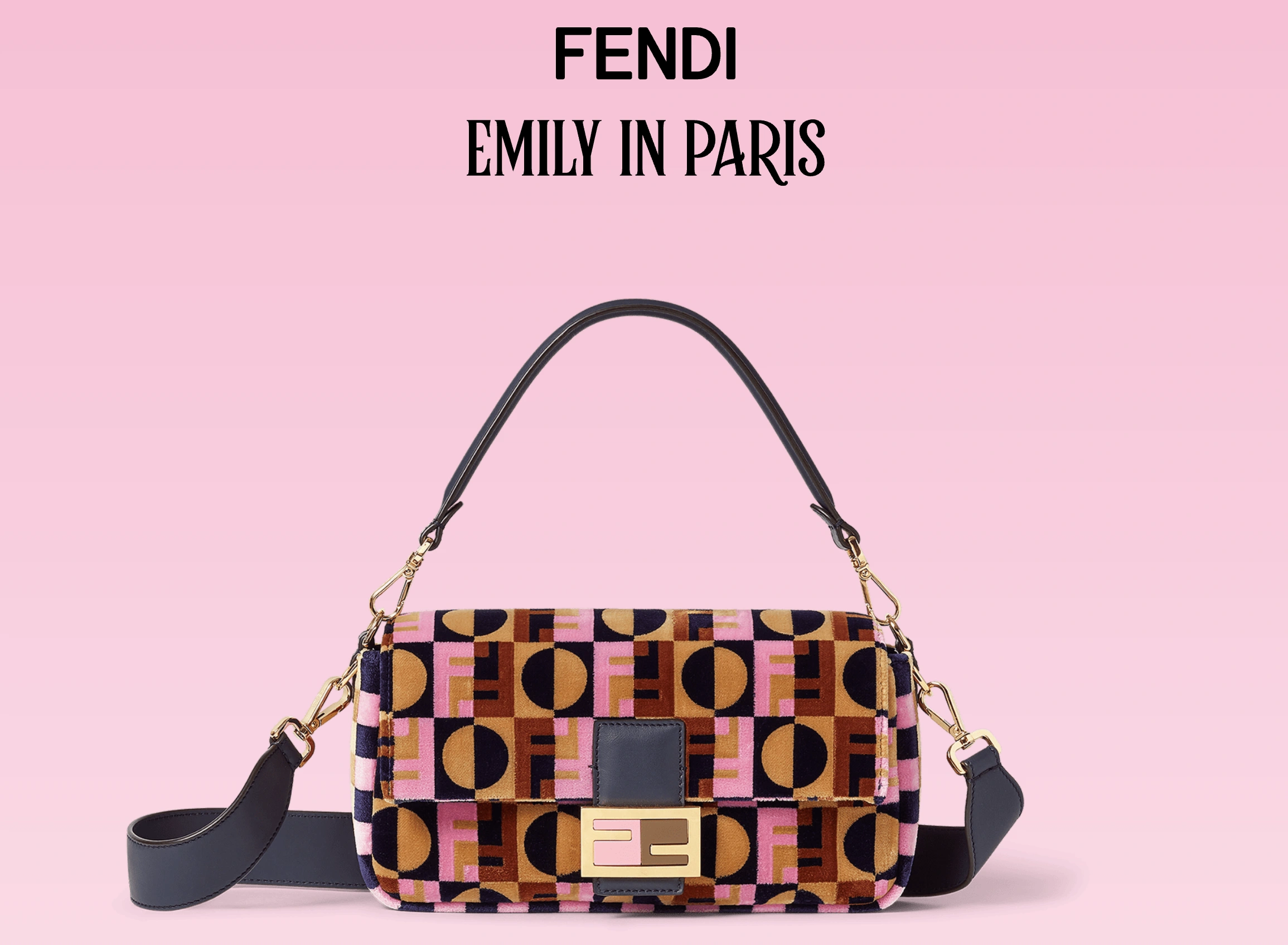
Fendi is the clearest example of a collaboration built into narrative structure. Season 5 does not simply feature a product. The brand is used as a plot device, which changes how viewers process the placement.
At the same time, Fendi supported the on-screen integration with a consumer-facing selection tied to the show. The brand presented the products as part of the same story world, not as separate merchandising. (Fendi and Emily in Paris)
Relevant source coverage also points to a release timed to the Season 5 premiere window and supported through press appearances and product storytelling. (Vogue)
Why It Works
Fendi succeeds because it treats the placement as narrative, not signage. That choice reduces friction for the viewer and increases the chance the product is remembered for the right reasons.
From a marketing lens, this is a strong example of Season 5 brand collaborations following three principles:
- Context first: The product belongs in the scene.
- One hero object: The audience can name what they saw.
- A direct path to purchase: Fans can find the product without effort.
This is also a clean example of Emily in Paris brand partnerships aligning the show’s visual language with the brand’s retail language. It keeps continuity across screen, social, and storefront.
What Brands Can Borrow
Most brands will not have a Fendi-level storyline. The transferable part is the structure.
Use this checklist when planning an entertainment collaboration:
- Define a single hero product or offer that can be understood in one sentence.
- Ensure the product can be discovered in under 30 seconds from any social post.
- Align creative assets across show moment, brand channels, and product page photography.
If the campaign requires a new product page or a temporary microsite, treat it as a real conversion surface. Work with a web design agency early, not after creative is locked. The campaign will be judged on speed, clarity, and checkout integrity as much as it is judged on aesthetics.
Fendi is one of the Emily in Paris Season 5 collaborations that proves product placement can be a sales engine, but only when the consumer journey is designed end to end.
Intimissimi: Storyline Integration That Feels Shoppable
What Happened
Intimissimi’s approach is direct: feature the brand prominently in a way that matches setting and character behavior. The integration is positioned as part of the season’s Italian setting and style cues, and it is presented as a meaningful on-screen moment rather than a casual background detail. (Intimissimi Brings Italian Elegance to Emily in Paris Season 5)
This is a different category of Season 5 brand collaborations than a retail pop-up. It is closer to a shoppable wardrobe moment, where brand recognition and fit are the primary levers.
Why It Works
Intimissimi benefits from three conditions that make Emily in Paris brand partnerships perform:
- High visual clarity: The product category reads immediately on screen.
- Low explanation burden: The audience does not need instruction to understand what it is.
- Private utility: Consumers can buy the item without signaling fandom publicly.
That last point matters. Many entertainment tie-ins rely on obvious branding. Intimissimi’s category allows a quieter purchase motive. The product can be bought for personal reasons and still be linked to the show’s aesthetic.
What Brands Can Borrow
If your product can plausibly be part of daily life, you can replicate this model without forcing a branded punchline.
Execution guidance:
- Design product pages around materials, fit, and use, not around references to the show.
- Create a curated collection page with tight merchandising. Ten products are often enough.
- Build an editorial layer that explains “where and why” without spoilers.
This is where UI UX design agency work becomes practical. The fastest path to conversion is a predictable browsing pattern, strong imagery, and clear sizing and returns. That is not glamorous work, but it is what makes Season 5 brand collaborations profitable.
Intimissimi is one of the Emily in Paris Season 5 collaborations that highlights a core truth: the easiest collaborations to scale are the ones that do not require the customer to perform fandom in public.
Boursin: A Pop-Up Experience Built for Social Sharing
What Happened
Boursin created a physical activation tied to the Season 5 moment: the Boursin Bistro pop-up at Café Renée in Toronto. The event was framed as an Emily in Paris inspired experience, designed for a one-night window and built around reservable attendance. (Boursin Bistro pop-up experience)
This is a strong example of Emily in Paris brand partnerships using scarcity and place. It converts a streaming premiere into a reason to go out, take photos, and share.
Why It Works
Boursin’s activation is effective because it does not ask the audience to buy an abstract feeling. It offers an experience with clear constraints:
- Date and time are fixed.
- Entry is gated by reservations.
- The product is the center of the menu, not a background sponsor.
For marketers, this is the most transferable lesson from Season 5 brand collaborations. An event is a distribution channel. It produces content, it creates community proof, and it generates a measurable spike in demand.
What Brands Can Borrow
If you are planning a pop-up tied to entertainment, treat it like a product launch, not a party.
A practical operational checklist:
- Build a single landing page that answers logistics in one screen.
- Create a photo plan. Decide what guests will photograph and where.
- Ensure the brand moment is in the path, not only on signage.
- Capture emails or opt-ins ethically and clearly.
- Define post-event conversion. Is it retail purchase, subscriptions, or trial?
Boursin’s program also shows why local execution matters. If the activation is city-based, the creative and logistics should match local expectations and venue realities. A distributed brand often needs regional production strength and consistent branding to avoid event quality drifting across markets.
Boursin is one of the Emily in Paris Season 5 collaborations that demonstrates a simple idea: the most effective experiential work is designed to produce both memories and measurable demand.
-1.webp)
Planet Oat: A Retail Product Drop Timed to the Premiere
What Happened
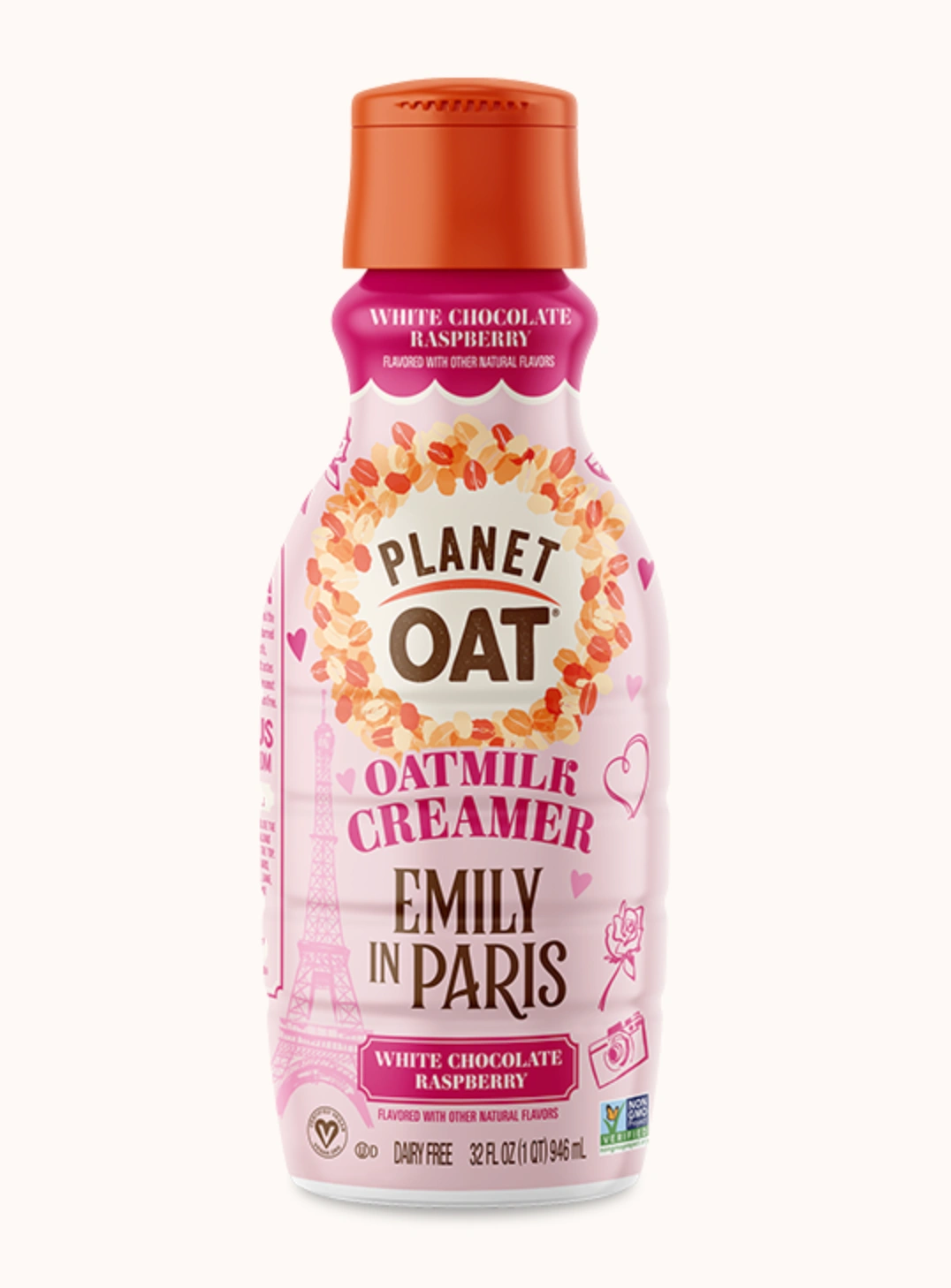
Planet Oat launched a limited-edition creamer tied directly to the season’s premiere timing. The partnership included retail distribution and a pop-up experience aligned to the premiere date, plus talent support through Ashley Park. (Planet Oat x Emily in Paris creamer)
This is a classic “watch moment” product strategy. It turns a household ritual into a purchase that feels relevant for the week the show drops.
Why It Works
Planet Oat’s collaboration works because it fits the natural rhythm of audience behavior:
- People host watch nights.
- People shop for groceries weekly.
- People look for small add-ons that make the moment feel planned.
Among Emily in Paris Season 5 collaborations, this is one of the cleanest examples of meeting fans where they already are. It also shows the value of pairing retail availability with a narrative wrapper.
What Brands Can Borrow
If your product has household frequency, you can use a similar model even without mass retail.
Key execution moves:
- Use packaging and naming that reads instantly in a store aisle.
- Build a “where to buy” module that is accurate and mobile-first.
- Plan for customer support volume during the first seven days.
- Prepare a short content kit for retailers, not only for your own channels.
This is also where search demand matters. When a limited product is tied to a cultural moment, branded search climbs quickly. A strong SEO agency partner can help ensure the landing experience captures that demand with the right structure, schema, and internal pathways, without turning the page into a cluttered ad.
Planet Oat is one of the Season 5 brand collaborations that proves a product drop can be modest and still effective, as long as the timing and distribution match consumer routines.
Baked by Melissa: A Limited-Time Drop With Clear Creative Constraints
What Happened
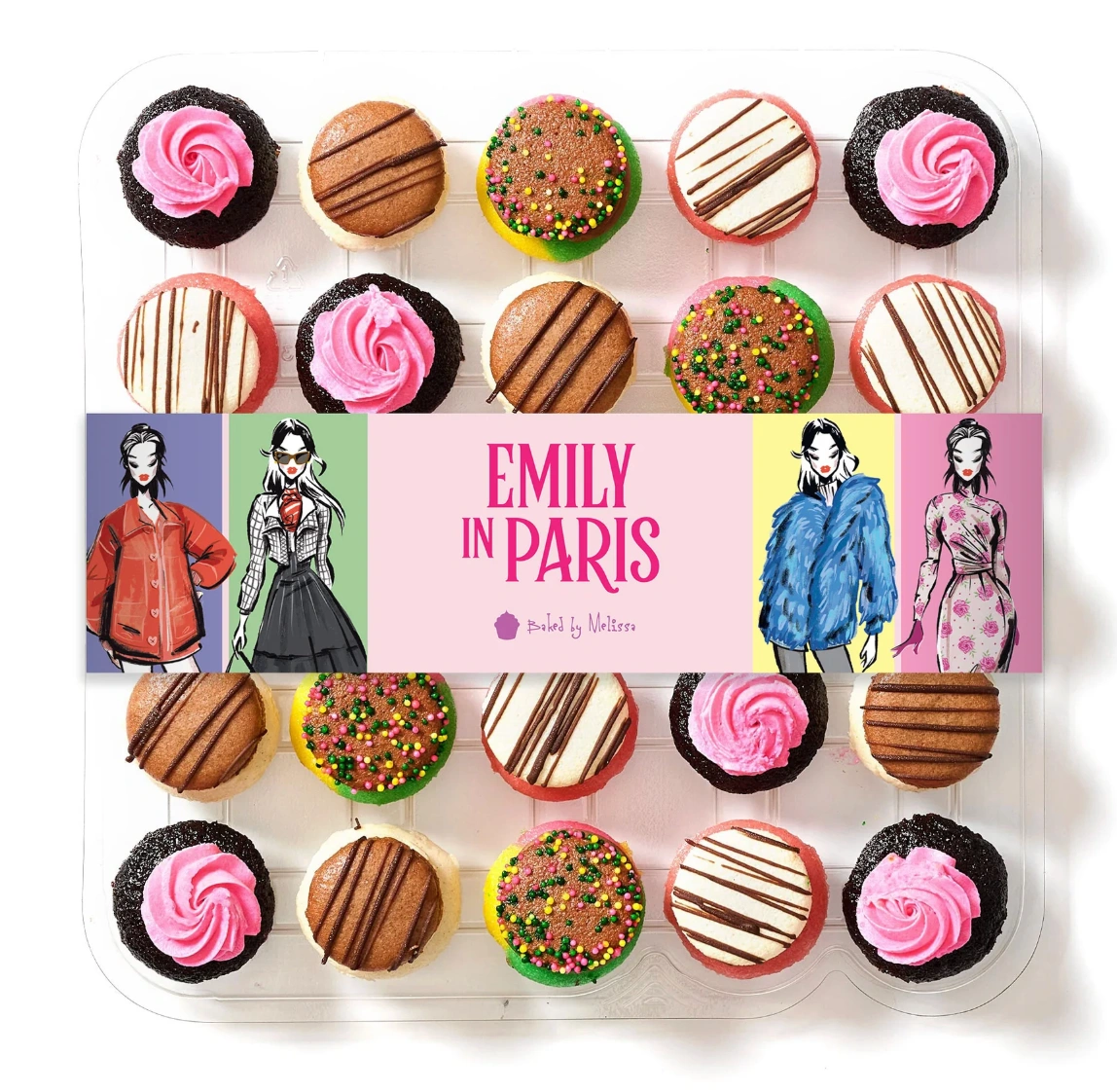
Baked by Melissa released a limited-time collection inspired by Season 5, built around a specific product format and a small set of flavors. It was positioned as a way to celebrate the season’s release through a shareable, giftable purchase. Baked by Melissa x Emily in Paris Season 5
This is an e-commerce friendly version of a partnership. It does not require retail negotiations or venue production. It requires product storytelling, checkout clarity, and fulfillment readiness.
Why It Works
Baked by Melissa benefits from constraints that make Season 5 brand collaborations easier to execute:
- The offer is limited and easy to summarize.
- The product is designed for sharing.
- The visual language is built into the product itself.
It also fits how audiences behave during releases. They buy small items that signal participation, often for gatherings.
What Brands Can Borrow
The Baked by Melissa model can be adapted by many categories because it is simple.
A useful blueprint:
- Keep the assortment tight. Too many options dilute the connection.
- Use photography that looks like editorial, not like a coupon page.
- Add a “shipping cutoff” module and inventory transparency.
- Make gifting frictionless, including a clear note field and delivery expectations.
If your current e-commerce experience struggles under traffic spikes, do not wait for the next collaboration to test performance. A campaign is not the time to discover fragile checkout steps. This is where a marketing consultation and audit can surface conversion and operational issues before the public does.
Baked by Melissa is one of the Emily in Paris Season 5 collaborations that shows how a limited drop can succeed when it is operationally calm and visually coherent.
Other Notable Season 5 Brand Integrations Worth Studying
Some Season 5 brand collaborations show up as on-screen integrations that may not have the same consumer product layer as the examples above. They still matter, because they reveal how the show builds a branded world.
The examples below were cited as Season 5 placements in coverage of the season’s marketing and episodes. (Vogue)
Dolce and Gabbana
The brand appears as part of the character world and retail environment. The key lesson is simple: retail locations and shopping scenes are high-leverage moments for lifestyle alignment.
For marketers, the takeaway is not about copying a designer label. It is about using the right “place” as the message. The store becomes the proof point.
Rimowa
Rimowa suitcases were referenced as being present across episodes. Luggage is a functional product with high visual recognition, which makes it a natural fit for travel-driven storytelling.
This is a useful reminder that functional categories can win in entertainment when the object is distinctive and easy to recognize at a glance.
Peroni
Peroni was cited as another placement. Food and beverage placements can be polarizing when they feel forced. They work best when they match the scene’s social logic.
For brands in this category, the core question is whether the product belongs in the moment as a natural choice. If the answer is unclear, the integration usually reads as paid placement.
These integrations are not the same as the headline Emily in Paris Season 5 collaborations listed earlier. They are still relevant for planning, because they show how narrative context shapes audience tolerance for brand presence.
They also reinforce a consistent point about Emily in Paris brand partnerships: realism is less important than internal coherence. Viewers forgive brand presence when it feels consistent with character and setting.
The Marketing Tactic Behind Emily in Paris Season 5 Collaborations
The common tactic across the strongest Emily in Paris Season 5 collaborations is not product placement alone. It is “story to shelf” with a short, timed conversion window.
Season 5 brand collaborations succeed when they connect three layers:
- A narrative moment that earns attention.
- A consumer artifact that is easy to buy, book, or share.
- A distribution plan that meets audiences across platforms.
This is why Emily in Paris brand partnerships often outperform generic influencer posts. They have built-in cultural momentum and a clear reason to act now.
The Collaboration Stack
Use this stack to plan Season 5 brand collaborations in your own category:
- On-screen or cultural trigger
A scene, a premiere week, a cast appearance, or a storyline moment. - Consumer offer
Product drop, curated collection, pop-up, bundle, or limited packaging. - Commerce surface
Landing page, PDP template, store locator, reservation flow, or retailer page. - Distribution layer
Owned email and social, creator content, retail channels, PR, and partners. - Retention layer
Capture data where appropriate, then follow up with value, not noise.
Brands that treat this as one system avoid a common failure mode: strong awareness with weak conversion.
If you want examples outside this show, Brand Vision Insights has covered the mechanics of entertainment-led campaigns across categories, including how partnerships go viral and what makes them repeatable. (2025 in Review: Top 10 Collaborations That Went Viral)
The Measurement Plan
Season 5 brand collaborations are often judged with vague language. That is risky. Entertainment partnerships can deliver real performance, but only if measurement is specified upfront.
A practical measurement plan should include:
- Branded search lift during premiere week
- Landing page conversion rate and bounce rate
- Retail velocity where applicable
- Earned media volume and quality
- Incremental email or SMS opt-ins
- Post-campaign repurchase rate for new customers
For broader context on how Netflix builds global attention and how brands can learn from that distribution discipline, see this breakdown from Brand Vision Insights. (Netflix Marketing Strategy 2025)
A final note on measurement: fans notice when placements feel like ads. Vogue’s coverage of Season 5 highlighted both the commercial upside and the audience sensitivity to overt marketing. That tension is part of the job now. (Vogue)
Collaboration UX: Landing Pages, Checkout, and Accessibility
Season 5 brand collaborations create short spikes of intense intent. That is a website stress test.
If your collaboration landing page loads slowly, hides key details, or breaks on mobile, you will pay for awareness you cannot convert. This is where execution discipline matters more than clever taglines.
For deeper context on how product placement and brand integration work as marketing systems, see: Iconic Brands in Movies: The Art of Product Placement
Make the Drop Page Fast
A collaboration page should behave like a performance page, not like a campaign poster.
Minimum requirements:
- Load fast on cellular data
- Clear CTA above the fold
- Delivery and returns visible without scrolling through long copy
- Inventory transparency when stock is limited
- A single primary action per screen
This is also why teams involve a web design agency early. The job is not only layout. It is performance engineering, content structure, and release governance.
Reduce Friction at Checkout
A good collaboration is often a first purchase. That means low trust and high questions.
Reduce friction by standardizing:
- Guest checkout
- Express pay options
- Clear shipping timelines
- Minimal form fields
- Mobile-first error handling
If the experience includes reservations or ticketing, apply the same principle. Every unnecessary step is an exit.
Design for Accessibility and Governance
Season 5 brand collaborations attract a broad audience. Accessibility is not optional, and neither is governance.
Practical standards:
- High contrast text on imagery
- Keyboard navigability
- Alt text for key images
- Clear error messages
- Version control for landing pages and disclaimers
A UI UX design agency should also be thinking about maintainability. If you run multiple collaborations per year, you need templates, not one-off builds. Templates reduce risk and lower time to market.
The best Emily in Paris brand partnerships look effortless. Behind the scenes, they are operationally strict.
Risks and Guardrails: When Entertainment Partnerships Backfire
Season 5 brand collaborations also show what can go wrong.
Common risks include:
- Narrative mismatch: Viewers sense a placement that does not belong.
- Overexposure: Too many branded moments can make a show feel transactional.
- Inventory gaps: A drop goes viral, then stock disappears with no backorder plan.
- Unclear rights: Talent, likeness, and title usage can create legal exposure.
- Tracking blind spots: A campaign succeeds in awareness but cannot be attributed.
Guardrails that protect both brand and partner:
- Define what must be true for the partnership to feel credible.
- Limit the number of hero messages. One is usually enough.
- Align legal, product, and site operations before creative goes live.
- Build a post-launch response plan for customer support and community.
If your collaboration is intended to support search growth, not only social reach, coordinate SEO and editorial early. The goal is to capture demand while it is highest, then retain it with evergreen content and internal pathways. A capable SEO agency can help structure that system without compromising brand clarity.
Emily in Paris Season 5 collaborations are effective because they are integrated. They fail when marketing, operations, and digital experience are treated as separate workstreams.
.webp)
Key Takeaways for Brands Planning 2026 Collaborations
Emily in Paris Season 5 collaborations offer a clear model for modern partnership marketing. The best programs are not loud. They are structured.
Key takeaways to apply:
- Season 5 brand collaborations work when there is a single hero offer and a short path to action.
- Emily in Paris brand partnerships succeed when the product belongs in the story world and the buying experience is predictable.
- Physical activations are strongest when they create content and conversion, not only ambiance.
- Limited drops win when fulfillment and customer support are treated as part of the campaign.
- The website is not a brochure during launch week. It is the campaign.
If you are planning entertainment-led partnerships in 2026, start with fundamentals. Validate your offer, your conversion path, and your operational readiness before you spend on awareness.
Speak with our team through a marketing consultation and audit.

webp.webp "E-E-A-T in Practice: 20 Trust Signals You Can Add to Any Website")
webp.webp "Rebranding Checklist: 25 Things to Update (From SEO to Social Handles)")