Most people read Aesop's marketing strategy as good taste. It is closer to operational discipline. The brand sells bottles, but what it really sells is a standard, and the packaging, the stores, the writing, and the customer experience all signal the same thing: restraint with intention. That consistency is why Aesop's marketing still stands out in 2026, even as beauty competition gets louder and faster.
We run a branding and marketing agency, so we read a brand like Aesop less as a story and more as a case study. The pattern is clear. Aesop's advantage is not one tactic. It is a system. The brand builds demand through design discipline, retail theater, and content that reads like publishing rather than promotion. When every touchpoint carries the same tone, customers do the distributing for you.
The short version
- Aesop's marketing strategy works because every touchpoint, from packaging to store to language to service, carries one consistent standard, not because of any single campaign.
- Aesop spends almost nothing on traditional advertising. It grows through retail experience, editorial content, and word of mouth instead.
- Minimalism is Aesop's brand positioning, not a style choice. Restraint reads as confidence and protects premium pricing.
- Aesop is owned by L'Oréal, which completed a USD 2.525 billion acquisition in 2023, and it remains a Certified B Corporation.
1. Brand Identity Rooted in Minimalism
Minimalism is Aesop's brand positioning, not a visual preference. It is a decision that shapes how people interpret quality. The apothecary-style bottles, the utilitarian labels, and the calm typography all communicate that the product does not need to shout. In a category full of claims, that restraint reads as confidence, and it lines up with Aesop's own statements about craft, formulation, and experience on its official site.
Aesop's identity works because it is operational. It reduces creative drift. It protects brand memory. It makes every product launch feel related, even when the SKU count grows. The brand feels edited, and edited brands earn trust faster. Most companies only reach that clarity after they settle their brand strategy and positioning, then let the design follow the decision instead of leading it.
- Uncluttered design keeps attention on ingredients, format, and usage.
- Functional packaging strengthens the premium cue without relying on glamour.
- Consistent aesthetics turn the bottle into a recognizable object in bathrooms, hotels, and content.
-1.webp)
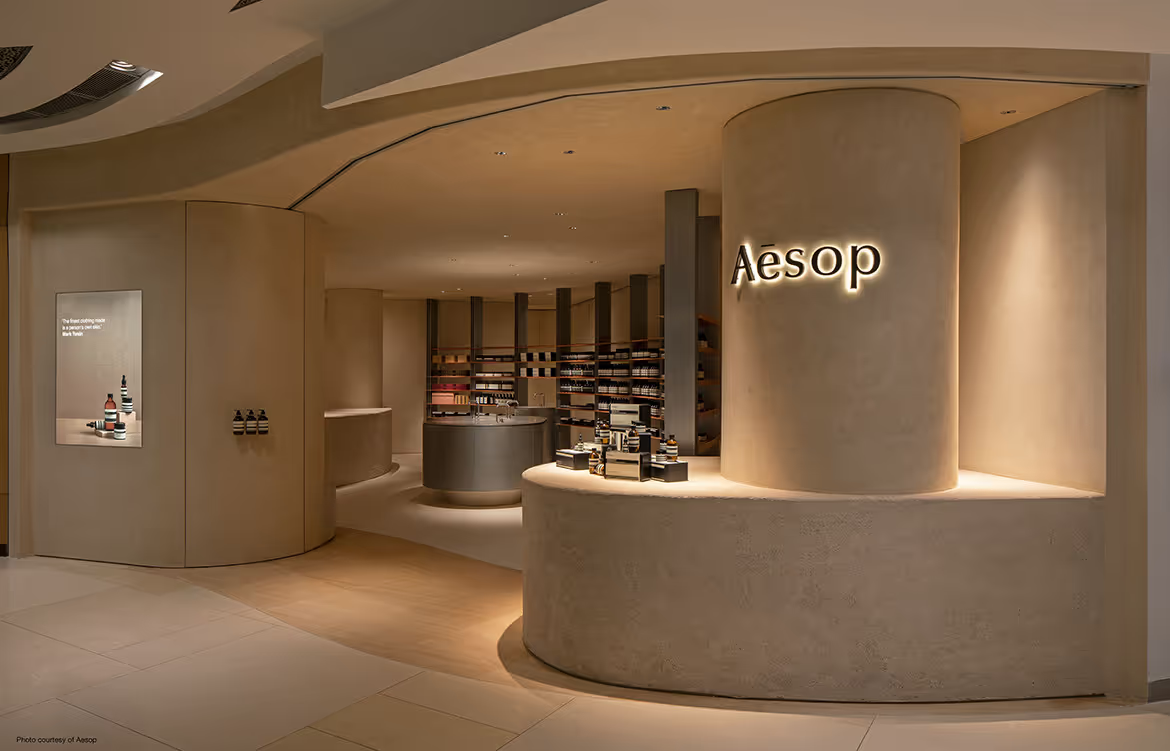
2. Unique, Experience-Centered Store Design
Aesop treats retail as media. The store is not a shelf. It is a set. Most brands scale by repeating the same store format everywhere. Aesop scales by repeating principles while letting the expression change. That creates a reason to visit, even for someone who could buy online in two minutes.
The local architecture approach also helps the brand borrow legitimacy from its surroundings. Aesop in one city feels like it belongs in that city. In another, it feels like a different installation. Publications have covered how Aesop designs stores to respond to local neighborhoods and heritage, often through collaborations with architects and designers, as Options, The Edge has reported. Even design-led outlets treat Aesop openings as architecture stories, not just retail news, which reinforces how central store design is to its marketing strategy, as coverage of its Rome store opening in Wallpaper shows.
- Each location is tailored to its neighborhood, often with local designers.
- Retail becomes a destination, not a transaction.
- The rotating visual identity encourages repeat visits and social sharing.
3. Emphasis on Customer Education, Not Selling
Aesop's selling style is consultative, not pushy. That matters because skincare is personal and confusing. When customers feel guided rather than pressured, they spend more time, ask more questions, and leave with higher confidence in the purchase. Confidence is what reduces returns and increases repeat buying.
Education also protects premium pricing. If a customer understands the ingredients, the texture, and the routine fit, the price feels like a trade, not a toll. Aesop frequently highlights store partnerships and on-the-ground design thinking through interviews and retail stories on its own site, which shows how seriously it treats the in-store experience, as in this Aesop journal interview.
- Staff are trained to explain ingredients and usage, not to upsell.
- Product storytelling builds trust because it answers why, not just what.
- Personalized consultations turn a browsing session into a small ritual.
4. Subtle, Content-Driven Marketing Approach
Aesop's marketing leans on publishing behavior: essays, interviews, recommendations, and cultural reference points that read like a point of view. That content creates affinity among customers who want taste, not trends, and it gives people language to talk about the brand beyond product benefits. Aesop's long-running editorial property, The Fabulist, is a clear example of this publishing mindset, profiled through the creative and design work tied to its development by Gretel. Aesop also hosts The Fabulist inside its own digital channels, which shows it treats editorial as a brand pillar, not a side project, as its Fabulist archive makes clear.
Aesop also benefits from a platform reality: minimal visuals and a consistent style become recognizable at speed. You do not need a logo when the entire feed looks like you. The brand does not win by posting more. It wins by posting with restraint.
- No reliance on loud, traditional advertising formats.
- Editorial builds a cultural halo around the products.
- Social content stays consistent with brand voice, not platform trends.
5. Premium Pricing and Exclusivity
Premium pricing works when the brand earns it through experience, not through claims. Aesop supports its price by keeping its cues consistent: packaging, store design, language, and service level. The brand also avoids the habit that weakens luxury most quickly: constant discounting. Discounts teach customers to wait. Aesop trains customers to buy when they need the product, not when the brand runs a sale.
Selective distribution protects the experience. If the product only appears in environments that match the brand, every point of sale reinforces positioning. That makes it harder for competitors to copy, because they would need to copy the whole system, not just the bottle.
- Premium pricing reinforces quality perception when the experience matches it.
- Limited discounting protects long-term willingness to pay.
- Selective distribution keeps the brand in the right rooms.
.webp)
6. Community Engagement and Sustainability
Aesop's sustainability posture is built into its materials and store behavior rather than treated as a seasonal campaign. That matters because customers have become skeptical of vague promises. When sustainability is practical, it feels real. When it is performative, it feels like marketing. Aesop outlines its sustainability framing and commitments on its official sustainability page.
Aesop is also a Certified B Corporation, which the brand confirms in its own help center, and the certification is publicly searchable through B Lab's directory.
- Practical sustainability signals are embedded in the brand's operations.
- Community programming strengthens belonging and retention.
- Values-based consistency makes the brand easier to trust.
7. Strong Brand Loyalty and Word-of-Mouth Marketing
Aesop has built an advantage that is difficult to purchase: advocacy. Word-of-mouth is not just free marketing. It is higher-quality marketing because it arrives with trust preloaded. In premium skincare, people buy because a friend said the texture is worth it, or because a hotel experience made the product feel elevated.
Loyalty here is created by consistency. The customer experience rarely surprises in a bad way. That predictability is valuable. It reduces decision fatigue and makes repurchase feel like the obvious next step.
- Satisfaction drives repeat buying, which drives growth without heavy promotion.
- Referrals compound because the brand is easy to describe.
- Advocates extend the brand through personal networks and gifting behavior.
8. Subtle Celebrity and Influencer Engagement
Aesop benefits when celebrities and creators mention it, but the brand does not need to look like it chased the mention. That difference matters. In luxury, the appearance of demand can be as important as demand itself. When endorsements feel organic, they strengthen authenticity. When endorsements feel bought, they weaken the brand's cultural value.
Aesop's selective approach also avoids overexposure. Overexposure makes premium feel common. The brand stays present, but not everywhere. That creates a sense of discovery, even when the brand is widely distributed.
- Selective partnerships reduce the risk of creator-brand mismatch.
- Organic endorsements feel credible because they appear unforced.
- Limited influencer saturation helps preserve exclusivity.
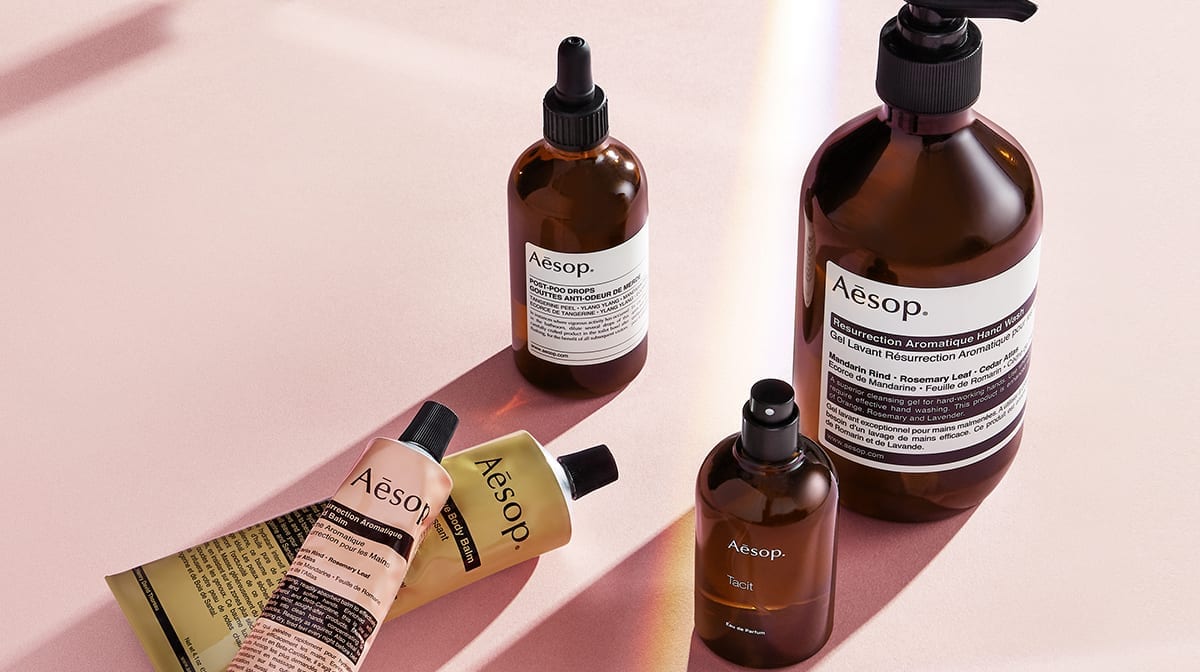
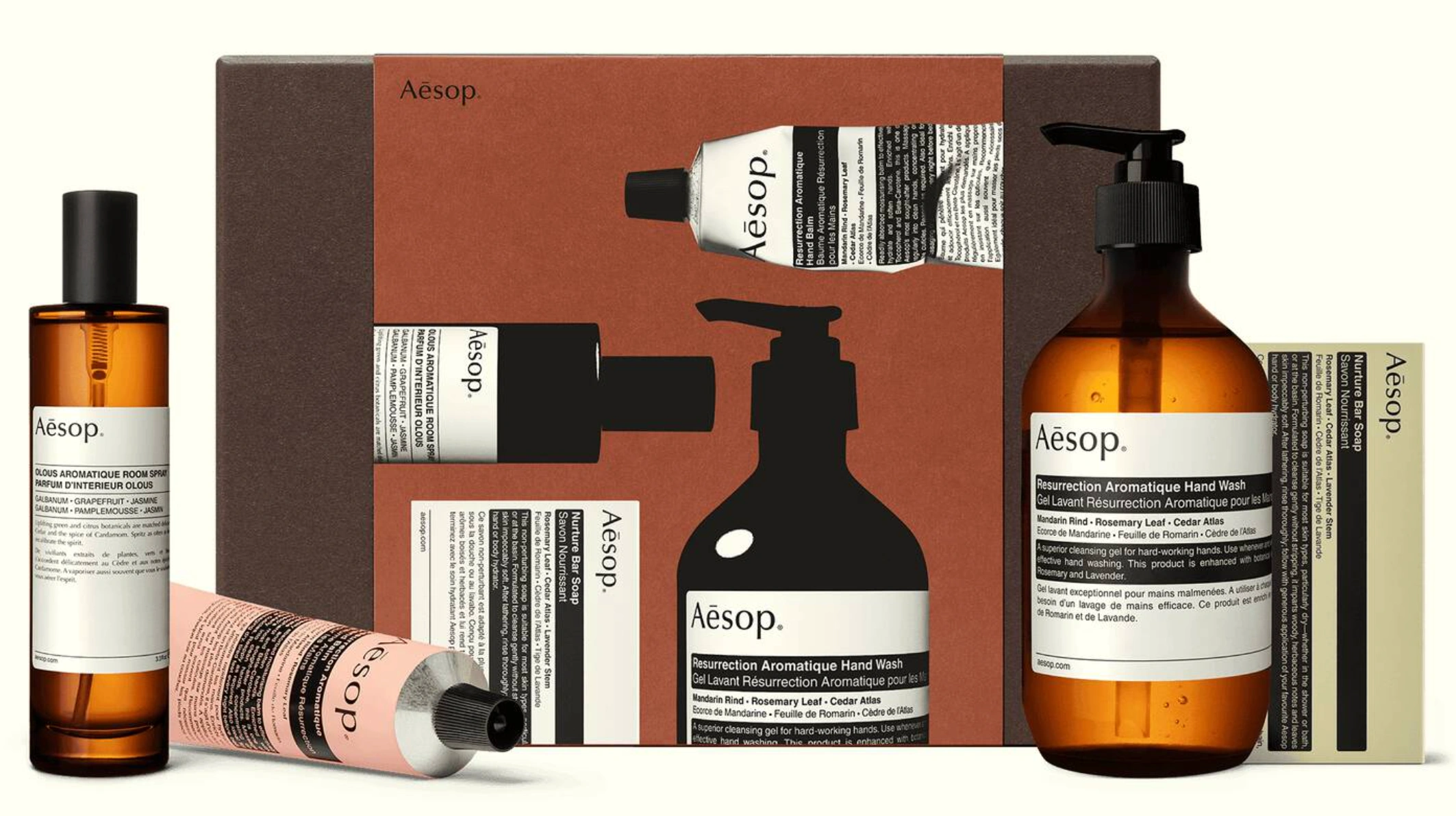
9. Minimalistic, Thoughtful Packaging and Product Names
Aesop's naming style is functional and descriptive. That sounds small, but it is strategic. Clear naming reduces friction. It makes shopping easier. It makes gifting easier. And it supports the brand's no-theatrics tone.
Packaging works the same way. The bottle looks like it belongs in a curated space, which makes it a visual signal inside the home. Many skincare products disappear into clutter. Aesop becomes part of the room.
- Clear product names reduce confusion and speed up decisions.
- Packaging reads as honest because it avoids inflated language.
- Visual consistency makes the product recognizable without needing a loud logo.
10. Limited Edition and Speciality Products
Scarcity can be manipulative, or it can be a form of curation. Aesop uses limited editions as a controlled way to introduce novelty without breaking the brand system. If the core line is stable, customers trust it. If a special release appears occasionally, customers pay attention.
Limited products also create conversation without needing big campaigns. They give loyal customers a reason to check in. That habit is powerful because it raises engagement without training people to wait for discounts.
- Scarcity increases attention when it is occasional, not constant.
- Specialty releases create new stories while keeping the core line stable.
- Limited editions encourage repeat visits online and in-store.
Financial and Growth Stats for Aesop
Aesop's scale is not theoretical. It has been backed by serious capital and serious retail expansion. L'Oréal announced it completed the acquisition of Aesop on August 30, 2023, in its official press release. The April 2023 announcement put the deal's enterprise value at USD 2.525 billion and reported Aesop sales of USD 537 million in 2022, according to L'Oréal's finance release. That same agreement put Aesop at around 400 points of sale worldwide at the time, a mix of standalone signature stores and department-store counters, as L'Oréal stated when it announced the deal.
That physical presence matters because Aesop's marketing strategy depends heavily on controlled retail experience and local store identity.
Key Takeaways from Aesop's Marketing Strategy
- Subtlety beats noise when the experience is strong and consistent.
- Cohesion across retail, packaging, and content creates a brand people remember.
- Education reduces friction, increases confidence, and supports premium pricing.
- Community and sustainability work best when they show up in daily operational choices.
Frequently Asked Questions About Aesop's Marketing
Does Aesop advertise?
Aesop barely uses traditional advertising. Rather than paid campaigns, it grows through store experience, editorial content like The Fabulist, selective press, and word of mouth, which keeps the brand feeling discovered rather than sold.
What is Aesop's brand positioning?
Aesop is positioned as quiet, design-led luxury skincare. Minimalism is the positioning itself, not decoration. Restraint in packaging, stores, and language signals confidence and supports a premium price.
What is Aesop's brand strategy?
Aesop's brand strategy is consistency across every touchpoint. Packaging, store design, customer education, content, and pricing all carry one standard, so the experience is recognizable in seconds and hard for competitors to copy.
How does Aesop use social media?
Aesop treats social media as an extension of its editorial voice, not a trend feed. Minimal, consistent visuals make its posts recognizable without a logo, and it posts with restraint rather than volume.
Who owns Aesop?
L'Oréal owns Aesop. It completed the USD 2.525 billion acquisition from Natura &Co on August 30, 2023, and Aesop now sits inside L'Oréal's luxury division.
How Business Owners Can Apply This in Their Own Companies
Aesop's lesson is not to copy minimalism. The lesson is to build a system your customer can recognize in five seconds. The fastest way to grow in 2026 is not always more content or more campaigns. It is removing contradiction. If your website says premium but your checkout feels sloppy, customers hesitate. If your brand story sounds thoughtful but your social posts feel generic, customers forget you. That gap between promise and experience is usually why a site isn't converting, not the design itself.
Start with the basics that compound. Clarify your positioning. Make your service experience consistent. Then make the digital experience feel like a natural extension of the brand, not a separate universe. Many businesses tighten the brand foundation first, then translate that clarity into a cleaner site through a web design agency. If organic demand is the goal, pairing that work with focused SEO helps your strongest pages show up when intent is highest.
Sometimes the cleanup is literal. A product brand carrying dead inventory, a soap or hygiene line that overproduced, can clear it through a liquidation and global trading partner before it relaunches around a tighter standard, which frees capital and shelf space for the reset.
- Build one recognizable standard across product, service, website, and content.
- Treat your website like a storefront, not a brochure, with clear UX decisions supported by a UI/UX design agency.
- Invest in fewer, stronger touchpoints that customers actually remember and repeat.
- Make sustainability and trust visible through actions, policies, and operational proof.
The way we diagnose a client's growth system is to find the contradiction first, then fix the highest-friction step, which is exactly what a focused marketing consultation is for.
A brand people remember is not the loudest one in the category. It is the one that never contradicts itself.



%2520(1).png)