
The Zoom marketing strategy is a useful case study in what happens when a product becomes a cultural default, then has to grow beyond the job it is famous for. In 2025, “video meetings” is not a category with much patience for feature lists. Decision-makers care about adoption, governance, reliability, and whether a platform can fit into the way work actually runs.
Zoom also has a brand problem most companies would still trade for. Its name became shorthand for a behavior. That awareness creates gravity, and it can also become a ceiling. Zoom has spent the last two years trying to expand the story from “meetings” to a broader work platform, including formally dropping “Video” from its legal name in late 2024. That change was not cosmetic. It was a positioning move tied to product scope and AI direction.
Zoom’s advantage has never been only marketing polish. Its distribution has always been designed into the product: a free tier that spreads through invitations, a purchase path that upgrades naturally when friction appears, and an enterprise motion that expands accounts across multiple products. Zoom describes this directly in its public filings, including how its sales model blends viral demand generation with a free basic plan and a sales approach matched to customer size.
This case study focuses on three things:
- How Zoom’s brand story stays coherent even as the product expands.
- How freemium distribution and enterprise selling reinforce each other.
- What parts of Zoom’s playbook transfer to other brands, and what parts do not.
At a Glance: Zoom’s Marketing Strategy
- The core brand promise stays stable: technology that works without drama, even as the product suite grows.
- Zoom markets through product behavior: meeting invites function as distribution. Zoom’s filings describe a sales model that combines viral demand generation with a free Zoom Meetings and Zoom Workplace basic plan, then routes opportunities by size and complexity.
- The business is split between enterprise and online: Zoom reports that enterprise customers represented 59.0% of revenue in the fiscal year ended January 31, 2025, with online customers at 41.0%. The online monthly average churn rate is reported at 2.9% per month for that same year. (Zoom’s FY2025 Form 10-K)
- Expansion is a visible pressure point: Zoom reports a trailing 12-month enterprise net dollar expansion rate of 98% as of January 31, 2025, down from earlier years, which frames why the company needs new reasons to expand within accounts. (Source: Zoom’s FY2025 Form 10-K)
- Zoom’s stated marketing mix includes brand and events: its filings list awareness programs, digital programs, public relations, tradeshows, and its user conference, Zoomtopia, as examples of brand-building and promotional activity. (Source: Zoom’s FY2025 Form 10-K)
- Zoom Ahead is a deliberate reset: Zoom launched a major brand campaign in December 2025, anchored by “I Use Zoom!,” using humor to speak to end users and to signal “Zoom” as a verb in official advertising. (Zoom campaign announcement and Marketing Brew coverage)
- The market context still favors hybrid work: Gallup’s hybrid work indicator has consistently shown hybrid as the most common arrangement among remote-capable employees, with a large share also fully remote. (Gallup hybrid work indicator)
- AI Companion is positioned as workflow, not novelty: AI Companion 3.0 is framed as “conversation to completion” and is also offered as a standalone subscription at $10 per month. (Zoom AI Companion 3.0 announcement)
.webp)
The Brand Story Origin: One-Click Join as a Promise
Zoom’s brand story starts with a simple promise: make joining and running meetings feel effortless for the person who does not want to think about the tool. That is a product promise, and it is also a marketing claim. In collaboration software, the tool is most visible at the moment it fails. Zoom built its early reputation by making failure feel less common, and setup feel less like a project.
That early story still matters because it explains why Zoom became the default verb in many teams. Not because the company ran the loudest ads, but because the user experience made adoption feel like the path of least resistance.
Simplicity as Differentiation
There is a pattern in Zoom’s product narrative that repeats across eras. The company tends to frame complexity as the enemy and usefulness as the differentiator. When a platform says “it just works,” it is making a positioning move that appeals to both end users and IT teams. End users want speed. IT teams want fewer tickets, fewer exceptions, and fewer tools to train.
In brand terms, Zoom’s most durable asset is not a logo or a tagline. It is the memory of friction removed. That memory is hard to dislodge, even when competitors bundle similar features.
UX as the Quiet Acquisition Channel
Zoom’s strategy is a reminder that UX can behave like a channel. A channel is any repeatable path that turns attention into adoption and adoption into revenue. For Zoom, many of those moments happen inside the product, not on a landing page.
This is also where many companies underinvest. They separate “marketing” from “product,” then wonder why conversion stalls. In practice, the acquisition system often looks like this:
- The product experience creates the first preference.
- The purchase experience determines whether preference converts.
- The admin experience decides whether the tool survives standardization.
This is where a strong UI UX design agency mindset matters, even for companies that think they “just” need better demand generation. It is also where a web design agency earns its keep. Your website and product are both parts of the same buying journey, and both must load fast, read clearly, and reduce the number of decisions a user must make to move forward.
Positioning Then vs Now: From Video Meetings to Zoom Workplace
Zoom’s strongest brand associations were formed during the pandemic era. That built awareness, and it also narrowed perception. In market terms, Zoom became a category label. In brand terms, it became “the meeting app.”
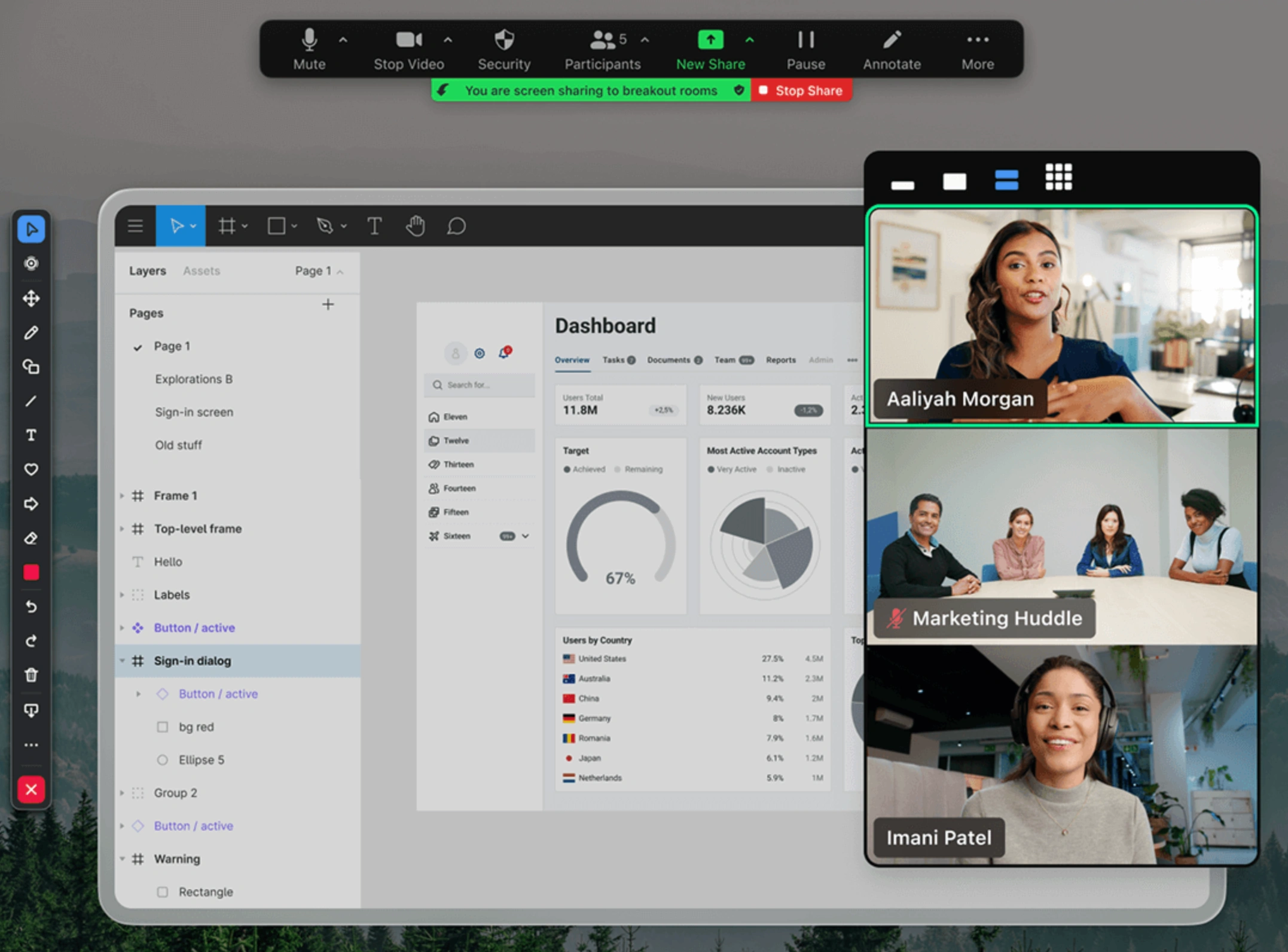
In 2025, Zoom is repositioning toward a broader platform story. Its public filings describe Zoom Workplace with AI Companion as an open, AI-first work platform for human connection, with a suite that includes Meetings, Phone, Team Chat, Docs, and more. That shift changes what Zoom must prove, and how it must market.
Why Zoom Dropped "Video"
In November 2024, Zoom publicly explained that it was dropping “Video” from its legal name, positioning itself as “Zoom Communications Inc.” and signaling that the company is “about so much more than video meetings.” (Zoom Communications)
This matters because names are not only branding. They set expectations for what the company sells. If your name is a feature, you will be evaluated like a feature. If your name is a platform, you can credibly expand, but you must also maintain coherence.
For Zoom, dropping “Video” also reduces a competitive trap. Bundled suites from larger platforms can make “video meetings” feel like a commodity. Zoom’s response is to compete on workflow, reliability, and breadth.
The Zoom Workplace Narrative
When a company expands its product scope, it has two choices:
- Keep the old story and add features quietly.
- Change the story and accept short-term confusion.
Zoom has chosen the second path, and it shows up in how it frames the platform. Zoom describes Zoom Workplace as a suite built to streamline the workday through communication and collaboration tools, and it positions trust as a core platform concept in its filings. (Zoom’s FY2025 Form 10-K)
A practical way to evaluate this repositioning is to use a simple positioning checklist:
- Promise: What job is the platform promising to do better than alternatives?
- Proof: What visible product behaviors back that promise?
- Default: What does the buyer assume your platform is, before you speak?
Zoom’s brand story works when the promise and proof match the default memory of “this tool is easy and reliable.” The risk is that “platform expansion” can introduce complexity that breaks that memory.
The Growth Engine: Freemium and Viral Demand Generation
Zoom’s distribution is a case study in product-led growth, but it is not a pure self-serve story. Zoom’s own description of its sales model makes that clear: viral demand generation and a free basic plan sit alongside a sales motion that scales with opportunity size. (Zoom’s FY2025 Form 10-K)
That hybrid is the point. Freemium creates reach. Sales creates expansion. The brand reduces friction across both.
Every Meeting Is a Product Demo
Few products have a built-in loop as clean as a meeting invitation. A user schedules a call, sends a link, and the platform gets introduced to new people at the moment they need it. That is distribution that does not depend on paid media.
The strongest part of Zoom’s loop is that the “demo” is not staged. It is the real product in real use. If the experience works, adoption is natural. If it fails, no ad can fix it.
For marketers, the transferable idea is not “make it free.” It is “make the core behavior shareable.” If your product has no shareable object, you will always be buying attention.
The Upgrade Triggers That Convert
Freemium only works when the upgrade path is tied to real constraints that a growing user eventually hits. In collaboration tools, those constraints are often predictable:
- Time limits or usage caps that are tolerable early, but restrictive at scale.
- Admin needs such as controls, provisioning, and reporting.
- Compliance, security, and retention requirements.
- Workflow expansion that pushes teams toward a broader suite.
The important nuance is that these triggers work best when they feel like a natural step, not a forced toll. When users upgrade because they are growing, the purchase feels rational.
Product-Led Growth With an Enterprise Follow-Up
Zoom’s filings also show why an enterprise follow-up matters. Enterprise customers represented 59.0% of revenue in the fiscal year ended January 31, 2025. Online customers represented 41.0%. (Zoom’s FY2025 Form 10-K)
That split suggests a dual mandate:
- Keep the self-serve engine healthy, because it creates reach and replenishes top-of-funnel.
- Keep enterprise expansion healthy, because it funds platform breadth and stabilizes revenue.
In 2025, Zoom reports an enterprise net dollar expansion rate below 100%. That is a signal that “seat growth” is not enough by itself. Expansion has to come from product breadth, bundles, and clearer narratives about outcomes.
Zoom’s Go-To-Market System: Self-Serve, Direct Sales, and Channels
Zoom’s GTM is designed to match the buying process of the customer. That sounds obvious, and many companies still get it wrong. They apply one sales motion to every account, then wonder why CAC rises and conversion falls.
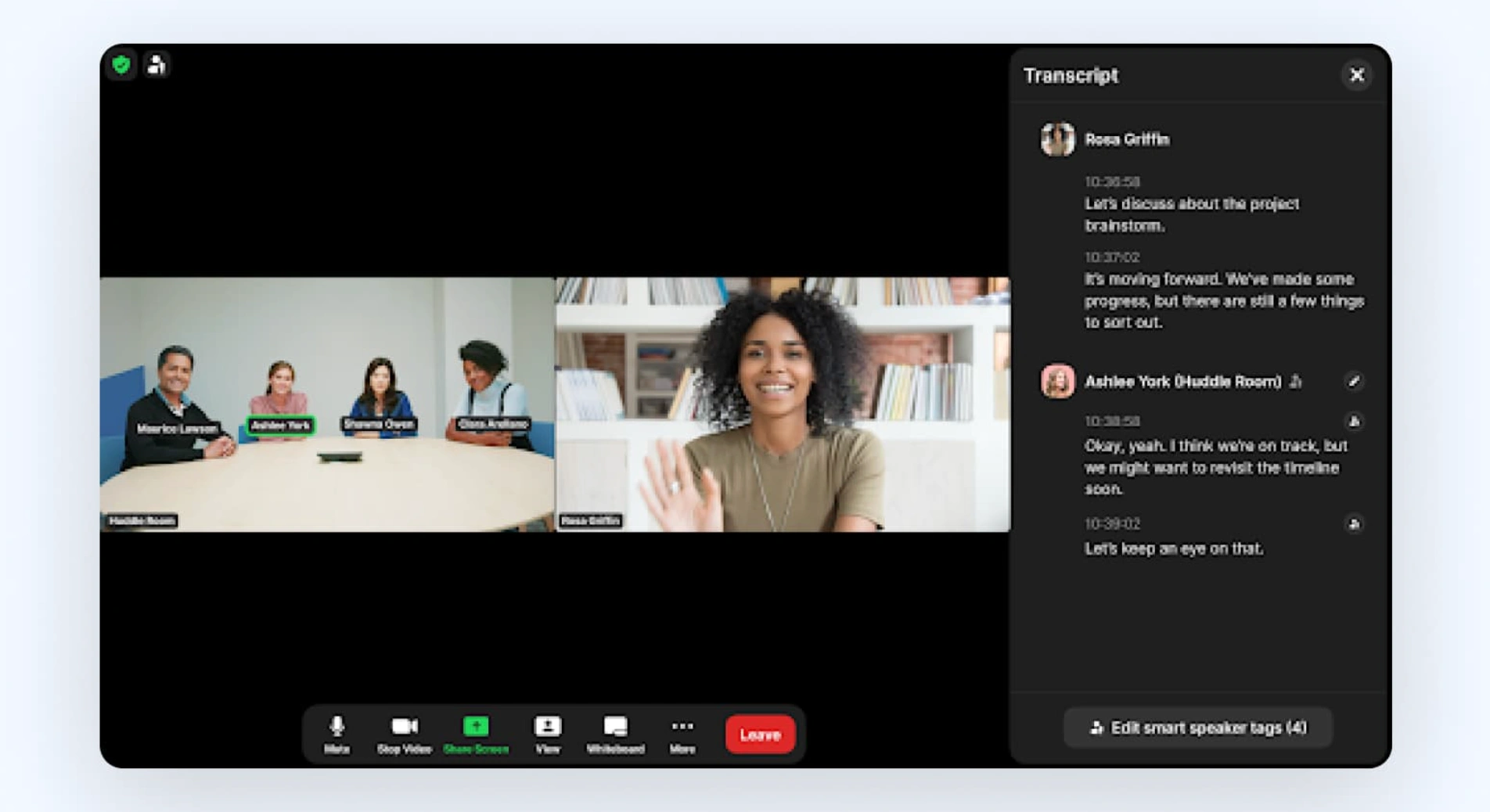
Zoom’s filings describe a model that routes customers by opportunity size, with direct sales organized by subscription size, region, and vertical. It also describes a broad channel ecosystem and an online channel designed for high-volume, self-service sales. (Zoom’s FY2025 Form 10-K)
Online: High-Velocity Self-Serve
Self-serve works when three things are true:
- The user can get value quickly.
- The purchase can happen without a committee.
- The product is easy to roll out without professional services.
Zoom’s online business serves a range from individuals to SMBs, and the company reports monthly average churn for online customers. That willingness to disclose churn is useful, because it tells you Zoom sees self-serve retention as a controllable system, not an accident.
For most companies, the lesson is that self-serve conversion is rarely a “messaging” problem. It is usually:
- An onboarding problem.
- A pricing and packaging problem.
- A product proof problem.
- A performance problem, including page speed and clarity.
Enterprise: Multi-Product Expansion
Zoom defines enterprise customers as distinct business units engaged via direct sales, resellers, or strategic partners. It also reports a strategic change: in 2024, it transitioned a large number of lower-value enterprise customers away from working with direct teams, in order to improve efficiency and customer experience. (Zoom’s FY2025 Form 10-K)
That is a segmentation decision. It also hints at a reality most leaders recognize: high-touch sales is a scarce resource. If you assign it incorrectly, you create cost without impact.
Zoom also signals that it is changing which metrics it emphasizes, moving away from reporting enterprise customer count and toward revenue-based indicators such as enterprise revenue and customers contributing more than $100,000 in trailing twelve-month revenue. That is consistent with a mature platform trying to scale efficiently.
Partners and Integrations as Distribution
Zoom’s channel ecosystem includes resellers, strategic technology and service partners, ISVs, and service integrators. This matters because enterprise distribution is rarely won through one channel. It is won through integration credibility.
The marketing implication is simple: integrations are not a product detail. They are a trust signal. They reduce perceived switching cost, and they increase the likelihood a platform is approved.
For most teams, this is where product marketing and partnership marketing should merge into one operating system:
- A clear integration directory.
- Joint proof points.
- Shared narratives around workflow, not features.
.webp)
The Marketing Mix Zoom Discloses: Brand, Events, Content, and Paid
Zoom’s filings describe sales and marketing expenses that include advertising and promotional events to promote the brand, including awareness programs, digital programs, public relations, tradeshows, and its user conference, Zoomtopia. (Zoom’s FY2025 Form 10-K)
That mix tells you something: Zoom does not treat marketing as only performance spend. It treats marketing as a combination of brand memory, customer community, and demand capture.
Brand Building and Awareness Programs
Brand in B2B often fails when it tries to copy consumer style without a product truth behind it. Zoom’s brand has a product truth. When the product is reliable, the brand claim feels earned.
In a market filled with similar feature sets, brand becomes the shortcut buyers use when they are tired. It reduces evaluation time. It also supports renewals, because people prefer not to be blamed for choosing the “wrong” platform.
For decision-makers, the point is not that brand is “nice to have.” The point is that brand is a cost-control strategy when the category is crowded.
Zoomtopia, Community, and Customer Marketing
User conferences and community programs are often dismissed as vanity. They are not. They are one of the few scalable ways to:
- Reduce churn through education.
- Increase multi-product adoption through exposure.
- Build peer validation.
Zoomtopia is also a messaging surface. It provides a predictable yearly moment when the company can define what “Zoom” means now, without relying on short-lived social chatter.
Content, Social, and Performance Media
Zoom’s content and digital programs function as both education and demand capture. This is where high-intent search meets brand trust. In 2025, many buyers will form opinions before they ever speak to sales.
That is why a durable SEO strategy is not separate from brand. It is part of how a company defines the category in plain language, at scale, and with consistency.
Trust as Strategy: Reliability, Security, and the IT Buyer Reality
Zoom is not only selling to end users. It is selling through IT and security gates, even when end users create the demand. Zoom explicitly frames trust as a cornerstone of the platform in its public descriptions. (Zoom’s FY2025 Form 10-K)
In enterprise software, trust is not a value statement. It is a buying requirement.
Trust as a Product Feature
Trust has to show up in the product, not only in policy pages. In practical terms, trust is built through:
- Visible security controls.
- Transparent admin tooling.
- Clear documentation.
- Consistent performance.
Zoom has invested heavily in security messaging and product capability over time, including advanced encryption options, and it highlights enterprise readiness in its platform narrative. Whether a buyer fully understands the details is less important than whether the buyer feels the company has done the work.
Governance and Admin Experience
Governance is where many platforms lose deals. Not because the product lacks features, but because the admin experience creates uncertainty.
A useful mental model is this: end users choose tools emotionally, IT approves tools rationally, and procurement enforces tools financially. If your platform only speaks to one of those audiences, the deal stalls.
This is also why “design” is not decoration. It is a governance enabler. Clear settings, logical permissions, and predictable defaults reduce risk. The same logic applies to a company website. Accessibility, navigation clarity, and maintainability are not aesthetics. They reduce friction in the buying journey and lower support burden later.
Reliability, Latency, and the Cost of Outages
The cost of an outage is not only refunds or credits. It is lost confidence. In collaboration tools, reliability is the brand.
Zoom’s early growth was fueled by the perception that it worked when other tools did not. Keeping that perception is strategic, especially when the company is asking the market to see it as a broader platform. A platform cannot expand if the core experience feels uncertain.
Zoom Ahead: The 2025 Narrative Reset
Zoom Ahead is not just a campaign. It is a correction. Zoom is telling the market, loudly, that it is more than meetings, and that it is willing to speak to the user who feels trapped by bad tools.
In December 2025, Zoom announced a major brand campaign called “Zoom Ahead,” developed with Colin Jost’s No Notes Productions, anchored by “I Use Zoom!” starring Bowen Yang. Zoom stated the campaign would debut on December 31 during the U.S. College Football Playoffs, with additional high-profile placements including a Super Bowl pre-show placement in February 2026. (Zoom campaign announcement)
Marketing coverage also framed the campaign as a push beyond meetings, with Zoom’s CMO describing the company’s intent to position itself as more than a meeting platform. (Marketing Brew)
What the Campaign Is Correcting
Zoom Ahead appears to correct three perception problems at once:
- Zoom is still “just meetings” in many minds.
- AI messaging fatigue is real, and many claims feel abstract.
- End users often have preferences that clash with IT standardization.
The campaign’s creative choice matters because it frames the buyer as human. It turns workplace software selection into a story about control, friction, and sanity.
If you want the creative mechanics behind this shift, Brand Vision Insights has also broken down why the ad works as culture rather than a feature reel.
A Brand Move With Product Implications
A campaign that speaks to end users creates product obligations:
- Self-serve onboarding must be clear, fast, and forgiving.
- Admin tooling must be strong enough that IT does not feel bypassed.
- Pricing and packaging must allow adoption without confusion.
In other words, brand demand without product readiness creates churn. Zoom’s approach suggests it is trying to keep those systems aligned: end-user desire, IT trust, and platform breadth.
AI Companion 3.0: From Conversation to Completion
Zoom’s AI messaging has shifted from “AI features exist” to “AI reduces work.” That is the correct direction for 2025. Buyers do not want novelty. They want time back.
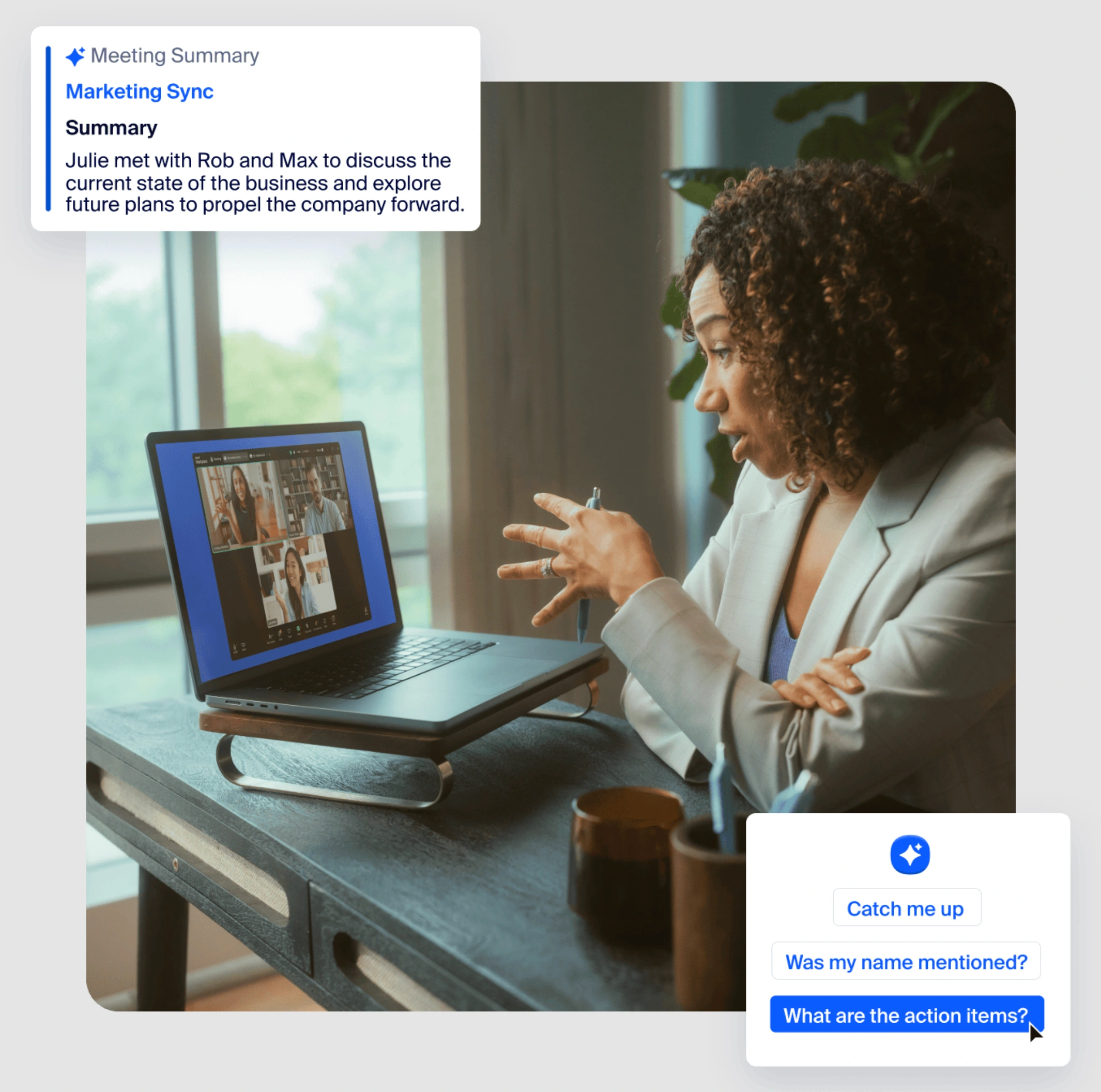
In December 2025, Zoom introduced AI Companion 3.0 with a “conversation to completion” framing and stated it is available for eligible Zoom Workplace users, with a standalone subscription option priced at $10 per month. (Zoom)
Outcome Marketing, Not Feature Marketing
Most AI marketing fails because it lists capabilities instead of outcomes. “Summarizes meetings” is a feature. “Reduces follow-up work and prevents missed decisions” is an outcome.
A practical outcome marketing structure looks like this:
- Before: what work exists because communication is messy.
- After: what disappears or becomes faster.
- Proof: what the product does, shown in a simple workflow.
- Control: how users and admins manage the behavior.
Zoom’s “conversation to completion” language is a bid to own the outcome layer, not the model layer.
Packaging, Pricing, and Adoption
Offering AI as included value for some users and as a standalone subscription for others is a packaging signal. It suggests Zoom wants to widen the addressable audience, without forcing a full platform upgrade first.
For marketers, the transferable lesson is that pricing is messaging:
- Bundles tell buyers what belongs together.
- Add-ons tell buyers what is optional.
- Standalone pricing tells buyers the feature is a product line, not a novelty.
If AI is central to your narrative, the packaging must match the claim. Otherwise the story collapses at checkout.
Trust and Data Boundaries in AI Messaging
AI adoption rises when people believe two things:
- The output will be useful.
- The system will not create risk.
Enterprise buyers ask predictable questions: where does data go, what is retained, what can be controlled, and how auditability works. A calm AI narrative does not dodge these questions. It answers them with boundaries, not ambition.
Zoom’s larger trust posture matters here. If trust is already part of the platform brand, AI becomes easier to adopt. If trust is weak, AI becomes a liability in the buyer’s mind.
-1.webp)
What Marketers Can Steal: The Zoom Playbook in 10 Lessons
- Build distribution into the behavior. If your product cannot be shared, marketing will always be expensive.
- Let the free tier teach the product. A free plan should create conviction, not confusion.
- Design upgrade triggers that feel like growth, not punishment. The best upgrades happen when a team scales.
- Treat reliability as brand equity. If the core experience fails, every channel becomes less efficient.
- Segment your sales motion by opportunity size. High-touch sales belongs where expansion is real.
- Use events to define the narrative once per year. Conferences and community are messaging surfaces, not only lead sources.
- Make trust visible. Security and governance must be legible, not buried.
- Reposition with proof, not speeches. A name change or a new platform story only works when product behavior supports it.
- Market outcomes, especially for AI. Show what disappears from the workday, not what the model can do.
- Align brand, product, and web experience into one system. Positioning should show up in your product UI, your site, your onboarding, and your sales narrative.
This is where many teams benefit from a structured brand strategy refresh, supported by consistent branding execution across product and marketing surfaces. For organizations with complex buying cycles, the same discipline applies even more strongly, because procurement and IT will stress test every claim. In those cases, a measured, systems-first approach is often the difference between pipeline growth and stalled evaluation. A specialist B2B marketing agency approach can be helpful when you need the narrative and the demand engine to mature at the same time.
FAQ: Zoom Marketing Strategy Questions
Is Zoom a Product-Led Growth Company?
Zoom operates like a product-led business with a strong enterprise overlay. Its distribution is driven by product behavior, and its filings describe viral demand generation and a free basic plan. At the same time, it routes larger opportunities through direct sales and channels. The combination is the strategy.
What Is Zoom’s Target Audience Today?
Zoom sells to two audiences at once: end users who care about ease and speed, and IT and business leadership that care about governance, security, and standardization. The brand is strongest when it can satisfy both without forcing trade-offs that feel painful.
What Channels Does Zoom Rely On Most?
Zoom’s most distinctive channel is still the product itself, through invitations and habitual use. Beyond that, its filings describe brand awareness programs, digital programs, public relations, tradeshows, and Zoomtopia. The mix suggests a balanced model: product-led distribution, reinforced by brand and customer marketing.
How Does Zoom Compete With Microsoft Teams and Google Meet?
Zoom competes by trying to be preferred, not merely present. Bundled suites win on procurement convenience. Zoom has to win on experience, reliability, and a broader platform narrative that justifies choosing it even when alternatives are included.
That is why Zoom’s repositioning toward Zoom Workplace and AI Companion matters. It is an attempt to compete at the workflow layer, not only the meeting layer.
What Makes the Zoom Brand Story Work?
The story is credible because it matches memory. People associate Zoom with low-friction use and dependable meetings. Zoom’s challenge is to expand the scope without breaking the original promise.
When the product and the marketing align, the brand feels earned. When they diverge, the brand becomes a claim that invites scrutiny.
What Should Smaller Brands Copy From Zoom, and What Should They Skip?
Copy the system, not the scale. Zoom has reach most companies will never have, and it benefits from years of category memory. What you can copy is:
- A shareable core action.
- Clear upgrade logic.
- A trust posture that is visible.
- A narrative that is tied to product proof.
What you should skip is the temptation to run a big awareness play before the product and onboarding are ready. Demand without readiness often becomes churn.
When to Copy Zoom, When Not To
When to Copy Zoom
- When your product can become the channel, through a shareable object or workflow.
- When you can tie your story to lived user memory, not abstract positioning language.
- When your trust posture is real, documented, and visible in the experience.
- When your pricing and packaging reflect how adoption actually happens.
When Not to Copy Zoom
- When your product requires heavy setup and cannot deliver value quickly.
- When your buyer is a committee and your narrative is still unclear.
- When you are expanding scope without a clear platform logic.
- When you want to run a brand campaign to compensate for product friction.
A Practical Next Step
If your team is trying to clarify positioning, reduce friction in the buying journey, or align web experience with pipeline goals, start with a structured marketing consultation and audit. It is often the fastest way to identify what is blocking conversion, what story the market actually hears, and what to fix first.
For readers who follow Brand Vision through Brand Vision Insights, the Zoom case is a reminder that the best marketing systems are built, not announced. The quiet work is the work that lasts.



%2520(1).png)