Your marketing materials are your customers' first impression of your business. Whether it is an online ad, brochure, or product photo, good image quality inspires confidence in you and your products. Clear, bright pictures positively brand you, while blurry pictures can result in negative comments about your reliability.
Today, businesses utilize both printed and digital materials. Digital images should be appealing on the screen and load quickly. Printed materials should retain their pristine quality and sharpness in enlarged size. If you desire to maintain clarity within your images while improving upon them, you may begin with your tools of improvement.
In this article, you will learn how to improve the quality of your digital and printed marketing materials utilizing simple techniques and AI programs (such as Artguru AI Image Enhancer, Vectorizer.ai) as a means of improving the quality of photographs and logos for the best representation of their brand.
How to Enhance Digital Marketing Materials
In today's world, your brand's pictures can be seen everywhere, whether on websites, social media, ads, or presentations. The key is to make them clear and professional-looking on all screens.
In the digital realm, the pictures are typically ridden by nagging faults, such as pixelation, compression, or loss of quality, resulting in blurry or deadened appearances, after being uploaded or resized. These issues typically distract viewers of quality screens.
The Problem: Pixelation and Compression
Even though many of your designs are very good, they can lose that quality if they are saved in very small file sizes or if they are uploaded too many times. As a result, logos can look fuzzy, product photos can look unclear, and banners may look fuzzy around the edges. This causes your brand to look less professional online.
The Solution: AI Photo Enhancer
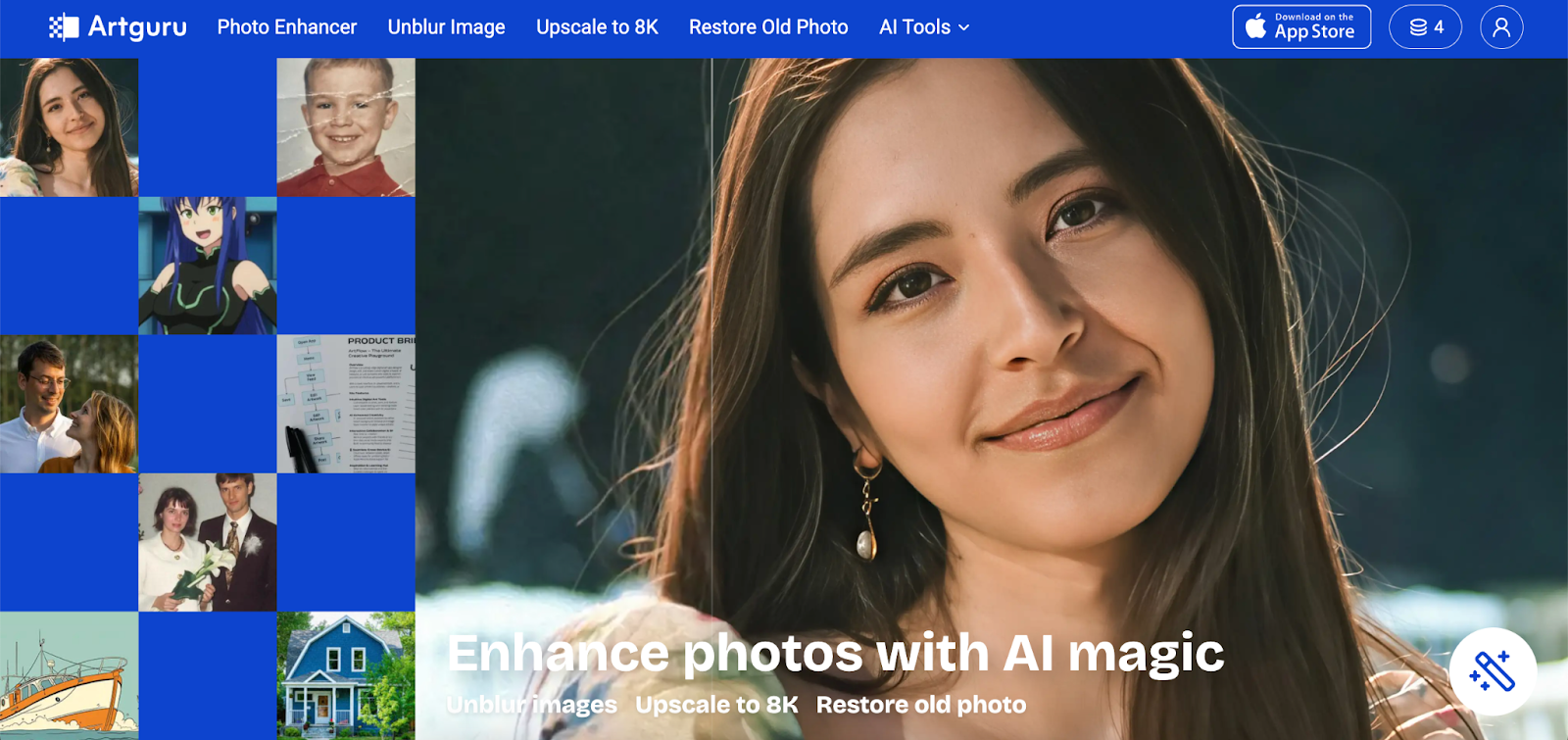
Luckily, AI tools like Artguru can make quick fixes on these problems for you. Artguru uses artificial intelligence to sharpen, upscale, and enhance your photos in just a few seconds; no photo or design editing experience is needed.
With Artguru, you can:
- Sharpen blurry or low-quality pictures
- Increase resolution without losing detail
- Save images as transparent PNGs for web use
- Improve lighting, contrast, and color automatically
This allows you to reuse some of those older pictures, improve the look of your old graphics, and, most of all, improve the overall quality of your graphics and photographs online
Simple Process: How to Use Artguru Photo Enhancer
You can enhance any brand image in just a few clicks. Here's how:
- Upload your image: Choose a photo, logo, or graphic you want to fix.
- Let Artguru enhance it: The AI will automatically sharpen and improve the picture.
- Download the new file: Save it as a clear, high-quality PNG for your website or ad.
That's it. In less than a minute, your visual becomes crisp, polished, and ready to make your brand shine online.
How to Prepare Marketing Materials for Print
When making things for printing, your goal is to keep the pictures clear, colorful, and sharp, whether you're printing a small flyer or a big banner. Print files need better resolution, stronger colors, and the correct size.
Common Print Problems: Blurriness When Enlarged
Many online pictures are saved in low-quality formats like JPG or PNG. These work fine for websites, but they lose quality when you make them bigger for printing. This happens because such images are made of pixels. When stretched, the pixels show up and make the image look rough or unclear.
Other common problems include:
- Low DPI (dots per inch): Printing needs 300 DPI for sharp results, but most web pictures are only 72 DPI.
- Wrong color mode: Screens use RGB colors, while printers use CMYK. This can make printed colors look different.
- Loss of detail: If an image is resized or compressed too much, small details disappear.
You can fix these issues in two simple ways:
Solution 1: Use an AI Upscaler for Photos
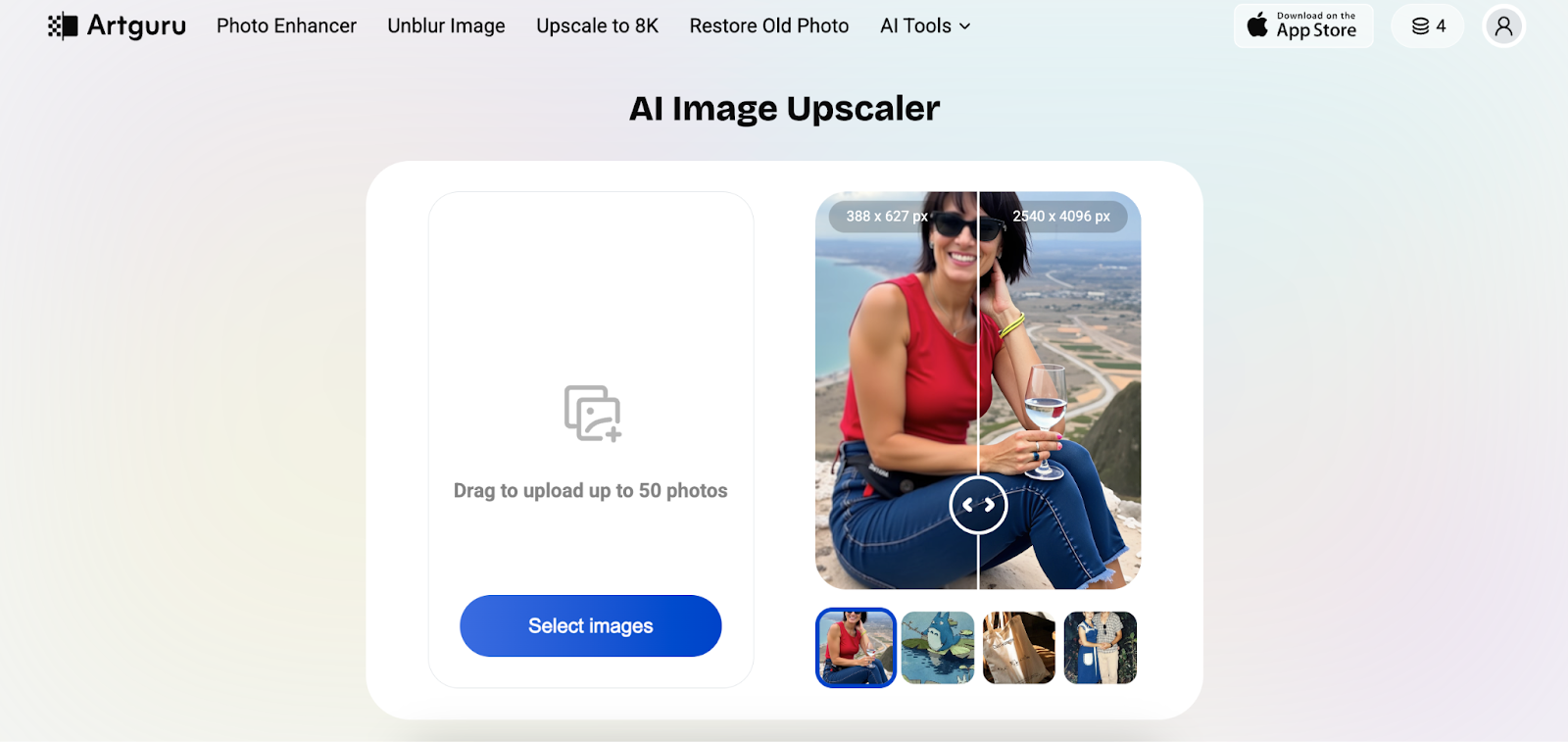
AI image upscalers like Artguru Image Upscaler can make low-quality photos ready for printing. Instead of just stretching the image, the AI adds real details and makes it look natural and sharp.
What it can do:
- Enlarge photos up to 4× or 8× without losing quality
- Make blurry parts clear
- Remove noise and smooth rough areas
- Make photos perfect for printing (brochures, posters, packaging)
It's very easy to use, just upload your photo, let the AI improve it, and download the new version for printing.
Solution 2: Vectorization for Logos and Graphics
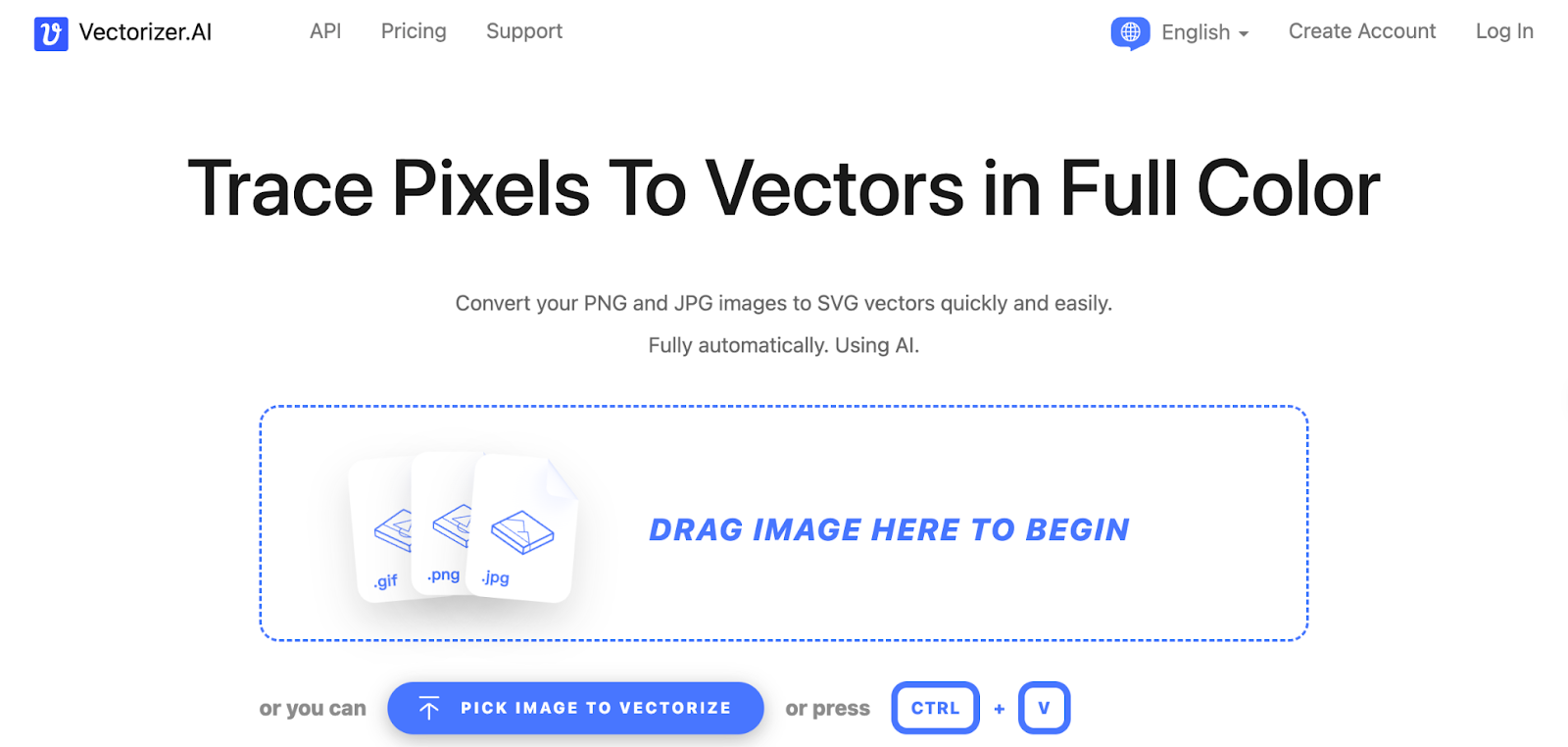
For logos, icons, or illustrations, it's best to use vector graphics instead of normal image files. Vector images are made of shapes, not pixels, so they can be resized without getting blurry.
A tool like Vectorizer.ai can automatically turn your logo into a vector file. This process is called vectorization, and it's very important for printing.
Why vectorization is important:
- Vectors stay clear and smooth at any size.
- Printers prefer vector files like SVG, AI, or PDF.
- You can easily edit vector colors and shapes without losing quality.
- Your brand looks more professional in print.
Simple Process: How to Use Vectorizer.ai
You can convert any logo or graphic into vector format in just a few steps:
- Upload your logo or graphic
Open Vectorizer.ai and upload your enhanced image file (PNG, JPG, or BMP).
- Let the AI convert it
The tool will automatically trace the shapes and lines, turning them into a smooth vector version.
- Download the vector file
Choose your preferred output (SVG, AI, or PDF) and save it. Once you save it, use this file in your design software (like Adobe Illustrator or InDesign) before sending it to the printer.
Your logo is now print-ready, meaning it will stay perfectly clear whether it's printed on a small business card or a large billboard.
Conclusion
Good visuals make a strong first impression. Whether online or in print, clear and high-quality marketing materials help people trust your brand.
For digital use, tools like Artguru Photo Enhancer can quickly fix blurry or low-quality images. For print, AI upscalers and Vectorizer.ai make sure your photos and logos stay sharp at any size.
By using these simple tools, you can easily improve the look of your marketing materials and present your brand in the best possible way, clean, clear, and professional.
.webp)