
Bugatti sits in a category of its own because the brand doesn’t only sell performance. It sells a controlled world of heritage, craft, and access. In 2026, when luxury buyers have more choice than ever, Bugatti marketing still wins by staying disciplined about scarcity, storytelling, and the owner experience.
For brands studying Bugatti success, the signal is clear. The product is extraordinary, but the strategy is even more consistent. Every touchpoint protects the same message: this is not a car you casually purchase. It’s a status object you’re invited to acquire, then live with.
- Founded by Ettore Bugatti in 1909 in Molsheim, France, the brand still centres its identity on heritage and engineering discipline. (Bugatti)
- Limited production remains the anchor of exclusivity, including the Chiron’s 500 unit run. (Bugatti Newsroom)
- The Veyron’s record era helped cement the modern halo narrative, including the verified 431.072 km/h average top speed figure recorded with external oversight. (Bugatti Newsroom)
1. A Legacy Built on Racing and Innovation
Bugatti marketing starts with origin, not tactics. Ettore Bugatti’s founding story is not treated like a museum plaque. It’s used as a living reference point that shapes how the brand speaks about engineering, form, and ambition. That continuity matters because heritage only works when it feels current, not nostalgic. (Bugatti)
Bugatti also keeps the brand myth anchored in real artifacts. Historic models and early design thinking are positioned as proof of a long technical lineage, which makes modern Bugatti success feel earned rather than manufactured. This is a useful lesson for any business building a premium brand. Your story needs receipts, not slogans. For companies shaping their own identity, a clear foundation makes every campaign easier to sustain.
- The origin story is repeatedly tied to craftsmanship, design discipline, and high performance.
- Heritage works best when it’s supported by tangible proof, not just repeated claims.

2. The Uncompromising Pursuit of Exclusivity
Bugatti marketing strategy treats scarcity as a product feature. The brand doesn’t merely limit inventory. It designs the buying experience around selectivity, long timelines, and personalisation, so the customer feels they’re entering a private tier of ownership. That emotional framing is why Bugatti marketing remains effective even when wider luxury markets cool.
The Chiron era shows how supply control becomes part of the story. Bugatti publicly reinforced the 500 unit limit and the closing of availability as production entered its final phase, turning constraint into credibility. (Bugatti Newsroom) Later, the final Chiron’s completion continued that narrative with a clear end point and a craft-forward message. (Bugatti Newsroom)
This is where exclusivity becomes more than a marketing afterthought. It’s a system. Brands that want premium pricing in 2026 usually need the same discipline, starting with a coherent brand strategy and the patience to protect it.
- Scarcity increases desirability because ownership feels rare and earned.
- A controlled allocation process signals confidence, not desperation.
View this post on Instagram
A post shared by BUGATTI (@bugatti)
3. The Halo Effect: Turning a Car into an Icon
A halo car is a cultural engine. Bugatti marketing uses halo vehicles to dominate the imagination of people who will never buy one, because those people still shape reputation, conversation, and long-term status. The Veyron did this by becoming a reference point for the outer limits of performance, and Bugatti preserved the record narrative with clear verification details and external oversight. (Bugatti Newsroom) When the record category faced scrutiny, Guinness publicly addressed it, keeping the story in the mainstream and reinforcing the seriousness of the claim. (Guinness World Records)
The halo effect also makes future launches easier. Once a brand owns a myth, every new product feels like a continuation of the same legend. This is why Bugatti success remains durable. The brand rarely needs to explain why it belongs at the top. The halo already did that work. When businesses build their own halo offering, the supporting system matters too, using the help of UI UX design agency makes premium experiences feel seamless from first click to final conversion.
- Halo vehicles drive awareness without needing mass-market volume.
- Verified milestones become long-term cultural references, not short-term campaign points.
.webp)
4. Craftsmanship as a Core Marketing Message
Bugatti marketing strategy leans heavily on the craft story because luxury buyers want proof. Craftsmanship isn’t positioned as a soft aesthetic claim. It’s shown through detail, finishing, and the way the brand talks about hand-assembly and bespoke elements. The final Chiron narrative reinforced this by framing the last build as hand-assembled and deeply personalised. (Bugatti Newsroom)
The deeper move is that Bugatti turns engineering into culture. When craft is visible, price becomes easier to justify because the buyer feels they’re paying for labour, time, and taste, not just horsepower. Brands outside automotive can borrow this by making their process visible and by investing in a coherent visual identity that signals quality before a customer reads a single line of copy.
- Craft stories work best when they show tangible details, not general claims.
- A premium visual system helps craftsmanship feel believable at a glance.
5. Melding Old-World Values with Modern Tech
Bugatti's success depends on a delicate balance. The brand signals timelessness through heritage cues, then proves modern relevance through engineering milestones. That mix prevents the brand from feeling trapped in nostalgia, and it keeps Bugatti marketing fresh as the category shifts in 2026.
Bugatti’s own framing is clear. It positions itself as a state-of-the-art marque with deep roots, which lets the brand evolve without breaking character. (Bugatti) This blend of legacy and modernity is a useful pattern for any company operating in a fast-changing market. You can modernize your product, your website, or your customer experience without abandoning what makes your brand recognizable, especially when the foundation is consistent.

6. Leveraging Ultra-Luxury Influencers
Bugatti marketing rarely needs mass reach. It needs the right social proof in the right rooms. In ultra-luxury, influence is often private, peer-to-peer, and status-driven. Owners, collectors, and tastemakers become the message, because their circles include people who can actually buy.
This is also why Bugatti’s imagery and press moments are curated. The brand protects its distance. It avoids overexposure and keeps the signal clean. For businesses, the equivalent is choosing fewer, higher-fit channels and building an audience that aligns with your actual price point. That discipline often starts with strong brand research so you know who you’re really for.
- Ultra-luxury influence is about relevance, not volume.
- The wrong visibility can dilute a premium signal.
7. Collaborations and Special Editions
Collaborations matter when they reinforce standards. Bugatti partnerships tend to work best when they extend heritage and craft rather than chasing novelty. A strong recent example is Bugatti’s own press release on a one-of-one Bugatti Baby II collaboration with Hedley Studios, positioned as an icon-level tribute rather than a typical co-branding play. (Bugatti Newsroom)
Special editions also create new desire cycles without changing the core promise. They give collectors a reason to stay engaged, and they let the brand refresh attention while protecting scarcity. This is a playbook many premium brands can adopt, especially when worked on with a sharp web design agency that makes limited drops feel controlled and intentional.
- Collaborations work best when they reflect shared standards.
- Special editions create collectible narratives that keep demand active.
8. Evocative, Cinematic Visuals
Bugatti marketing is built to be felt before it’s analysed. The brand uses cinematic visuals to sell mood, power, and isolation, placing the car in a world that looks unattainable on purpose. That distance is the desire mechanism. It signals that ownership changes your environment, not just your garage.
In 2026, when audiences scroll faster and attention is more fragmented, this approach remains effective because it is instantly legible. The visual language is consistent, high-touch, and unmistakably premium. For brands in any category, the lesson is that your visuals should match your pricing. If they do not, your conversion path becomes harder, even if your product is excellent.
- Cinematic storytelling makes luxury feel like a lifestyle, not a spec sheet.
- Consistent visual language builds brand recognition faster than slogans.
.webp)
9. Engaging at Elite Auto Shows and Private Events
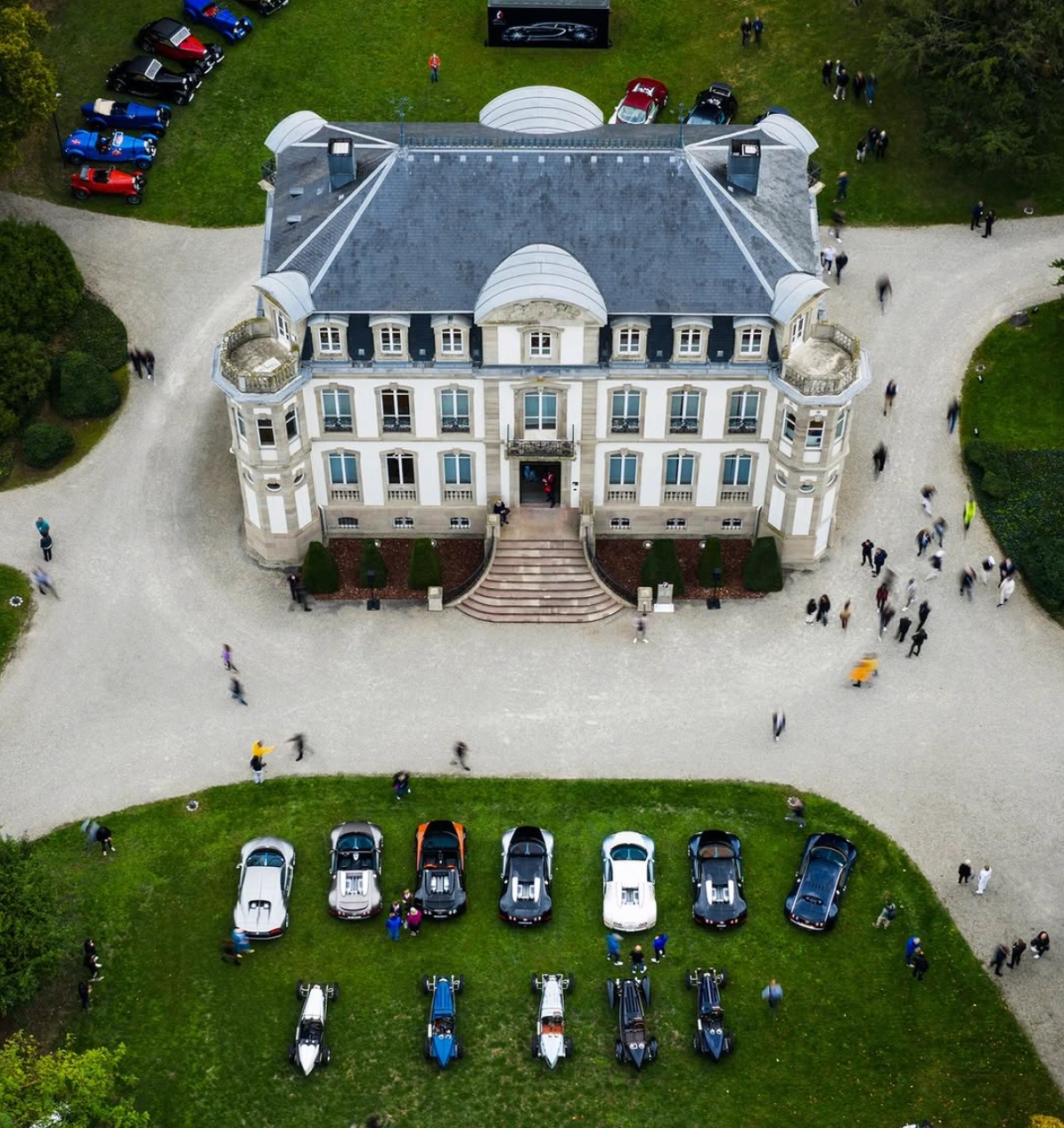
Bugatti marketing concentrates energy where intent is highest. Elite auto shows, concours events, and private showcases create the right conditions for a controlled narrative and high-value conversations. The setting matters because it frames the product as art, not inventory.
This is also where community becomes a marketing channel. Owner gatherings and invitation-only moments keep the brand alive among the people who already hold the keys. In other industries, the equivalent might be private demos, member events, founder salons, or partner-led showcases. When executed well, it becomes a retention engine, not just a new customer channel.
- Premium venues reinforce premium perception.
- Community moments increase loyalty because they turn buyers into advocates.
10. Managing Supply to Match Demand
Scarcity only works when it’s credible. Bugatti success is tied to the discipline of supply management, and the Chiron era showed how the brand publicly reinforced production limits while demand remained high. (Bugatti Newsroom) When the final Chiron was completed, the closing message reinforced the idea that the end was real, not a marketing line. (Bugatti Newsroom)
For other brands, controlled availability can mean capped capacity, limited enrolment, waitlists, or seasonal drops. The key is that the constraint must match your operations. If you cannot deliver premium service at scale, do not pretend you can. Build a system, then protect it.
- Real constraints build trust and long-term demand.
- Clear endpoints turn production into a narrative, not just a manufacturing detail.
View this post on Instagram
A post shared by BUGATTI (@bugatti)
11. After-Sales Service and Brand Loyalty
In ultra-luxury, the sale is only the beginning. The ownership experience becomes a retention strategy, a referral engine, and a reputation safeguard. Bugatti marketing benefits because satisfied owners are more credible than any campaign. Their stories travel within private networks where purchase intent is real.
For businesses, this is the reminder that loyalty is built after checkout. Service design, support, and proactive care are where premium brands either prove their value or lose it. If customer experience is inconsistent, perception drops fast, even if the product is strong.
- Premium support turns buyers into repeat customers.
- Strong service protects brand reputation in high-stakes categories.
12. Evolving the Legacy with Hypercars
Bugatti marketing works because the brand evolves without breaking character. Each new chapter reinforces the same identity: obsessive engineering, controlled access, and visual theatre. The brand’s core framing positions it as a modern hyper sports car marque with more than a century of continuity, which gives it room to change while staying recognisable. (Bugatti)
This is what makes Bugatti success feel stable. The story shifts with technology, but the rules remain constant. Scarcity, craft, and narrative discipline keep the brand’s cultural position intact.
- Evolution works when the identity stays consistent.
- New products land faster when the audience already trusts the brand’s standards.
The Future of Bugatti Marketing
In 2026, the luxury market is shaped by faster news cycles, sharper scrutiny, and buyers who want both heritage and modern relevance. Bugatti marketing is positioned to hold its edge because the brand treats scarcity as policy, craft as proof, and storytelling as a controlled system. The brand’s public communications also continue to reinforce production discipline and milestone credibility, which keeps the aura intact. (Bugatti Newsroom)
The brands that win the next cycle will likely look similar. They will be selective about where they show up, careful about what they promise, and consistent in how they deliver.
- Expect the same emphasis on limited series, bespoke builds, and controlled access.
- The strongest luxury signals will continue to be discipline, not noise.
How Business Owners Can Learn From This and Apply It
From Brand Vision’s expert point of view, the strongest lesson in Bugatti marketing strategy is coherence. Bugatti success is not built on one campaign. It is built on a system where product, messaging, visuals, and customer experience all reinforce the same promise over time.
Start with what you can control. Build a clear identity and protect it in every channel. If your brand feels premium, your website has to feel premium too, which is why many teams invest in a web design company that prioritises performance, clarity, and credibility. Then ensure your story is visible in the details, from your branding agency work to the way you present offers and deliver service.
When you are ready to grow, scale the system, not just the spend. Strong organic visibility comes from consistent publishing and technical foundations, often supported by an SEO agency that builds durable search performance rather than short spikes. If you need a clear starting point, a structured marketing audit can surface where your positioning is strong and where the experience breaks.
- Turn your origin story into proof, not a paragraph.
- Create a flagship offer that defines your standard, then let everything else ladder up to it.
- Control availability if capacity is limited, and make the constraint real.
- Make your craftsmanship visible through process, product details, and consistent presentation.
- Design your customer journey like a premium experience, not a funnel.
- Build growth on systems, including measurement, content, and a site that converts.
.webp)



%2520(1).png)