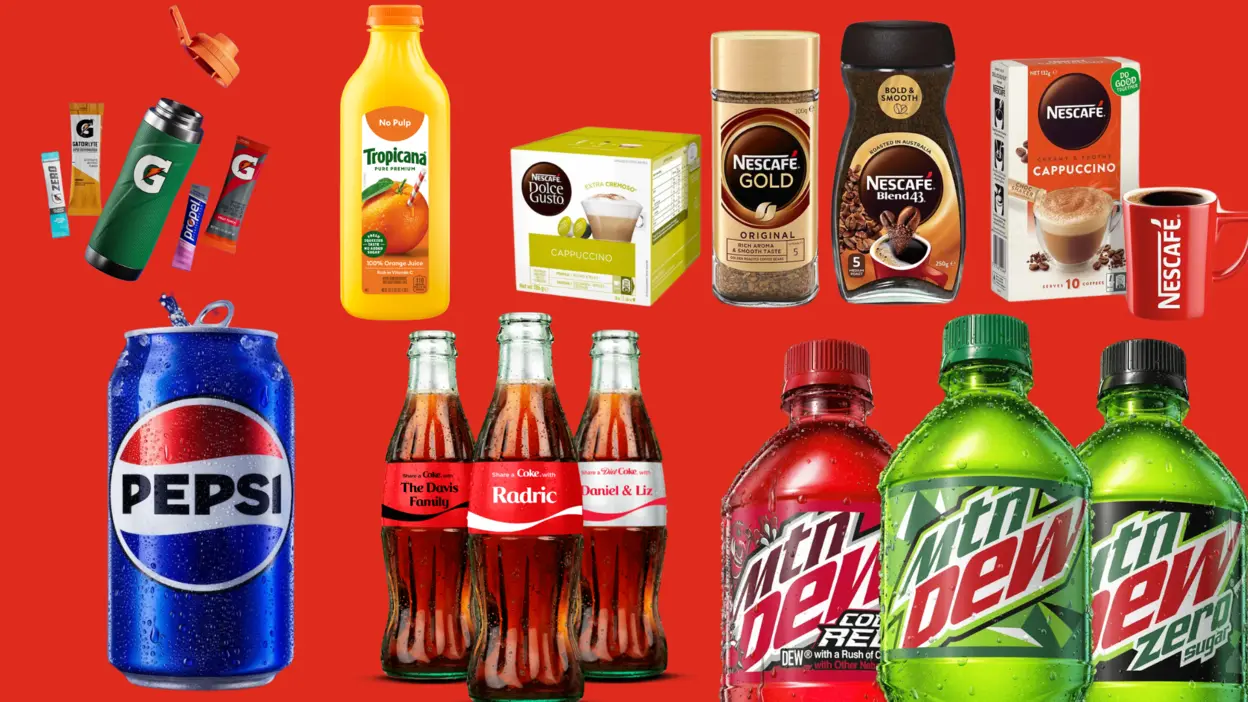
The biggest beverage brands in the world are useful case studies because scale comes from more than the recipe. Distribution, category position, recognizable assets, product innovation, and years of consistent brand building all matter. This article looks at 15 major non-alcoholic beverage brands using a mix of brand value, parent-company revenue, category scale, and global reach. Those measures are not directly comparable, so the list is not presented as a single-metric ranking. Where newer 2026 data is available, it replaces older figures; full-year company revenue figures generally refer to 2025, the latest complete annual period.
Key takeaways
- Brand Finance's 2026 Food & Drinks report values Coca-Cola at $46.1 billion, keeping it the world's most valuable non-alcoholic drinks brand.
- Nongfu Spring rose to $15.3 billion in brand value and became the world's strongest non-alcoholic drinks brand by Brand Strength Index.
- Functional drinks remain a major value pool: Red Bull reached $12.3 billion in brand value, Monster $9.1 billion, and Gatorade $9.0 billion in 2026.
- Nescafé remains the most valuable coffee and tea brand, reaching $5.6 billion in 2026.
- Company revenue and individual brand value tell different stories. PepsiCo reported $93.9 billion in 2025 company revenue, while The Coca-Cola Company reported $47.9 billion.
Nespresso
Scale and latest figures
- CHF 6.4 billion (about $7 billion) in sales, 2024
- The brand that created the premium home espresso category
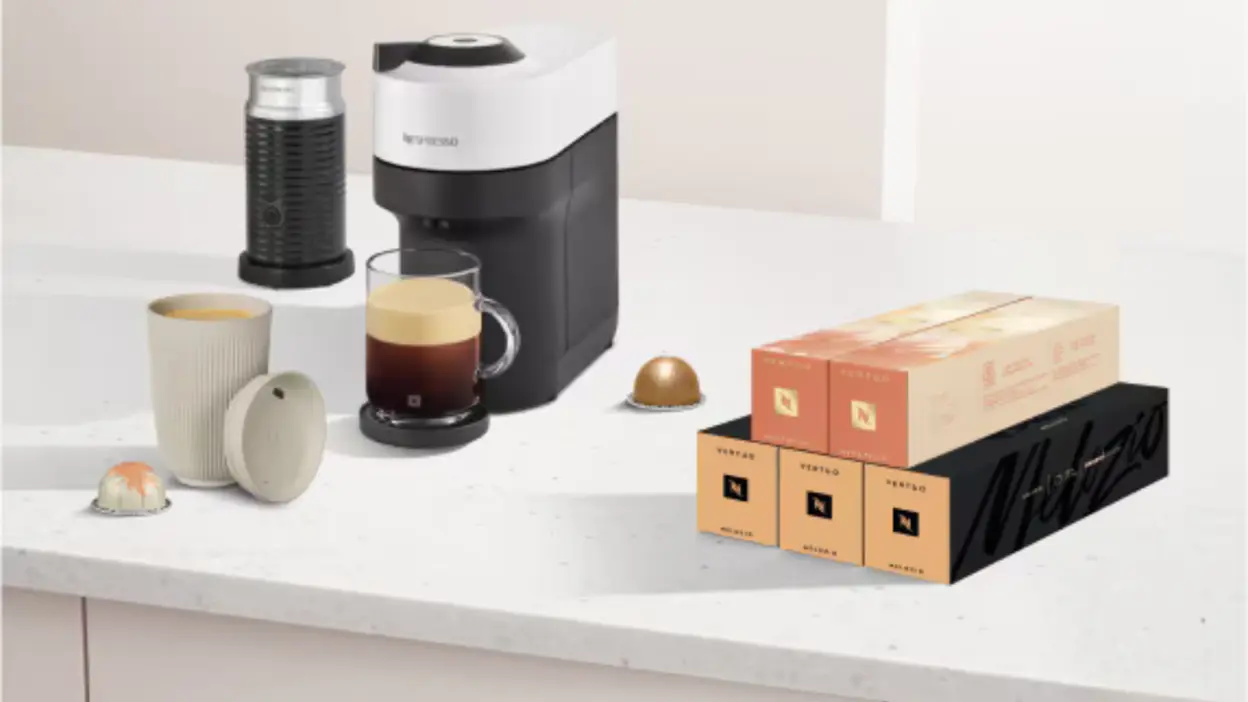
Introduced in 1986 by Nestlé, Nespresso pioneered single-serve espresso pods. It stayed niche until the 2000s, when sleek machines, a club membership model, and celebrity ambassadors like George Clooney turned it into the aspirational name in home coffee. Nespresso did not invent better coffee. It built a luxury identity around convenience, then defended it with boutiques, members-only releases, and a steady cadence of new capsule blends. Backed by Nestlé's distribution and a visible recycling program, it holds high margins in a category full of cheaper pods.
Tropicana
Scale and latest figures
- Long-established orange-juice brand in North America and Europe
- Now part of Tropicana Brands Group, with PepsiCo holding a minority interest
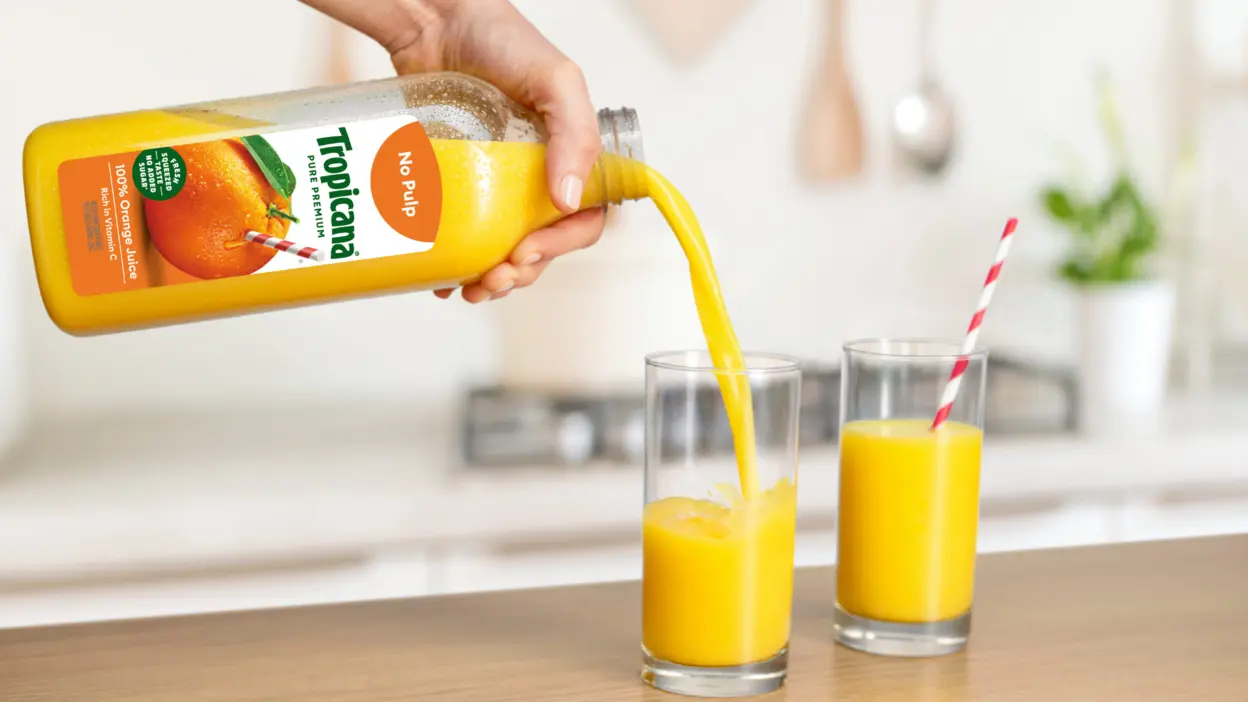
Founded in 1947 by Anthony Rossi, Tropicana changed orange juice with flash pasteurization. PepsiCo bought it in 1998 and scaled it worldwide. In 2021, PepsiCo sold a majority stake to PAI Partners, forming Tropicana Brands Group, and kept a minority share. The brand still runs on its straight-from-the-grove promise and decades of consistent brand equity. Sugar concerns and private-label competition have squeezed the category, so Tropicana leans on reduced-sugar lines like Trop50 and new blends to hold its place. Its packaging history is also a cautionary tale: the 2009 redesign that stripped the orange-and-straw was reversed within weeks after sales fell. It remains a useful rebranding case study because recognition was disrupted faster than the new system could rebuild it.
7Up
Scale and latest figures
- Global lemon-lime soda with split ownership by geography
- Keurig Dr Pepper manages 7Up in North America; PepsiCo handles the brand in many international markets
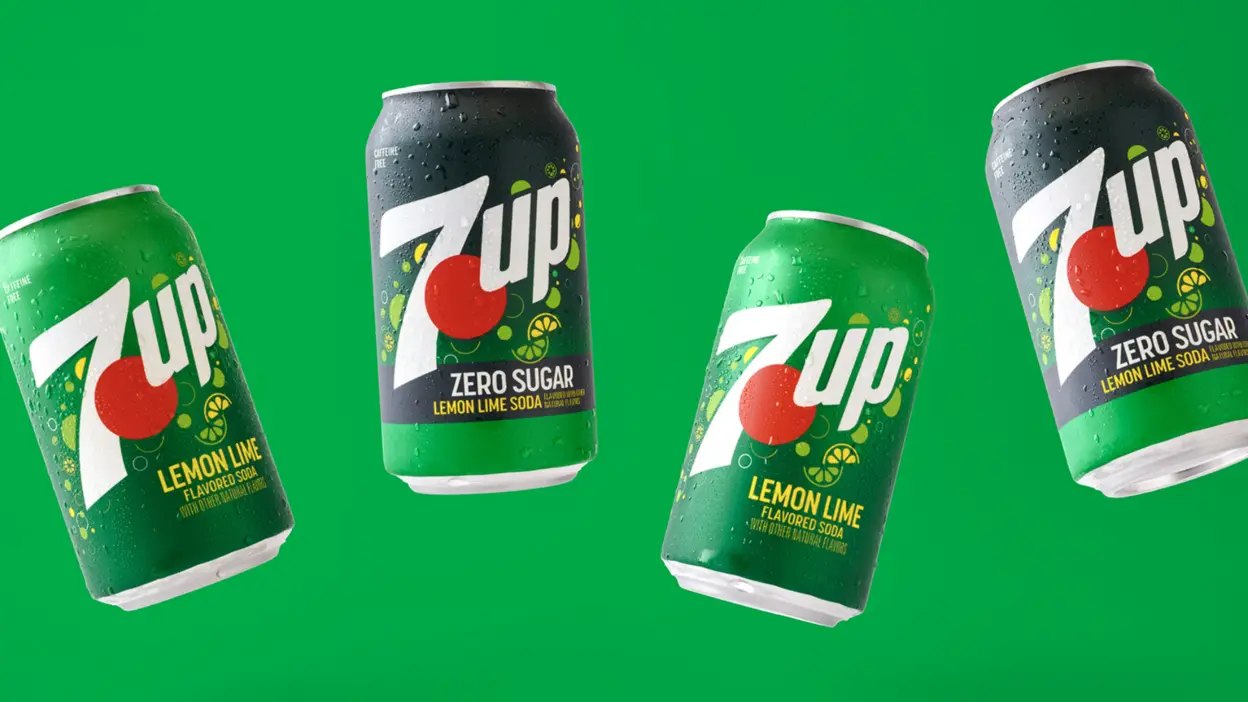
7Up launched in 1929 under the unwieldy name Bib-Label Lithiated Lemon-Lime Soda. It found its footing as the Uncola, a crisp alternative to the cola wars. Ownership now splits by geography: Keurig Dr Pepper runs 7Up in North America, PepsiCo in many international markets. Sprite outsells it at home, but 7Up performs well abroad on PepsiCo's distribution. Sugar-free variants, localized flavors, and recurring brand refreshes keep a light citrus taste in front of a loyal base.
Fanta
Scale and latest figures
- One of The Coca-Cola Company's global sparkling brands
- A 2023 redesign standardized Fanta's visual system across markets
Fanta started in 1940s Germany, created when wartime trade embargoes cut off Coca-Cola's syrup supply. After the war, Coca-Cola took it global, and Orange Fanta launched in Italy in 1955. Bright color and fruit-forward flavors made it a hit, especially outside North America. Its playful, youth-first positioning travels well from Europe to Africa, helped by a constant rollout of local flavors like Shokata and Fruit Punch. A 2023 redesign unified Fanta's packaging worldwide, giving a sprawling flavor range one graphic design system.
Mountain Dew
Scale and latest figures
- Long-running PepsiCo soft-drink brand with a strong U.S. presence
- Marketing remains closely tied to gaming, action sports, and youth culture
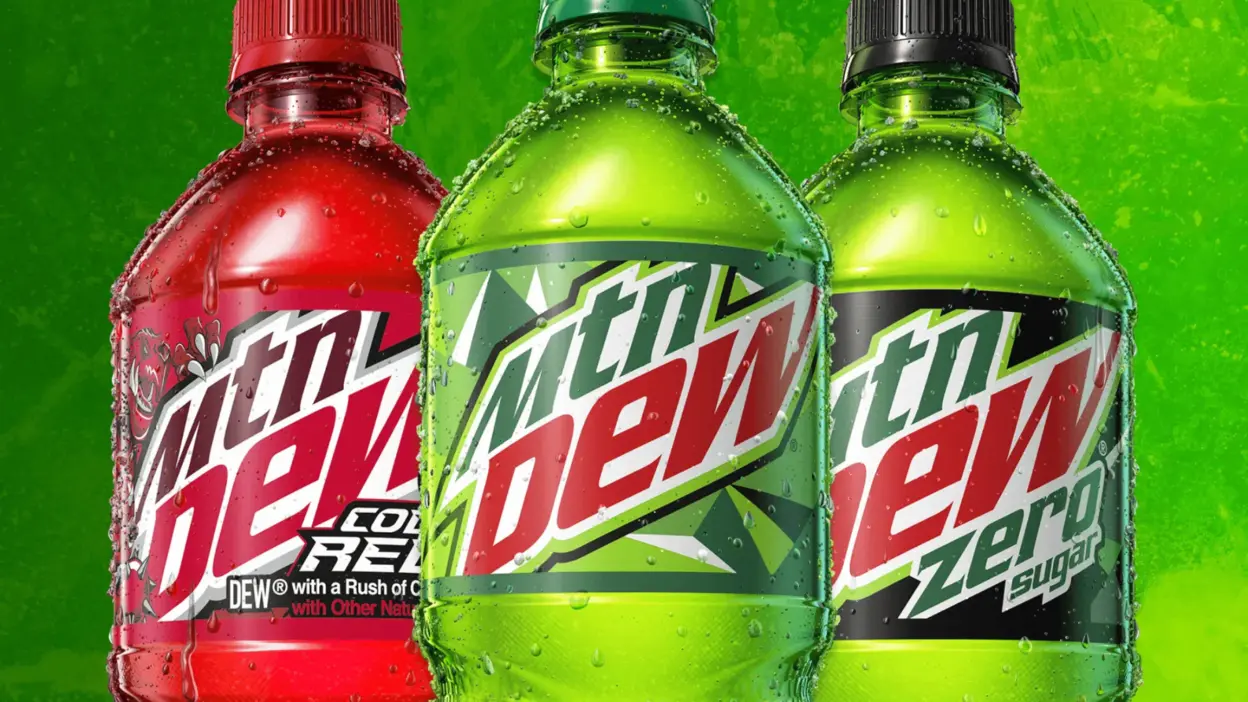
Mountain Dew started in 1940 as a whiskey mixer in Tennessee and took off after PepsiCo acquired it in 1964. Neon-green color, higher caffeine, and the Do the Dew extreme-sports marketing built a fan base loyal enough to name itself Dew Nation. The brand's edge comes from where it shows up: skateboarding, gaming, and youth culture. Flavor experiments like Code Red and Baja Blast, plus gaming tie-ins and energy-style line extensions, keep it relevant as the category crowds.
Nongfu Spring
Scale and latest figures
- Brand value of $15.3 billion in 2026, up 38 percent year on year
- The world's strongest non-alcoholic drinks brand by Brand Strength Index in 2026
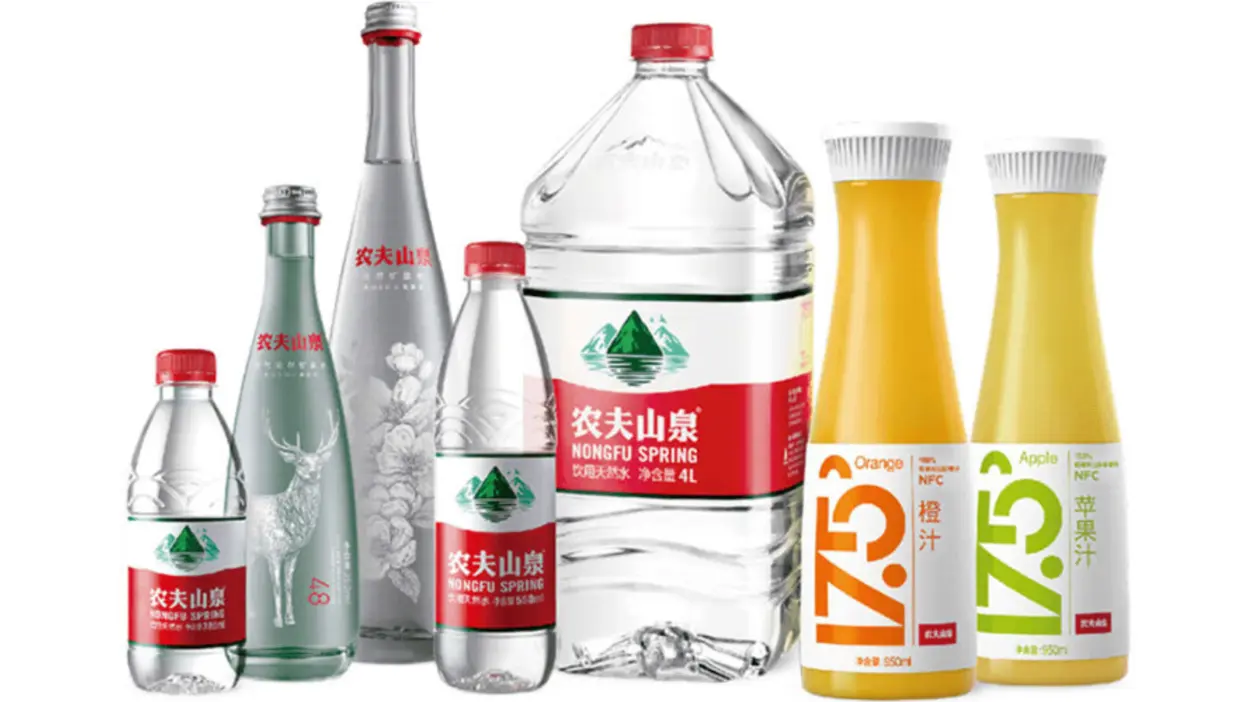
Founded in 1996, Nongfu Spring built China's largest bottled-water brand by sourcing from named natural springs. Its 2020 IPO made founder Zhong Shanshan one of China's richest people. The brand markets its slightly sweet water as pure and safe, a strong pitch in a market sensitive to safety, and has extended into tea, juice, and vitamin drinks without diluting the water line. The number that matters here is the climb: Brand Finance valued Nongfu Spring at $15.3 billion in 2026, up 38 percent year on year, and ranked it ahead of Coca-Cola on brand strength. That growth shows how quickly beverage value is expanding beyond the traditional U.S. and European category leaders.
Lipton
Scale and latest figures
- The world's largest tea brand, hot and iced
- Sold to CVC Capital Partners in 2022 as part of a roughly €4.5 billion tea-business deal
Lipton began in 1890 with Sir Thomas Lipton's push to make tea affordable. It became Unilever's flagship tea line, spanning black tea bags, herbal blends, and ready-to-drink iced tea through a long partnership with PepsiCo. One correction is worth making here, because the common version gets it backwards: Unilever did not buy Lipton in 2022. It sold it. In a deal completed on 1 July 2022, Unilever divested its global tea business, including Lipton, to CVC Capital Partners for about €4.5 billion, roughly $5 billion. The business now trades as Lipton Teas and Infusions and remains the largest tea operation in the world, sold in more than 100 countries. The Pepsi Lipton ready-to-drink joint venture was kept separate from that sale.
Dr Pepper
Scale and latest figures
- Keurig Dr Pepper, its parent, reported net sales of $16.6 billion in 2025
- Parent-company net sales grew 8.2 percent year over year in 2025
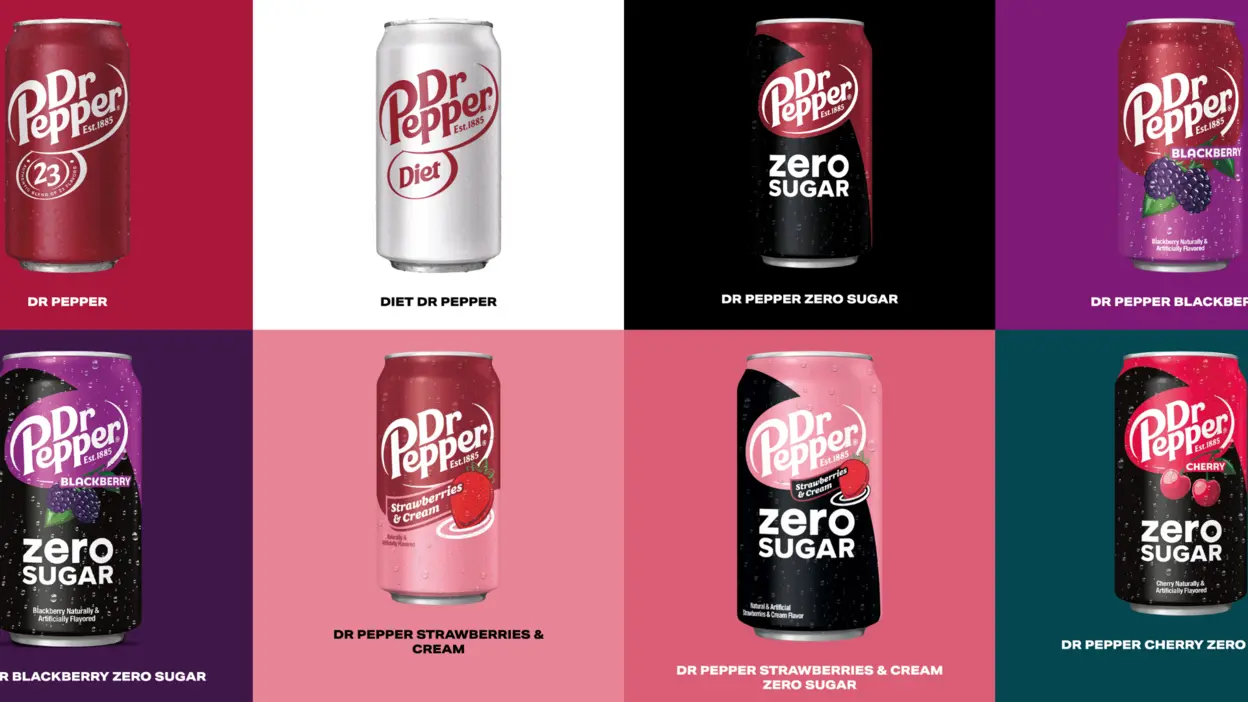
Dr Pepper dates to 1885 in Waco, Texas, a year older than Coca-Cola. Its 23-flavor formula and One of a Kind positioning have always kept it a step outside the cola fight. After several corporate moves it landed inside Keurig Dr Pepper, which reported $16.6 billion in net sales for 2025. The brand holds a devoted base through its odd, spiced cherry-vanilla taste and culturally specific campaigns like Fansville for college football, with limited runs such as Strawberries and Cream keeping it in the conversation. The more useful current scale marker is the parent company: Keurig Dr Pepper reported $16.6 billion in 2025 net sales, up 8.2 percent year over year.
Sprite
Scale and latest figures
- A major global lemon-lime brand within The Coca-Cola Company
- The Coca-Cola Company posted $47.9 billion in revenue in 2025
Sprite arrived in 1961 as Coca-Cola's crisp lemon-lime answer to 7Up. Youth-first marketing like Obey Your Thirst made it the company's leading clear soda, and it now sells in close to 200 countries, with real strength in Asia and Africa. The formula is simple and the identity has barely moved in decades: cool, refreshing, caffeine-free. Seasonal flavors and steady campaigns keep interest up, and the 2022 switch from green to clear bottles added a recycling angle. Sprite remains one of Coca-Cola's major sparkling brands, inside a company portfolio that generated $47.9 billion in 2025 revenue.
Gatorade
Scale and latest figures
- Brand value of $9.0 billion in 2026, up 21 percent year on year
- One of Brand Finance's three largest functional-drink brands by value
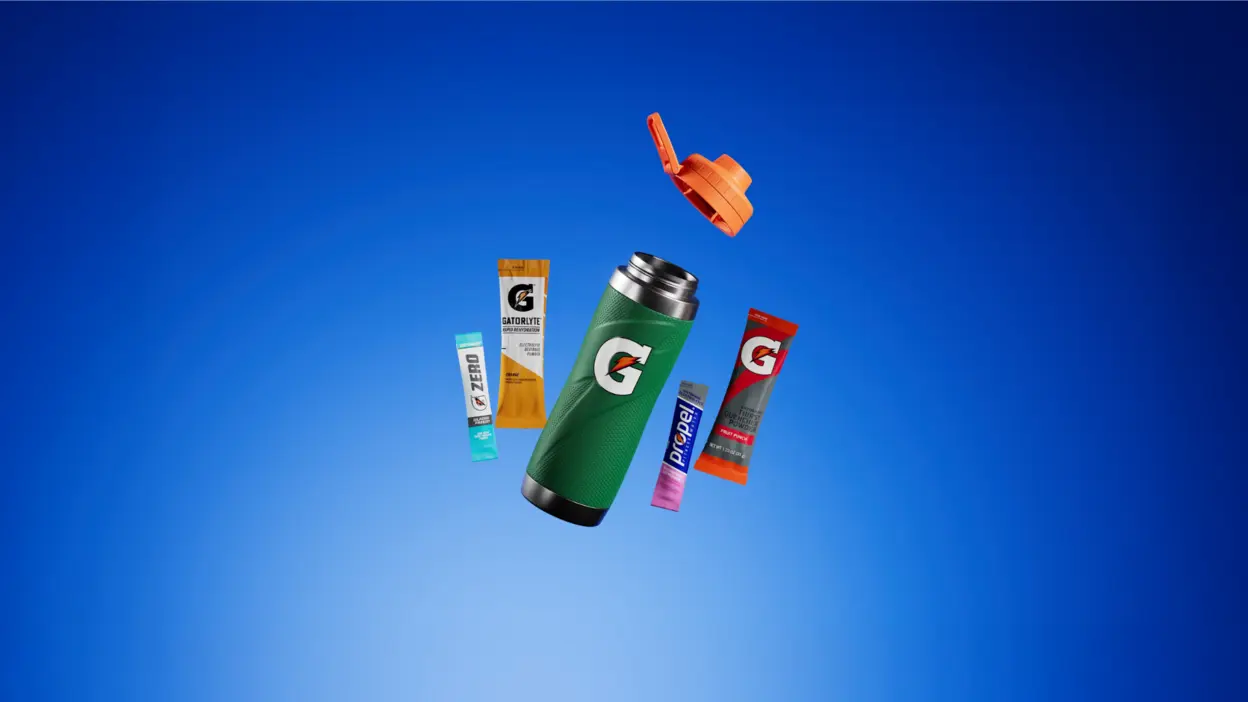
Gatorade was invented in 1965 at the University of Florida to rehydrate football players, and the Gators' success turned it into a phenomenon. The Gatorade shower made it shorthand for winning. PepsiCo picked it up through the Quaker Oats acquisition in 2001. Gatorade remains a major sports-drink brand, but the category is more competitive than it once was. Brand Finance valued Gatorade at $9.0 billion in 2026, up 21 percent year on year, placing it just behind Monster among functional-drink brands by value. Line extensions such as G2, Zero, and Fast Twitch show how the portfolio keeps widening the number of occasions the Gatorade name can serve.
Monster Energy
Scale and latest figures
- Monster Beverage net sales of $8.29 billion in 2025, up 10.7 percent
- Brand value of $9.1 billion in 2026, up 4 percent year on year
Monster Energy launched in 2002 out of Hansen's Natural, with a black-and-green can and more caffeine than the field. Unleash the Beast marketing, plus deep involvement in motorsports, esports, and action sports, built a young, committed following. Coca-Cola's minority stake and distribution deal opened the world to it. Monster reported $8.29 billion in net sales for 2025, up 10.7 percent. Brand Finance then valued the Monster brand at $9.1 billion in 2026. It competes in a similar cultural territory to Red Bull, using athletes, motorsports, gaming, and action sports as recurring brand platforms.
Nescafé
Scale and latest figures
- Brand value of $5.6 billion in 2026, up 20 percent year on year
- Nescafé remained one of Nestlé's leading coffee growth contributors in 2025
Nescafé launched in 1938 as an instant coffee built to use surplus Brazilian beans, and U.S. military rations in the Second World War spread it worldwide. The name fuses Nestlé and café. Today it is the leading instant coffee across much of Asia, Latin America, and Europe, sold in more than 180 countries. Its advantage is the one most of this list shares: availability and convenience, granules that dissolve anywhere and sit on nearly every shelf. Nestlé keeps the line moving with 3-in-1 mixes, premium Gold tiers, ready-to-drink products, and cold-coffee formats. Nestlé's 2025 results identified Nescafé as a leading contributor to coffee growth, while Brand Finance valued the brand at $5.6 billion in 2026. These three companies, Nestlé, PepsiCo, and Coca-Cola, have topped global food and beverage rankings for years, though that particular tally is now dated.
Red Bull
Scale and latest figures
- 2025 group turnover of €12.196 billion, up 8.6 percent
- Brand value of $12.3 billion in 2026, up 27 percent year on year
Red Bull started in 1987, when Austrian co-founder Dietrich Mateschitz adapted a Thai tonic called Krating Daeng for Western taste and, in doing so, created the energy drink category. Red Bull Gives You Wings and a slim silver can did the rest. The real model is not a drink company. Red Bull behaves like a media company that happens to sell a can, owning the events, films, and teams, from Formula 1 to football clubs, that its audience already watches, then placing the product inside the content rather than interrupting it. Company figures show 2025 turnover of €12.196 billion on 13.969 billion cans sold across 178 countries. Brand Finance valued Red Bull at $12.3 billion in 2026, up 27 percent year on year. Those are different measures, but together they show why Red Bull remains the category reference point for both commercial scale and brand strength. This is beverage marketing at its most disciplined.
Pepsi
Scale and latest figures
- PepsiCo's 2025 net revenue reached $93.9 billion
- The Pepsi brand is worth $22.5 billion, the second-strongest soft drink brand
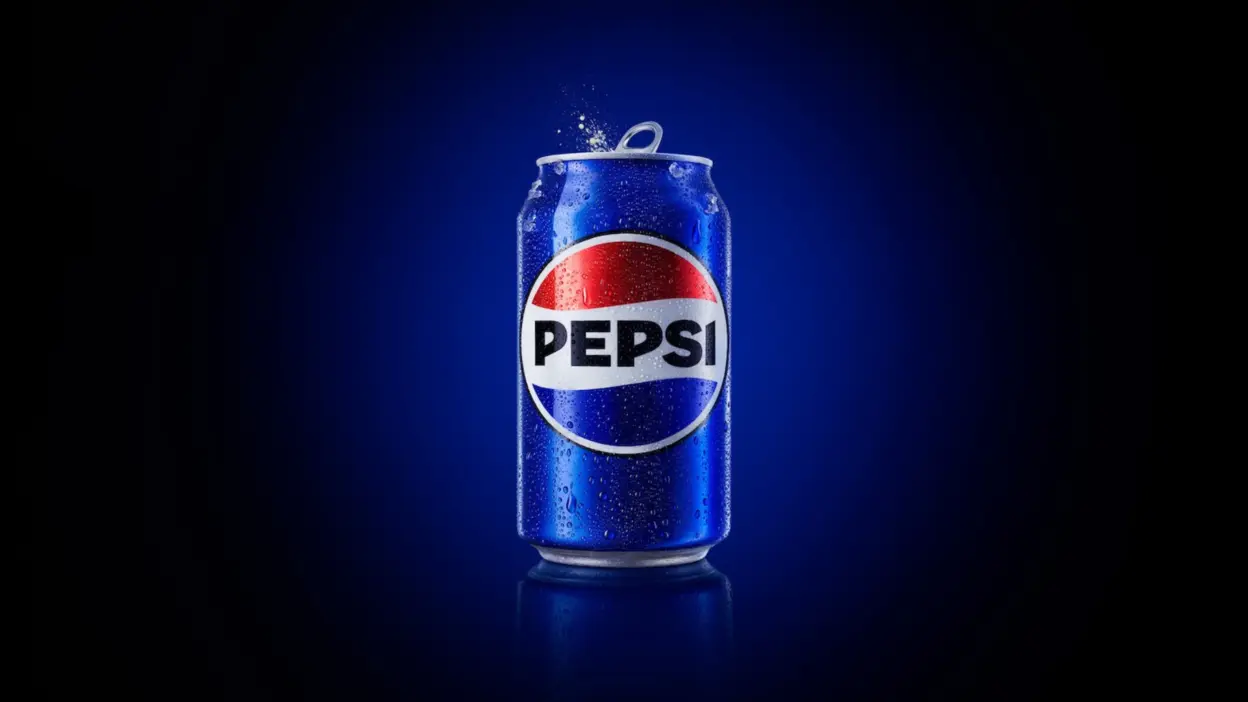
Pepsi was created in 1898 by Caleb Bradham as Pepsi-Cola and spent the twentieth century as Coca-Cola's main rival in the cola wars. The Pepsi Generation campaigns and the blind-tasting Pepsi Challenge cast it as the younger, hipper choice, and constant reinvention, from new logos to music and sports tie-ins to flavors like Mango and Nitro Pepsi, has kept that posture. Two numbers separate the brand from the company. The Pepsi brand is worth $22.5 billion on Brand Finance's 2025 ranking, second behind Coca-Cola. But the parent, PepsiCo, posted $93.9 billion in revenue in 2025, well above The Coca-Cola Company, because PepsiCo combines beverages with a large convenient-food portfolio. Brand Vision's guide to parent companies behind familiar brands explains why company revenue and individual brand performance should not be treated as the same metric. By market value across the beverage sector, the two remain the pair everyone else measures against.
Coca-Cola
Scale and latest figures
- Brand value of $46.1 billion in 2026, still the world's most valuable non-alcoholic drinks brand
- The Coca-Cola Company posted $47.9 billion in revenue in 2025
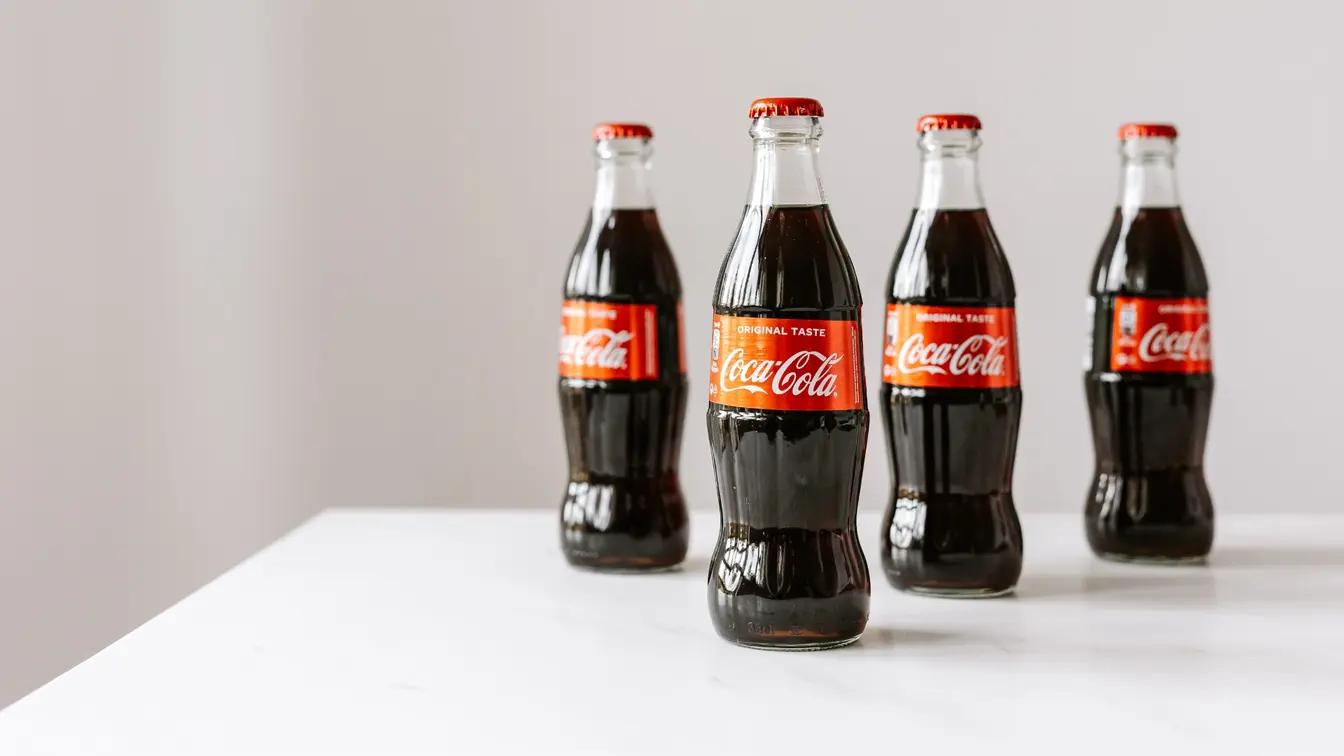
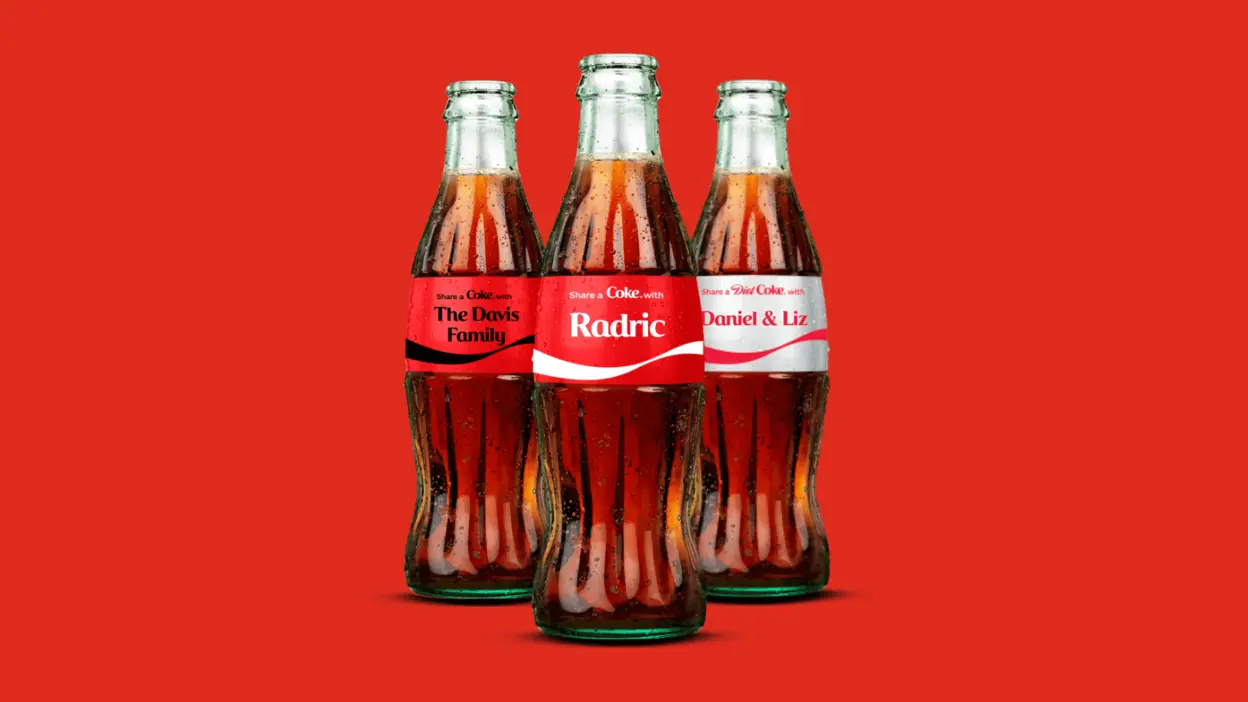
Coca-Cola launched in 1886 as a soda-fountain drink mixed by pharmacist John Pemberton, and over a century it became the most recognized brand on earth, tied to nostalgia marketing from the Santa Claus ads to the 1971 Hilltop campaign. Its moat is distribution, not flavor: Coca-Cola reaches more than 200 countries and serves roughly 2.2 billion drinks a day. That scale is why a product anyone could imitate stays on top. Brand Finance valued the Coca-Cola brand at $46.3 billion in 2025. Its 2026 Food & Drinks report kept Coca-Cola in first place at $46.1 billion even as Nongfu Spring overtook it on brand strength. The company reported $47.9 billion in revenue for 2025. For companies studying the commercial value of long-term branding, Coca-Cola remains a useful case because distribution and recognizable assets have compounded over decades. Plenty of ranked lists of the biggest soda brands put it first, and the financial record explains why.
Frequently Asked Questions
What are the biggest beverage brands in the world?
Major global beverage brands include Coca-Cola, Pepsi, Red Bull, Nescafé, Monster Energy, Gatorade, Sprite, Dr Pepper, Lipton, Nongfu Spring, Mountain Dew, Fanta, 7Up, Tropicana, and Nespresso. They span soft drinks, energy drinks, coffee, tea, water, sports drinks, and juice. Their scale is measured differently, so individual brand value, brand sales, and parent-company revenue should not be combined into one league table.
Which beverage brand is the most valuable in the world?
Coca-Cola remains the most valuable non-alcoholic drinks brand in Brand Finance's 2026 ranking at $46.1 billion. Nongfu Spring reached $15.3 billion and became the world's strongest non-alcoholic drinks brand by Brand Strength Index.
What are the largest soft drink companies in the world?
PepsiCo, The Coca-Cola Company, and Keurig Dr Pepper are among the largest public companies with major soft-drink portfolios. PepsiCo reported $93.9 billion in 2025 revenue, The Coca-Cola Company $47.9 billion, and Keurig Dr Pepper $16.6 billion. Those are company-level figures, not revenue attributable only to their flagship soda brands.
Which energy drink brand is the biggest?
Red Bull remains the functional-drink category leader in Brand Finance's 2026 ranking at $12.3 billion in brand value, ahead of Monster at $9.1 billion. Red Bull also sold 13.969 billion cans in 2025, while Monster Beverage reported $8.29 billion in 2025 company net sales.
What makes a beverage brand successful globally?
Distribution reach and a consistent identity, more than the product itself. The biggest beverage brands sell almost everywhere, hold a clear meaning for decades, and adapt only at the edges with local flavors, sugar-free options, and sustainable packaging. A recipe can be copied quickly. The distribution network and the decades of consistent meaning cannot.
The pattern behind the biggest beverage brands
Across these brands, the recurring advantage is not one campaign or one formula. It is the ability to keep product, packaging, distribution, and brand meaning working together for years. That is why the strongest beverage brands can expand into new formats without becoming unrecognizable.
For beverage companies reviewing identity, portfolio structure, or packaging, you can contact Brand Vision to discuss the next step. For companies building specifically in Quebec, our branding agency in Montreal page outlines regional support.