
Procurement has long sat at a structural disadvantage: access to large volumes of data but limited capacity to act on it quickly. AI in procurement changes that equation. By converting fragmented spend records, supplier histories, and contract repositories into structured intelligence, AI enables procurement functions to operate with the analytical precision that finance and operations already expect from them.
That shift carries consequences well beyond efficiency. Procurement teams with AI-driven visibility can identify consolidation opportunities, detect pricing exposure, and model risk scenarios before disruptions occur. For organizations building out their B2B marketing and operational infrastructure simultaneously, the procurement function’s ability to generate structured insight from unstructured data becomes a meaningful competitive input, not just a back-office improvement.
The trajectory is clear. The role of AI in modern procurement is expanding from transactional automation toward predictive decision support, touching sourcing cycles, supplier ecosystems, contract governance, and compliance reporting. The functions that move early establish a structural advantage. Those that delay inherit compounding inefficiency.
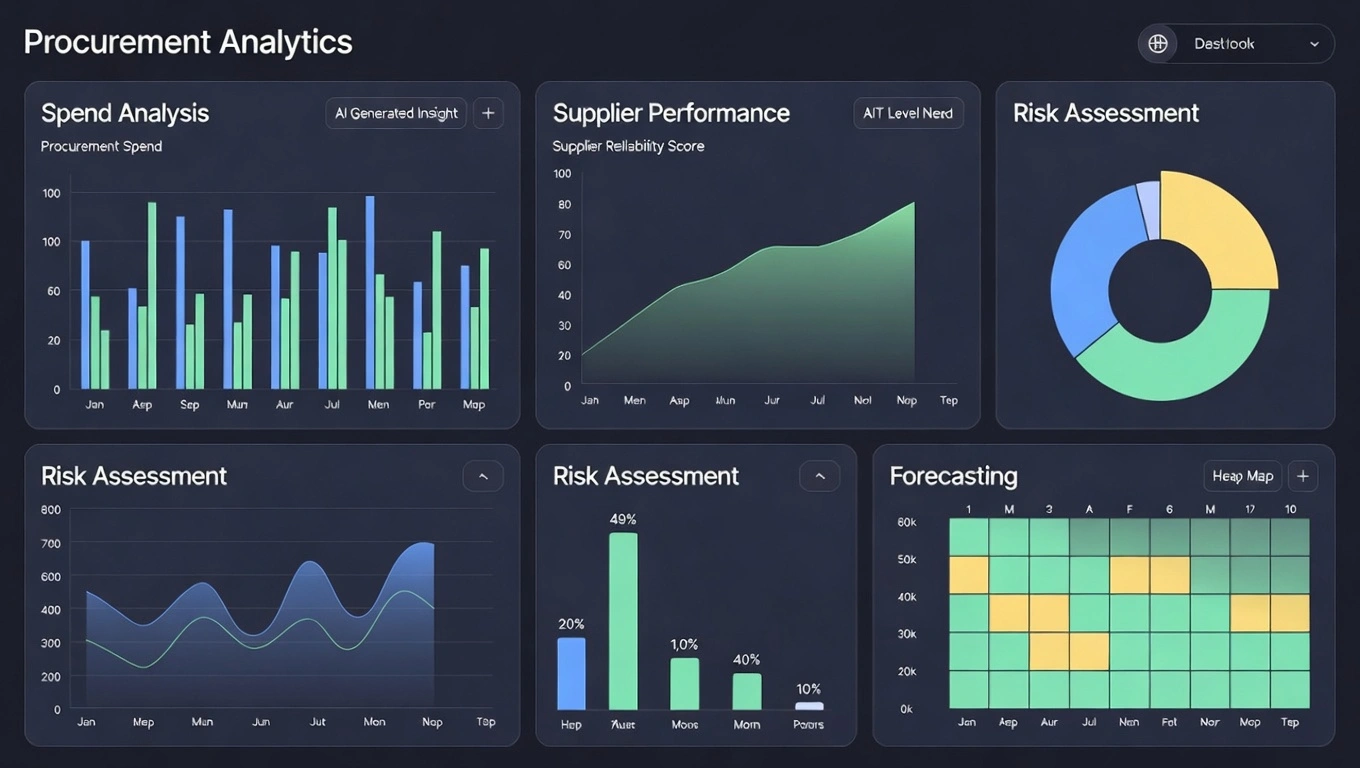
Spend Visibility Is the Foundation, Not the Goal
Procurement functions that cannot answer basic questions about where money goes cannot answer more sophisticated ones about how to optimize it. Spend data in most organizations remains fragmented across ERP systems, procurement platforms, and manual records maintained at the category or business-unit level.
AI-driven classification tools address this by normalizing supplier names, categorizing transactions at scale, and flagging anomalies that manual review would miss. The result is a reliable spend baseline. Research documented in 59% of CPOs believe applying generative AI to predictive spend and sourcing analytics is a high priority, reflecting how central spend intelligence has become to procurement’s strategic credibility.
That credibility matters. A procurement function with clean, current spend data earns a different kind of conversation with finance and executive stakeholders. It moves from reporting what was spent to advising on what should be spent differently. AI in procurement makes that transition operationally viable.
From Reactive Risk Response to Predictive Supplier Intelligence
Traditional supplier risk management is built on lagging indicators: annual reviews, supplier scorecards updated quarterly, and risk registers that reflect conditions from months ago. By the time a single-source dependency or financial instability surfaces through these processes, the exposure has already compounded.
AI changes the detection window. By integrating internal supplier performance data with external signals including market volatility indices, geopolitical monitoring, and financial health indicators, predictive models surface concentration risk, delivery instability, and pricing exposure before they reach operational impact.
The practical output is not a longer risk report. It is earlier, more specific intervention. A procurement team that identifies over-dependence on a single-region supplier three months before a disruption has strategic options. A team that identifies it after the fact has only cost-control ones.
Intelligent Sourcing and Contract Analytics: Where AI in Procurement Compounds
Sourcing cycles consume significant procurement capacity through documentation, compliance checking, and proposal evaluation that are fundamentally data-matching tasks. AI addresses each of these directly. Automated tools generate draft RFPs, evaluate supplier responses against defined criteria, and surface discrepancies across competing proposals.
For lower-risk purchases, rule-based automation routes approvals within established policy guardrails, reducing cycle time without requiring procurement staff involvement. That capacity returns to the higher-value work: complex supplier negotiations, strategic category management, and cross-functional alignment with finance and operations.
Contract data amplifies this further. Most organizations store contract information in formats that resist analysis, making it difficult to track renewal dates, identify unfavorable pricing clauses, or surface compliance risk at portfolio scale. AI-powered contract management tools extract structured data from large repositories, converting what was an administrative function into a source of financial and risk intelligence. Missed renegotiation windows and undetected liability clauses are not strategy failures in isolation. They are symptoms of a contract management process that cannot operate at the required scale.
Supplier Performance Monitoring and Negotiation Preparation
Annual supplier reviews provide a single, backward-looking data point on relationships that change continuously. Dynamic supplier profiling, enabled by AI, integrates operational metrics, delivery history, ESG indicators, and market signals into a continuously updated view of each supplier relationship.
Three dimensions of value emerge from this:
- Segmentation precision: Suppliers can be tiered based on spend, criticality, ESG exposure, and historical reliability rather than general category assumptions. Strategic suppliers receive differentiated engagement. Lower-tier vendors are managed through standardized workflows. The result is a supplier ecosystem with clearer governance.
- Negotiation preparation: AI supports scenario modeling using historical pricing, market indices, and volume data. Procurement teams enter negotiations with documented leverage rather than assumptions. For repeat purchases, automated benchmarking confirms whether current pricing is consistent with market conditions.
- Internal stakeholder alignment: Conversational AI tools integrated into procurement portals guide employees through requisition processes, reducing errors and incomplete submissions. Internal stakeholders interact with procurement as a structured, functional resource rather than a manual approval bottleneck.
ESG Integration and Compliance Monitoring at Scale
Environmental and regulatory reporting requirements have expanded materially, and the trajectory continues upward. Manual data collection from supplier disclosures, audit reports, and certifications cannot scale with those requirements. The process becomes a constraint, not a function.
AI addresses the structural problem by extracting relevant ESG indicators from supplier documentation at volume, feeding them into reporting frameworks that support executive updates and regulatory submissions. For procurement leaders, this creates a different kind of value: sustainability metrics become a standard input to sourcing decisions rather than a compliance exercise conducted after the fact. Digital procurement systems designed to incorporate this data enable procurement to report on supplier carbon exposure, diversity metrics, and regulatory adherence without parallel manual processes.
The downstream effect is brand coherence as well as compliance accuracy. Organizations that can demonstrate structured ESG governance across their supplier base carry that credibility externally.
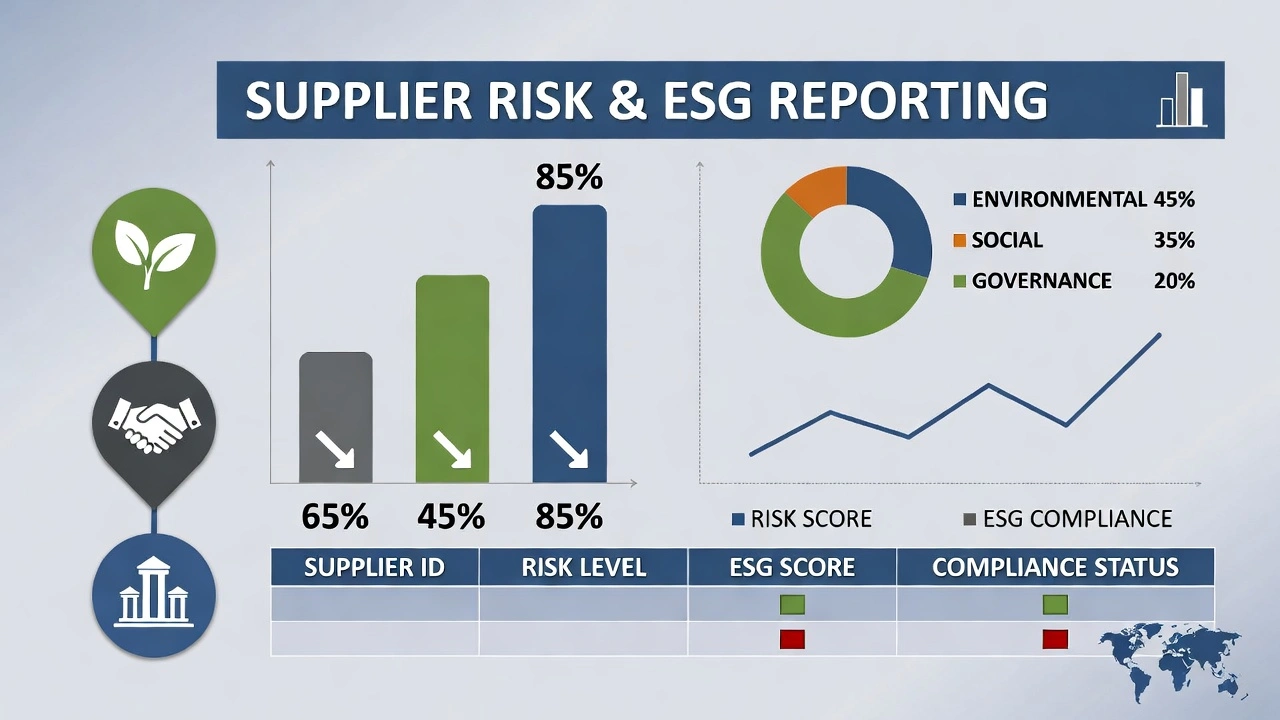
Procurement functions building ESG capacity alongside sourcing and supplier management capabilities are effectively doing the same work that brand strategy practitioners do at the organizational level: aligning operational decisions with the values the organization is committed to communicating externally. When those two disciplines move in coordination, the credibility compounds.
Building an AI in Procurement Roadmap That Holds
The organizations realizing the fastest returns from AI in procurement share a structural approach: they start with narrow, high-impact use cases, document measurable outcomes, and use those outcomes to build internal support for broader adoption.
Spend classification and contract analysis are the most defensible entry points. Both deliver visible, verifiable value quickly, and both produce cleaner data that accelerates every subsequent AI application. Organizations that begin here build a foundation. Those that attempt procurement-wide AI transformation without that foundation inherit integration debt.
Scaling requires more than technology selection. It requires clean data pipelines, governance standards, and change management that brings procurement professionals along rather than positioning AI as a replacement for their judgment. Ethical data use and accountability remain central throughout.
The trajectory of AI in procurement is not toward automation for its own sake. It is toward a procurement function that operates with the analytical capacity, risk awareness, and strategic influence that the function’s structural position has always warranted. The organizations that close that gap now compound the advantage.
For organizations assessing where to begin, a marketing audit or procurement capability review structured around these dimensions can clarify where data quality, tooling, and process governance need to be addressed before AI delivers against its potential.
The Procurement Function Has Always Had the Data. AI Gives It the Capacity to Use It.
Procurement’s value has always been constrained by the gap between available data and the capacity to act on it. AI in procurement closes that gap systematically, across spend visibility, risk detection, sourcing efficiency, contract governance, and ESG reporting. The function that integrates these capabilities moves from cost centre to decision engine. That repositioning is not incidental. It is the structural outcome of applying intelligence to the data that procurement already holds.


%2520(1).png)






