
AI agents for marketing teams are no longer experimental. In 2025, platforms like Microsoft Copilot, Anthropic's Claude, and Google Gemini have moved from novelty tools into structured workflow components that high-performing agencies are integrating at scale.
The shift is significant. AI agents for marketing teams are not just autocomplete tools or chatbots. They are systems capable of planning, executing, and iterating on marketing tasks with contextual awareness, brand alignment, and measurable output. McKinsey's research on agentic AI estimates that effective and scaled agent deployments could produce productivity improvements of three to five percent annually and lift growth by ten percent or more. For agency leaders, founders, and marketing directors managing complex campaigns and growing client portfolios, understanding how to deploy these agents strategically is now a core operational competency.
This guide breaks down how each major AI agent platform performs across real agency workflows, where each tool creates the most structural leverage, and how to build an integrated AI agent stack that strengthens team performance without compromising brand integrity.
What Are AI Agents for Marketing Teams?
AI agents for marketing teams are software systems that can perform multi-step marketing tasks autonomously or semi-autonomously based on instructions, context, and defined goals. Unlike a standard AI chat tool, an agent can reason through a problem, use external tools, retain context across tasks, and produce structured outputs that integrate directly into marketing workflows.
In practical terms, AI agents for marketing teams can:
- Research and summarize competitor positioning and market landscape
- Draft and iterate on long-form content at scale with brand consistency
- Analyze campaign performance data and generate strategic recommendations
- Automate SEO audits and identify content optimization opportunities
- Produce structured briefs, positioning frameworks, and strategy documents
The distinction between a basic AI assistant and a true marketing agent is the depth of reasoning, the ability to use contextual inputs, and the capacity to execute across connected systems. HubSpot's State of Marketing research confirms that AI adoption among marketing teams has accelerated substantially, with teams reporting meaningful productivity gains across content, campaign management, and data analysis. As Brand Vision has observed working with ambitious marketing teams, the agencies seeing the most measurable gains are those treating AI agents for marketing teams as structural infrastructure, not optional experimentation.
.webp)
Microsoft Copilot: AI Integration Into the Tools Marketing Teams Already Use
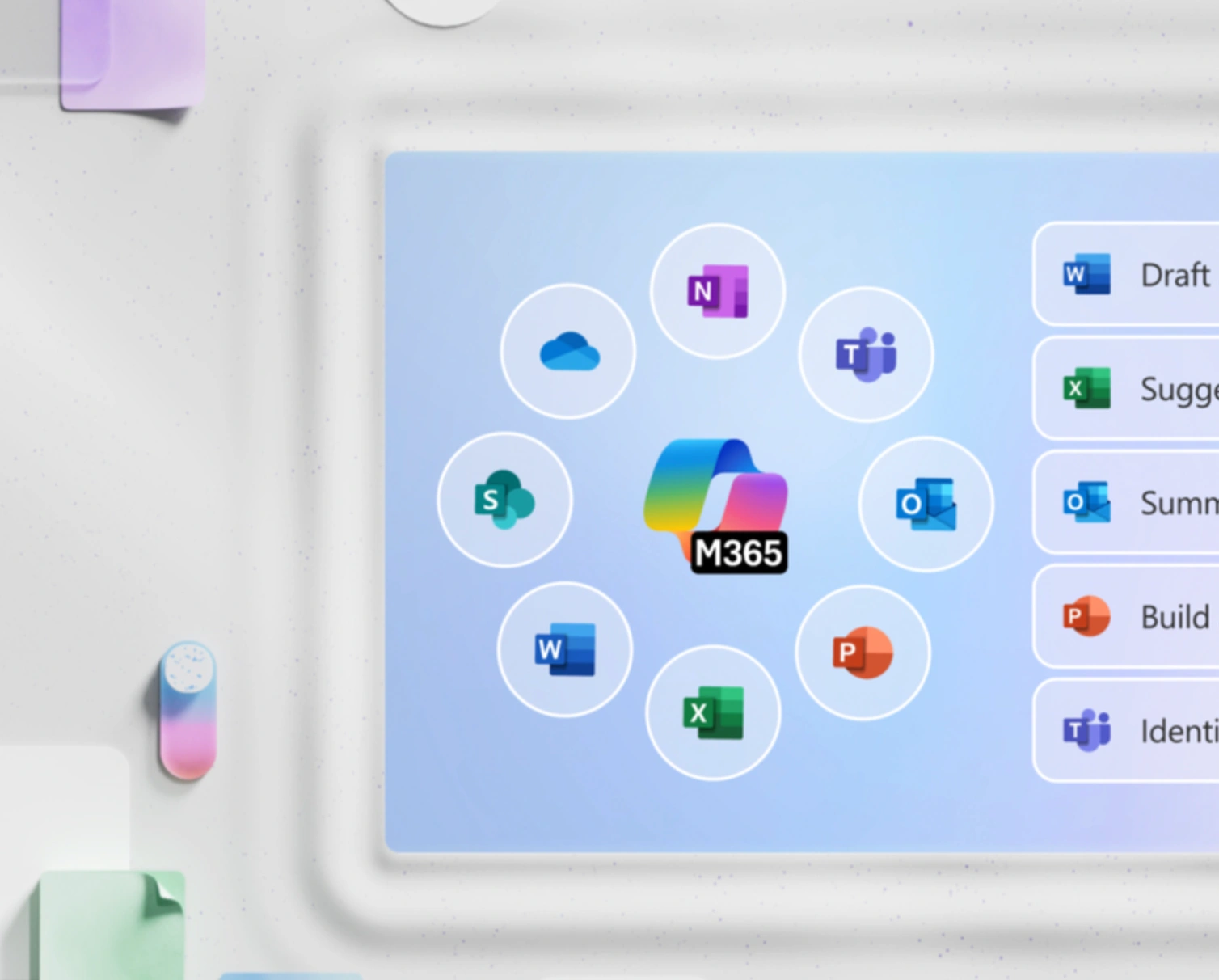
Microsoft Copilot is one of the most operationally practical AI agents for marketing teams because it integrates directly into Microsoft 365, including Word, Excel, PowerPoint, Teams, and Outlook. For agencies running their operations on Microsoft infrastructure, Copilot removes the friction of switching between a standalone AI tool and the platforms where work actually happens. According to Microsoft's official documentation, Copilot is designed to assist with drafting, summarizing, analyzing, and creating content across the entire suite.
What Copilot Does Well for Marketing Workflows
Copilot performs strongly across three core marketing contexts:
Content drafting and editing: Within Word and Outlook, Copilot generates first drafts, rewrites existing content for clarity, adjusts tone, and summarizes lengthy documents. For agencies managing high-volume content production, this compresses the time-to-draft significantly.
Data analysis and reporting: In Excel, Copilot synthesizes campaign performance data, generates summaries, and surfaces trends without requiring advanced formula knowledge. Marketing teams presenting monthly reports to clients benefit from faster, more structured data outputs.
Meeting and communication efficiency: In Teams, Copilot summarizes meetings, extracts action items, and drafts follow-up communications. For cross-functional agency teams managing multiple client accounts, this reduces administrative overhead and improves operational alignment.
Where Copilot Has Limitations
Copilot is less effective for deep strategic marketing tasks, brand voice development, or nuanced long-form content that requires positioning expertise. It is also constrained by the Microsoft ecosystem, meaning teams working outside of 365 will not extract full value. For agencies focused on brand strategy and premium brand development, Copilot is best positioned as an operational efficiency layer rather than a brand-building instrument.
Claude: Structured Reasoning for Brand-Consistent Marketing Content
Anthropic's Claude stands out among AI agents for marketing teams for its reasoning depth, instruction-following precision, and ability to maintain brand voice consistency across long-form content. Where some AI tools generate surface-level output, Claude processes complex briefs, multi-part instructions, and nuanced positioning requirements with a higher degree of structural discipline.
How Claude Supports Marketing Teams in Practice
Long-form content architecture: Claude is particularly effective at producing pillar content, comprehensive guides, and structured thought leadership pieces. For agencies that position clients as category authorities, Claude produces initial drafts that reflect the client's positioning framework with clear topical depth and semantic structure.
Brand voice alignment: When given detailed brand guidelines, Claude applies tone, language standards, and messaging hierarchy with consistency. This makes it one of the more reliable AI agents for marketing teams that manage brands with sophisticated communication frameworks and multi-channel content requirements.
Strategic document drafting: From marketing audits to positioning frameworks to content strategies, Claude handles complex structured outputs requiring logical progression and multi-layered reasoning. Teams working on B2B marketing strategies find Claude particularly well-suited for producing credible, in-depth deliverables that reflect real strategic thinking.
SEO-structured content: Claude follows detailed SEO briefs including heading hierarchy, keyword placement, internal linking logic, and semantic structure. For teams managing search engine optimization at scale, Claude reduces the time required to produce well-structured content drafts without sacrificing quality.
.webp)
Claude's Constraints
Claude does not browse the internet natively in all configurations, and real-time data access requires specific setup. It also performs best with detailed, structured prompts. Agencies that invest in developing prompt libraries and content brief templates will extract significantly more value from Claude as a core AI agent for marketing teams.
Google Gemini: AI Agents Aligned With Search Intent and Content Performance
Google Gemini brings a distinct strategic advantage as one of the AI agents for marketing teams focused on search visibility and content performance. Because Gemini is built by Google, it carries a structural alignment with how Google processes, interprets, and evaluates content. According to Google's research on generative AI, Gemini's multimodal architecture is designed to understand content context across text, images, and data simultaneously.
Gemini's Core Value for Marketing Teams
Search-aligned content generation: Gemini understands query intent in a way that reflects how Google's systems evaluate relevance. For teams producing content targeted at competitive keywords, Gemini's suggestions tend to reflect topical alignment more naturally.
Multimodal capabilities: Gemini can process and generate content across text, images, and structured data. For marketing teams producing multimedia content or analyzing visual assets alongside written output, this creates meaningful operational efficiency.
Google Workspace integration: Similar to how Copilot integrates with Microsoft 365, Gemini integrates into Google Workspace, including Docs, Sheets, Gmail, and Meet. Agencies built on Google infrastructure benefit from the same embedded workflow efficiency.
Research and synthesis: Gemini's real-time search integration allows marketing teams to execute competitive research, trend analysis, and market intelligence tasks without leaving the workflow environment.
Gemini's Positioning in an AI Agent Stack
Gemini is most powerful when paired with a structured SEO agency methodology. It is less suited for complex brand strategy work or premium brand voice development, where Claude's structured reasoning delivers more calibrated output. As one of several AI agents for marketing teams, Gemini fills a clear and measurable role in search-oriented content production.
.webp)
How AI Agents for Marketing Teams Transform Core Agency Workflows
Understanding how AI agents for marketing teams apply to specific workflows is more operationally useful than comparing tools in the abstract. The following maps each agent type to the workflows where it creates the most structural value.
Content Production and Editorial
AI agents for marketing teams compress the content production cycle significantly. A workflow that previously required a brief, a research phase, a first draft, multiple revision cycles, and a final edit can be compressed by integrating AI agents at the brief and drafting stage. The human team retains responsibility for strategic direction, brand judgment, and quality assurance.
Practical content workflow applications include:
- Generating structured content outlines from keyword briefs
- Producing first drafts of blog posts, whitepapers, and landing page copy
- Adapting long-form content into social and email formats
- Repurposing existing content into new formats without starting from scratch
SEO and Organic Growth
AI agents for marketing teams executing SEO workflows can increase the volume and consistency of optimization work substantially. From technical search engine optimization audits to content gap analysis to keyword clustering, AI agents process large data sets and produce actionable recommendations faster than manual analysis allows.
Specific SEO workflow applications include:
- Identifying internal linking opportunities across large content libraries
- Generating meta descriptions and title tag variations at scale
- Analyzing competitor content structure for strategic gaps
- Structuring content to target featured snippet positions and People Also Ask results, in alignment with Google's E-E-A-T content standards
Brand Development and Positioning
The application of AI agents for marketing teams in brand work is more nuanced. AI agents are highly effective at processing brand research inputs, synthesizing competitive landscapes, and producing structured frameworks. However, the creative judgment and strategic acuity behind strong branding decisions remain a distinctly human responsibility.
Where AI agents reliably support brand workflows:
- Synthesizing customer research and interview data into positioning insights
- Generating brand voice guideline drafts for review and refinement
- Producing messaging framework variations for structured testing
- Analyzing brand perception data and surfacing patterns across platforms
UX and Web Design Strategy
AI agents for marketing teams increasingly support UX design and web strategy work through content structuring, user journey documentation, and information architecture support. While AI agents do not replace the visual and interaction design expertise of a skilled UX team, they accelerate research synthesis, wireframe documentation, and design brief production.
Campaign Reporting and Analytics
AI agents for marketing teams handling reporting and analytics tasks reduce the time required to produce client-ready insights from raw performance data. Copilot's Excel integration and Gemini's Sheets integration compress the analysis-to-presentation cycle, freeing senior strategists to focus on interpretation and recommendations rather than data assembly.
Building a Practical AI Agent Stack for Your Marketing Team
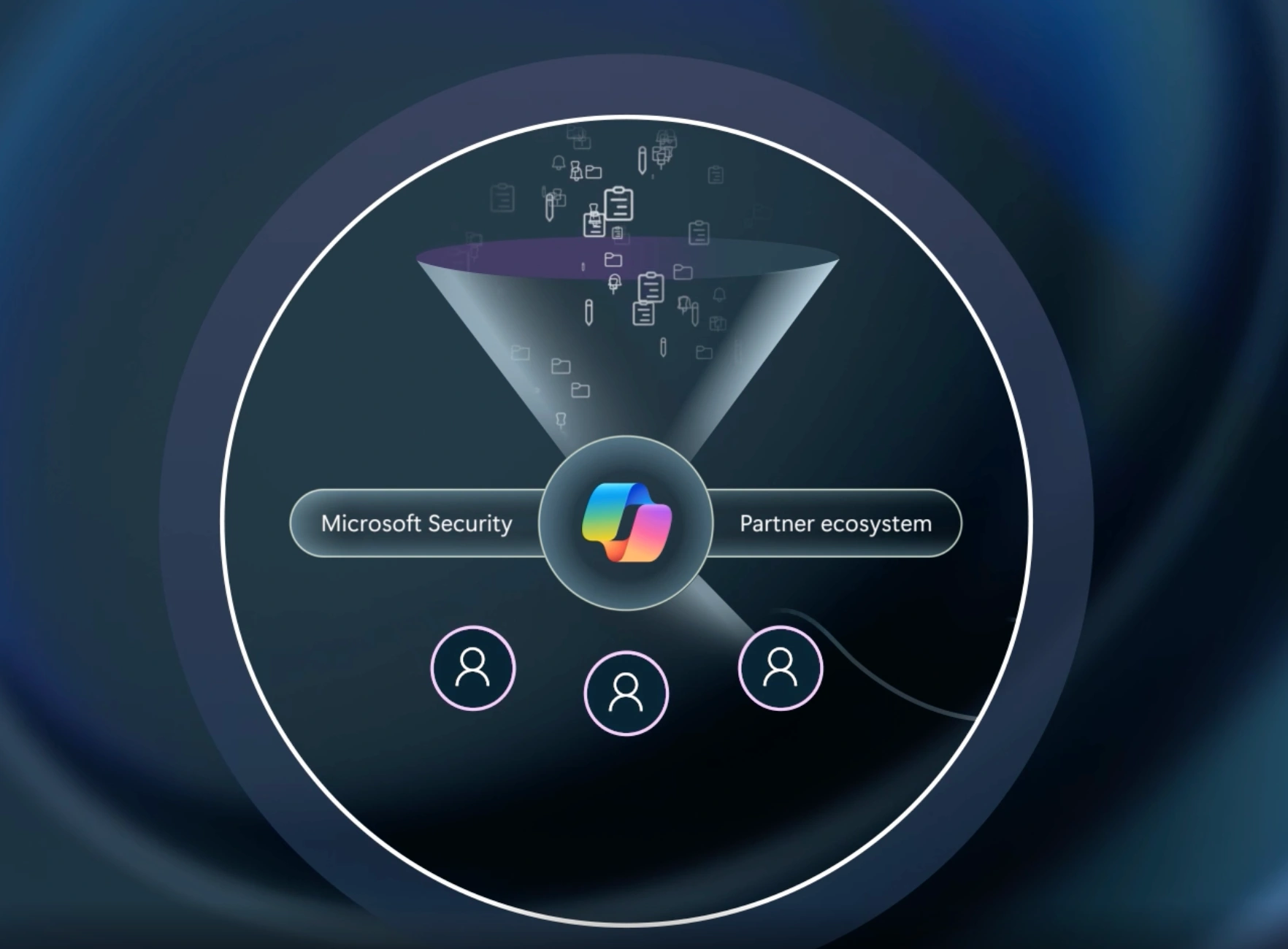
The most sophisticated agencies in 2025 are not selecting one AI agent and applying it universally. They are building layered stacks that assign each tool to the workflows where it performs best.
McKinsey's analysis of generative AI in marketing identifies opportunity identification, content personalization, and process automation as the three highest-value applications of AI in marketing operations. A structured approach to deploying AI agents for marketing teams looks like this:
Layer 1: Operational Efficiency (Copilot or Gemini) - Use Copilot or Gemini for embedded workflow tasks: summarizing meetings, drafting communications, analyzing performance data, and generating report frameworks. These tools remove friction from recurring administrative and analytical tasks.
Layer 2: Content and Strategy Production (Claude) - Deploy Claude for structured, brand-sensitive content production, long-form writing, positioning frameworks, strategic documents, and SEO-structured content. Claude's instruction-following depth makes it the most reliable choice for brand-aligned output.
Layer 3: Search Intelligence (Gemini) - Use Gemini for search-oriented research, content gap analysis, and keyword-aligned content structuring. Its alignment with Google's content evaluation systems creates an advantage in organic visibility workflows.
For agencies that have not yet mapped their marketing technology against these layers, a marketing consultation and audit is a structured starting point. Identifying where AI agents for marketing teams can replace manual processes most efficiently requires a clear operational audit before tool selection.
.webp)
What AI Agents Cannot Replace in Marketing
A grounded assessment of AI agents for marketing teams requires honest acknowledgment of their limitations. The most important distinction is between execution-layer tasks, where AI agents perform well, and strategic and creative judgment tasks, where human expertise remains irreplaceable.
AI agents in 2025 cannot reliably:
- Make nuanced brand positioning decisions that require market instinct and experience
- Build authentic client and audience relationships that drive long-term retention
- Design visually compelling brand systems and high-performance digital experiences
- Apply creative intuition to campaign concepts and brand storytelling
- Manage complex multi-stakeholder client engagements with political and relational nuance
This is precisely why AI agents for marketing teams are most powerful when deployed by skilled marketing professionals who use them to elevate output quality and team capacity, not replace strategic thinking. McKinsey's State of AI research consistently finds that AI high performers redesign workflows around human and AI collaboration rather than attempting full automation. For startup marketing teams operating with lean resources, AI agents extend team capability meaningfully without requiring headcount increases. For established agencies, they create the operational bandwidth to pursue higher-value strategic work.
Frequently Asked Questions About AI Agents for Marketing Teams
What is the difference between an AI agent and an AI assistant?
An AI assistant responds to individual prompts in a single interaction. An AI agent for marketing teams can plan and execute multi-step tasks, use tools and external data sources, and iterate based on goals rather than individual instructions. Agents are designed for workflow integration across connected systems, not just one-off queries.
Which AI agent is best for content marketing?
Claude is generally the strongest choice among AI agents for marketing teams focused on content marketing, particularly for long-form, brand-sensitive content that requires consistent voice, topical depth, and structural precision. Gemini is more effective for search-aligned content production and keyword-driven optimization workflows.
How do AI agents affect SEO performance?
When deployed correctly, AI agents for marketing teams can increase the volume, consistency, and structural quality of SEO content. However, they must be guided by an experienced SEO agency methodology to avoid generic output that fails to reflect real topical authority or meet Google's E-E-A-T criteria.
Can AI agents replace a marketing agency?
No. AI agents for marketing teams are execution accelerators, not strategic replacements. The research synthesis, brand judgment, creative direction, and client relationship management that define premium agency work require human expertise. AI agents scale output efficiently. They do not replace the thinking that makes that output effective. The distinction between agencies using these tools well and those that are not is structural deployment, not tool selection. For teams ready to build that structure, Brand Vision Marketing works with marketing leaders to design the systems and frameworks that compound over time.
The Structural Case for Integrating AI Agents Now
The agencies that will compound competitive advantage in 2025 and beyond are those building structured AI agent workflows now rather than waiting for the tools to mature further. The platforms are already sufficiently capable to produce measurable operational gains. The gap between agencies treating AI agents for marketing teams as core infrastructure and those using them experimentally is widening each month.
The decision is not whether to integrate AI agents. It is how to integrate them with the strategic rigor, brand discipline, and operational clarity that defines high-performance marketing. Assigning each tool to the workflows where it performs best, building structured prompt libraries, and maintaining the brand and quality standards that separate premium content from generic output, these are the disciplines that determine whether AI integration strengthens or dilutes agency positioning.
For agencies navigating this transition with precision, Brand Vision provides the strategic structure and execution clarity to integrate AI tools without compromising brand integrity or client trust. Explore our web design agency and branding agency services to see how we build the digital foundations that make AI-generated content perform.

%2520(1).png)
.png)