Most coverage of Tim Hortons reads its marketing as a run of campaigns: Roll Up To Win, the hockey sponsorships, the Smile Cookie. That misses where the work actually happens. Tim Hortons does not win on hype. It wins on habit.
The Tim Hortons marketing strategy is built to operate in two places at once: the national imagination and the local routine. Most of it is engineered to turn an occasional guest into a frequent one. At Brand Vision, a branding agency, the useful way to read this playbook is as a system rather than a sequence of ads. The campaigns are the visible surface. Loyalty, payments, community programs, restaurant operations, and digital convenience are the machinery underneath.
At a glance
- Everyday Canadian identity is the moat. Tim Hortons anchors itself in community sport and national ritual, which gives it relevance in the most ordinary moments: the commute, the kids' practice, the weekend errand run.
- Tentpoles return every year. Roll Up To Win, Smile Cookie, and Camp Day are predictable moments customers anticipate, which makes media and in-store execution easier to plan and scale.
- Beverage-first growth. In late 2025, cold beverages grew 8.6 percent and reached a record 27 percent of Tim Hortons' beverage mix. In 2026 the brand kept extending beverage occasions with matcha, seasonal cold drinks, and functional formats.
- Loyalty at scale. Tims Rewards still earns 10 points per eligible dollar, and by February 2026 Tim Hortons said the program had more than 7 million active members, making it a direct merchandising and retention channel as well as a points program.
- Payments close the loop. The Tims Mastercard is embedded in the app and ties everyday spend to coffee rituals, keeping the brand present even between visits.

Positioning: "Everyday Canada" as a moat
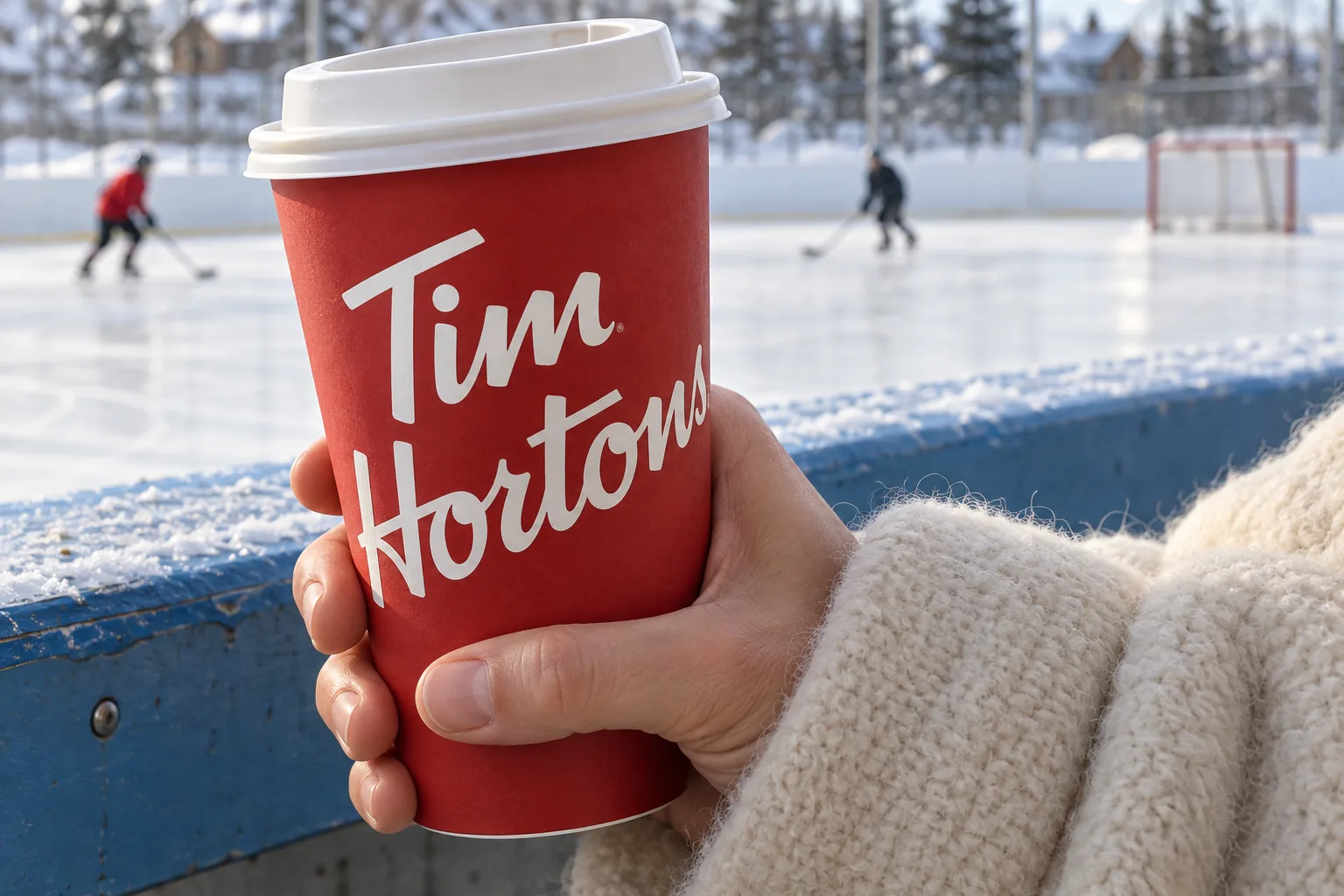
Tim Hortons' target market is mainstream Canada: a broad base of everyday Canadians across ages and incomes, anchored by commuters, working adults, and families who fold the brand into a daily routine. It sells familiarity first and coffee second. Coffee, breakfast, and hockey form a cultural triangle, and the brand's job is not to reintroduce itself every season. Its job is to stay emotionally close through repetition, local presence, and a tone that feels like home. For another place-based company, that is the core challenge a branding and marketing agency in Canada has to solve: use regional familiarity without making the identity too narrow to travel.
That position is reinforced through decades of youth sports and community presence, which puts the logo where families actually spend time rather than only where they scroll. Even when the brand paused men's programming during Hockey Canada's 2022 crisis, it kept its women's, para, and youth support, signalling brand safety while protecting grassroots credibility. The broader sponsorship logic is the same one covered in Brand Vision's sports marketing guide: the property has to reinforce a real brand role, not merely add exposure.
The mechanism is simple and durable. Familiar brand assets reduce friction at the point of choice, so customers need less persuasion when the brand already feels present in their lives. Density then converts that equity into frequency. The emotional story matters more when it is easy to act on. That is why a clear brand strategy matters before execution, why consistent branding earns recall, and why a documented brand voice pays off long before any single campaign does.
Tentpoles: Roll Up, Smile Cookie, Camp Day
Tim Hortons' food and beverage marketing leans on a few big moments that return every year and feel bigger than a promotion. Each does three jobs at once: drive traffic, earn attention, and reinforce community identity.
Roll Up To Win is the long-running gamified promotion that now blends the app with physical cups, after cups returned in 2025, keeping the tactile ritual and the digital data together. A good Roll Up is operational as much as creative. The store has to be fast, the prizes and redemptions have to feel real, and the roll mechanic has to be easy enough for a casual guest.
Smile Cookie is a spring charity drive that has become a media event. The 2025 campaign raised a record 22.6 million dollars for more than 600 local charities across Canada and the US. In 2026, the 30th-anniversary campaign expanded support to nearly 700 charities and community groups in Canada. (Tim Hortons, 2026) The product is simple and the story is local, which makes the campaign easy to understand and easy to repeat.
Camp Day is one of the country's largest single-day fundraisers. In 2025 it raised over 13 million dollars. The 2026 campaign raised $12.7 million, bringing the program's historical total to $287.7 million and supporting nearly 350,000 underserved youth through Tims Camps. (Tim Hortons, 2026) The campaign works because it gives franchisees, staff, and guests a shared purpose that is easy to understand and easy to join.
The pattern underneath all three is repetition. Customers know each moment is coming, so participation climbs without heavy re-education, and local press plus local pride expands reach without constant new creative. In a crowded coffee category, showing up consistently is itself the differentiator.
Product and menu: "Back to Basics" plus beverage innovation
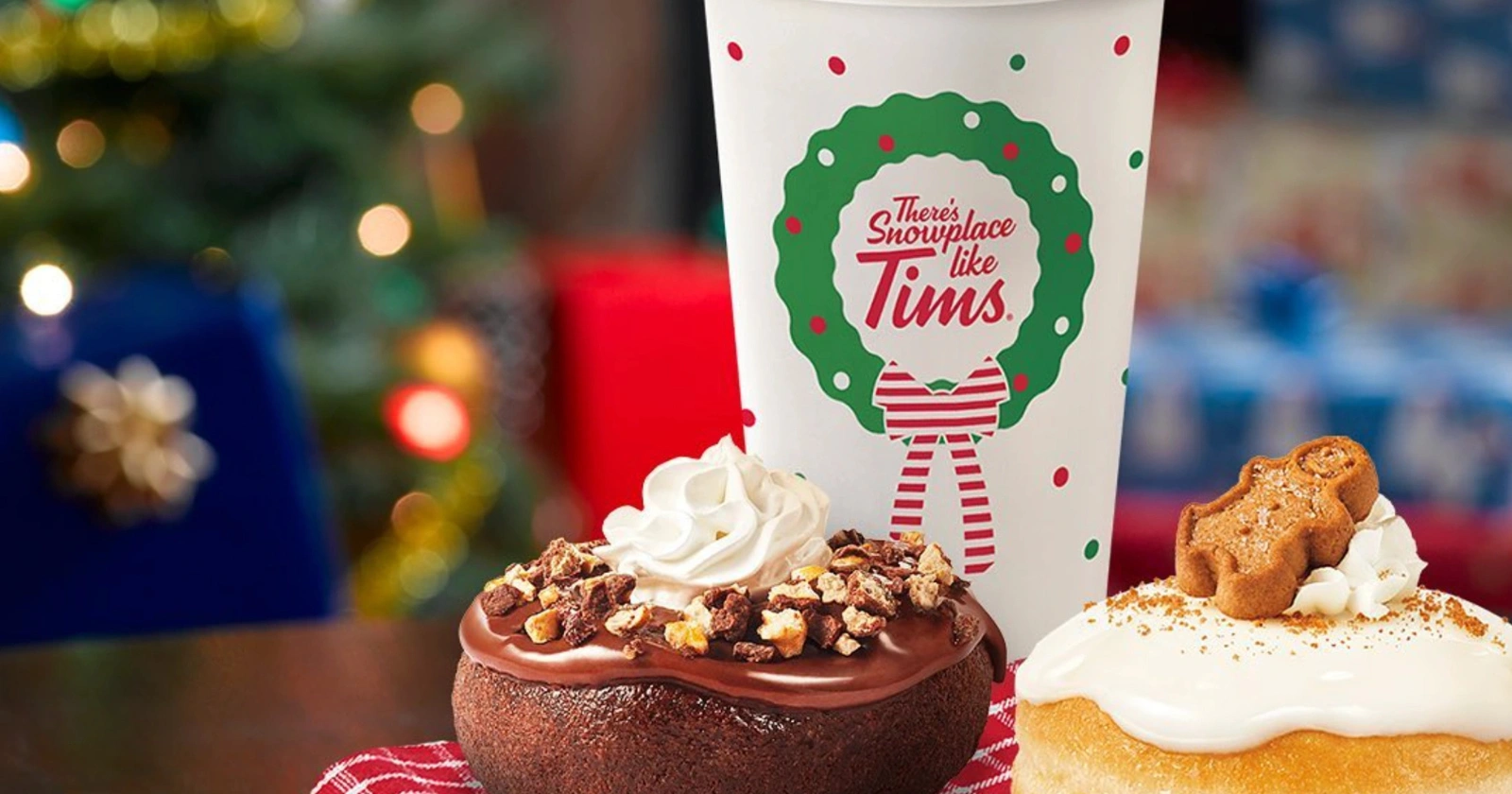
Tim Hortons' menu strategy pairs a stable core with an experimental edge. The core keeps trust. The edge keeps attention, especially in beverages, where customization and seasonal variety drive repeat visits.
The "back to basics" push improved the fundamentals with freshly cracked eggs, a new dark roast, and Craveables, paired with national sampling for Tims Rewards members. That quality reset matters because breakfast is the highest-frequency daypart, so small improvements compound fast at national scale.
On the growth side, beverages keep expanding, and cold is leading. In its fourth-quarter 2025 results, Restaurant Brands International reported that Tim Hortons' cold beverages grew 8.6 percent to a record 27 percent of total beverage sales. Functional drinks are the newest lever: Protein Lattes carry 20 grams of protein per medium hot drink and 17 grams iced, letting Tims compete for the coffee-plus-nutrition occasion rather than caffeine alone.
The order matters. Dependable breakfast and coffee make customers more willing to try a new drink, cold coffee is a canvas for flavour and foam, and limited-time runs give people a reason to return without reinventing the menu.
Loyalty, app, and payments: the habit engine
The Tim Hortons marketing strategy is not only about messaging. It is about mechanics that make the brand easier to choose, easier to repeat, and easier to personalize.
Tims Rewards shifted from per-visit to spend-based earning at 10 points per dollar, which makes the value easier to understand at the counter. The app footprint is large. At its 2023 credit-card launch, Tim Hortons said almost five million Canadians were using the app every month. By February 2026, Tim Hortons said Tims Rewards had more than 7 million active members, showing how much the owned audience had grown. (Tim Hortons, 2026 priorities) That scale turns the app into a direct channel for offers, order-ahead, delivery, and daypart-specific prompts.
Payments extend that loop. The Tims Mastercard, embedded in the app, lets cardholders earn up to 15 points per dollar at Tims and 5 points per dollar on everyday categories like groceries, gas, and transit. When earning is tied to everyday spend rather than only to visits, points grow even on the days someone does not stop for coffee, and faster earning makes redemption faster, which accelerates frequency. The same first-party data also makes retention practical, which is exactly where a structured email marketing strategy earns its keep, and why we push clients to treat the app and its interface design as product, not just a place where points sit.
Digital and delivery: from investment to muscle memory
Tims invested heavily in digital ordering, loyalty, and media, including a C$80 million commitment in 2021 to support the Back to Basics plan. The investment is still showing up in physical operations. Tim Hortons said more than 800 Canadian restaurants had digital kiosks by early 2026, while restaurant owners and the company committed $400 million to build 80 new Canadian restaurants and renovate 400 existing locations during 2026. (Tim Hortons, 2026 investment plan) The point is not digital for its own sake. Ordering, pickup, and restaurant layout are being redesigned together.
The shift is behavioural. Digital becomes muscle memory when it removes friction. When ordering is faster, pickup is clear, and rewards land immediately, customers do not need a reason to use the app. They just do. That is the same standard we hold a client's site to when we rebuild it: a conversion-first website should make the next action the obvious one, not the effortful one.
US and international: beverage-first expansion
In the US, Tim Hortons has framed growth around beverage occasions, leading with cold espresso, Cold Brew, and seasonal flavours while using national tentpoles like Roll Up. The approach rides broader quick-service trends toward iced and flavoured cold coffee and keeps the food lineup comparatively simple, a positioning QSR Magazine has tracked closely. For brands carrying a familiar identity across the border, the relevant lesson is localization without reinvention, the kind of consistency a branding and marketing agency in the US has to protect across regional media and retail touchpoints.
What the numbers say in 2026
The performance picture is steadier than the original headline suggested. Restaurant Brands International reported full-year 2025 comparable-sales growth of 2.8 percent at Tim Hortons Canada, with 2.8 percent in the fourth quarter. In Q1 2026, Canadian comparable sales grew 1.5 percent; in Q2 they were nearly flat at 0.1 percent, leaving the first half at 0.7 percent. (RBI Q2 2026) The useful marketing read is not uninterrupted growth. It is a brand defending frequency while expanding menu occasions, digital convenience, and restaurant capacity.
Risks and lessons
- Privacy and trust. A 2022 joint investigation by the Privacy Commissioner of Canada found the Tim Hortons app collected vast amounts of location data without adequate consent. The brand tightened its disclosures afterward, a reminder that data-driven marketing only works when it is transparent.
- Reputation management. Sponsors sometimes have to move fast. The temporary withdrawal from men's Hockey Canada programming showed brand-safety discipline while preserving youth and community support.
- Seasonality. Weather swings move the hot-versus-cold mix, so a flexible beverage pipeline is the hedge. The faster cold grows, the more that flexibility is worth.
FAQ
Who is Tim Hortons' target market?
Tim Hortons' target market is mainstream Canada: a broad base of everyday Canadians across ages and incomes, with a core of commuters, working adults, and families who build the brand into a daily routine. The positioning leads with national identity and familiarity, then layers community sport and local presence on top, so the brand reads as part of ordinary life rather than an occasional treat.
How does Tim Hortons advertise?
Tim Hortons advertises mainly through recurring tentpole moments and community presence rather than a constant churn of new creative. Roll Up To Win, Smile Cookie, and Camp Day return every year, sports and youth sponsorships like Timbits and hockey keep the brand visible where families gather, and the app increasingly serves as a direct advertising channel for personalized offers. The strategy favours repetition and earned local press over one-off campaigns.
What is Tim Hortons' mission statement?
Tim Hortons does not foreground a single formal mission statement in its current public materials, but the purpose the brand consistently expresses is community and quality: serving Canada's everyday coffee and food while making a difference in local communities. The line long associated with the company frames its mission as delivering superior-quality products and services for guests and communities through leadership, innovation, and partnerships. In practice the mission shows up less in a slogan than in the community programs and the everyday-ritual positioning described above.
What community programs define Tim Hortons?
Three programs anchor the brand's community identity: Timbits Minor Sports, Smile Cookie, and Camp Day. The 2025 Smile Cookie campaign raised a record $22.6 million; the 2026 edition supported nearly 700 charities and community groups. Camp Day raised $12.7 million in 2026 and brought the program's historical total to $287.7 million. Together these programs keep Tim Hortons present in local life beyond the restaurant visit.
What is new on the Tim Hortons menu in 2026?
Tim Hortons has kept beverage innovation moving through 2026. A national matcha lineup launched in July, and Strawberry Matcha drinks followed in September after strong early demand. (Tim Hortons) Pumpkin Spice also returned for the fall across lattes, Iced Capps, Cold Brew, and muffins. Protein Lattes remain part of the broader functional-beverage push, with 20 grams of protein in a medium hot drink and 17 grams iced. (Tim Hortons)
How business owners can apply the Tim Hortons playbook in 2026
The lesson worth stealing is not the hockey ads. It is that the strongest brands build one clear habit loop and reinforce it through product, community, and digital convenience. The transferable sequence is straightforward: own a default occasion with consistent quality and a frictionless order; schedule a small number of tentpole moments so the brand is not paying to reintroduce itself every quarter; make community presence operational through sustained local partnerships; then use loyalty and first-party data to shape behaviour, not just to hand out points. For location-heavy businesses, local SEO can support that same neighborhood visibility between campaign peaks.
The thread connecting all of it is system over surface. A campaign can buy attention for a week, but only a tightened brand system, where positioning, product, site, and loyalty all say the same thing, moves you from persuading customers to simply being chosen. If you want help building those fundamentals, that is the work we do in a marketing consultation and audit.
Habit is cheaper to keep than attention is to buy. The brands that understand that stop chasing the next campaign and start engineering the next visit.



.webp)









.webp)