
Shein has become a fast-fashion phenomenon, but the most useful way to understand its marketing strategy in 2026 is as a connected system. The company links rapid product testing, creator distribution, app-based merchandising, marketplace expansion, and retention mechanics so that demand signals can shape what gets promoted next. Marketing is not separate from the operating model. It is built around the same speed.
This Brand Vision analysis focuses on the mechanics behind Shein's marketing strategy: what supports its reach, where trust and regulation create constraints, and which ideas other brands can adapt without copying the ultra-fast-fashion model.
Shein Marketing Strategy at a Glance
- Shein's marketing strategy blends speed, creator distribution, and conversion-focused app design into a daily demand engine.
- TikTok remains a major amplifier, and hashtag data still shows massive attention for #shein and #sheinhaul. (TikTok Creative Center)
- Trust and compliance are now part of Shein marketing in 2026, especially in the EU where marketplace controls and consumer-protection questions are under scrutiny. (European Commission)
1. Business Model: Why Shein's Marketing Moves So Fast
Shein marketing works because the business model is built for momentum. The company describes its approach as "real-time fashion," a supply chain and demand sensing system designed to test, learn, and scale quickly. Instead of committing to huge seasonal bets, Shein can launch many small experiments, then amplify what converts. That makes the marketing strategy more efficient because content does not need to be timeless. It only needs to be timely. (Shein Group)
The operational detail matters because it explains why Shein marketing keeps compounding. When the product engine is designed for fast iteration, the B2C marketing strategy can be designed for constant refresh. That creates a flywheel: more products, more creator content, more on-site variety, more conversion moments, and more data to sharpen the next cycle. A useful outside lens on this model is how Shein and Temu connect demand and factory output through platform mechanics, not traditional fashion calendars. (Harvard Business School Working Knowledge)
- Demand sensing and rapid iteration sit at the center of Shein's "real-time fashion" positioning. (Shein Group)
- Small-batch testing reduces inventory risk while maximizing trend responsiveness.
- High SKU volume creates a content advantage because creators can always find something new to show.

2. Gen Z Targeting and Mobile-First Shopping
Shein's marketing strategy is designed around Gen Z behavior, not traditional retail behavior. Gen Z discovery is social first and mobile first, and the shopping journey is rarely linear. A product can be discovered through a haul, validated through comments, checked through reviews, and purchased through an app that keeps offering discounts and urgency triggers. Shein marketing fits that pattern because it treats attention like a renewable resource and conversion like a product feature.
The brand also stays anchored to one clear value promise: variety at a low price point. That promise is reinforced through frequent promotions, discount codes, and seasonal events that train shoppers to expect deals. In 2026, Shein marketing still leans heavily into this "always on value" posture because it protects demand even when consumer spending tightens. It is not a luxury aspiration. It is entertainment, plus affordability, plus speed.
- Gen Z targeting is reinforced through app-first design and social proof.
- Discounts, promos, and urgency mechanics keep conversion rates high.
- The shopping experience is built to feel like browsing content, not browsing a catalog.
3. Influencer Marketing: Building Social Proof at Scale
Influencer marketing is not a layer on top of Shein marketing. It is the distribution backbone. Shein has treated creators like a performance channel for years, using volume to keep content circulating and letting algorithms decide which posts break out. This is why Shein marketing feels omnipresent. It is not one celebrity endorsement. It is thousands of creators feeding a constant stream of try-ons, hauls, outfit edits, and trend recaps. The same participation-first logic is central to TikTok's marketing model, where creator-native formats can carry a campaign beyond paid distribution.
The format also matches how people decide what to buy now. Google has published data showing online video influences purchase decisions for many shoppers, which helps explain why haul-style content can convert so consistently. (Think with Google) YouTube's Culture and Trends team has also highlighted the growth of the YouTube shopping ecosystem, which is why long-form creator content remains valuable for product evaluation. (YouTube Blog)
- Creator content works because it compresses awareness, validation, and styling into a single scroll.
- Affiliate mechanics convert creators into measurable acquisition partners.
- Repeatable formats keep output high without needing constant reinvention.
@mayskarim Ad: @SHEIN @SHEINUS Stay savvy , Shop SHEIN by Searching ( RS466 ) and use my discount code ( 24SBSmaisk ) FOR UP TO 90% OFF !!❤️🔥😍 . . . . . . . #sheinbigsalesday #sheinblackfriday #sheinforall #saveinstyle #loveshein #shein #sheincares #christmas #christmastiktok #شي_ان #شي_ان_السعودية #اكسبلور ♬ All I Want for Christmas Is You - Mariah Carey
TikTok's #Shein and Influencer Hauls
Hauls work because they compress a lot of persuasion into a short video. You see volume, price, styling, and transformation in seconds. For Shein marketing, this format creates social proof while also removing purchase hesitation. It makes the low price feel like low risk, and it makes the variety feel like a reason to browse now.
The system behind the content is what makes it scale. Codes, affiliate links, and repeatable creator briefs turn attention into conversion. Hashtag analytics still show huge attention for #shein and #sheinhaul, which signals the format is still culturally normalized in 2026. (TikTok Creative Center)
- Hauls create proof quickly: fit, style, and value in one scroll.
- Discount codes and affiliate links reduce friction from interest to checkout.
- Trends and seasonal moments keep content discoverable.
YouTube's Role in Shein's Popularity
YouTube adds depth and search longevity to Shein marketing. TikTok can create the spark, but YouTube can act like a library of validation, especially for shoppers who want to see quality, sizing, and outfit building in more detail. Longer videos reduce uncertainty, which is critical for apparel purchases where returns and disappointment can quickly damage loyalty.
YouTube also supports a different type of conversion behavior. People search for specific topics, seasons, and occasions, and haul videos can rank for months or longer. That makes YouTube a compounding channel inside Shein marketing, especially when creators post consistent series content. (YouTube Trends)
- Long-form try-ons reduce hesitation for online-only brands.
- Search behavior creates ongoing discovery beyond the posting date.
- Content can be repurposed into shorts, ads, and retargeting creatives.
4. Shein's Pop-Up Store Strategy
Shein is primarily digital, but pop-ups have played a strategic role in Shein marketing. Physical experiences create credibility for a brand that many people first meet through a phone screen. Pop-ups allow shoppers to touch products, test sizing, and post real-time content, which can reshape perception from "cheap online app" to "legitimate retail moment."
Pop-ups are also engineered for social sharing. The design is made to be photographed, and the timing is made to feel rare. This creates localized hype that travels online, especially when creators attend and post. In a world where many digital-first brands struggle to build trust, pop-ups are a visible trust shortcut.
- Pop-ups create content opportunities and credibility in one move.
- Temporary retail turns shopping into an event, not a transaction.
- Social sharing amplifies the experience far beyond the physical footprint.
5. The Marketplace Model: Expanding Product Range and Reach
The marketplace shift is one of the most important evolutions in Shein marketing. When a brand becomes a platform, it can capture demand across categories instead of relying only on in-house product. That expands the surface area for acquisition and retention. A shopper might arrive for fashion, then stay for beauty, accessories, home, or niche products offered by third parties.
Marketplace expansion also supports localization and resilience. It makes it easier to adapt assortments, reduce cross-border friction, and keep the app experience fresh. Shein's seller ecosystem is now part of how Shein marketing scales variety and keeps shoppers browsing. (SHEIN Marketplace)
- Marketplace inventory expands variety without fully expanding internal product risk.
- Sellers gain access to a demand engine and traffic ecosystem that already exists.
- The app becomes a broader shopping destination, which increases lifetime value.
6. Loyalty, Gamification, and Repeat Sessions
Shein marketing is not built only on acquisition. It is built on repeat behavior. Loyalty and gamification mechanics keep users returning even when they did not plan to shop. Points, check-ins, flash sales, and time-limited deals create feedback loops that turn browsing into a habit. That is partly an interaction design problem: the timing, feedback, and progression of each action shape whether the experience feels useful or compulsive.
The app also uses community content as a conversion asset. Reviews, user photos, and purchase proof reduce uncertainty. That matters because Shein's catalog is enormous, and shoppers need quick validation to make decisions. When loyalty mechanics and social proof combine, the storefront feels alive and constantly updated, which increases session frequency.
- Points and rewards encourage repeat engagement.
- Urgency triggers drive impulse conversion.
- UGC improves conversion by reducing perceived risk.
7. Brand Risk: Regulation, Sustainability, and Trust
In 2026, the biggest tension in Shein's marketing strategy is trust. The same speed and scale that drive growth also attract scrutiny. Sustainability claims, labor concerns, marketplace compliance, and platform design can shape how regulators and consumers respond. Price remains a strong purchase driver, but long-term brand equity becomes harder to protect when trust and compliance questions stay unresolved.
Regulatory pressure is no longer abstract. After a 2025 request for information concerning illegal products and protections for minors (European Commission), the European Commission opened formal Digital Services Act proceedings against Shein in February 2026. The investigation includes the platform's controls on illegal products, transparency of recommender systems, and risks linked to reward-based addictive design. (formal DSA proceedings)
Environmental and Sustainability Concerns
Shein has published sustainability reporting, including its 2024 Sustainability and Social Impact Report, to address concerns and outline initiatives. (Shein Group) (Shein Group PDF) At the same time, scrutiny around environmental marketing claims has increased. Italy's competition authority issued a press release about a €1 million fine connected to misleading environmental claims, which shows how sustainability language can become a compliance issue, not just a brand positioning choice. (Italian Competition Authority)
- Sustainability claims are held to higher proof standards in 2026.
- Enforcement risk makes green messaging a legal issue, not only a PR issue.
- Trust issues can become a reputational and compliance cost as the platform scales.
Labor and Social Responsibility Issues
Supply chain questions continue to affect Shein marketing because they shape public perception and policy attention. When allegations circulate, they travel quickly across the same social platforms Shein depends on for demand. This creates a structural risk: the marketing engine amplifies both the brand story and the criticism.
Brands watching Shein's marketing strategy should recognize the tradeoff. Speed is a growth advantage, but transparency becomes a growth requirement at scale. Even for smaller companies, trust needs to be treated like a measurable asset. It is not a soft concept in 2026.
- Supply chain scrutiny can reshape platform policy and consumer sentiment.
- Brand trust becomes a competitive advantage when attention is high.
- Long-term equity requires more than speed and price.
8. The 2026 Landscape: Shipping, Customs, and Policy Headwinds
Shein marketing has benefited from cross-border e-commerce efficiency, but the economics changed in 2026. The EU agreed in late 2025 to remove the €150 customs-duty exemption, and from July 1, 2026 it began applying a temporary €3 customs duty to low-value e-commerce items covered by the new rules. (European Commission; 2026 implementation guidance) Enforcement attention has also increased, with EU customs authorities reporting control actions in which many third-country e-commerce goods failed to meet applicable standards. (European Commission)
These shifts matter because they change the economics behind Shein marketing. Additional duties and compliance costs can weaken the price advantage that supports impulse conversion, while regional logistics and marketplace partnerships become more strategically important.
- Customs policy can reshape conversion by changing price and delivery expectations.
- Compliance costs increase as markets tighten control over parcels and marketplaces.
- Brands that rely on cross-border pricing need contingency plans for 2026.
9. Marketing Lessons Brands Can Borrow From Shein
There are real lessons inside Shein's marketing strategy, but they are not about copying the exact model. Most brands do not want the trust risk and policy exposure that comes with ultra-fast fashion at scale. The lesson is about systems: how product cadence, creator distribution, and conversion design reinforce each other. Shein marketing works because it removes friction between discovery and purchase.
For brands expanding internationally, Shein also shows why international marketing depends on localization. Content, creators, merchandising, and offers need to feel native to each market. The goal is not to run the same ad everywhere, but to standardize the parts of a demand loop that still work after local adaptation.
- Build one repeatable demand loop instead of chasing every channel.
- Treat creators like a channel with briefs, cadence, and marketing metrics tied to acquisition and repeat purchase.
- Build a storefront designed for conversion, not only aesthetics.
10. Shein's Financial Performance and Growth Signals
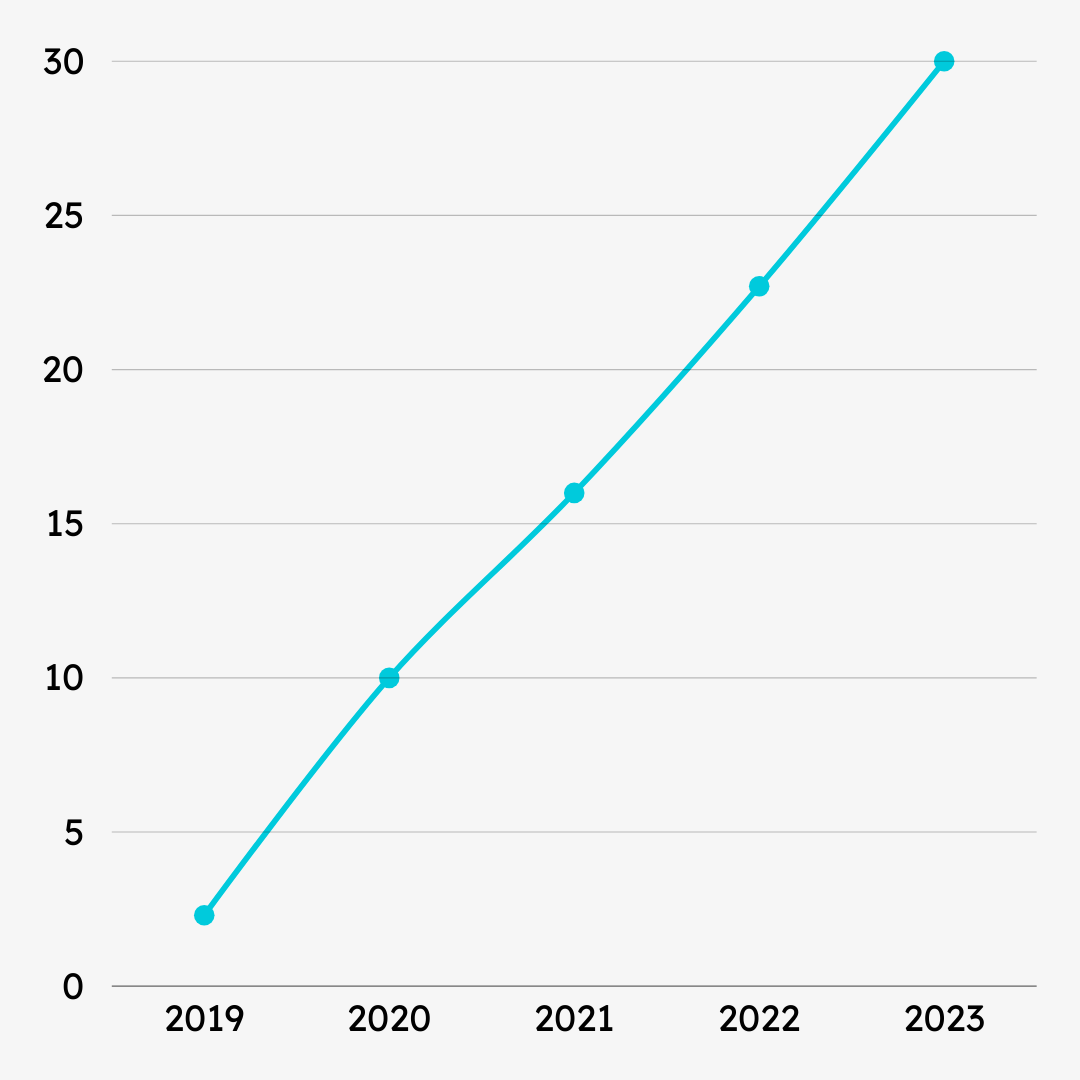
Shein's scale is a key reason the marketing strategy gets studied so closely. Reporting on Shein's 2024 performance has put revenue around $37 billion with profit around $1.3 billion, highlighting both the size of the machine and the pressure of operating costs. (The Business Times)
Valuation narrative has also become part of the conversation. Earlier reporting around a potential London IPO included debate over valuation cuts (Financial Times). The listing later moved to Hong Kong: Shein debuted there on September 1, 2026, and by September 4 its shares had fallen more than 20% below the offer price as the company pitched acquisitions and marketplace expansion as its next growth phase. (Reuters) The point for marketers is not the daily share price; it is that operating conditions, regulation, and growth expectations now shape the external brand narrative alongside demand.
- Revenue and profit reporting show the scale behind Shein marketing.
- Market narrative and regulatory context shape investor and consumer sentiment.
- Large scale makes trust and compliance central, not optional.
How to Apply Shein's Marketing Strategy Without Copying the Model
You do not need Shein's scale to borrow the useful mechanics. A clear offer, disciplined content cadence, strong conversion experience, and repeatable retention loop can reinforce one another without copying the risky parts of ultra-fast fashion.
- Turn your positioning into a consistent buying reason. Promotions work best when they follow a rhythm, not random discounting. A clear brand strategy gives your pricing, packaging, and message a coherent logic that customers can trust.
- Build creators into a pipeline. Treat creators like a channel with onboarding, briefs, and monthly volume. Start with a performance plan, then expand. A focused marketing consultation can clarify what to test first and how to measure success without wasting budget.
- Make conversion a design priority. Shein's advantage is not only social reach, it is what happens after the click. Fast pages, clear navigation, strong product detail pages, and smart merchandising turn interest into revenue. That is where a strong web design agency and UI UX agency approach becomes a growth lever, not a cosmetic one.
- Standardize your brand system so speed does not create chaos. If you want faster output, you need tighter rules. Visual identity, tone, naming systems, and templates allow your team to ship consistently. A disciplined branding agency process helps you move fast without looking fragmented.
- Build durable discovery beyond social spikes. Social is powerful, but long-term demand compounds when customers can find you intentionally. For catalog-heavy stores, ecommerce SEO can strengthen product and category discovery, while a broader SEO agency strategy can support the wider technical and editorial system.
If you want to translate these mechanics into a growth system that fits your own market, Brand Vision can help connect positioning, digital experience, and acquisition priorities. Contact Brand Vision to discuss the next step.