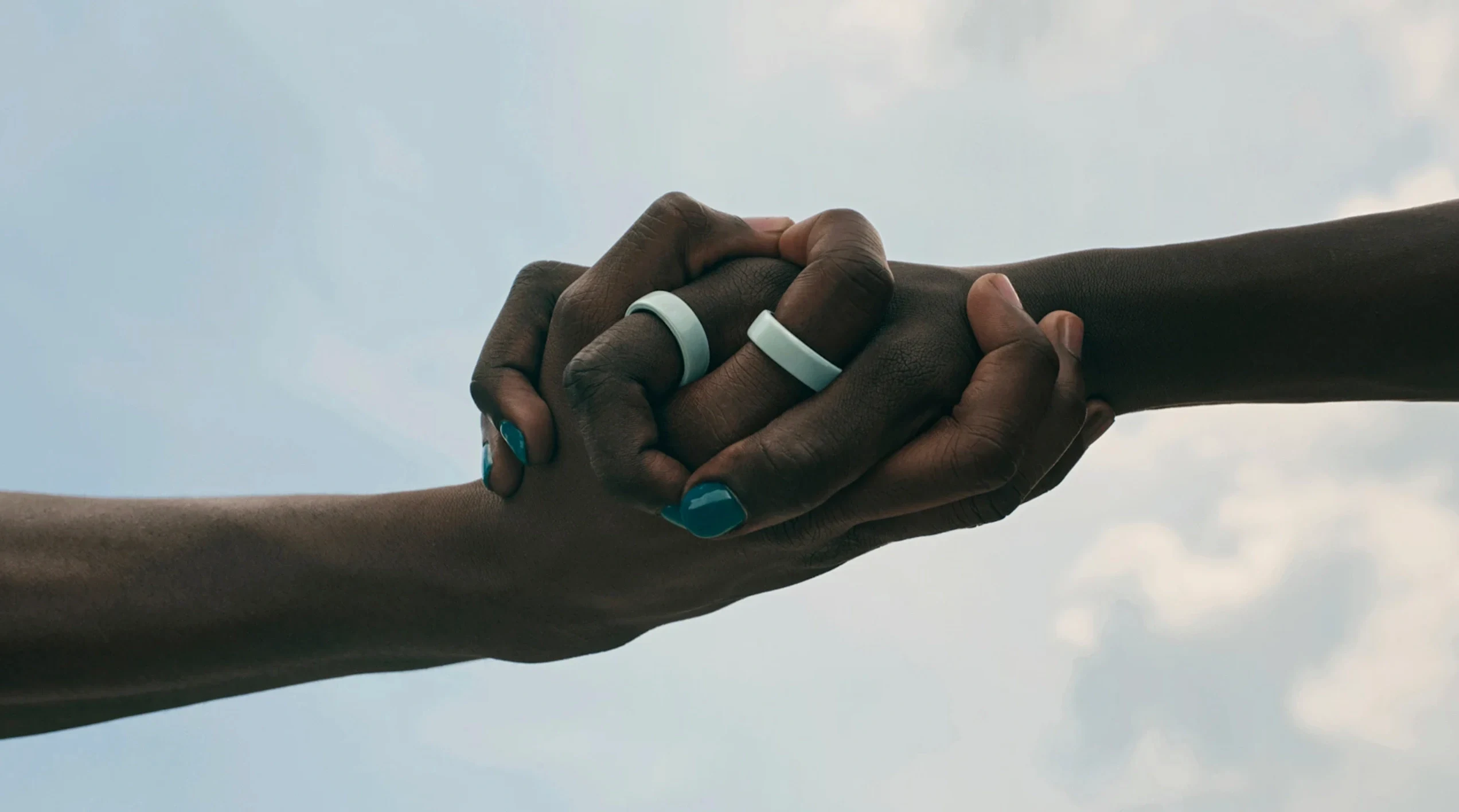
The Oura marketing strategy is a useful case study for leaders who need growth without turning wellness into a vague lifestyle aesthetic. The category is crowded, the trust bar is high, and the buyer has more choices than ever. Yet Oura has managed to move from “sleep tracker for biohackers” to a broader wellness brand that people wear in public, talk about, and treat as part of identity.
That shift did not come from one campaign. It came from a linked system: positioning that feels personal, product design that reads like jewelry, channels that match how younger buyers discover status objects, and distribution that reduces purchase friction. For teams building any health-adjacent product, the mechanics are worth studying.
At a Glance: The Oura Ring Marketing Strategy in 2025
- Scale and momentum: Oura reported surpassing 5.5 million rings sold and said revenue doubled for the second year in a row, alongside new funding and expansion plans. (Business Wire announcement)
- Awareness shift: Under its current marketing leadership, Oura moved from low awareness to above 30% awareness in the US, alongside a repositioning toward a broader “holistic healthcare” narrative. (Marketing Week interview)
- The core idea: Oura frames the ring as a “translation device” that turns complex signals into usable guidance, which supports wellness as a daily practice rather than a one-time purchase.
- The trend mechanism: Oura pairs health utility with self-expression, treating the ring as both a sensor and a visible object people choose, style, and replace like a wardrobe item.
- The growth engine: Product decisions, campaign creative, retail distribution, and subscription retention are designed to reinforce each other instead of competing for attention.
Method note: Numbers and milestones in this case study are drawn from Oura’s public announcements and interviews in established business and marketing outlets. Interpret brand claims as directional unless independently verified.
Why Oura Ring's Marketing Matters for Wellness and Health-Tech Brands
Wellness brands face two hard problems at the same time.
First, differentiation is thin. Many products promise “better sleep,” “less stress,” and “more energy.” Those claims are easy to copy. Second, trust is fragile. Health-adjacent products can lose credibility quickly if the messaging sounds clinical without evidence, or lifestyle-first without substance.
Oura’s recent marketing stands out because it addresses both problems in a disciplined way. It makes wellness feel individual, not generic. It makes the product visible, not hidden. It supports broad reach channels with a product story that still feels coherent when someone lands on a product page for the first time.
For teams doing health and wellness marketing agency work, the lesson is not “run a bold campaign.” The lesson is how to build a brand system that can travel across retail, social video, and subscription retention without losing the plot.
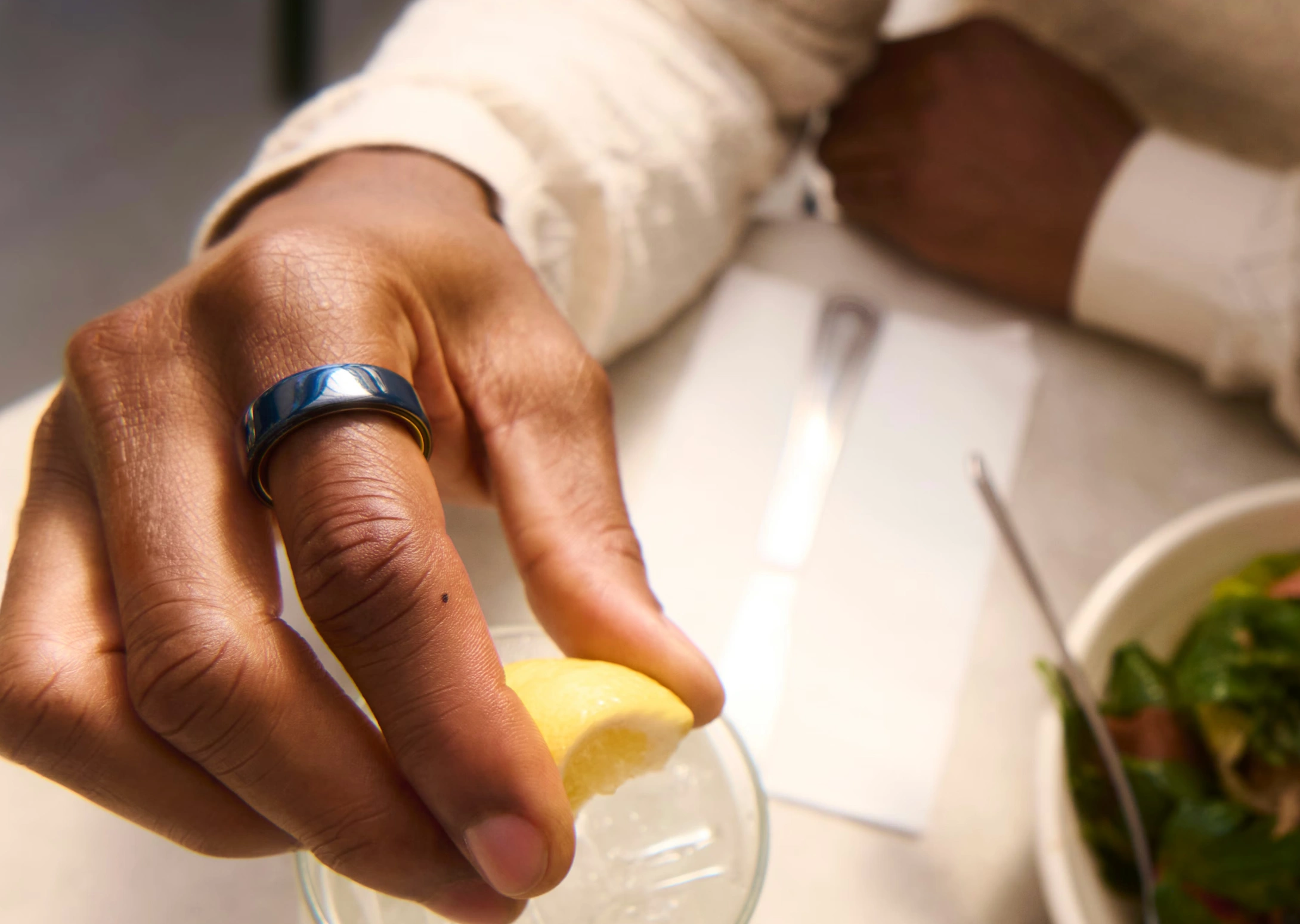
Category Context: Wellness Becomes Daily and Personalized
In 2025, wellness is less about occasional behavior and more about ongoing management. That is not a creative trend. It is a demand shift.
McKinsey frames wellness as a daily, personalized practice for millennials and Gen Z, tied to a global market it sizes at $2 trillion. (McKinsey Future of Wellness (May 29, 2025). The practical implication is simple: the winning brands do not only sell products. They sell systems that users return to.
At the same time, wearable adoption continues to expand across categories, with new form factors gaining attention. IDC’s market insights note continued growth in global wearables shipments, alongside “new form factors” beyond traditional wrist-worn devices. (IDC Wearable Devices Market Insights (Updated Oct 21, 2025).
Oura Ring's strategy sits at the intersection of these forces. It sells a product that collects data continuously, then packages it as personalized guidance. The ring format adds a second advantage: it is naturally an object of style and identity, not only utility. That makes trendiness an outcome of product and positioning, not a layer of decoration.
Positioning Shift: From Sleep Tracking to Proactive, Holistic Health
Oura Ring's repositioning is the foundation. Without it, the newer campaigns read like cosmetic refreshes.
Marketing Week describes the early challenge clearly: low awareness, positioning that was “relatively unclear,” and a story centered on sleep tracking and niche biohacker use. Over time, Oura repositioned toward a broader “holistic healthcare” frame, with women’s health becoming a central growth lever. (Marketing Week interview with Oura CMO)
This is not a slogan change. It is a hierarchy change. When a brand moves from a single feature to a platform story, it has to re-sequence messaging:
- What the product is, in plain language
- What it helps a person do, day to day
- Why the brand is credible to say it
- How someone starts, and what happens after the first week
That sequencing matters because it maps to how prospects evaluate risk. With wellness products, the perceived risk is not only money. It is time, habit change, and trust with personal data.
If you look at Oura Ring's recent outputs through that lens, the intent is consistent. The product translates signals. The user makes decisions. The ring becomes part of daily behavior.
STP Snapshot: Who Oura Ring Targets and What It Promises
Segmentation
- People who want daily wellness feedback without wearing a watch
- People motivated by self-improvement, but resistant to harsh performance culture
- People who view wellness as part of identity, not a private activity
Targeting
- Younger consumers who expect personalization, visibility, and shareable narratives
- Women’s health audiences looking for cycle-aware insights within a broader wellness system
- Mainstream buyers who need clarity, not technical jargon
Positioning
- A wearable that translates complex biometric data into actionable guidance, framed as an everyday health practice rather than a one-time “fix”
Product as Brand: Design, Color, and Multi-Ring as Self-Expression
Oura’s product strategy and marketing strategy are hard to separate. That is the point.
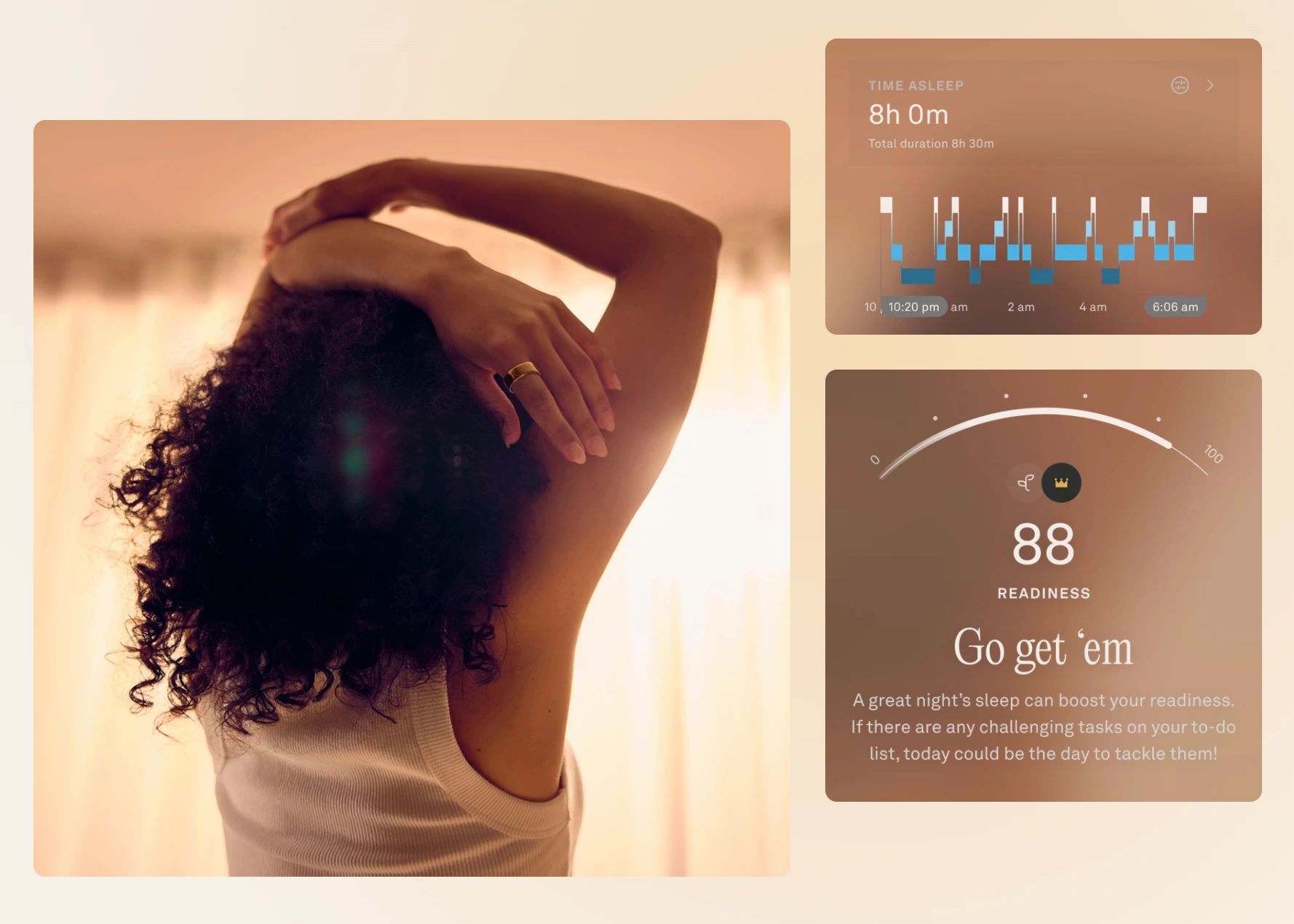
The ring format does something watches struggle to do. It can feel like jewelry first, technology second. That opens a door: the product can stand out as a style decision while still carrying health utility.
The Jewelry Logic: Making a Wearable Visible
Oura’s ceramic collection is a clear signal that the company is treating design as a brand lever, not packaging. Wired notes Oura’s ceramic ring options and frames the launch as a premium finish paired with new accessories. (Wired coverage of the Ceramic Collection)
The marketing value of that move is structural:
- Colorways create new reasons to talk about the product without inventing new health claims.
- A visible object makes “recognition” possible, which supports community identity.
- Product photography becomes easier to build around lifestyle rather than charts.
This is also where digital execution becomes revenue-linked. If your product is design-led, the website has to carry that design with fidelity. That includes high-quality imagery, clean comparison between finishes, and fast performance on mobile.
For brands building similar experiences, strong web design services are not cosmetic. They protect conversion when paid reach and retail interest spike. A slow product page can turn a high-cost awareness moment into leakage.
-1.webp)
Multi-Ring Support and the Wardrobe Effect
Wired also notes a feature that matters more than it looks: support for multiple rings within the app, allowing users to swap rings based on mood or outfit. (Wired on multi-ring support)
That is a retention and expansion mechanic.
If a user can treat the ring like a wardrobe item, the brand can sell a second unit without forcing a second subscription story. It also gives marketing more creative territory: the product is not just “the ring you own.” It is “the ring you choose today.”
From a product experience perspective, this is classic systems thinking. The app, account model, and support flows need to handle multiple devices without confusion. That is a UX design problem as much as a marketing one. Done well, it reduces friction and increases lifetime value without asking for louder messaging.
Credibility Engine: Science, Privacy, and Responsible Health Messaging
When a brand markets wellness, it is operating close to regulated territory. Credibility is not a single claim. It is a set of signals that reduce doubt over time.
Oura’s Proof Stack
Oura’s credibility signals show up in three places:
- How it talks about insights, using measured language rather than medical certainty
- How it frames its role, as guidance and translation rather than diagnosis
- How it presents ongoing feature development, suggesting the system improves over time
Oura also includes straightforward disclaimers in its public communications. In its Business Wire announcement, Oura states its ring is not a medical device and is not intended to diagnose or treat medical conditions. (Business Wire announcement)
That kind of clarity matters. It sets a boundary that protects trust. Many brands blur this line and pay for it later.
Privacy, Partnerships, and the Limits of Health Claims
Privacy is part of the credibility stack, not a separate legal issue. Wellness products collect sensitive signals. Users know that, even if they do not read policies.
The marketing implication is practical:
- Make data control visible in the product and on the site.
- Explain what is collected, why, and how it improves the experience.
- Avoid messaging that suggests certainty when the product is offering probabilities.
If your brand has partnerships in healthcare, insurance, or employers, the trust bar rises again. People need to see governance, not only a promise. That includes clear user consent patterns, simple account controls, and communication that stays consistent across PR, support, and campaigns.
Oura’s broader strategy works because its trend narrative does not replace credibility. It sits on top of it.
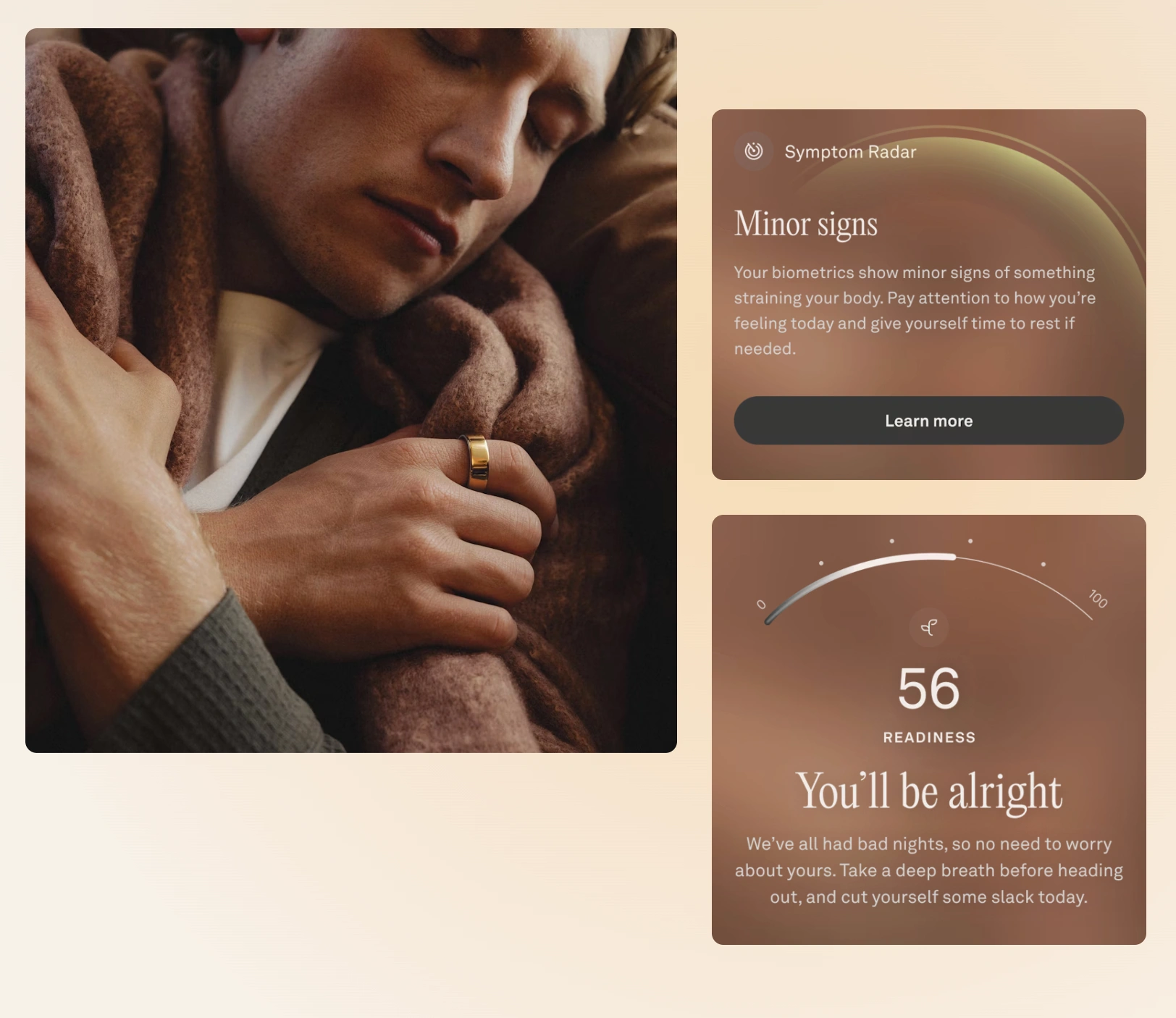
Campaign Breakdown: “Give Us the Finger” and “Ring True to You”
Oura’s 2025 campaign work is a clear expression of the larger system. It uses cultural language, not clinical language. Yet it keeps the product centered.
Give Us the Finger: A Campaign Built on Identity
“Give Us the Finger” is a brand campaign built around the ring’s placement and the idea of signaling. It frames health as something people pursue with optimism and agency, not fear. (Oura campaign announcement)
Strategically, the campaign does three things:
- It gives the ring a recognizable cultural cue. That supports word-of-mouth because people can reference it without explaining features.
- It shifts the emotional posture. The tone leans toward confidence rather than anxiety.
- It creates permission to wear the product visibly. That makes the ring socially legible, not only useful.
For other brands, the lesson is not to copy the creative. It is to build campaigns from product truths. A ring is worn on the hand. That physical reality can be turned into meaning. Many campaigns skip that step and end up generic.
Ring True to You: Colorways as a Growth Strategy
Oura’s ceramic push is a design-led expansion play. Marketing Dive describes the “Ring True To You” work as a multi-channel campaign tied to color, self-expression, and younger buyers, including placements designed to scale awareness. (Marketing Dive coverage)
Colorways function as a growth strategy when they are used intentionally:
- They broaden the audience without changing the core product promise.
- They increase the number of entry points for content and retail storytelling.
- They give existing customers a reason to re-engage.
Importantly, this approach stays industry-agnostic. Any product that can be styled, displayed, or customized can use design as a growth lever. The constraint is operational: your organization has to ship creative, web updates, and retail assets without lag or inconsistency.
Channel Strategy: TikTok, Snapchat AR Try-On, Live Sports, and Urban OOH
Oura’s channel mix fits the product’s dual identity: health tool and visible object.
Social Video for Cultural Adoption
Platforms like TikTok are well-suited for products that signal identity because the content language is personal. People show routines, not spec sheets. They show “why I wear this” more than “what it does.”
Oura’s has an intense focus on TikTok as a priority channel for younger audiences, alongside creative designed to feel lifestyle-forward.
For teams building similar strategies, the practical question is not “should we be on TikTok.” It is “what would a real user show.” If the answer is unclear, the product story is not finished.
AR Try-On to Reduce Fit Risk
Rings are high-friction purchases because sizing matters. Oura’s use of a Snapchat virtual try-on lens addresses that risk in the channel itself. This is a strong example of a channel choice that is tied to a conversion barrier, not a trend.
OOH and Live Sports for Legibility at Scale
Oura’s channel plan also includes TV and live sports programming, plus digital out-of-home in major cities. These placements tied to live sports and urban visibility are designed to broaden awareness.
When brands run high-reach channels, the website becomes the conversion surface for everyone who searches the brand name five minutes later. This is where technical basics become pipeline basics:
- Pages need to load fast on mobile.
- Accessibility needs to be handled as a default, not a later patch.
- Landing pages need governance, so campaign pages do not drift from the core message.
This is also where strong search engine optimization supports the channel mix. Branded search demand rises after OOH and TV. If the search results and landing experience are unclear, a large percentage of that demand evaporates.
.webp)
Distribution Strategy: From DTC to Retail Try-On and Experiential
Oura’s distribution choices reinforce the marketing story. They reduce uncertainty, which is one of the biggest blockers for smart rings.
Why Rings Need Try-On
Rings are personal. Sizing, comfort, and appearance are hard to evaluate on a screen. Retail solves that in minutes.
Marketing Week notes that Oura’s earlier focus leaned toward direct-to-consumer and partnerships, with less emphasis on retailers. Over time, retail became part of the growth plan. (Marketing Week interview)
This is not only a sales decision. It is a trust decision. A product that can be handled in-store feels more real. That matters in a category where skepticism is common.
Retail Expansion Without Diluting Premium
Oura’s retail partnerships, alongside the campaign push, are connecting awareness-building to distribution.
The premium risk in broad retail is brand dilution. Oura’s strategy avoids that by keeping the story consistent:
- The product remains design-forward.
- The messaging remains measured about health claims.
- The campaign remains centered on identity and lifestyle.
For other teams, the takeaway is to treat retail as part of brand architecture. Your in-store presence, your site, and your packaging should use the same language and hierarchy. If they do not, customers experience friction and doubt.

Retention Flywheel: Subscription, Personal Insights, and Community Identity
Oura’s marketing does not end at the sale. It is built to support ongoing use.
The Wear, Data, Insight Loop
The most durable retention mechanic in wearables is longitudinal value. The more consistently someone wears a device, the more useful the insights can become.
That creates a flywheel:
- Wear the ring
- Collect signals over time
- Translate signals into insights
- Adjust behavior
- Feel progress and identity reinforcement
- Wear the ring again
This model turns “wellness” into a daily relationship, which matches the broader market shift described by McKinsey. (McKinsey Future of Wellness)
Keeping Subscription Value Clear
Subscription models add pressure. If value is unclear, churn rises fast.
Oura ring mitigates that pressure by keeping the story grounded in outcomes and continuity. It also keeps widening the narrative beyond a single metric. When the product is framed as a platform, the subscription reads less like an add-on and more like the operating system.
This is where product clarity matters. Users should be able to answer two questions at any time:
- What am I learning this week?
- What should I do with it?
When those questions are answered simply, retention improves without needing louder marketing.
Key Lessons: What Marketers Can Borrow From Oura
Oura’s strategy is not a single tactic. It is a connected set of decisions that make trendiness a byproduct of clarity.
A simple framework that explains the system:
- Proof: measured claims, clear boundaries, credibility signals
- Personalization: translation of signals into guidance that feels individual
- Permission: self-expression that makes the product socially legible
A Practical Checklist for Teams
If you are building a comparable strategy, pressure test your plan against these points:
- Positioning
- Can you describe the product in one line without feature stacking?
- Does the promise read as personal, not generic?
- Product and design
- Does the product have visible, ownable design cues?
- Do design updates create new reasons to engage without inventing new claims?
- Channel mix
- Do your channels match the way your audience discovers and validates identity objects?
- Do you have conversion surfaces built for the attention you are buying?
- Distribution
- Where does your category need try-on, demos, or human reassurance?
- Is retail part of your brand architecture, not only a sales channel?
- Retention
- Do users understand the weekly value, not only the long-term promise?
- Does the product experience reinforce identity and progress?
- Governance
- Can your team ship campaign pages, product updates, and compliance language quickly without inconsistency?
- Do web, product, and marketing share the same system of truth for copy and design?
Oura’s clearest advantage is not that it “does wellness.” Many brands do. The advantage is that its brand system is coherent across product, creative, and distribution, which is rare in practice.
If you are rethinking your positioning or building a clearer growth system across product, site, and channels, start with the fundamentals. A disciplined brand story still wins in 2025. Speak with our team about branding.
FAQ: Oura Ring's Marketing Strategy Questions
What is Oura Ring's marketing strategy in 2025?
Oura Ring's 2025 strategy combines a broader wellness positioning with product design that reads like jewelry, then supports it through high-visibility channels and expanding retail distribution. It treats trendiness as a result of coherence, not a temporary creative layer.
Why did Oura Ring move beyond “sleep tracking” as its core story?
A single-feature story limits audience size and reduces creative territory. Oura’s repositioning expands the narrative toward proactive wellness, which gives it more room to speak to daily habits, women’s health, and longer-term health management.
How does Oura make wellness feel individual instead of generic?
It frames the product as a translator of signals, then packages those signals into guidance a person can act on. The promise is not “wellness.” The promise is clarity about your own patterns, presented in a way that feels personal.
What role does self-expression play in Oura’s growth?
Self-expression makes the ring socially legible. Colorways and design finishes give the product a style dimension, which expands the audience and increases reasons to talk about the ring without relying on medical claims.
Which channels does Oura emphasize, and why?
Oura uses channels that fit both identity storytelling and reach. Marketing coverage highlights TikTok and Snapchat for younger audiences, plus live sports and urban out-of-home to broaden awareness at scale.
Why does retail matter so much for smart rings?
Rings have higher purchase friction because sizing and comfort are hard to evaluate online. Retail reduces uncertainty quickly, which supports trust and conversion.
Is Oura a medical device brand?
Oura presents itself as a wellbeing and health insights platform, while also stating clear limits around medical use in its public communications.
What can other brands learn from Oura without copying it directly?
The transferable lesson is systems design: align positioning, product design, channel choices, distribution, and retention into one coherent narrative. If any part contradicts the others, trendiness becomes fragile and expensive to maintain.

%2520(1).png)