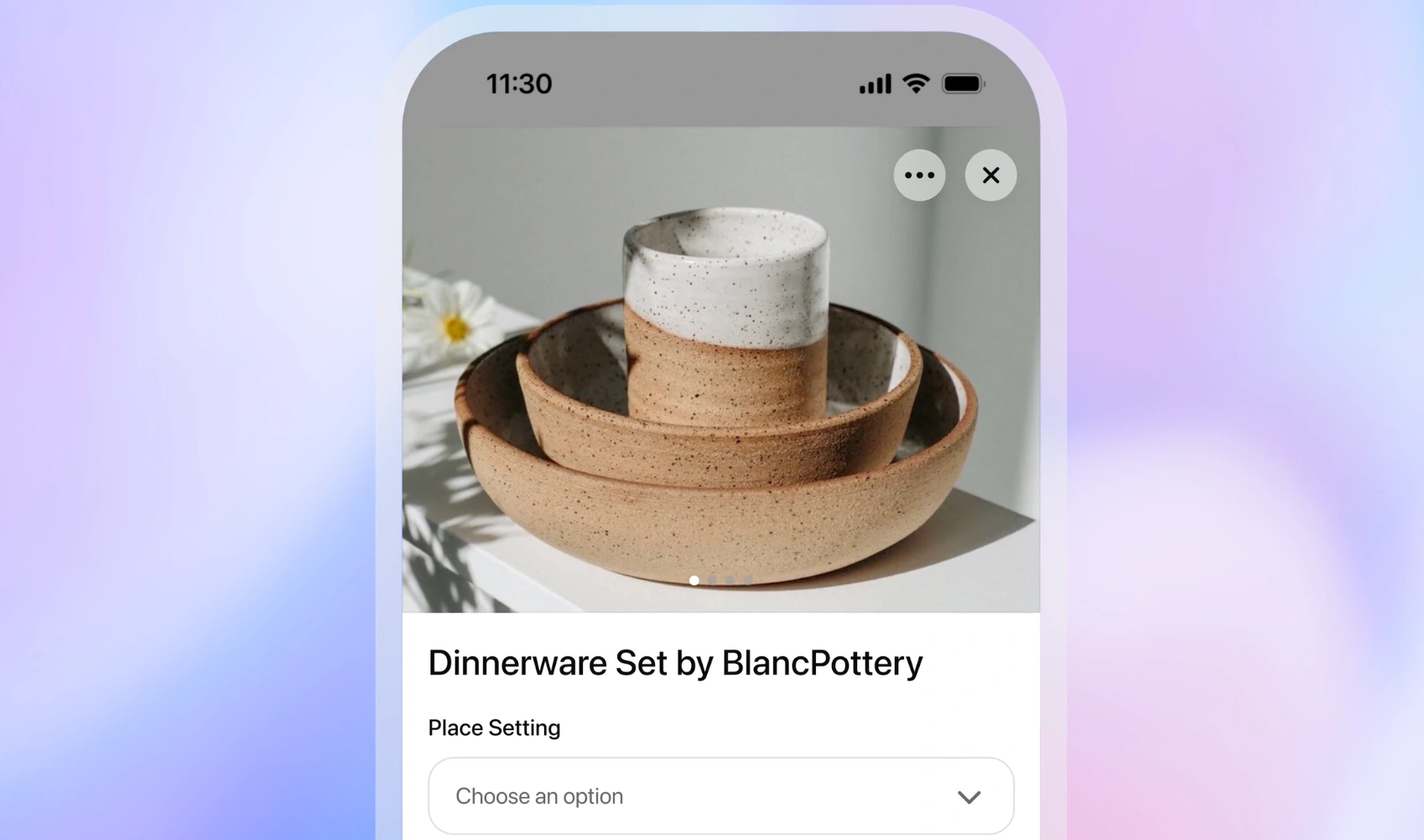
ChatGPT shopping has changed significantly since Instant Checkout launched in September 2025. Today, ChatGPT can surface product options with images, product details, merchant choices, and links to buy. Some eligible products and merchants may also show Instant Checkout, while other purchases continue on the seller’s site. Product results are separate from ads and are not ranked based on OpenAI partnerships. For e-commerce and B2C brands, the important shift is that AI can now influence product discovery before a shopper reaches a marketplace or merchant website.
At a glance
- Shopping today: Product results can appear in ChatGPT on mobile and web when a query signals shopping intent.
- Instant Checkout: Some eligible products and merchants can still be purchased inside ChatGPT; other listings send shoppers to the merchant’s site.
- Shopify: Shopify product data is integrated through Shopify Catalog, while OpenAI’s current support guidance says Shopify purchases complete on the merchant’s online store.
- New in October 2026: Clothing and accessory listings can show a virtual “Try on” option, and shoppers can save products to Favorites or folders in the ChatGPT Library. (OpenAI Release Notes)
- Product ranking: Shopping results are not ads and are not influenced by OpenAI partnerships.
How to Use ChatGPT Shopping
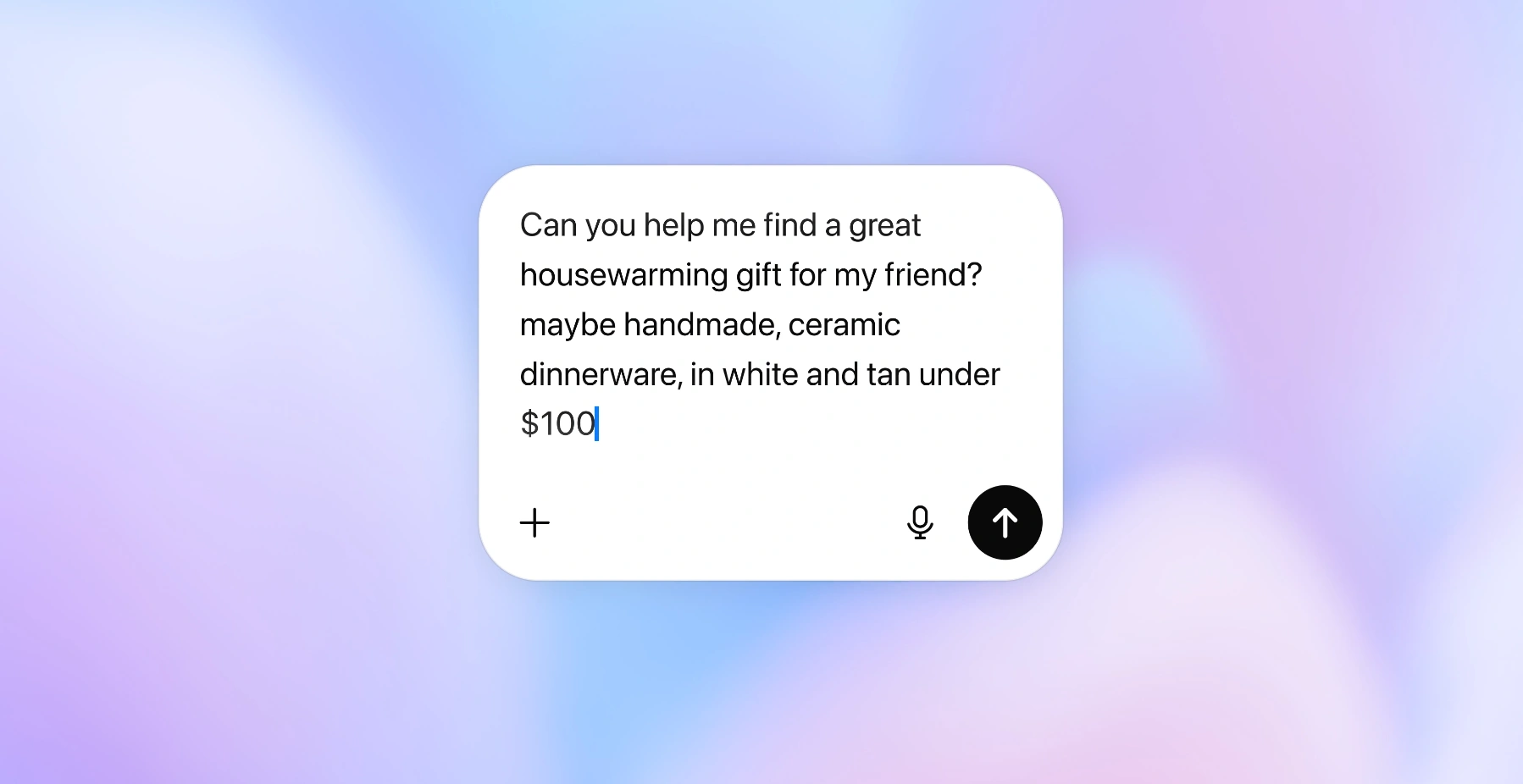
You do not need a special command to use ChatGPT shopping. Ask a normal shopping question and include the constraints that matter, such as budget, size, use case, materials, or preferred brands. ChatGPT may show product cards, compare merchant options, or ask follow-up questions. For clothing and accessories, some listings can also offer virtual try-on. For merchants, consistent product photography and product presentation are part of the same visual identity customers see elsewhere.
- Describe what you need and include constraints such as budget, size, category, or intended use.
- Review the product details, merchant options, prices, and return information before choosing.
- Use virtual try-on or saved Favorites when those controls are available.
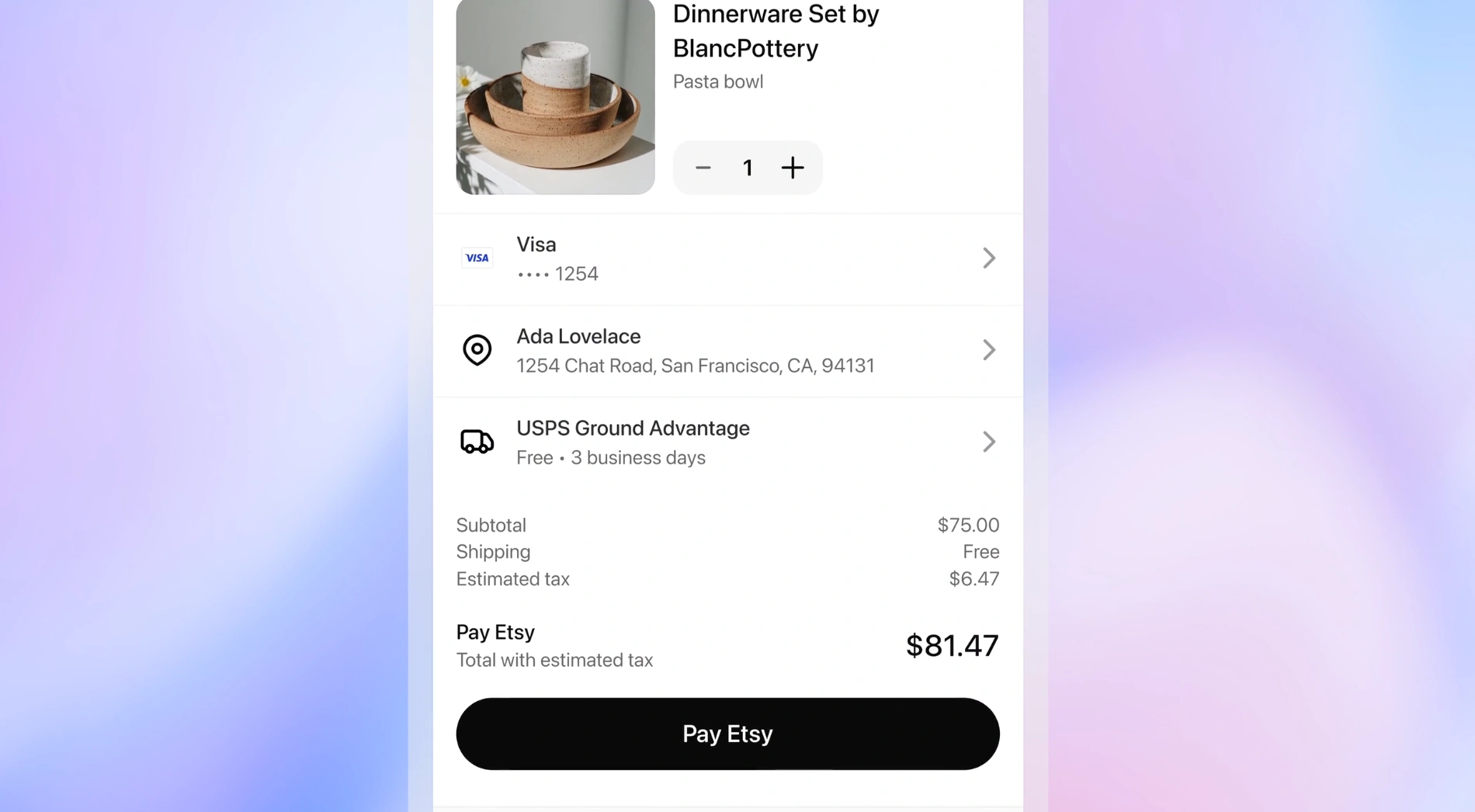
- If Instant Checkout is offered, confirm the order in ChatGPT; otherwise follow the merchant link to complete the purchase.
1) How product discovery works
Product discovery is broader than Instant Checkout. ChatGPT can show products when it interprets a question as shopping intent, using the query, conversation context, structured product metadata, and other available information. OpenAI says product results are not ads and are not influenced by its partnerships (OpenAI Help). For merchants, accurate feeds and product pages can therefore become part of AI search optimization, even though appearing in a product carousel is not guaranteed.
- Product results can include images, prices, merchant options, ratings, and model-generated review summaries.
- Selections are organic rather than paid product placements.
- OpenAI notes that labels, review summaries, prices, and availability may be incomplete or delayed, so shoppers should verify important details before buying.
2) What Instant Checkout adds
Instant Checkout launched on September 29, 2025 as an early agentic-commerce feature. At launch, U.S. Free, Plus, and Pro users could buy eligible products from U.S. Etsy sellers inside ChatGPT, single-item purchases were supported, and Shopify participation was described as coming next (Reuters). OpenAI’s launch announcement described the same starting scope and made clear that the merchant remained responsible for orders, payment, fulfillment, returns, and support. (OpenAI)
- The original 2025 launch began with U.S. Etsy sellers and single-item purchases.
- Those launch limits should not be treated as a complete description of current shopping availability.
- Current OpenAI guidance instead says Instant Checkout may appear for some eligible products and merchants.
3) Who can use it and where
The current shopping experience is available in ChatGPT on mobile and web, but OpenAI’s present shopping help page does not publish one universal country or merchant list for Instant Checkout. The original rollout was U.S.-only and Etsy-based (Reuters). Shopify product data is now integrated into ChatGPT through Shopify Catalog, but OpenAI’s current Shopify guidance says shoppers check out on the merchant’s online store. That means merchant-owned e-commerce web design and e-commerce SEO still matter after AI discovery.
- Shopping results are available in ChatGPT on mobile and web.
- Instant Checkout availability depends on the specific product and merchant.
- Shopify products can appear through Shopify Catalog, while checkout for Shopify merchants occurs on the merchant’s online store.
4) Checkout mechanics and user experience
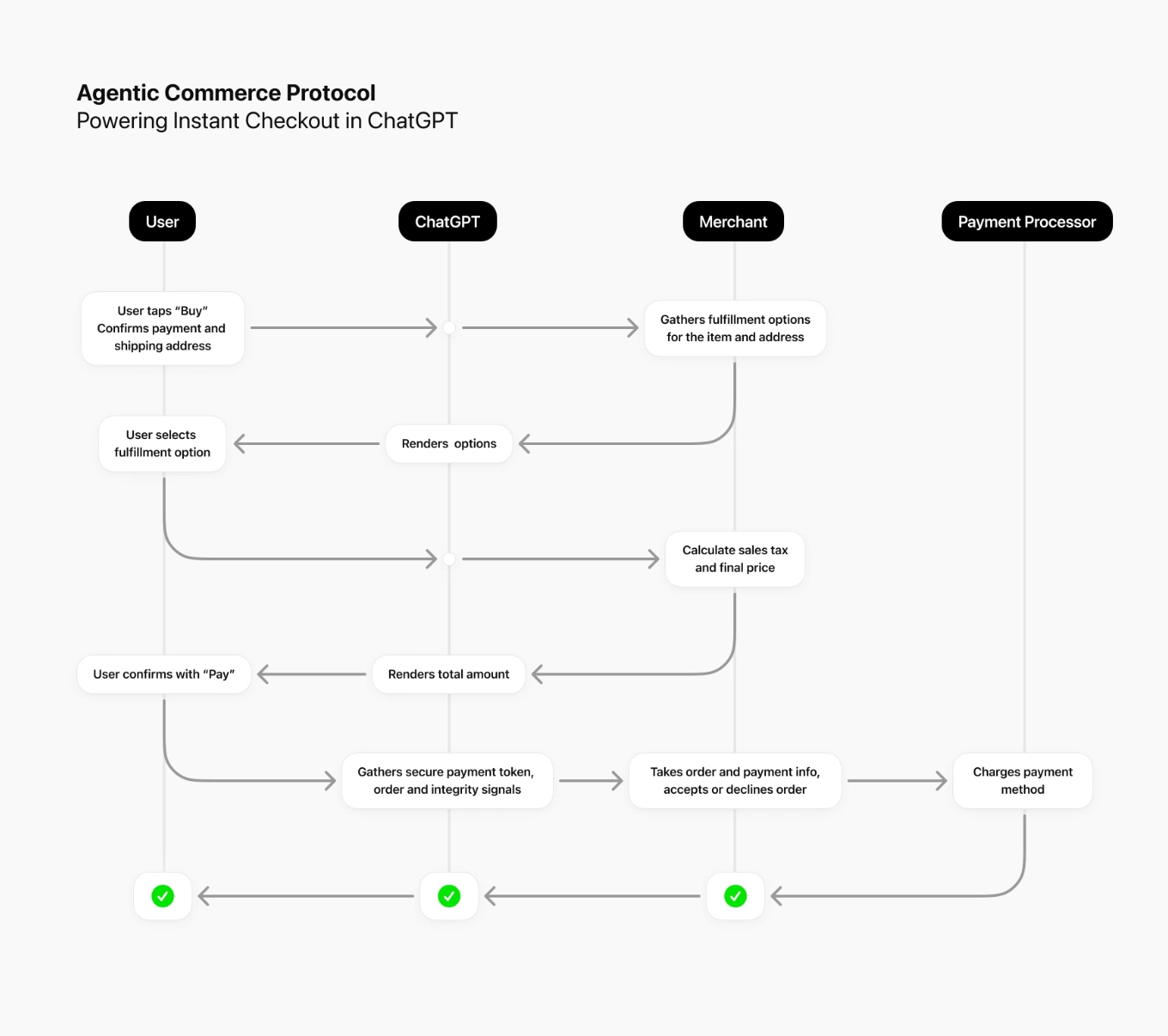
When Instant Checkout is available, the user confirms the order, shipping information, and payment details before the purchase is submitted. OpenAI says payment tokens are authorized for a specific merchant and amount, and only information required to complete the order is shared with the merchant. The merchant remains the merchant of record and handles payment, fulfillment, returns, and support. Stripe helped co-develop the underlying Agentic Commerce Protocol, but participating merchants can use other payment processors as well (PYMNTS).
- The shopper explicitly confirms the purchase before an order is submitted.
- The merchant remains responsible for order acceptance, payment processing, fulfillment, returns, and support.
- Instant Checkout is a supported path for eligible listings, not the only way purchases can be completed.
5) OpenAI’s monetization strategy
Instant Checkout also created a commerce revenue model for OpenAI. Its launch documentation says merchants pay a small fee on completed Instant Checkout purchases, while the service is free for shoppers and does not affect product prices or product-result ranking. The Financial Times also covered the commission model at launch (Financial Times). For brands, this is another distribution surface, but it does not replace the positioning and trust work a branding agency would address across the wider customer journey.
- OpenAI says merchants pay a small fee on completed Instant Checkout purchases.
- Shoppers do not pay an added Instant Checkout fee, and OpenAI says merchant fees do not change product ranking.
- The merchant keeps control of payment, fulfillment, returns, and the customer relationship.
6) Current limitations
The current limitations are different from the launch limitations. OpenAI’s 2025 rollout began with U.S. Etsy sellers and single-item purchases (Reuters), but current support pages no longer present those points as a universal description of ChatGPT shopping. Today, not every product is shown, Instant Checkout is not available for every listing, prices can lag merchant updates, review summaries are model-generated, and virtual try-on does not guarantee fit or size.
- Not every available product or merchant will necessarily appear in ChatGPT.
- Prices, shipping terms, ratings, and generated labels should be verified before purchase.
- Instant Checkout availability varies, and many purchases still complete on merchant sites.
7) Tips for users to maximize ChatGPT shop
The strongest shopping prompts describe the decision rather than relying on phrases like “buy me.” Tell ChatGPT what you need, what you want to avoid, your budget, and any important trade-offs. Then verify merchant details before purchasing. Current shopping tools also let users save products to Favorites or folders, and supported clothing or accessories may offer virtual try-on (OpenAI Help).
- Give concrete constraints such as budget, size, material, intended use, and preferred features.
- Compare merchant options instead of assuming the first price shown is the lowest available.
- Check measurements, product details, shipping, and return policies before buying.
- Use Favorites or folders to save options, and use virtual try-on as a visualization aid rather than a fit guarantee.
Shop Your Essentials with AI
ChatGPT shopping is now best understood as a discovery and comparison layer that can sometimes extend into checkout. For digital retail, the merchant’s own product data, pricing, brand presentation, and website still matter because many shoppers continue to complete purchases outside ChatGPT. If your team is adapting product discovery and conversion paths for AI-assisted shopping, talk with Brand Vision about the site, search, and brand experience around that journey.
FAQ
Is ChatGPT shopping available worldwide?
Shopping results are available in ChatGPT on mobile and web. OpenAI’s current support page does not list one universal global eligibility rule for Instant Checkout; availability depends on the product and merchant. The original 2025 launch was limited to U.S. users buying from U.S. Etsy sellers (Reuters).
Is Instant Checkout still limited to single-item purchases?
Single-item checkout was a documented limitation of the September 2025 launch. OpenAI’s current shopping help page no longer presents that launch limit as a universal description of today’s shopping experience, so users should rely on the checkout options shown for the specific product and merchant (Reuters).
Do users pay transaction fees?
OpenAI’s launch documentation says shoppers do not pay an added Instant Checkout fee and merchants pay a small fee on completed purchases. The Financial Times also reported the merchant commission model at launch (Financial Times).
Are the product suggestions ads?
No. OpenAI says product results are selected independently by ChatGPT, are not ads, and are not influenced by OpenAI partnerships (OpenAI Help).
How is payment processed?
For eligible Instant Checkout purchases, the shopper explicitly confirms the transaction and the merchant processes the order through its payment setup. OpenAI says payment tokens are scoped to the approved amount and merchant. Stripe co-developed the protocol, but merchants can participate with other payment processors as well (PYMNTS).