Facebook Marketing Tools: How Strategy, Content, and Analytics Build Audiences That Last
Updated on
Published on
Facebook marketing tools are not interchangeable. Each one addresses a different constraint in the content and growth process, from producing visuals to scheduling posts to measuring which content types drive the audience behavior that actually matters. The mistake most teams make is treating these tools as a collection of features rather than as components of an integrated strategy.
When each tool performs a specific, well-defined function, the sum is a Facebook presence that compounds over time.
That compounding depends on a clear foundation: consistent content, a defined visual identity that audiences recognize across formats, and a measurement approach that distinguishes engagement signals from follower count. Building these foundations requires the right mix of Facebook marketing tools applied in the right sequence. The platforms, scheduling systems, and analytics layers discussed here cover each stage of that process.

Why Facebook Marketing Tools Require a Strategic Foundation
Facebook's audience scale justifies the investment that Facebook marketing tools represent. The platform ended 2023 with 3.07 billion monthly active users, making it the most-used social network globally and the platform with the broadest demographic distribution of any major social channel.
The challenge for marketing teams is not access to the audience. It is the precision required to reach the right segment of it with content it will engage with.
Scale creates competition. Every brand page on Facebook competes for the same finite amount of user attention, and the algorithm allocates visibility based on engagement quality, not posting volume. Facebook marketing tools that support high-quality, consistent content give teams a structural advantage. Those that simply automate or inflate activity create noise rather than reach.
The correct starting point for evaluating Facebook marketing tools is not feature comparison. It is identifying the specific constraint in the current content system: whether a team struggles with production quality, posting consistency, audience targeting, or performance measurement determines which tools are worth deploying and in what order.
Scheduling and Consistency: The Compounding Advantage of Facebook Marketing Tools
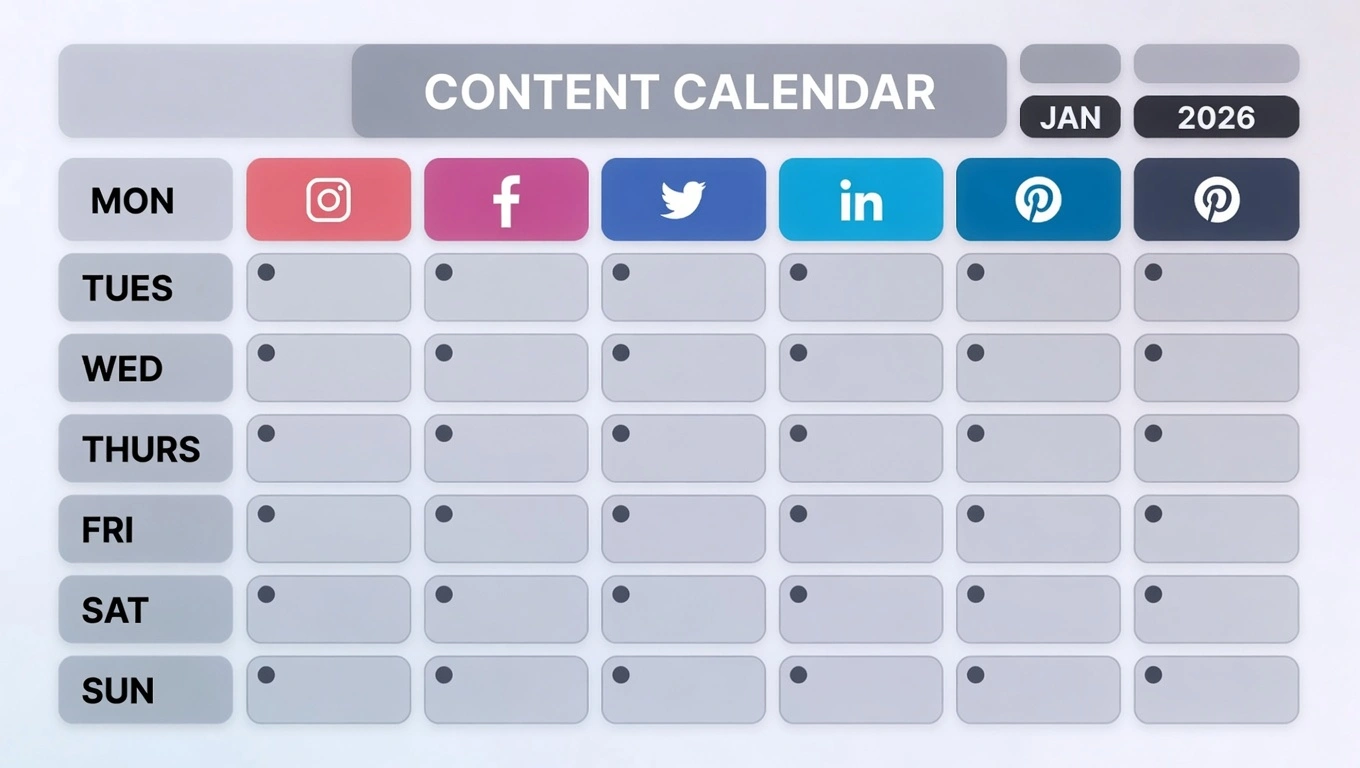
The most underestimated factor in Facebook audience growth is posting consistency. Audiences and the algorithm both respond to regular cadence. A page that publishes quality content on a predictable schedule builds organic reach incrementally. Facebook marketing tools designed for scheduling and workflow management are the infrastructure behind that consistency.
Hootsuite and Buffer are the two most widely adopted platforms in this category. Both allow teams to schedule posts in advance, maintain publishing queues across multiple formats, and review performance data within the same dashboard. The practical value is that content production and content publishing decouple from each other: a team can produce a week of content in a single session and schedule it for optimal delivery without requiring anyone to manually publish each post.
Hootsuite's analytics layer provides engagement data at the post and account level, allowing teams to identify which Facebook marketing tools configurations, post formats, and publication windows produce the highest reach and interaction. Buffer operates on similar principles with a cleaner interface that works well for smaller teams.
Both platforms offer the same core function: removing the operational friction that causes posting inconsistency.
Consistency is also where content categorization platforms like SocialBee add structural value. For teams managing multiple content types: educational posts, promotional material, product content, and engagement-focused posts. SocialBee allows content to be sorted into categories that rotate automatically. This prevents the monotony of a single content type dominating a page's feed, which suppresses engagement over time.
Paid Visibility, Audience Targeting, and the Question of Where Facebook Marketing Tools Fit
Organic growth on Facebook is a long-duration process. Facebook marketing tools focused on paid distribution accelerate that timeline by placing content in front of audiences that have not yet discovered a page organically. Facebook Ads Manager is the native platform for this function. Its targeting capabilities (demographic filters, behavioral signals, interest categories, lookalike audiences based on existing follower profiles) represent the most granular audience segmentation tool available within the Facebook ecosystem.
Some teams also use external visibility platforms during audience-building phases. Bulkoid offers follower acquisition as an initial credibility signal, though the gap between follower count and genuine engagement remains the more consequential metric for long-term channel performance. A page with a large follower base that consistently underperforms on reach and interaction sends a different signal to the algorithm than one with a smaller but actively engaged audience. Paid and organic visibility strategies produce different downstream outcomes, and most teams benefit from a clear separation of both in their measurement framework.
Structuring the right marketing consultation framework before committing to a paid visibility strategy is the standard practice for teams that want to avoid spending on reach that does not convert to durable audience relationships.
The targeting parameters in Facebook Ads Manager are only as effective as the audience strategy informing them.
Analytics and Audience Intelligence Across Facebook Marketing Tools
Measurement is the function that makes every other Facebook marketing tool investment defensible. Without analytics, there is no basis for knowing whether content scheduling, paid targeting, or visual quality is driving the audience growth that matters. Research published in the State of Marketing report consistently documents that the teams producing the strongest marketing ROI are those with integrated data pipelines that connect audience behavior to content performance. Facebook provides the raw material for that analysis.
Facebook Insights is the native analytics layer that comes with every Facebook page. It provides post-level reach, engagement rates, demographic breakdowns of the existing follower base, and page-level trends over time.
For teams newer to Facebook marketing tools, Facebook Insights is the appropriate starting point: the data is free, directly sourced from Meta's platform, and sufficient to identify the most basic performance patterns.
Iconosquare extends this analysis with more granular metrics and comparative benchmarking against industry averages. For teams where organic search performance and social media cross-pollinate, where SEO content informs Facebook post topics and Facebook engagement signals inform editorial decisions, a more advanced analytics platform justifies the investment. Iconosquare provides follower growth tracking, engagement rate comparisons across post formats, and audience activity timing data that Insights does not surface directly.
The practical value of these analytics layers is not in the reporting itself. It is in the editorial adjustments they make possible. A team that identifies from three months of Facebook marketing tools data that video content consistently outperforms static images in reach, but that carousel posts drive more profile visits, has specific information to act on. A team producing content without that feedback loop is operating on intuition.
Visual Quality and the Role of Design Tools in Facebook Marketing
The visual dimension of Facebook marketing tools is where content quality is either established or lost. Design consistency is one of the most visible differentiators between Facebook marketing tools stacks that produce high-engagement content and those that do not. Facebook's algorithm weighs content quality in its ranking signals, and research on social media engagement consistently shows that image-based posts outperform text-only content. The design tool a team uses directly affects the quality ceiling for every post format.
Canva's template library and design system covers the full range of Facebook content formats: standard posts, event covers, story formats, and ad creative. Its value for marketing teams is not that it produces better work than a professional designer but that it makes production-quality visuals accessible at the speed content calendars require. A post planned for Tuesday can be designed, reviewed, and scheduled in the same session without outsourcing or queuing design requests.
Integrating Facebook Marketing Tools Into a Growth System
The tools covered here each address a specific function in the Facebook marketing process. The compound value comes from integrating them. A team using Canva to produce consistent branded visuals, Hootsuite or Buffer to publish them on a structured schedule, Facebook Ads Manager to place the strongest pieces in front of targeted audiences, and Facebook Insights or Iconosquare to measure results and adjust strategy is operating a complete growth system rather than a collection of disconnected tools.
The structural insight that social media marketing strategy research consistently surfaces is that platform success is less a function of any individual tool than of the consistency with which the system behind it operates. Pages that grow predictably over time are those where content production, scheduling, targeting, and measurement each have defined owners, defined processes, and regular review cycles.
Applying Facebook marketing tools without that operational structure produces inconsistent results regardless of quality. A posting schedule that runs for three weeks and then lapses because the scheduling tool was never institutionalized does not compound.
An analytics review that happens once and is never repeated does not inform the editorial decisions that follow. The tools enable the strategy; they do not substitute for it.
The Measurement That Precedes Every Follower Gained
Every Facebook marketing tool in a well-structured stack serves one of three functions: it helps a page produce better content, place it in front of the right audience, or understand whether it worked. The teams that grow Facebook audiences consistently are those that have answered the question each tool is designed to ask. What is the right content? Who is the right audience? What is actually working?
Follower count is the visible output of that process, not the cause of it. A page can accumulate followers through purchased signals, algorithm-driven visibility spikes, or genuine audience development. Only the third produces the engagement rates, content interactions, and brand trust that make a Facebook presence worth maintaining. Facebook marketing tools are the instruments through which that genuine development happens, one well-measured content cycle at a time.
The goal is not a large audience. It is a responsive one. That distinction, held consistently across content decisions, publishing schedules, and targeting strategies, is what separates Facebook pages that compound from those that plateau.
.png "Best Branding Agencies in Toronto (2026)")
%20(1).png "10 Best Web Design Companies in Toronto (2026)")