Van rental Dubai operators compete for customers who have already decided to search online. Year-round tourism, a dense corporate travel economy, and a resident population accustomed to on-demand logistics create sustained demand for vehicle hire across the city. That demand does not translate automatically into bookings for any individual provider. Dozens of operators can deliver a serviceable vehicle at a comparable rate.
What separates the providers that grow steadily from those competing on price is how visible and credible they appear when a customer makes a decision. A coherent brand strategy and a well-maintained local SEO presence solve both sides of that problem. One builds the trust that converts attention into a booking. The other ensures that attention finds the right company in the first place.

Why the Van Rental Dubai Market Is So Search-Dependent
The mechanics of how customers choose a van rental provider in Dubai now operate almost entirely through digital channels. A traveler arriving at Dubai International or a corporate coordinator arranging group transport does not consult a printed directory. They search on a mobile device, with a specific need and a short timeline for decision-making.
Dubai's rental market serves distinct demand segments simultaneously: tourists booking for sightseeing, corporate clients arranging recurring team transport, and residents using rental vehicles for short-term needs. Each segment searches differently. Providers that structure their online presence around all three search patterns capture a broader pool of intent than those optimizing for a single customer type.
A van rental company absent from that digital window is effectively invisible. The customer does not pause to look for alternatives that are not appearing. Competitors who do appear simply absorb the booking, and the missed opportunity leaves no trace.
The speed of this decision-making process matters as much as the channel through which it happens. A customer searching for van hire in Dubai from an airport may have minutes to choose a provider, confirm availability, and arrange pickup. The rental company that appears prominently and presents a frictionless experience captures that customer. The one buried in search results does not get considered.
How Local SEO Positions Providers for Organic Discovery
Most van hire inquiries in Dubai begin on a smartphone. Think With Google data shows that 76% of nearby smartphone searches result in a business visit within the same day. That figure reflects a customer ready to act, not one still researching. A single well-timed appearance in local search results is a direct revenue event.
A structured local SEO program for a Dubai van rental operator typically addresses the following components:
- Google Business Profile optimization: Maintaining accurate hours, verified location data, fleet photography, and a complete service category structure so the profile appears prominently in Maps and local pack results.
- Citation consistency: Ensuring the business name, address, and phone number appear identically across directories, booking platforms, and review sites. Inconsistencies suppress rankings and create friction for customers trying to confirm details.
- Content aligned to search intent: Developing website and listing content around the specific phrases customers use, such as "airport van rental Dubai" or "seven-seat van hire Dubai Marina," rather than relying on generic category terms alone.
- Review management: Building review volume through systematic post-service requests and responding to all feedback attentively. Reviews serve as a conversion signal to prospective customers and a ranking signal to search engines.
Each component supports the others. A provider with strong citation data but limited review volume will cede position to one managing both actively.
What Brand Strategy Contributes Where SEO Cannot
Search ranking brings a potential customer to the listing. Brand strategy determines whether they stay long enough to book. 86% of consumers, according to Salesforce, say the experience a company provides is as important as its products and services. In a market where several van rental providers in Dubai appear in the same search result, the company with the clearest brand identity converts at a higher rate.
Brand strategy for a rental company governs positioning, visual consistency, and how every customer-facing element communicates quality. It resolves the questions a search listing cannot answer: Is this operation organized? Will the vehicle match what was shown online? If a problem arises, will the company respond professionally?
In competitive service sectors, the brand elements that reduce uncertainty matter most. For a rental operator, that means visual consistency from the website through the booking confirmation, messaging that matches the promised service level, and a clarity of offering that removes ambiguity from the decision. Each element functions as a risk-reduction signal from the customer's perspective.
The providers that hold durable positions in Dubai's rental market are not uniformly the cheapest or the operators with the largest fleet. They are the ones whose brand communicates quality, consistency, and reliability so clearly that customers arrive at the booking decision with their doubts already resolved. That is what brand investment, done well, actually accomplishes.
Building Trust Before the Booking Is Made
Trust governs the final step in the booking decision. Once a customer has found a van rental listing, the remaining question is whether the company behind it is safe to choose. Reviews, profile completeness, imagery, and response behavior all function as trust infrastructure that either closes the decision or prolongs the hesitation.
Google's own data shows customers are 2.7 times more likely to trust a business with a complete Business Profile on Google Search and Maps, and 70% more likely to visit. For a van rental company in a market this competitive, a neglected profile is a structural disadvantage, not a minor gap.
Review management is where many operators underinvest. Volume matters, but so does response engagement. A profile with 40 reviews and active responses to each communicates operational attentiveness more effectively than one with 200 older reviews and no engagement. Customers assess response patterns as a proxy for how the company handles issues that arise after the booking is confirmed.
The practical work of trust-building includes response protocols for negative reviews as much as positive ones. A van rental provider in Dubai that responds to a critical review with a clear explanation and a remediation offer demonstrates operational professionalism more convincingly than one that ignores negative feedback. The response to difficulty is often more persuasive to a prospective customer than the catalog of positive reviews.
When Branding and Local SEO Reinforce Each Other
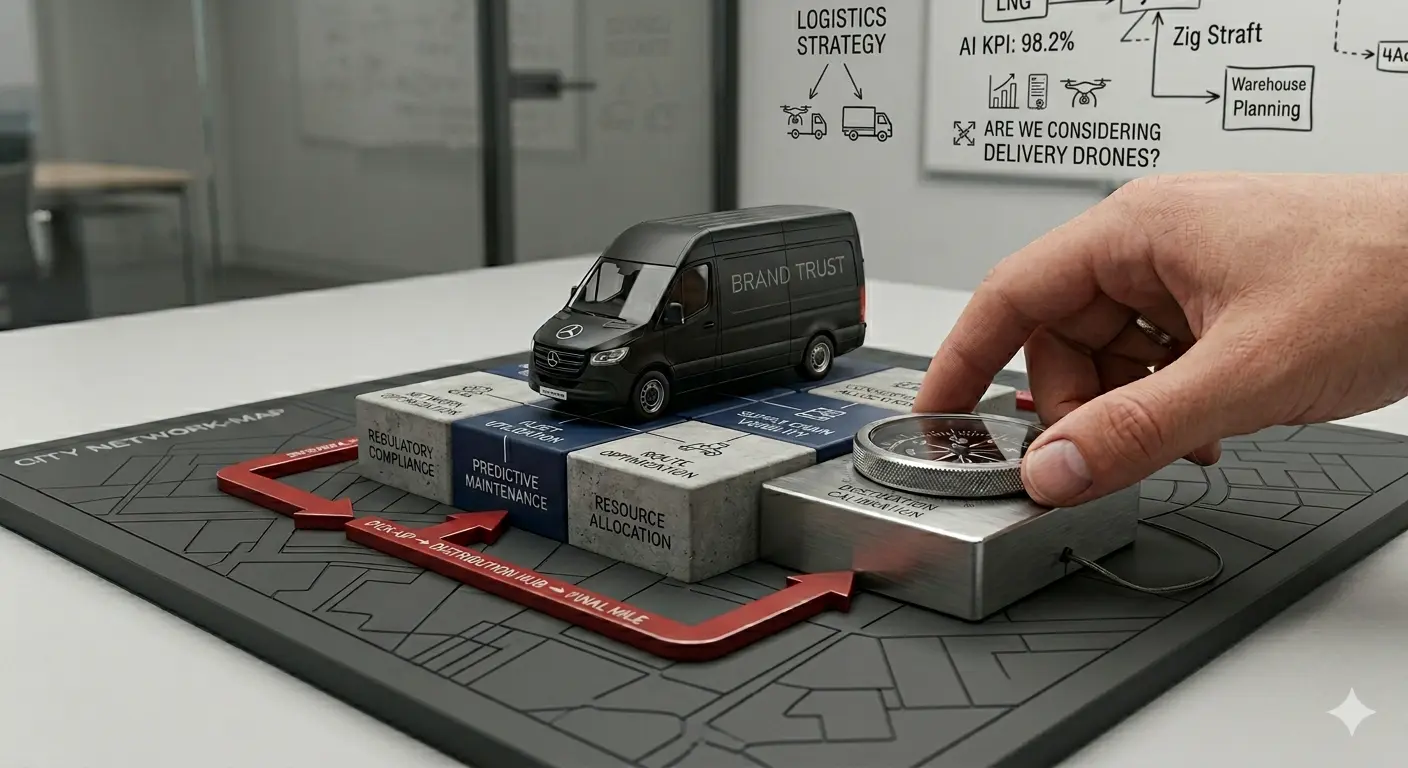
The most persistent mistake in this market is treating brand investment and local SEO as separate initiatives with separate returns. In practice, they compound each other at every stage of the customer journey.
A coherent brand generates more specific and more credible review content, because customers have something distinct to endorse beyond the transaction itself. Those reviews improve local search rankings, which increases the brand's visibility to more prospective customers. Each well-handled booking adds to the review record and the company's organic authority. The system builds on itself.
Brand consistency also ensures that the customer experience matches the digital promise, which keeps review quality high. A gap between the online presentation and the operational reality produces reviews that undermine both the brand and the SEO performance the positive reviews were building. The feedback loop is only self-reinforcing when both elements are maintained to the same standard.
Van rental providers in Dubai who monitor this feedback loop can identify exactly where the system underperforms: low review volume suggests a post-service request process is missing; declining rankings despite a strong review base point to a citation or profile issue; traffic without conversions points to a brand presentation problem. Each gap has a specific fix.
The Long-Term Return on Integrated Brand and SEO Investment
Short-term booking volume responds to promotions and paid placements. Long-term growth requires a more durable foundation. McKinsey research on growth companies found that 80% of growth-company value comes from unlocking revenue from existing customers. For a van rental Dubai operator, this translates into the economics of reputation.
A brand that customers trust generates repeat bookings and referrals without repeated acquisition costs. A well-maintained SEO presence brings in new customers continuously at a marginal cost that decreases as authority and review volume compound over time.
The providers building genuine market share in Dubai's rental market are making both investments simultaneously, not sequentially. They understand that each investment makes the other more effective, and that the compounding begins only when both are active. Providers that invest in brand and SEO in parallel are not spending twice. They are building two systems that make each other more productive with each passing month.
The Infrastructure Behind Every Booking
Dubai's van rental market will continue attracting new entrants as long as demand remains high. That is not a reason to delay brand and SEO investment. It is the reason to build that foundation before competitors do, because the review record, domain authority, and brand recognition being built now are advantages that later entrants will have to spend years developing.
A provider entering the Dubai van rental market with a complete Google Business Profile, an established review base, and a visual identity that communicates professionalism does not need to compete on rate. Customers choose them because the brand presents a lower-risk option than newer competitors, regardless of price differences.
The operators who will hold the strongest positions in this market three years from now are executing consistently today: no gaps in profile management, no visual inconsistency between the digital brand and the operational reality, and no reliance on paid-only visibility strategies that disappear when spend stops.
The fleet is the product a customer receives. The brand and search presence are the infrastructure that brings them to it. For van rental companies in Dubai serious about sustainable growth, that infrastructure is the place to start building.


.webp)