Kith x Columbia NSE Collaboration for the Slopes: Drop Strategy Lessons
Updated on
Published on

The Kith for Columbia NSE drop is a reminder that collaborations now function as business systems, not just seasonal news. In late 2025, a collab can be a category expansion, a credibility test, and a distribution event, all in one window.
For decision-makers, the point is not whether a capsule sells out. The point is what the collaboration proves, how it moves customers through a funnel, and whether the experience is strong enough to convert peak attention into repeat demand. That is where the work lives. It is also where most brands underinvest.
This analysis from Brand Vision Insights focuses on what the Kith x Columbia collaboration gets right, and what teams can apply to their next partnership.
At a Glance: What Kith for Columbia NSE Is and Why It Matters
- The collaboration is titled Nippon Snow Expedition and expands beyond apparel into equipment and technical accessories, not just branded layers. Details are outlined in Kith’s official release post: Kith for Columbia NSE.
- The global release is structured as part of Kith’s Monday Program on December 29, 2025, with a coordinated launch time across key regions.
- The collection includes technical outerwear and mountainwear, plus skis, snowboards, boots, bindings, helmets, and goggles through specialist partners.
- The strategic lesson: credibility is built through product truth and execution quality, not through a louder logo.
- The operational lesson: the drop page, checkout flow, inventory logic, and support readiness determine whether peak traffic becomes revenue or friction.
What Is Kith for Columbia NSE and What’s in the Collection?
The simplest way to read Nippon Snow Expedition is as a complete mountain kit. It is not positioned as a streetwear label “trying” outdoor. It is positioned as a composed system: apparel, equipment, and accessories that belong together visually and functionally.
That matters because customers can sense when a collaboration is only cosmetic. A logo placement might earn press. It rarely earns trust. This release makes a different bet: the aesthetic is consistent across categories, and the technical components are credible enough to be used.
Apparel and Mountainwear
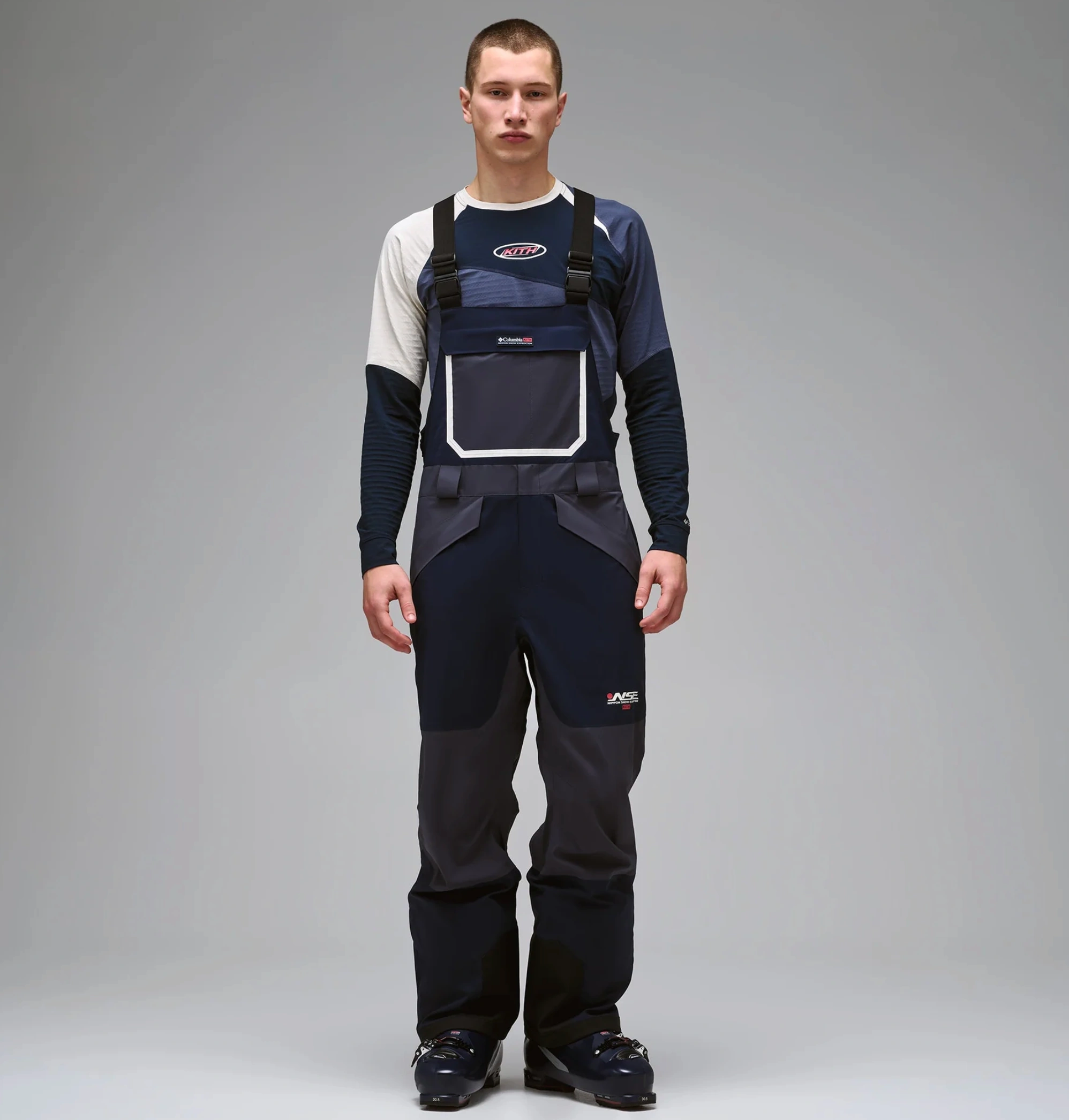
The apparel side leans on performance materials and mountain-specific features, not generic winter styling. Kith’s release details reference Columbia’s technical stack, including waterproof and breathable construction and reflective insulation elements used across the assortment. (Kith for Columbia NSE)
From a brand perspective, this is the right choice. If you want the “slopes” story to land, the garment needs to behave like slope gear. It needs to handle moisture, wind, and long wear. It also needs the small details that signal fluency, such as pocketing designed for passes or goggles.
From a marketing perspective, this creates clear, defensible claims:
- Waterproofing and seam logic
- Breathability and comfort under movement
- Warmth strategy that does not rely on bulk
- Purpose-built features that solve on-mountain problems
Those claims are easier to sell because they are specific. They are also easier to defend when customers ask why the price is justified.
Equipment and Hardgoods
The most consequential choice is the move into hardgoods. Kith partnered with established equipment manufacturers, including Nordica and Capita, plus Union Binding Company, to introduce skis, snowboards, bindings, and ski boots as part of the same story. (Kith for Columbia NSE)
This is more than a product expansion. It is a credibility mechanism.
Hardgoods shift the collaboration from style to performance. They also raise the cost of failure. That pressure can be useful because it forces a more disciplined approach to materials, testing, and partnership selection.
For brands watching this release, the signal is clear: if you want to play in a performance category, bring performance operators to the table. Do not pretend your team can “learn it later.”
Footwear and Accessories
Footwear returns as a continuation of the Kith and Columbia relationship, with winterized elements called out directly in Kith’s release notes, including weather protection technology and insulation details. (Kith for Columbia NSE)
Accessories broaden the system. The release also includes a range of technical eyewear and protection through Oakley, including helmet and goggle categories. That matters because it reduces the number of gaps in the “full kit” story.
A collaboration feels more complete when customers can buy the whole narrative in one checkout. It also increases average order value without forcing bundles. Customers build their own bundle.
Release and Distribution: How the Drop Is Structured
How a collaboration launches often matters as much as what it includes. This is where brand teams win or lose the moment.
Kith’s approach uses a familiar pattern for its audience: a timed global release through an established program format. It reduces confusion. It concentrates attention. It also creates a clear operational window for support, inventory, and site performance.
Timing, Channels, and Regional Availability
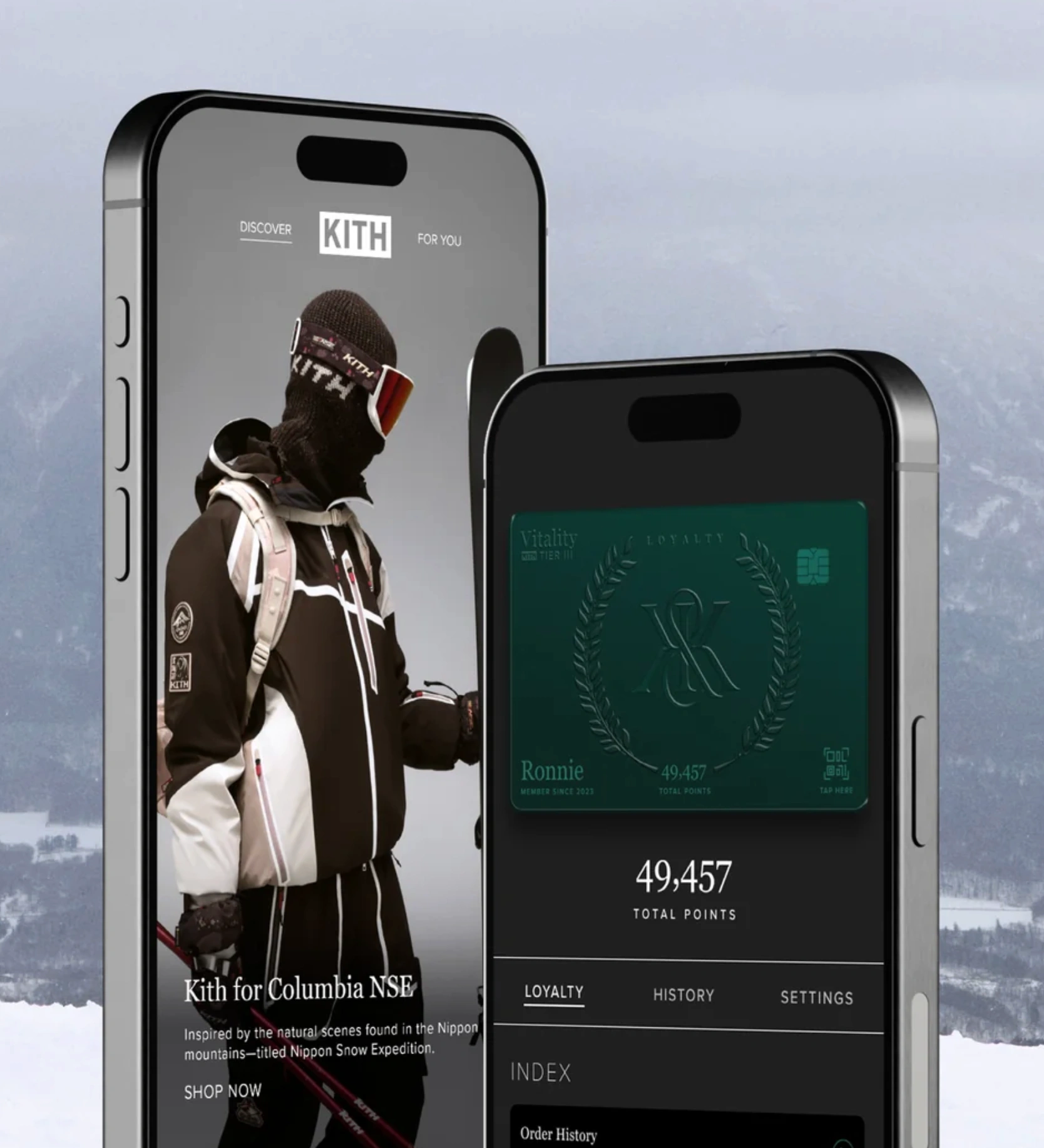
Kith states the collection releases globally as part of Kith’s Monday Program on December 29, 2025, in store, online, and via the Kith app, with coordinated timing across New York, London, and Paris time zones. (Kith for Columbia NSE)
For other brands, the lesson is that “global” is not just geography. It is customer expectation. If your audience is multi-region, your launch mechanics should not privilege one segment without intent.
Also note the line that equipment is available in select regions only. That is a common reality with hardgoods, and it needs to be handled with clarity. Nothing erodes trust faster than a customer discovering restrictions after they have invested time building a cart.
Why “Select Regions Only” Can Be a Feature
A region-limited assortment can feel like a limitation, but it can also function as a trust signal if it is framed correctly.
Reasons this approach can be strategically sound:
- Compliance and safety requirements differ by market.
- Fulfillment and return logistics for hardgoods are not identical to apparel.
- Inventory risk is higher and margin errors are more expensive.
- Customer service demands increase when sizing, fit, and boot flex enter the picture.
If a brand cannot deliver the right experience in every region, it is often better to limit availability than to deliver a weak version everywhere. Scarcity is not the point. Operational competence is.

Why This Collaboration Works: A Brand Fit Framework
Collaboration strategy should be treated like product strategy. That means it needs a framework, not a mood board.
The fastest way to pressure-test a partnership is to separate aesthetics from fit. Plenty of collaborations look good in photography. Fewer hold up when the product meets real use.
This is where good brand strategy pays for itself. It forces teams to define what they are borrowing, what they are contributing, and what the customer is meant to believe when the collaboration lands.
-1.webp)
The Five-Part Brand Fit Checklist
Use this checklist before creative direction is final:
- Code Compatibility
Do both brands share recognizable codes that can sit together without dilution? Think materials, silhouettes, typography, and pacing. - Audience Overlap With a Clear Expansion
Overlap is useful, but expansion should be intentional. Who is new, and why will they trust this move? - Product Truth
Are the claims real? Can the product perform? Can it be explained in plain language? - Distribution Fit
Do channels match the product category? Are fulfillment and returns ready for the complexity? - Proof Plan
What will convince a skeptical buyer? Testing, specialist partners, credible materials, or third-party validation.
If you cannot answer these five points, the collaboration is not ready. It may still ship. It will not build durable equity.
Applying the Framework to Kith x Columbia
Kith and Columbia have collaborated before, so there is already a shared language. That lowers risk. The question becomes how far the partnership can stretch while still feeling true.
This release stretches further than prior apparel-only capsules because it introduces professional equipment partners. That decision supports product truth and proof.
The cultural inspiration also helps unify the system. Kith’s “Nippon Snow Expedition” framing uses a specific landscape reference, which makes the narrative more concrete. It reads as a designed world, not a random collection of SKUs.
If you want a parallel example of how “quiet” codes can outperform loud ones, the logic is similar to what we analyzed in Bottega Veneta’s marketing strategy in 2025. The through line is restraint, craft, and control. The execution does the selling.
Product Credibility: Why Technical Proof Beats a Logo Swap
A collaboration that targets performance customers has to clear a higher bar. The buyer is not only purchasing identity. They are purchasing function, safety, and comfort.
This is where many collaborations fail. They treat performance as a costume. Customers in technical categories notice immediately.
Technical Materials as Marketing Claims
Kith and Columbia’s release language highlights named technologies and construction details, which makes the product story easier to trust. (Kith for Columbia NSE)
For brand teams, the takeaway is practical: technical storytelling should sound like engineering, not poetry.
A simple standard helps:
- Name the material or construction
- State what it does in one sentence
- Explain when it matters in real conditions
- Add a care and longevity note if relevant
This format improves conversion because it reduces uncertainty. It also improves support load because it preempts basic questions.
Specialist Partners as Trust Infrastructure
Hardgoods partners function like third-party proof. Nordica, Capita, and Union carry their own reputations. Their presence changes how the entire collaboration is perceived. (Kith for Columbia NSE)
This is a key strategic point. When a collaboration expands into a new category, the fastest path to credibility is to partner with the category’s operators.
That principle is not limited to outdoor. It applies to:
- Beauty brands entering fragrance
- Food brands entering supplements
- Software companies entering security claims
- Consumer brands launching durable goods
The partner becomes part of the evidence.
Market Context: Why Winter Sports Still Matter in 2025
The slopes are not a niche stage. Winter sports remain a meaningful part of the outdoor economy, and demand has stayed resilient through multiple seasons.
Preliminary reporting tied to NSAA data suggests U.S. ski areas recorded 61.5 million skier visits in the 2024–25 season, the second-highest on record, with a year-over-year increase. (SAM Magazine’s report on 61.5 million skier visits)
Zoom out further and the macro context is also supportive. The U.S. Bureau of Economic Analysis estimates outdoor recreation value added at 2.3% of U.S. GDP, totaling $639.5 billion for 2023. (BEA outdoor recreation data)
For collaborations like this, those numbers matter because they justify investment. They also suggest that outdoor is not only an aesthetic trend. It is a real demand pool with repeat behavior.
The Drop Funnel: From Attention to Conversion to Retention
Many collaboration teams over-measure the top of funnel and under-measure the parts that create durable growth. Views and likes are not meaningless, but they are not the business outcome.
The core question is whether a spike in attention becomes:
- first-party audience
- completed purchases
- repeat purchases
- a measurable lift in brand preference
This is where an SEO agency mindset helps, even if the drop is mostly driven by owned channels. You still need attribution discipline. You still need a conversion plan.
Stage-by-Stage KPIs That Actually Matter
A practical measurement stack for collaboration drops:
- Attention
- Search demand lift for the collaboration name
- Press pickup quality (not volume)
- Social saves and shares, not only views
- Intent
- Email and SMS opt-in rate
- Product page depth and return visits
- “Notify me” and wishlist adds
- Conversion
- Add-to-cart rate by SKU
- Checkout completion rate
- Payment failures and out-of-stock errors
- Retention
- New-to-brand customer percentage
- Repeat purchase within 30–90 days
- Returns and exchange rates by size category
- Brand Lift
- Direct traffic lift to core pages after launch
- Branded search lift that persists beyond the drop window
If you cannot track these, you are not running a collaboration. You are running a content moment.
Retention Loops That Outlive the Drop
The most valuable outcome of a drop is not sell-through. It is a customer relationship.
A few retention loops that are practical and understated:
- Post-purchase education that helps the customer use and care for the product
- A second release that complements the first, not a random follow-up
- Early access for returning customers
- A content series that continues the world-building without repeating the same images
Brand Vision has seen this pattern repeatedly. The brands that win are the ones that treat a collaboration as the start of a relationship, not the end of a campaign. A relevant parallel in the drop economy is how collectible collaborations are built through repeatable mechanics, which we explored in Wildflower Cases marketing and collaborations.
UX and Site Readiness: What Makes Drop Pages Convert in 2025
A collaboration can be strategically perfect and still underperform if the buying experience collapses under traffic.
This is not a “nice to have.” It is often the difference between revenue and frustration. The average documented cart abandonment rate across studies is about 70%, which means most intent dies in checkout without careful design. (Baymard cart abandonment rate statistics)
This is where strong web design services and a disciplined UI UX design agency approach matter. Not for aesthetics. For throughput and trust.
A Practical Drop-Page Checklist
Use this checklist as a pre-launch standard.
Before launch
- Confirm mobile performance first. Most traffic will be mobile.
- Validate sizing information, fit notes, and materials. Reduce uncertainty early.
- Stress test inventory logic, including partial availability by region.
- Pre-write support macros for shipping, returns, and product questions.
- Create a clean fallback state for sold-out SKUs that routes users to alternatives or opt-ins.
During launch
- Monitor checkout errors, payment failures, and queue behavior.
- Keep product pages stable. Avoid last-minute edits that break layout or tracking.
- Ensure cart and checkout display clear shipping timelines and restrictions.
After launch
- Capture demand that did not convert: waitlists, email flows, restock signals.
- Review heatmaps and funnel drop-offs. Document what failed.
- Build a post-launch page that stays live, indexed, and useful for search.
The best drop pages age into evergreen landing pages. They keep collecting demand after social attention moves on.
Accessibility, Performance, and Governance
Collaboration drops create edge cases that expose weak systems.
A few governance points that senior teams should care about:
- Accessibility: clear focus states, readable contrast, and keyboard navigation are not optional when traffic spikes. They also reduce support issues.
- Performance: image weight, script bloat, and layout instability cost conversions when thousands arrive at once.
- Maintainability: build reusable components so each drop does not require custom code that breaks later.
These are operational decisions. They protect revenue.
A Repeatable Collaboration Playbook for Brands
The best collaborations look effortless because the process is controlled. The goal is not more content. The goal is fewer surprises.
This playbook is intentionally simple.
Plan, Launch, Measure, Repeat
1) Define the proof
- What should the customer believe after this collaboration?
- What evidence supports that belief? Product testing, specialist partners, or technical materials.
2) Choose the hero
- Pick 1–3 hero SKUs that carry the story.
- Ensure photography and copy are built around those heroes, not the full SKU list.
3) Build a world, not a collage
- Lock a tight visual system and repeat it across assets.
- Keep naming consistent. Keep claims consistent.
4) Engineer the funnel
- Decide what the drop is meant to produce: revenue, opt-ins, new customers, or category entry.
- Build the experience accordingly.
5) Treat the landing page as an asset
- Keep it indexed. Keep it fast. Keep it understandable six months later.
6) Run a postmortem
- Document: what broke, what converted, what retention signals appeared.
- Use that learning to inform the next partnership.
When teams do this well, collaborations stop being unpredictable spikes. They become a structured growth channel.

FAQ: Kith x Columbia Nippon Snow Expedition
Is Kith for Columbia NSE a performance collection or a fashion capsule?
It is positioned as a performance-led collaboration that includes technical apparel and credible hardgoods partners. The release details emphasize both mountainwear and equipment categories.
When does Kith for Columbia NSE release?
Kith states the collection releases as part of Monday Program on December 29, 2025, across stores, online, and the Kith app, with coordinated timing across major time zones.
Why would a collaboration limit equipment availability to select regions?
Hardgoods introduce different logistics, compliance considerations, and customer support demands. Region-limiting can protect the customer experience when fulfillment or returns are complex.
What should brands measure beyond “sell-out”?
Measure opt-ins, checkout completion, new-to-brand rate, and repeat purchase within 30–90 days. Those indicators show whether the collaboration built a durable customer base.
How do collaborations affect SEO and long-term demand?
Collaboration names can create branded search demand. Keeping the landing page live and useful after the drop helps capture ongoing intent, especially when social attention has moved on.
.webp)
Turning Collaboration Heat Into Durable Growth
Kith x Columbia is a useful case study because it treats collaboration as a full-stack experience: credible product, coherent story, and structured distribution. That combination makes the attention spike easier to convert, and easier to repeat.
If your team is planning a collaboration that needs stronger positioning, a clearer funnel, or a more reliable buying experience, start with fundamentals: branding, site performance, and measurement discipline.
To discuss a collaboration or launch system with Brand Vision, start a conversation and request a project outline.