Marketing leaders are operating in a split reality. Generative tools can scale production and multiply variations, but audiences can also spot synthetic shortcuts faster than most teams expect. The Jonas Brothers x Almond Breeze partnership shows how to acknowledge that tension without turning a campaign into a debate about technology.
This breakdown comes from the day-to-day brand, web, and marketing work we do at Brand Vision, where we help founders and marketing teams translate campaigns like the Almond Breeze Jonas Brothers campaign into practical decisions. In 2026, the advantage is not copying creative. It is building a repeatable standard for trust, clarity, and conversion that holds up across every channel.
The Almond Breeze Jonas Brothers campaign is not a rejection of AI as a tool. It is a critique of the kind of synthetic, overbuilt creative that has started to feel interchangeable. That distinction matters for decision makers because it connects creative direction to credibility, distribution performance, and the moment a viewer decides to click, shop, or move on.
The Quick Story Behind the Campaign
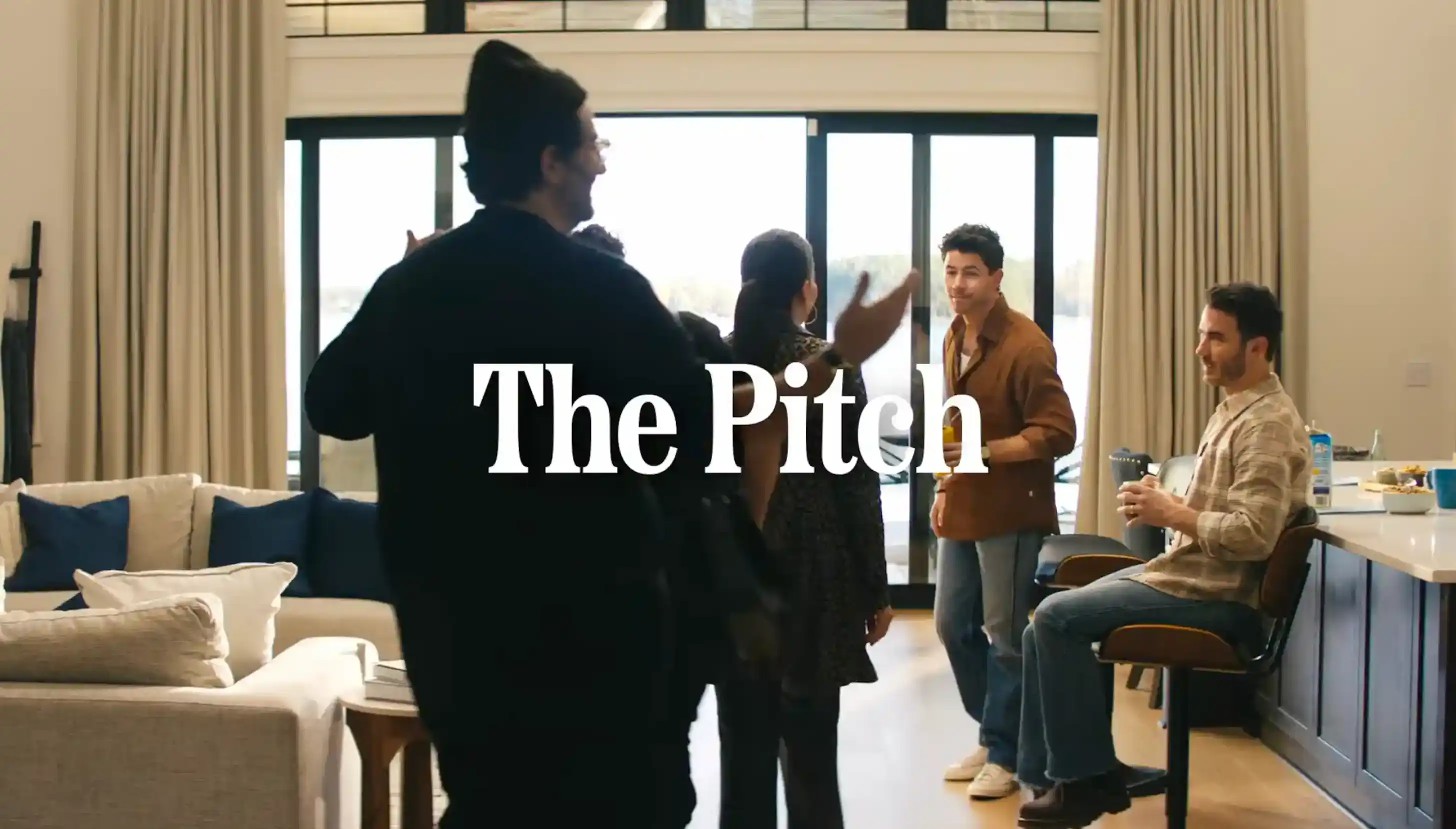
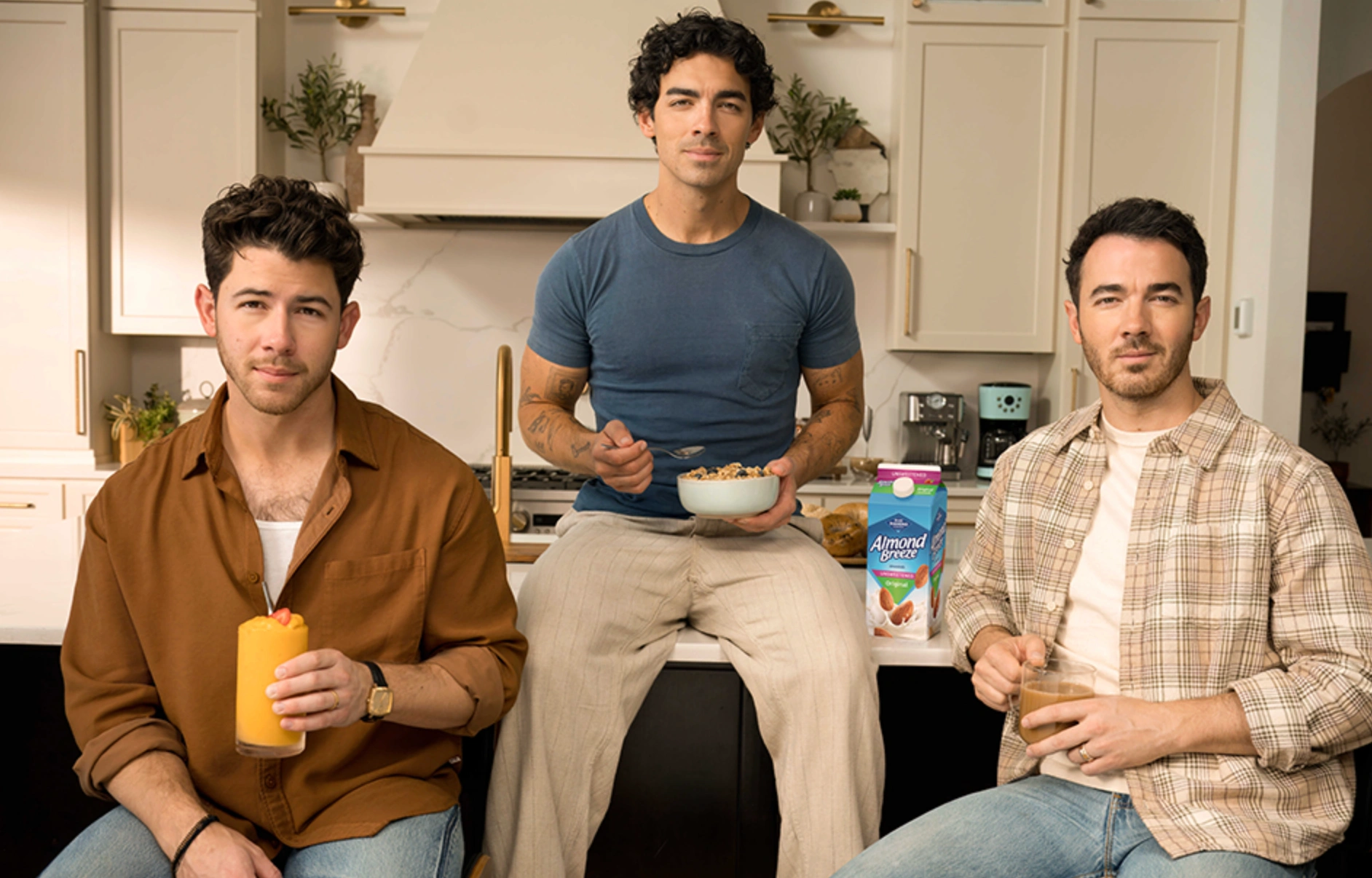
The Jonas Brothers x Almond Breeze collaboration uses a pitch room setup. The brothers sit through increasingly exaggerated concepts that lean into the AI-ad aesthetic, and the story resolves by choosing a straightforward product idea instead. The campaign’s public framing emphasizes “It’s Really Good” and “Anti-bot authenticity,” positioning the product claim as strong enough to stand without gimmicks (PR Newswire).
The structure matters. The ad does not simply tell the audience “keep it real.” It shows the audience what “too much” looks like, then makes “simple” the winning decision. That is why the Almond Breeze Jonas Brothers campaign is built to survive short-form clipping and platform remixing. Coverage describing the campaign as a jab at “AI-generated slop” captures the cultural reference point the creative is playing with (Marketing Dive).
At A Glance
- The Almond Breeze Jonas Brothers campaign critiques synthetic-feeling creative without sounding anti innovation.
- The Jonas Brothers x Almond Breeze pairing works because celebrity is part of the decision logic, not a decorative cameo.
- "The Pitch" campaign frames human judgment and restraint as the premium signal.
- Anti AI advertising here targets low-effort output and sameness, not technology.
- The format is naturally modular for social distribution and cutdowns.
- The biggest drop-off risk is post-click. If the landing experience is cluttered or slow, the campaign’s “simple” promise collapses.
How We’re Evaluating This Campaign
We are looking at the Almond Breeze Jonas Brothers campaign through three lenses that matter to leaders who need both credibility and outcomes.
- Creative clarity: Does the story land fast, and does the message survive being clipped.
- Trust mechanics: What signals make it feel human-led, and what would break that trust.
- Conversion path: Does the experience after the ad maintain the same tone, speed, and simplicity.
That last point is where many campaigns underperform. When a brand positions itself as clear and human, the digital experience has to prove it.
Why Anti-AI Advertising Is Showing Up Everywhere Right Now
The trust problem: synthetic fatigue is real
Audience reaction to AI in advertising is not uniform. It is mixed and increasingly context-dependent, which raises the stakes for any brand that makes AI the visible aesthetic of a campaign. Consumers do not need to understand the toolchain to sense when something feels generic.
Recent survey analysis shows that sentiment is broadly split between people who like AI in ads, feel neutral, or dislike it, which helps explain why brands are cautious about leaning too hard into AI aesthetics (Zappi). That split creates a practical constraint: the more “synthetic” a campaign looks, the more likely it is to polarize.
The Almond Breeze Jonas Brothers campaign uses that tension without asking viewers to take a side. It treats the AI-ad look as a familiar trope, then resolves the story with human selection and restraint. That is a safer pattern than making AI the star of the show.
The opportunity: human craft as a differentiator
Anti-ai advertising is also rising for an operational reason. Teams are producing more assets, more frequently, across more channels. Scale can introduce sameness, even when the output is polished. "The Pitch" campaign positions “human taste” as a differentiator by framing restraint as the deliberate choice.
At the same time, leaders are being pushed to establish clear governance around AI-assisted creative. Industry guidance has focused on responsible use, disclosure expectations, and the risks of synthetic media, which is why many marketing organizations are formalizing review standards rather than treating AI tooling as informal experimentation (IAB).
The Creative Mechanic That Makes It Work
"The Pitch" room format as a control system
"The Pitch" room structure functions like a visible quality filter. The audience watches the campaign reject bad ideas, which makes the final idea feel chosen rather than generated. In a time when viewers assume many ads are assembled quickly, “choice” becomes a trust signal.
This is why the Jonas Brothers x Almond Breeze setup matters beyond entertainment. It externalizes the decision process. It tells the audience: we saw the flashy option, we chose clarity. In strategy terms, that is a way of showing standards rather than claiming standards.
Why the joke lands, even if you like AI
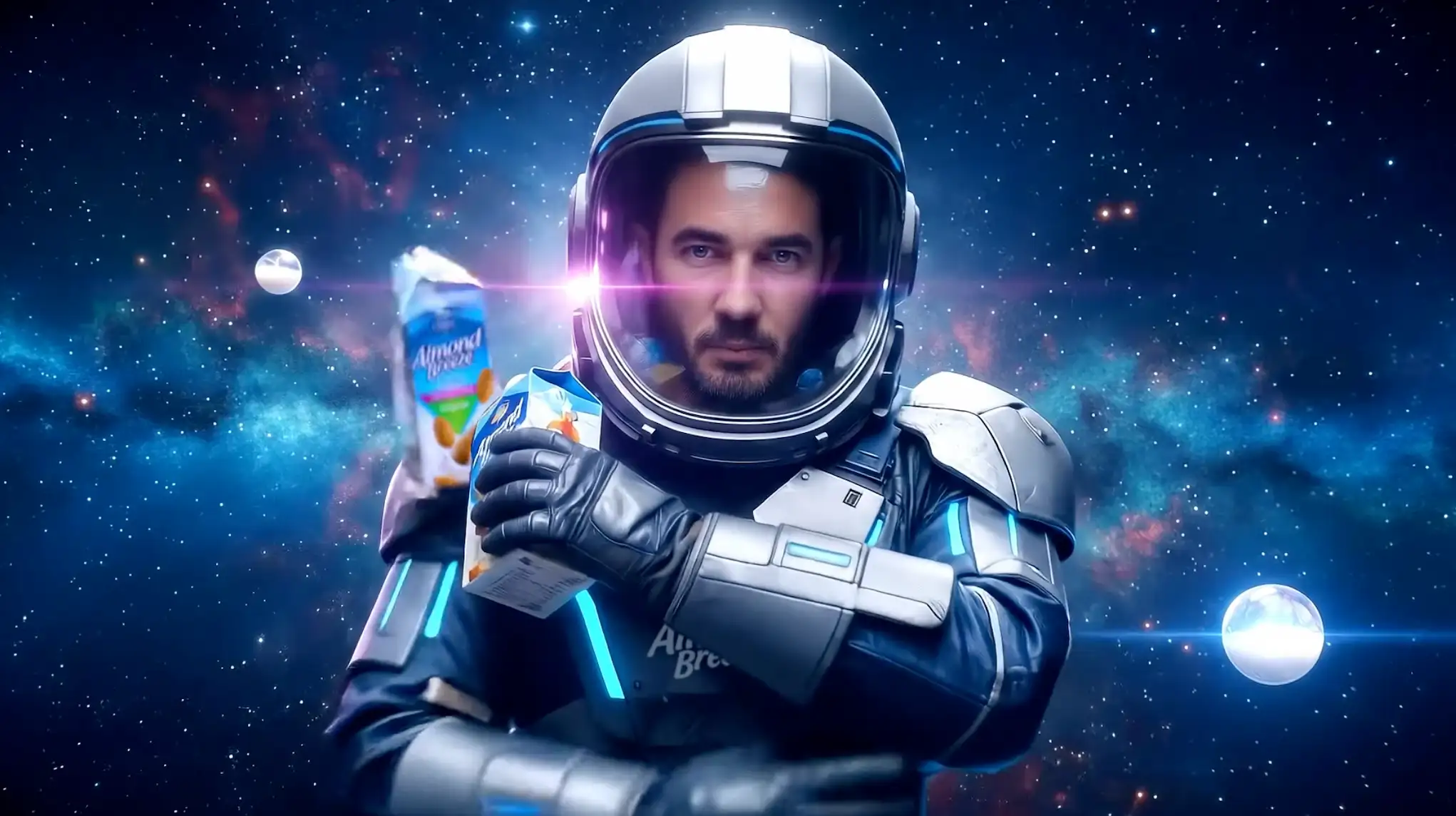
The best anti AI advertising critiques a behavior, not the existence of a technology. "The Pitch" campaign critiques the habit of using AI aesthetics as a shortcut to appear creative. That keeps the tone light while still making a clear point about quality. One of the pitches was having them sponsor the brand "in space," and it was made to feel out of touch in a funny way.
It also avoids the moral stance that makes some AI commentary feel preachy. Humor reduces defensiveness, then the story returns to a simple product truth.
Authenticity Signals in 2026: What This Campaign Gets Right
Four signals to borrow without copying the script
“Authenticity” often becomes a vague compliment. The Almond Breeze Jonas Brothers campaign is useful because it expresses authenticity as observable execution choices.
- Visible restraint: the concept does not rely on effects to carry the point.
- Human selection: the narrative shows a preference being made, which makes the endorsement feel earned.
- Product clarity: the AI topic does not replace the product message.
- Tone continuity after the click: trust compounds when the next step feels consistent.
If you want to operationalize those signals, treat them as a brand system problem. Messaging, visual identity, and execution standards need to align. That is why this topic connects naturally to work like branding services and conversion-focused UX design.
.webp)
Where brands overdo authenticity and lose it
Anti AI advertising can backfire when it becomes performative. The fastest way to lose credibility is to posture as “human” while your experience feels careless. Audiences do not require perfection. They require coherence.
If the campaign tone says simple, but the landing page feels like a maze, the message breaks. If the campaign argues for quality, but the mobile experience loads slowly, the message breaks. Authenticity is often won or lost after the click.
The Strategic Risk: Don’t Sound Like You’re Anti Tech
A simple governance model for human-first creative
The Jonas Brothers x Almond Breeze partnership works because it critiques outcomes, not tools. Many brands copy the surface and accidentally communicate an anti tech posture that alienates customers, employees, or partners. A better posture is: we use modern tools responsibly, and we hold the output to a human standard.
A governance model that does not require bureaucracy:
- Define your “human standard” criteria: distinctiveness, factual accuracy, brand voice, visual coherence.
- Assign a named owner for final sign-off who is accountable for quality.
- Use a short checklist for any AI-assisted assets before they ship.
Responsible AI oversight is becoming a mainstream expectation, not a niche concern, particularly as adoption accelerates and the risks of hallucinations, bias, and rights issues show up in real workflows (IAB).
Disclosure and brand safety guardrails
"The Pitch" campaign avoids a common trap because it does not make a fragile promise like “no AI was used anywhere.” It makes a taste and quality statement. That is a defensible position even for teams that use AI internally for drafts, testing, or production support.
Practical guardrails for anti-AI advertising:
- Avoid absolute claims you cannot audit.
- Be explicit about what you reject: low-effort sameness, not innovation.
- If UGC is part of the campaign ecosystem, provide boundaries that prevent misleading content or rights violations.
- Add a brand safety pass for any synthetic media elements, even if they are minor.
Distribution and Post Click Experience: Where Most Brands Fumble
What to do on the landing page in the first 5 seconds
The Almond Breeze Jonas Brothers campaign is built for fast recognition. The post-click experience should respect that pace. In the first five seconds, a visitor should be able to answer:
- Am I in the right place.
- What is the product promise in one sentence.
- What do I do next.
If the Jonas Brothers x Almond Breeze campaign drives interest but the page forces hunting, the clarity earned in the ad is wasted. This is a common failure mode for brands that win attention but lose conversion.
Landing page priorities that match a simple message:
- One primary CTA visible without scrolling on common devices.
- A plain-language headline that mirrors the campaign claim.
- Minimal distractions above the fold, with supporting details lower on the page.
This is where thoughtful web design services and conversion-aware UX create compounding returns.
Performance and accessibility as trust multipliers
When a campaign centers human craft, your site cannot feel careless. Slow pages, cluttered layouts, and poor mobile readability create an immediate credibility gap. Performance and accessibility are not just technical requirements. They are trust signals.
A practical checklist:
- Mobile-first layout with clear typography and spacing.
- Fast image delivery and controlled script overhead.
- Accessible contrast and predictable keyboard navigation.
- Short forms, or a clear “where to buy” path, depending on the objective.
-1.webp)
Measurement That Matches the Objective
Metrics that matter for trust and recall
Most commentary stops at views. For a campaign built around anti AI advertising cues, views are incomplete. The real job is to reinforce credibility and distinctiveness, then translate attention into action.
Useful metrics for the Almond Breeze Jonas Brothers campaign pattern:
- Ad recall or brand recall lift where available.
- Completion rates for hero and cutdown assets.
- Save and share rates as a proxy for resonance.
- Comment quality, measured by specificity and intent.
- Click-through to a focused landing page and conversion proxies tied to your funnel.
A 30-day measurement plan
A practical 30 day plan separates creative impact from post-click friction:
- Week 1: Confirm tracking, events, and baseline performance. Define thresholds.
- Week 2: Test two variants: one that leans into "The Pitch" campaign posture, one that leans into product benefit.
- Week 3: Improve the first screen: headline clarity, CTA placement, speed.
- Week 4: Synthesize lift, intent signals, and what should become a standard.
What Business Owners Can Learn From the Almond Breeze Jonas Brothers Campaign
The Almond Breeze Jonas Brothers campaign works because it makes a quality standard visible. It rejects noise, chooses clarity, and keeps the product promise consistent from the ad to the next click. Business owners can apply the same thinking without celebrity reach by tightening the message, simplifying the experience, and putting a real review process behind every asset.
A practical way to apply the Jonas Brothers x Almond Breeze playbook in 2026:
- Define the shortcut you are rejecting. Name the thing you will not do, whether it is generic copy, inflated claims, or templated visuals. If you need to sharpen positioning, start with a brand foundation through our branding services.
- Make the decision process part of the story. Show how you choose quality, test ideas, or refine messaging. This builds trust faster than polished language.
- Match your landing page to your promise. If the message is simple, the page should feel simple within seconds. Clean hierarchy, fast load time, one primary CTA. This is where UX design turns interest into action.
- Build one strong asset, then clip it for channels. Create a single core narrative, then adapt it into platform-native cutdowns that keep the same tone and claim.
- Put governance in writing. Even small teams need a short checklist for accuracy, brand voice, and visual consistency. If your campaign pages are hard to maintain, a structured rebuild through our web design services can help.
If you want a clear plan that connects campaign creative to conversion, start a conversation with Brand Vision.
FAQ
What is the Almond Breeze Jonas Brothers campaign about?
The Almond Breeze Jonas Brothers campaign uses a pitch room format where exaggerated, AI-styled ideas are presented, then rejected in favor of a simple endorsement. The campaign’s public framing emphasizes “It’s Really Good” and “"The Pitch",” reinforcing that the product claim does not need synthetic spectacle to land.
Why does the Jonas Brothers x Almond Breeze partnership resonate in 2026?
The Jonas Brothers x Almond Breeze partnership fits the moment because consumers are split on AI in ads, and many viewers are fatigued by content that feels automated or interchangeable. Survey analysis has described consumer sentiment as broadly divided across like, neutral, and dislike positions, which increases the risk of making AI aesthetics the centerpiece of creative (Zappi).
Is "The Pitch" campaign actually anti AI advertising?
It is better understood as anti low-quality output. "The Pitch" campaign critiques the habit of using AI aesthetics as a shortcut to appear creative. It avoids the fragile claim that no AI is used anywhere, which keeps the positioning defensible even for teams that use AI internally.
How can a smaller brand use the Almond Breeze Jonas Brothers campaign approach without a celebrity?
Borrow the structure, not the star. Show bad options being rejected and one clear option being chosen. Then make the post-click experience match the tone, with a fast page, clear hierarchy, and one primary CTA. That is where conversion-focused web design services make the difference.
Closing Takeaway: Human First Does Not Mean Low Tech
The Almond Breeze Jonas Brothers campaign succeeds because it is disciplined. It uses the partnership to make a simple point about taste, choice, and trust. "The Pitch" campaign is not a rejection of modern tools. It is a reminder that brand credibility is built by standards the audience can feel in the work.
If you want a practical plan that connects campaign creative to conversion, start a conversation with Brand Vision.

%2520(1).png)
.png)