Sports marketing in 2026 is a growth system, not a logo placement. Strong programs connect rights, creators, media, digital experience, and measurement so attention can move toward revenue and loyalty. Brand Vision, a branding agency, approaches the topic through the same brand, web, and marketing lens used across audience-driven businesses. The frameworks below are designed for teams testing a first partnership or scaling a multi-property sports and entertainment marketing strategy.
What Sports Marketing Means in 2026
Sports marketing is the set of strategies that connect brands, athletes, teams, leagues, and events with fans to drive measurable business outcomes. A modern sports marketing strategy blends sponsorship and licensing, athlete partnerships and NIL, media distribution, performance advertising, experiential activations, and retention programs that move fans from attention to purchase and repeat buying.
One of the biggest forces reshaping this space is athlete economics. The House settlement received final court approval in June 2025, opening the door for participating Division I schools to provide direct financial benefits to athletes while a new system governs third-party NIL reporting and review. (Reuters) (College Sports Commission) For brands, that makes contract language, activation obligations, rights ownership, and approval workflows more important, not less.
Streaming is the other defining shift. Sports discovery now moves across live broadcasts, streaming feeds, highlights, creator commentary, and on-demand formats. Nielsen's 2026 sports work emphasizes how multiplatform distribution is expanding reach while producing different audience profiles by platform. (Nielsen) That means media planning should account for where fans watch, not only which league or event they follow.
- Sports marketing is a full funnel system, not a top-of-funnel play
- Sports marketing strategy is built around distribution plus conversion, not exposure
- Compliance and disclosure protect ROI because mistakes erase performance
The Sports Marketing Stack Brands Actually Need
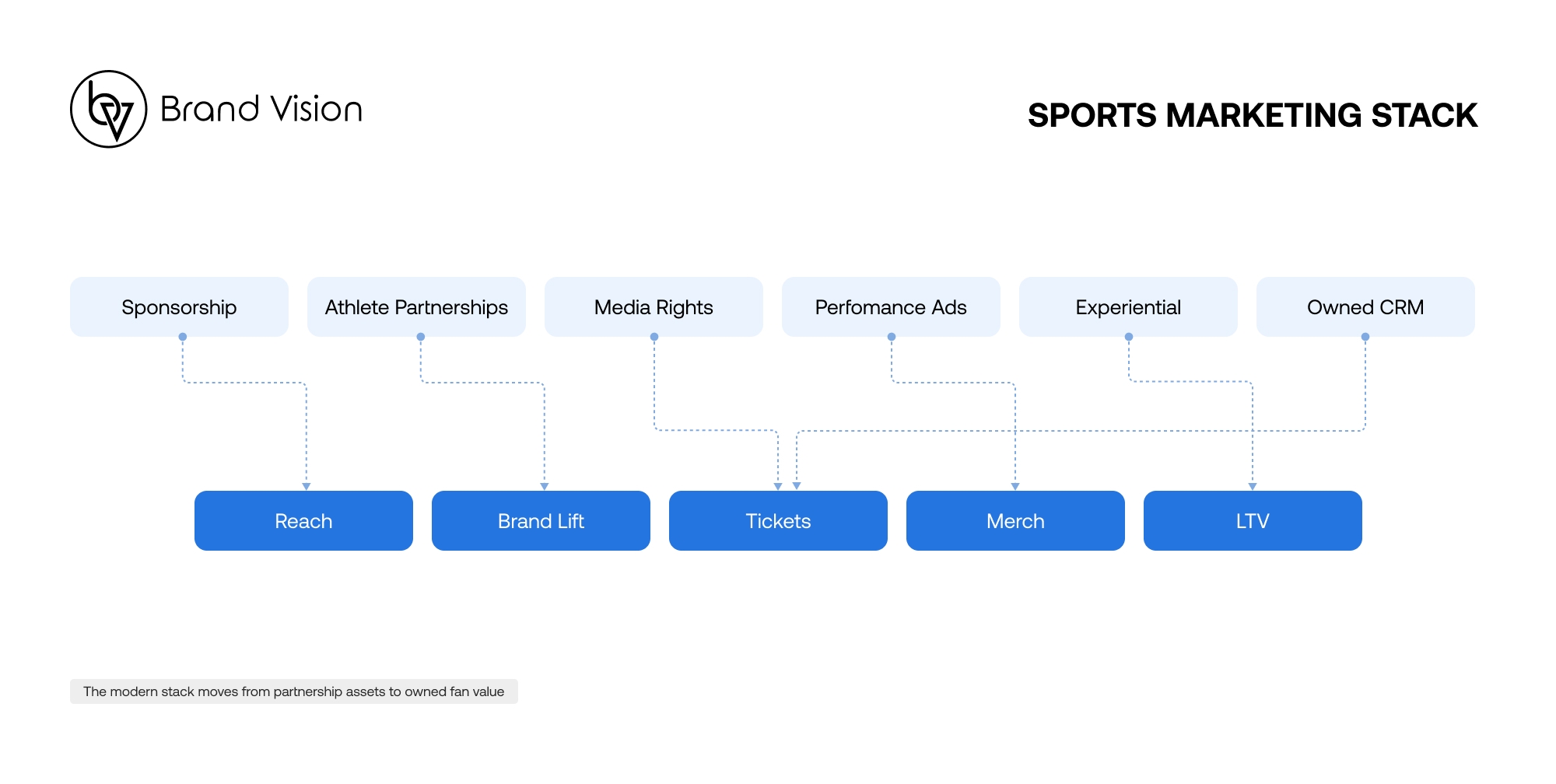
A sports marketing strategy works best when it’s built as a stack, not a collection of tactics. The stack keeps creative, media, and measurement connected, so you can repeat wins across a season instead of guessing every activation.
- Inventory and rights: the properties, packages, and content access you can actually use
- Distribution: how inventory travels across broadcast, streaming, social, creators, email, and SMS
- Conversion layer: landing experiences, offers, and checkout paths that turn hype into revenue
- Retention layer: membership, loyalty, and lifecycle messaging that compounds demand
- Measurement layer: brand lift, incrementality, and revenue attribution leadership trusts
Channels and Tactics That Win in 2026
Sponsorships and Assets
Sponsorship still drives scale, but it only performs when the asset fits the audience and the story. Start with objectives, overlap, and what the property can uniquely deliver: access, trust, data, or moments that can’t be replicated elsewhere. Build a sports sponsorship strategy that includes both reach and conversion pathways, so a jersey patch is never the end of the plan.
Nielsen Sports breaks down how brands can think about sponsorship ROI, including tying exposure and brand equity signals to behavior change and business outcomes. (Nielsen Sports)
- Define the one job the sponsorship must do: awareness, credibility, demand, or retention
- Negotiate for content access and usage rights, not just placements
- Structure a measurement plan before you sign, not after you spend
Athlete Partnerships and NIL
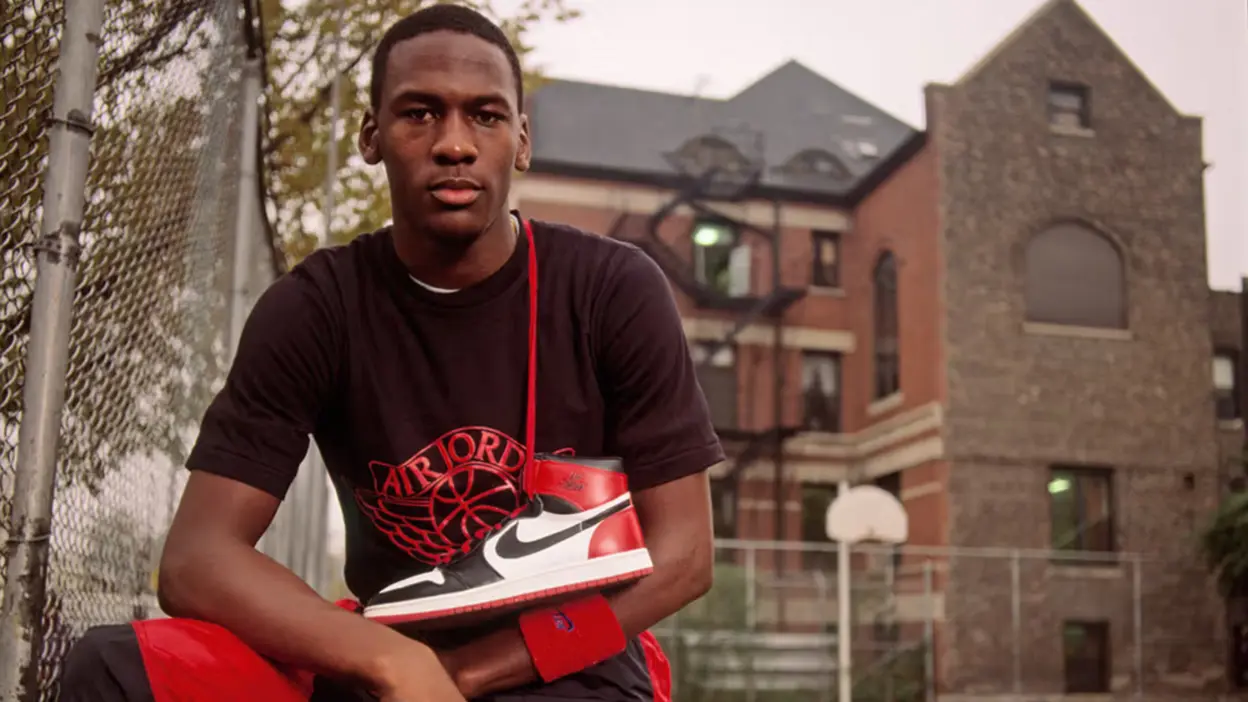
Athletes bring distribution and trust, but an athlete marketing strategy breaks quickly when contracts are vague. Treat athlete partnerships like media plus performance: clear deliverables, clear usage, clear disclosure, and a creative system that keeps content consistent across formats. The long-running Michael Jordan marketing model is a useful example of what happens when an endorsement becomes a durable product and storytelling platform.
For brands trying to stay current on revenue sharing and NIL implementation, NCAA documentation and settlement-related guidance remain essential starting points. (NCAA) The rules that took effect in 2025 introduced direct school benefits and new reporting and review requirements for many third-party NIL agreements. The practical takeaway is simple: approvals, claims, rights, and payment terms need to match the current system rather than last season's assumptions. For additional context on partnership structures, see Brand Vision's breakdown of major athlete endorsement deals.
- Lock deliverables by format: short video, story frames, live moments, community posts
- Write brand safety language that is realistic and enforceable
- Require disclosure language that stays visible and unmistakable
Social and Creator Programs
Creators are no longer an add-on. In sports marketing 2026, creators are how brands turn attention into sustained narrative across a season. The strongest programs run as a series, with recurring segments fans recognize, rather than one-off posts that disappear in a day.
Creator budgets are also becoming a major line item. IAB’s creator economy research shows how quickly ad spend has shifted into creator-led programs, which makes governance and measurement non-negotiable. (IAB)
Disclosure standards matter here. If you’re marketing to North American audiences, align with current FTC endorsement guidance and Canada’s updated influencer disclosure expectations. (FTC) (Ad Standards Canada)
- Build a consistent series format you can repeat through the season
- Use platform-native concepts and edit styles per channel
- Standardize disclosure rules and approval steps so speed never creates risk
Live and Experiential
Experiential marketing is where sports marketing can create memory density. If the activation only exists for people already attending, it is underused. Design experiences that create content, capture permissioned data, and lead to a measurable next step: a purchase, membership, download, or follow. For a market-specific activation, local execution still has to match the master brand. A South Florida team planning around a major event, for example, may benefit from a branding and marketing agency in Miami that can connect the onsite experience with the surrounding digital campaign.
A practical 2026 lens is that fan engagement has become more platform and membership oriented, with new models shaping how fans buy, attend, and interact. PwC’s sports outlook highlights how digital engagement and evolving monetization are changing planning assumptions. (PwC)
- Anchor activations to predictable attention spikes: rivalries, tournaments, milestones
- Capture permissioned data with real value exchanges: upgrades, drops, early access
- Build an owned post event journey that keeps the relationship alive
Media Rights and Distribution
Media rights shape reach, pricing, and what ad products you can buy. Streaming has changed how fans watch and how campaigns should flight, especially when packages shift day of week windows and distribution partners.
For the NBA, the most reliable baseline is the league’s own announcement, supported by major wire coverage. (NBA) (Associated Press) The planning implication for sports marketing strategy is that platform context matters more than ever: creative, placements, and pacing should follow where and how fans actually watch.
- Plan flights around the highest intent windows, not just the biggest games
- Match creative to platform context: lean in watch vs scroll environment
- Track distribution shifts so you can model frequency, reach, and incremental lift
Performance Ads
Performance media is how sports marketing turns excitement into measurable outcomes. Treat paid search, paid social, and programmatic as the conversion surround for sponsorship and event moments, connecting spikes in attention to clear offers and landing experiences. A disciplined paid media strategy should segment by market, audience, and intent, then test creative and offers against business outcomes rather than optimizing only to clicks.
Incrementality is the clearest way to defend spend when attribution gets noisy, and Google’s guidance is a strong baseline for teams that want to test what actually drove lift. (Think with Google)
- Use geo and interest layers around markets, venues, and fan affinities
- Build offer ladders: single ticket, bundle, membership, merch add-on
- Run creative testing that mirrors season cadence, not static ad sets
CRM, Loyalty, Email, and SMS
Owned channels are where sports marketing becomes profitable. If your CRM is disconnected from ticketing, merch, and engagement behavior, you’ll spend more than you need to. Build a unified profile and segment by intent, not just demographics, then automate around schedule drops, rivalry weeks, and product launches.
- Segment by recency, spend, and content behavior
- Automate pre-game and post-game sequences with real value
- Tie lifecycle offers to product reality: inventory, pricing bands, scarcity
Content and Owned Media
Owned content is the connective tissue that makes a sports marketing strategy feel consistent. The best programs publish like a media company: weekly cadence, recurring segments, and clear creative rules that keep everything recognizable.
Nielsen’s 2026 sports marketing view, paired with recent reporting on how streaming continues to widen the playing field for sports marketers, gives a useful reality check on where attention is moving. (Nielsen) (Marketing Dive)
- Map content to season narrative and fan emotion curve
- Build repeatable formats that can be cut into short and long versions
- Publish utility content that reduces friction: access, timing, local guidance
Measurement That Leadership Trusts
Sports marketing is expensive when it’s measured with vanity metrics. The strongest teams use blended measurement that connects media to outcomes, then validates lift with testing. Marketing mix modeling helps allocate spend across channels, and incrementality testing helps prove what actually caused growth during key windows.
Google’s MMM guidebook is a practical baseline for building a measurement culture that leadership trusts. (Think with Google) If you want an open source framework many teams are now evaluating, Meridian is the current reference. (Google Developers)
- Build one KPI ladder that connects awareness to revenue
- Use incrementality testing around major spikes, not random weeks
- Pass campaign identifiers through checkout so attribution stays real
Budgets and Benchmarks Without False Precision
Benchmarks are useful as a starting line, not a promise. Sports marketing costs shift by market, by moment, and by property. Instead of chasing a perfect number, set decision rules: what CAC is acceptable, what payback window matters, and what lift you need from brand spend. Then test smaller, learn faster, and scale what survives reality.
PwC’s 2026 sports outlook frames how AI, membership models, and shifting fan behavior are changing the economics behind sports media and sponsorship decisions. (PwC)
- Set a pilot budget tied to a measurable outcome and fixed test window
- Build a reporting cadence leadership can read in five minutes
- Align spend to moments where attention and intent rise together
Risks and Compliance You Can’t Ignore
Compliance is part of performance because a takedown or PR issue destroys ROI. If your sports marketing strategy includes influencers, athletes, gambling adjacency, or alcohol, you need rules that are visible in every creative review.
- Influencer and endorsement disclosures should follow FTC guidance (FTC)
- Gambling marketing should align with AGA standards (American Gaming Association)
- Alcohol marketing should follow DISCUS responsible placement and digital guidelines (DISCUS)
Mini Case Studies Brands Keep Copying
The fastest way to sharpen sports marketing in 2026 is to study repeatable patterns, not one time viral moments. When women’s sports momentum accelerates, the winners build multi-year platforms, not a single post. Deloitte’s reporting on women’s elite sports revenue growth shows why brands are leaning into longer horizons and more sustained commercial strategies. (Deloitte)
When rights and distribution expand, the winners redesign creative for the new viewing context and build commerce and retention layers around the broadcast itself. Official league announcements and major coverage help keep planning grounded, especially when internal stakeholders ask why pacing and placements are changing. (NBA) (Associated Press)
- Multi year storytelling beats one-off activations
- Streaming distribution changes creative, cadence, and measurement
- Big events only matter when the funnel is ready to convert demand
What You Can Apply To Your Own Brand
- Build a sports marketing strategy around one outcome, not ten objectives
- Treat sponsorship as content plus conversion, not exposure
- Use creators to run a season long series, not random posts
- Design landing pages and offers before you buy media
- Capture first-party data during peak moments, then nurture it after
- Validate impact with incrementality testing so spend decisions stay rational (Think with Google)
Actionable 90 Day Sports Marketing Plan
Weeks 1 to 2: Strategy and Inventory
- Choose one primary goal and two secondary goals
- Build a fan overlap map across one property and one athlete or creator
- Shortlist assets by objective and required deliverables
- Pre-approve disclosure and compliance language
Weeks 3 to 4: Plan and Price
- Request proposals that include audience composition and usage rights
- Model three scenarios: conservative, balanced, aggressive
- Align flighting to the strongest attention windows
Weeks 5 to 6: Create and Integrate
- Produce modular creative that can be cut into multiple formats
- Build a conversion hub with clear offers and tracking
- Configure CRM flows for pre-event and post-event sequences
Weeks 7 to 10: Launch and Optimize
- Phase spend into the two best moments, not a flat line
- Run one lift test and one creative test that informs the next flight
- Shift budget toward markets and concepts that prove impact
Weeks 11 to 13: Prove and Scale
- Deliver a readout that ties spend to outcomes
- Lock the next activation only if unit economics hold
- Turn the winning pattern into a repeatable seasonal system
How Business Owners Can Learn From this in 2026
Sports marketing works when the system is built end-to-end. If the goal is revenue, the campaign can’t stop at awareness because attention is not a business result. The conversion experience has to load fast, explain the offer clearly, and remove friction from the buying path, which is why a strong web design agency partner matters when you want sports-driven demand to convert.
The next step is brand clarity. Partnerships feel rented when the brand has no point of view, no consistent identity, and no reason for fans to care beyond placement. When your branding is consistent, the sponsorship becomes recognizable across every channel, and that’s what makes a sports marketing strategy compound.
Finally, protect your spend with measurement and iteration. A smarter UI UX design approach improves conversion, while working with an SEO agency keeps demand compounding between events. When venues, teams, or activations also depend on nearby intent, local SEO can support discovery around schedules, locations, and event-specific searches without replacing the broader search strategy. When the path forward is unclear, a structured marketing consultation can align goals, channels, creative, and measurement into one executable plan.
If you need help connecting the brand, campaign, and digital conversion system around a sports or entertainment opportunity, contact Brand Vision to map the next steps.