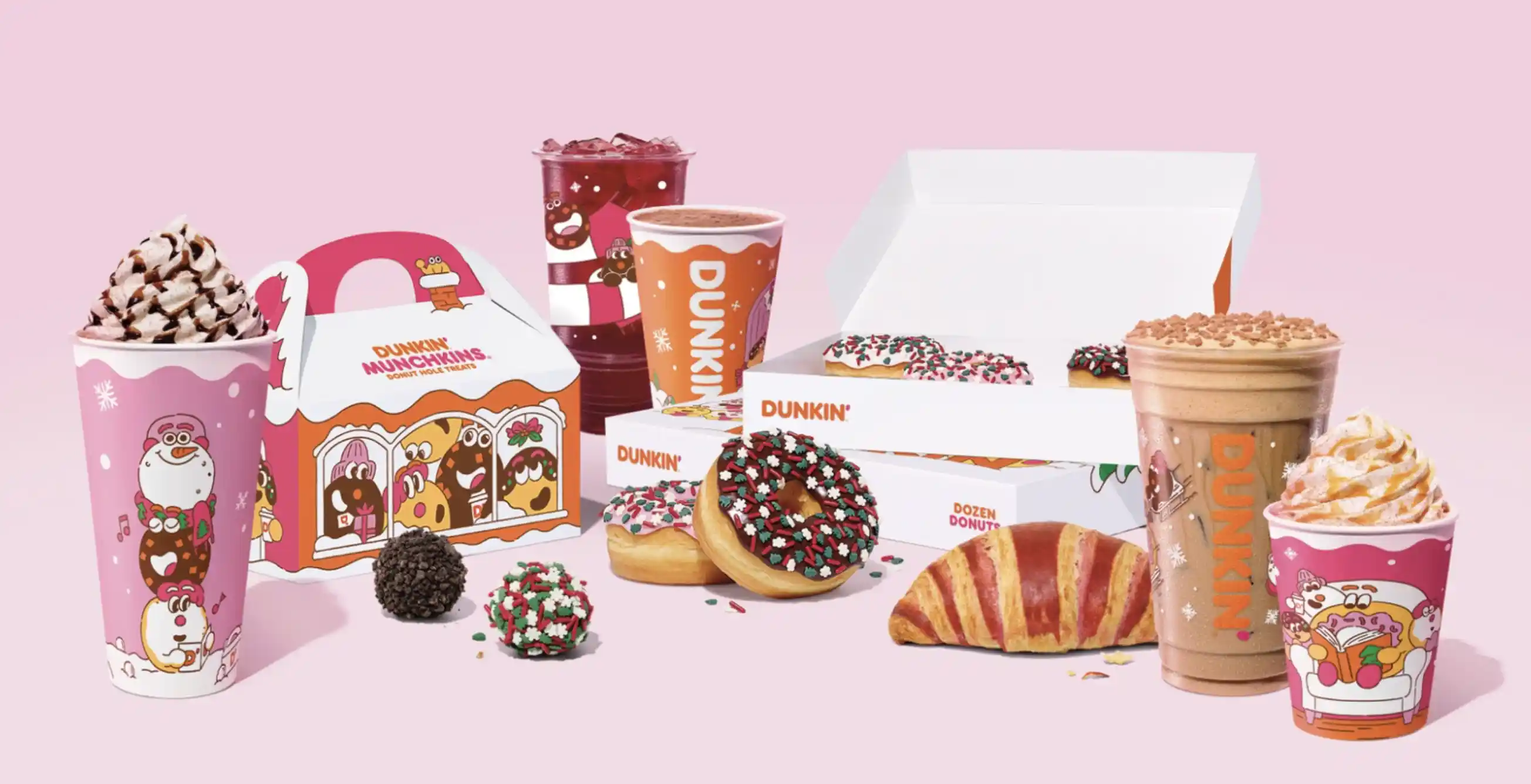
Dunkin’s marketing strategy is built less around one viral campaign than around a repeatable brand system. The company shortened its name, kept the pink-and-orange visual memory people already knew, and then used celebrity partnerships, creator-led menu items, seasonal offers, rewards, and store-based comedy to keep the brand culturally visible. The through line is consistency: new ideas arrive, but they still look and sound unmistakably Dunkin’.
That is why the case is useful for founders and marketers. Brand Vision, a branding agency, approaches the lesson as a question of alignment between identity, offer, customer experience, and campaign execution, not as an invitation to copy Dunkin’s specific celebrities or humor. At the operations layer, coffee businesses may also use systems such as coffee roasting software to support consistency, but that vendor category should not be read as evidence of Dunkin’s own technology stack.
At a glance
- Dunkin announced the move from “Dunkin’ Donuts” to “Dunkin’” in September 2018, with the official rollout beginning in January 2019.
- The rebrand preserved familiar colors and typography while giving coffee and on-the-go occasions more room in the story.
- Ben Affleck and the DunKings campaigns created a recurring entertainment world instead of treating each celebrity appearance as a disconnected stunt.
- The Charli, Ice Spice, and Sabrina Carpenter collaborations show how creator relevance can be attached to a real menu item and a clear customer action.
- Dunkin’ Run demonstrates how a simple value proposition can be embedded directly into creative.
- Rewards changes show the risk of changing loyalty economics for customers who have already learned the old system.
A tighter name: the Dunkin’ Donuts rebrand
Dunkin announced in September 2018 that it would officially shorten its name from Dunkin’ Donuts to Dunkin’, with the new branding taking effect in January 2019. The company described the move as another step in its effort to become a beverage-led, on-the-go brand while preserving the familiar pink and orange colors and the rounded lettering customers already recognized (Dunkin’ newsroom).
The lesson is not that shorter names are automatically better. The stronger idea is selective change: preserve the brand assets that still carry recognition while changing the parts that restrict the story. That is the same logic behind thoughtful rebranding services, where the goal is to identify what the existing brand has earned before deciding what actually needs to change.
- The name changed, but Dunkin kept recognizable colors and typography.
- The January 2019 rollout gave packaging, advertising, online channels, and new or remodeled restaurants a common transition point.
- The shift gave beverages more room without removing donuts from the product experience.
Ben Affleck turns the drive-thru into a recurring brand world
Dunkin’s first Super Bowl commercial in 2023 placed Ben Affleck behind the drive-thru counter at a Dunkin restaurant in Medford, Massachusetts. The setting mattered as much as the celebrity. The store stayed central to the joke, Affleck’s well-known personal connection to Dunkin made the casting feel native, and the spot worked a real offer into the scene: Dunkin’ Run, which at the time gave guests a $1 classic donut with a medium or larger coffee (Dunkin’ press) (YouTube).
That combination gave Dunkin a repeatable creative territory. The brand could revisit Affleck, Boston references, the store environment, and product cues without rebuilding the campaign world from zero every time. What can be said confidently is that the platform generated a continuing stream of campaign material and cultural coverage. Claims about exact incremental visits or sales require separate measurement evidence.
- Use celebrities whose existing connection to the brand makes the partnership easier to believe.
- Keep the product or store experience visible enough that the entertainment still belongs to the brand.
The DunKings era extends serial storytelling
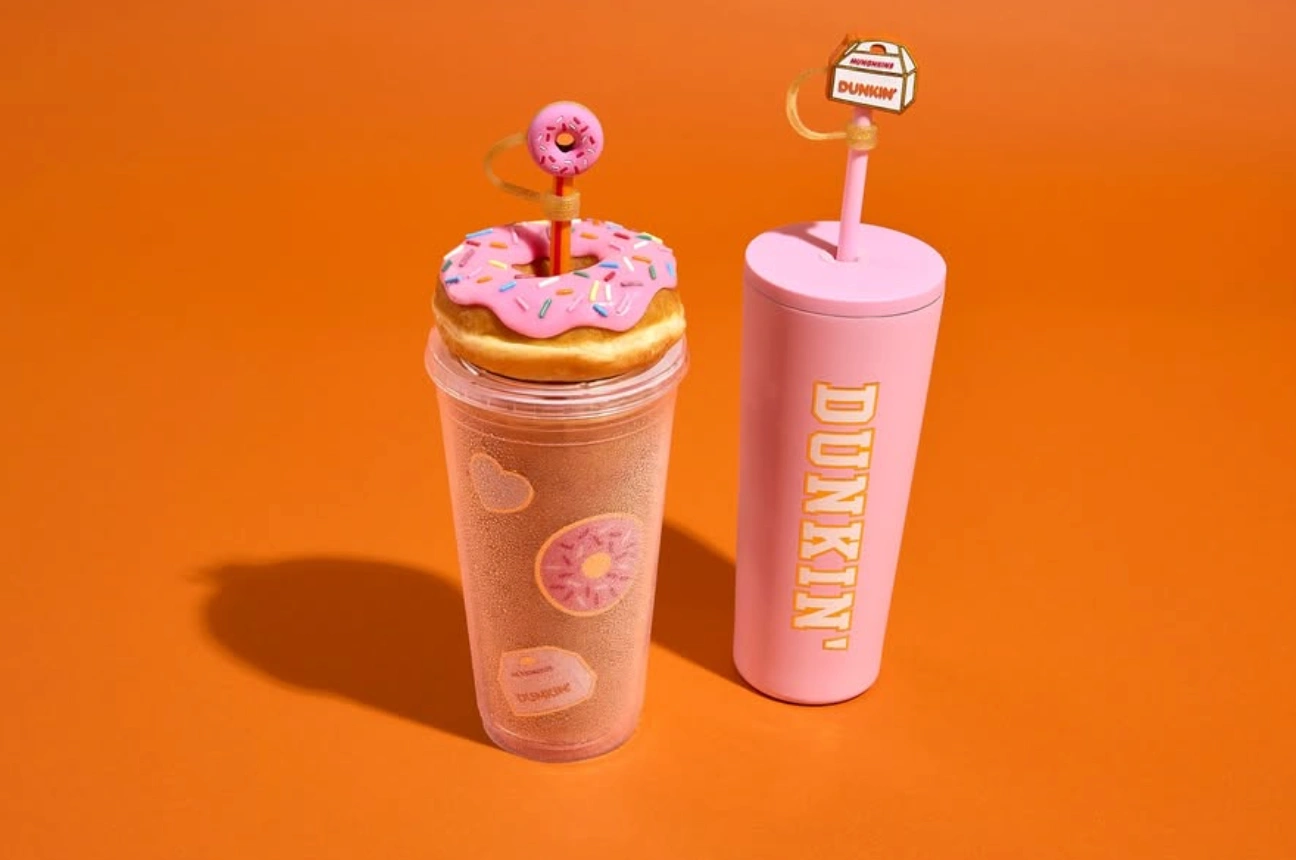
The 2024 DunKings campaign and its 2025 continuation show how Dunkin turned the Affleck relationship into serialized storytelling. Familiar characters, Boston humor, music, and branded merchandise gave audiences references that could return from one campaign to the next (People 2024) (People 2025).
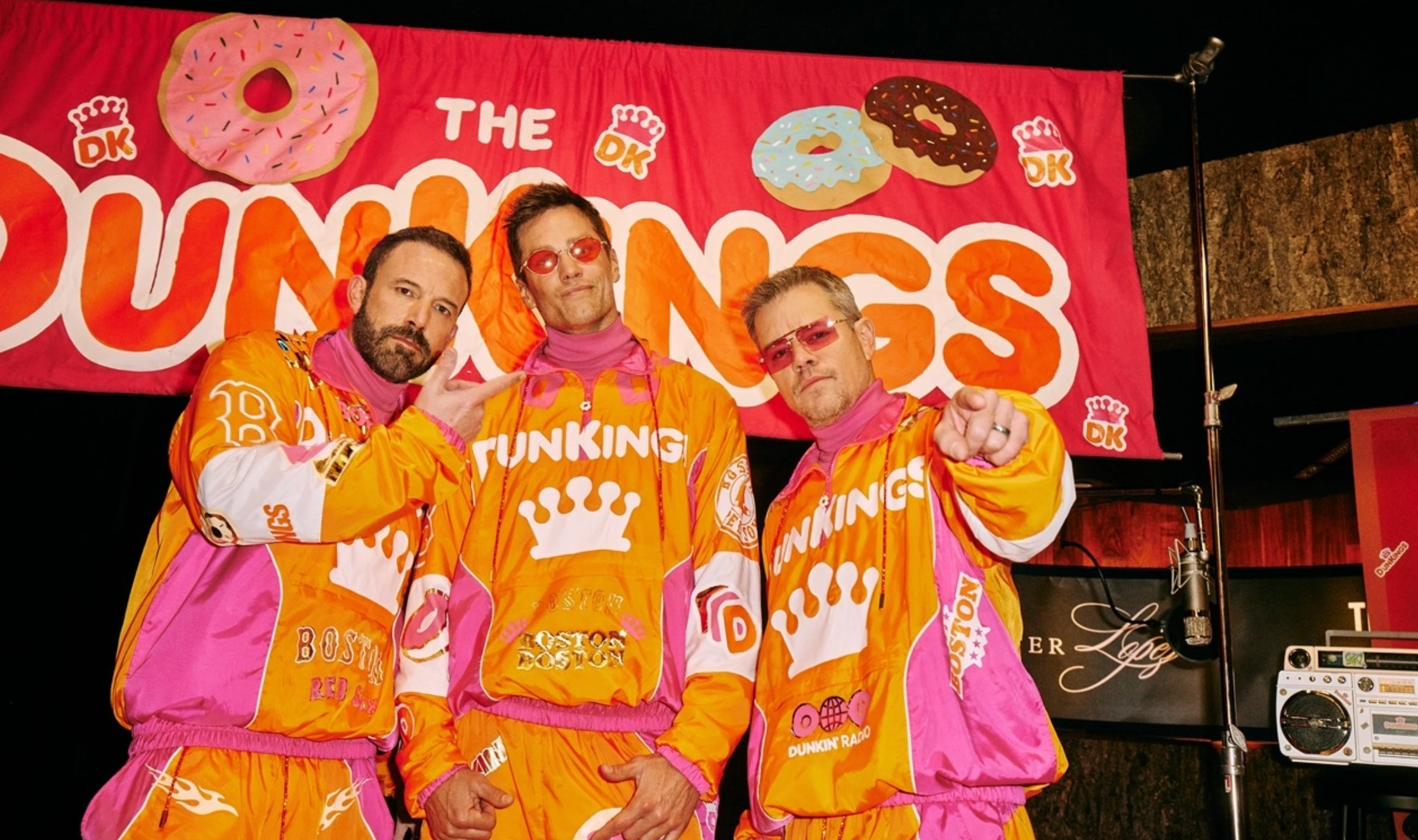
The merchandise element also matters because it lets the audience participate in the campaign world outside the ad itself. That connects naturally to the broader idea of brand merchandise and fandom: clothing and accessories can become identity objects when people genuinely want to display the association, rather than simply receiving another promotional item.
- Recurring characters can create recognition from one campaign to the next.
- Merchandise works best when it feels like part of the culture around the campaign, not an unrelated logo placement.
The Charli turns a creator habit into a trackable menu moment
In 2020 Dunkin put Charli D’Amelio’s regular cold brew order on the national menu as “The Charli.” The campaign used her existing relationship with the brand rather than inventing a generic endorsement, and it paired the named drink with social content, a contest, and app-based ordering incentives (PR Newswire) (Marketing Dive).
The useful marketing lesson is the mechanic. A creator partnership became a product customers could actually order, giving the campaign a clearer behavioral endpoint than a sponsored post alone. For food and beverage marketing, that connection between personality, menu item, app behavior, and in-store purchase is especially powerful because the promotion can end in a concrete transaction.
- Build creator collaborations around a real product or action when the partnership supports it.
- Use app orders, redemptions, and product sales as measurement points rather than relying only on views and mentions.
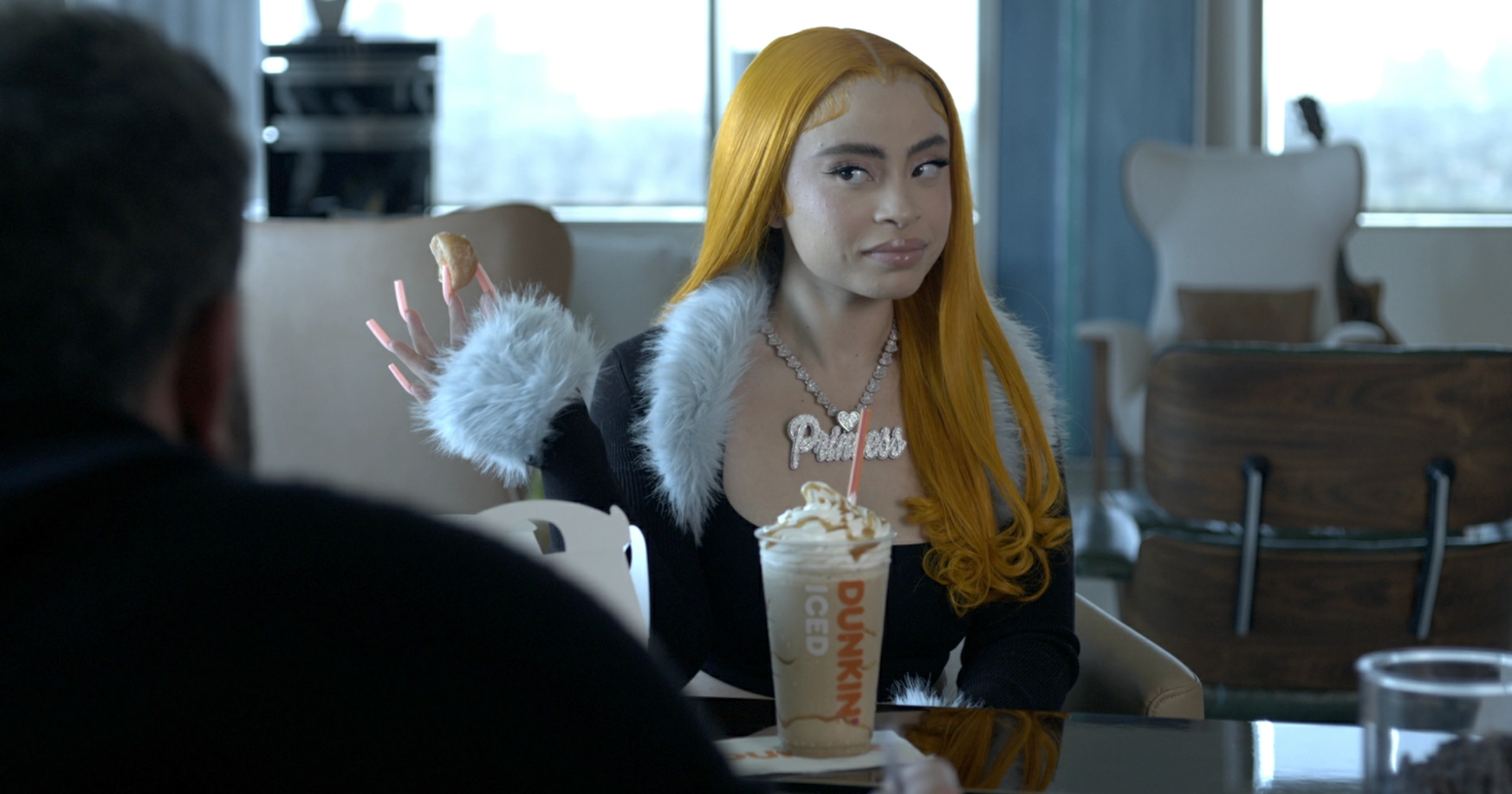
Ice Spice MUNCHKINS remixes a familiar product cue
Dunkin followed a similar logic in September 2023 with the Ice Spice MUNCHKINS Drink. The campaign paired Ice Spice with Ben Affleck and debuted around the MTV Video Music Awards, while the drink itself combined Frozen Dunkin’ Coffee with Pumpkin MUNCHKINS Donut Hole Treats (Dunkin’ blog) (ABC News).
The brand benefit came from recombination. Instead of creating an entirely unfamiliar product name, Dunkin attached the collaboration to MUNCHKINS, one of its most recognizable menu assets. That made the novelty feel new and familiar at the same time.
- New collaborations can borrow memory from products customers already recognize.
- A cultural tentpole can increase attention, but the product still needs a clear reason to belong to the brand.
Sabrina Carpenter gives the creator model a second season
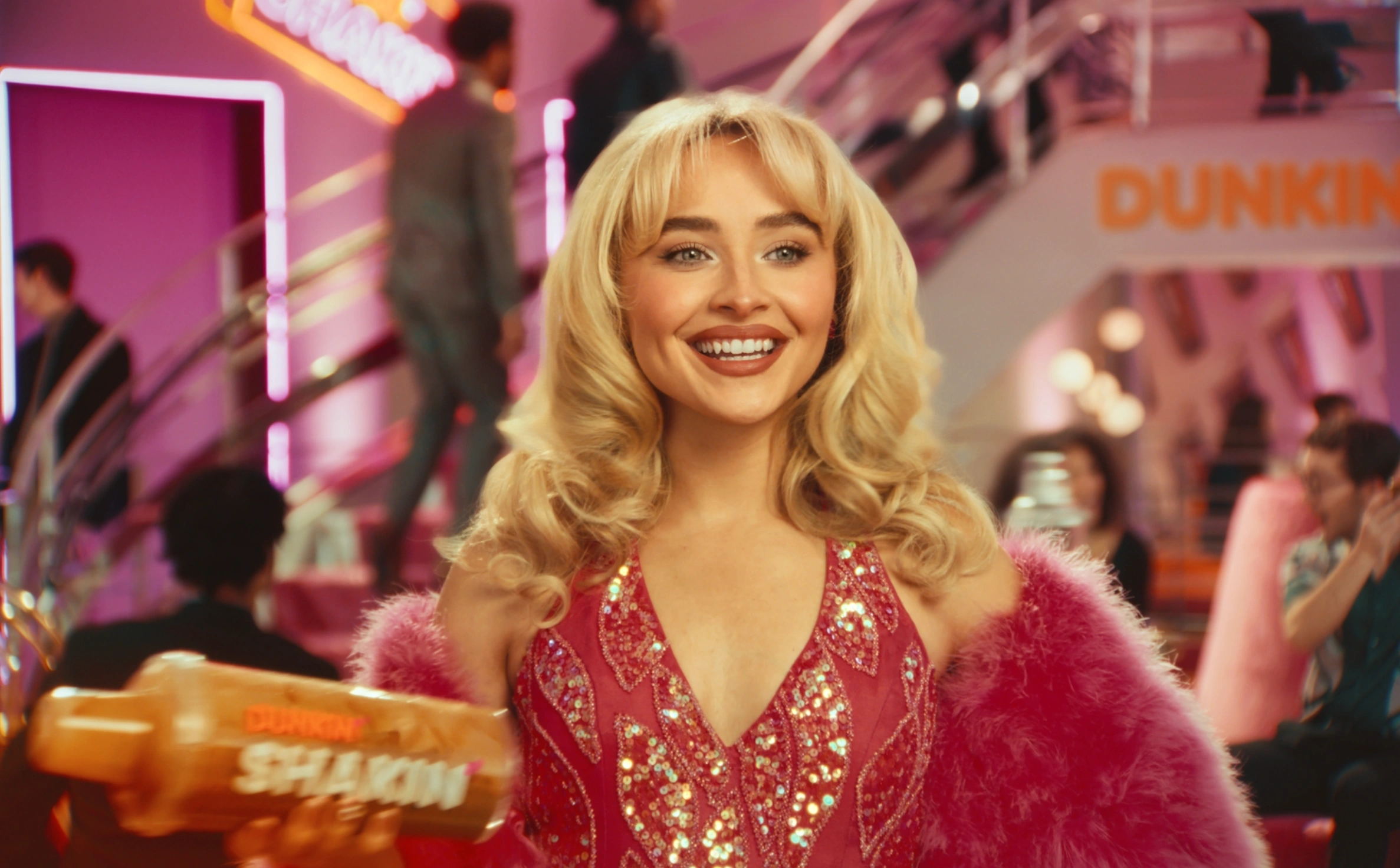
Dunkin’s collaboration with Sabrina Carpenter began with Sabrina’s Brown Sugar Shakin’ Espresso, which arrived on December 31, 2024 as part of the winter menu. The drink connected directly to the cultural momentum around her song “Espresso” and launched with an Artists Equity campaign built around the same joke (Dunkin’ newsroom).
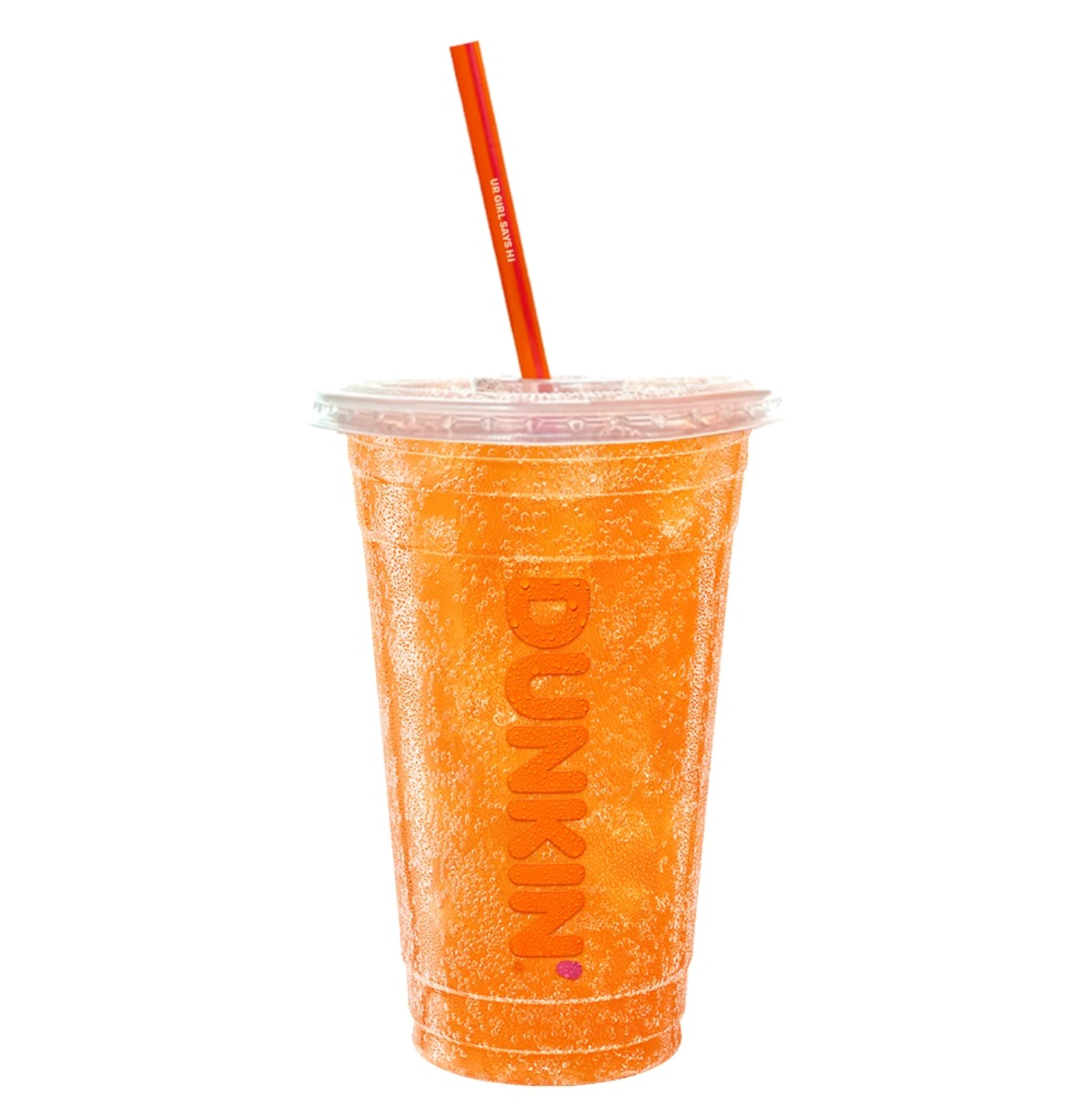
The relationship returned for summer 2025 with the Strawberry Daydream Refresher, giving Dunkin another seasonal product and another campaign world rather than treating the first collaboration as a one-time appearance (Dunkin’ newsroom). Repetition is the more durable lesson here: when a partnership fits the brand, a second chapter can deepen familiarity without requiring the same product or creative concept.
- Use cultural timing when it strengthens the product idea, not as decoration.
- A returning collaborator can create continuity while still giving each launch its own role.
Dunkin’ Run makes the value proposition easy to remember
Dunkin’ Run is a useful example of a promotion built around simple mental math. In the 2023 Super Bowl campaign, the offer gave customers a $1 classic donut with a medium or larger coffee. The creative repeated the phrase inside a scene people were already watching for entertainment (YouTube cut) (iSpot listing).
The offer is memorable because the action is simple: buy the coffee, add the donut. What should not be assumed without supporting transaction data is a specific attach-rate lift or a permanent habit after the campaign ended.
- Simple offers are easier to repeat in advertising, at the counter, and in an app.
- Measure attach rate and repeat behavior directly rather than treating memorability as proof of purchase behavior.
Rewards backlash shows the cost of changing learned value
Dunkin replaced DD Perks with Dunkin’ Rewards in 2022, and the new economics triggered visible customer backlash. Fortune documented complaints that customers needed more spending to earn certain beverages, even as the new system expanded redemption options beyond drinks (Fortune). Later coverage continued to document changes to redemption thresholds and offers through 2025 (Yahoo recap).
The loyalty lesson is straightforward: once customers learn what a point is worth, a program change is also a messaging problem. Brands need to explain what changed, who benefits, and how members can still extract value, while measuring whether the new economics affect participation or retention.
- Model customer reactions before changing the value of familiar rewards.
- Treat loyalty communication as part of the product experience, not just a promotional announcement.
Cross-format durability is a creative advantage
Dunkin’s strongest campaign ideas are easy to recognize across different placements because the core ingredients stay simple: a familiar store, recognizable colors, a product, a celebrity or creator with a believable connection, and a short line or offer. That makes it easier to adapt a concept for television, online video, social clips, PR, and owned channels without losing the central joke or message (Dunkin’ Super Bowl 2023 video).
The advantage is creative consistency, not a guaranteed reduction in media cost. A reusable brand world can reduce the need to re-explain who the brand is every time, but production and distribution economics still depend on the campaign.
- Design campaign ideas around a small number of recognizable brand cues.
- Make sure shorter edits still preserve the product, offer, or action the audience needs to understand.
Why the rebrand still matters
The 2018 announcement and 2019 rollout gave Dunkin a broader name while retaining distinctive visual assets. That decision still helps explain why later campaigns can move between espresso, refreshers, MUNCHKINS, value offers, creators, and entertainment without looking like different companies (Dunkin’ newsroom) (AP via CityNews).
- A rebrand is strongest when it creates room for future growth without discarding useful recognition.
- Consistency after the launch matters as much as the launch itself.
What business owners can learn from Dunkin’s marketing strategy
The transferable lesson from Dunkin is the system behind the campaigns. Clear branding services can align positioning, identity, voice, and customer touchpoints before a business increases campaign volume. From there, marketing works harder because each new piece reinforces something the audience has already learned.
- Keep recognizable brand cues consistent enough that a new campaign still feels familiar.
- Connect campaigns to real products, offers, or customer actions wherever possible.
- Use creators and celebrities when their audience and existing relationship to the brand make sense.
- Measure the behavior you care about instead of treating attention as proof of sales.
How to apply these insights to your brand in 2026
Start by defining what you want the business to be known for, then make sure the website, social presence, sales materials, and campaign creative all reinforce the same promise. If people struggle to find products, understand offers, or move from interest to action, UI/UX design can address the customer journey rather than adding more promotion on top of friction.
When the problem is broader than one channel, a marketing consultation can help separate positioning issues, experience problems, media questions, and measurement gaps. For Chicago food and beverage companies that want a local strategy and digital partner, Brand Vision also operates as a branding agency in Chicago.
- Clarify the brand before increasing the campaign cadence.
- Remove friction from the path between campaign attention and the next customer action.
- Choose a content rhythm the team can sustain without weakening quality.
FAQ
What is the core of the Dunkin’ marketing strategy?
Dunkin combines a highly recognizable identity with recurring cultural partnerships, product launches, value offers, and store-based humor. The consistency between those elements is more important than any single celebrity campaign.
Which Dunkin’ campaigns are the clearest examples of its strategy?
The Ben Affleck and DunKings campaigns show serial storytelling, The Charli demonstrates a creator-led menu item, Ice Spice shows how a familiar product cue can be remixed, and the Sabrina Carpenter collaborations show how a creator relationship can return across seasons.
How did the Dunkin’ Donuts rebrand change the brand?
Dunkin announced the shorter name in September 2018 and began the official rollout in January 2019. The company kept recognizable colors and typography while giving its beverage-led, on-the-go positioning more room.
What should smaller brands borrow from Dunkin?
Borrow the discipline rather than the celebrity budget: protect recognizable brand assets, connect campaigns to a real offer or action, choose partners who fit the brand, and measure customer behavior directly.
Coffee, culture and conversion
Dunkin’s marketing works because new cultural moments keep returning to familiar brand cues. The name is shorter, the campaign cast changes, and the menu rotates, but the experience still feels connected. That is the durable lesson: make change recognizable enough that customers can follow it.
If your brand needs that kind of alignment across identity, website, customer experience, and campaigns, speak with Brand Vision about the next step.