
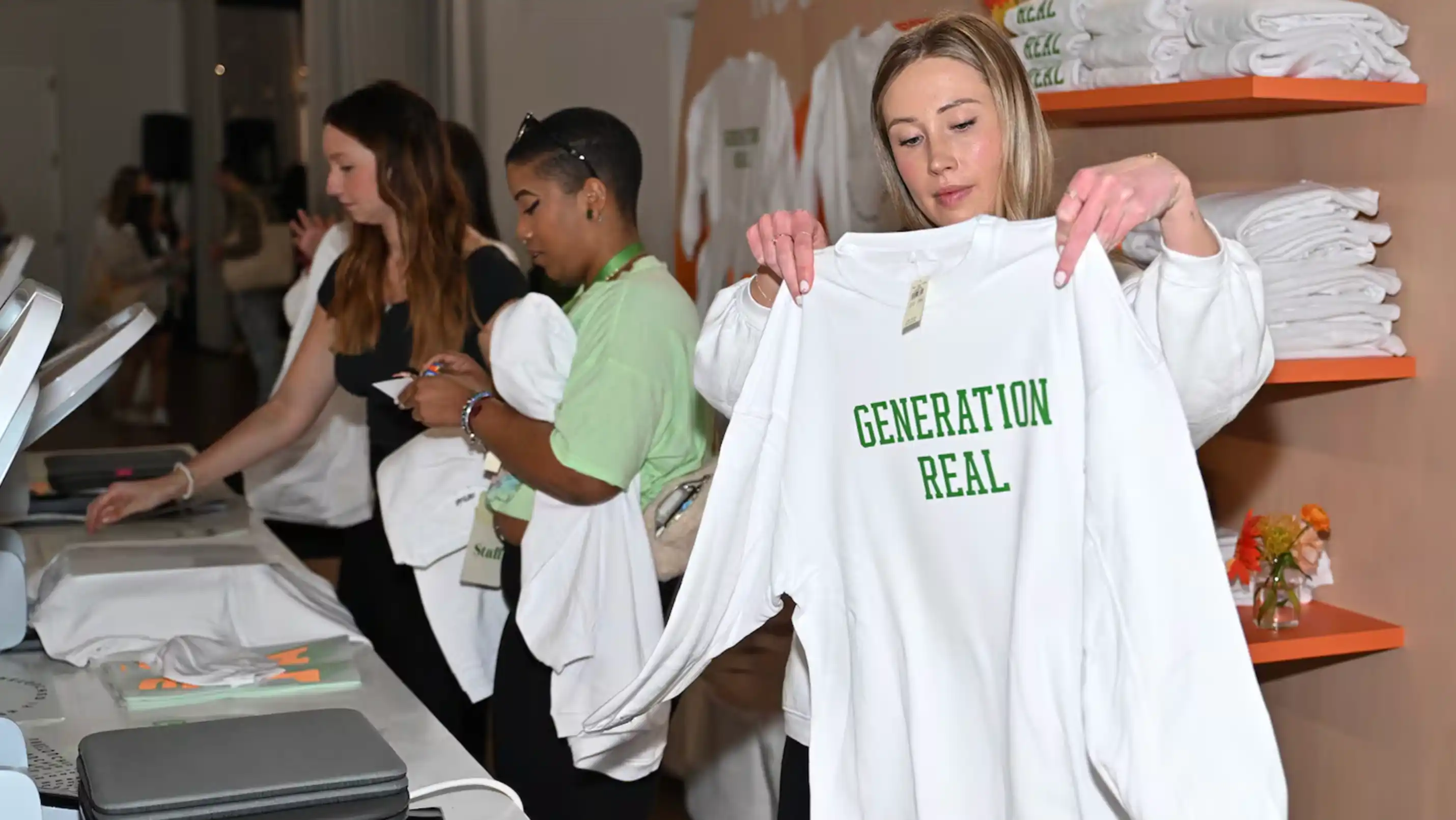
Anti-AI marketing used to sound niche, like a tiny corner of the internet shouting into the void. Then the AI backlash reached advertising, and almost overnight the message flipped into a clear signal: this was made by real people, for real people. If you have been wondering why people dislike AI in advertising, the honest answer is not that tech is scary. It is that a lot of AI-led creative feels empty, polished on the surface and hollow underneath. The best anti-AI marketing campaigns of 2025 did not win by sounding anti-tech. They won by sounding pro-human.
We run a branding and marketing agency, so we read launches like these less as ads and more as case studies in what earns trust right now. What follows turns the anti-AI marketing playbook into choices you can actually apply, from positioning and messaging to creative direction, channels, and trust building in 2026.
At a glance
- The anti-AI marketing that worked in 2025 did not argue about tools. It sold a feeling: human presence, imperfection, and real connection.
- Polaroid turned screen fatigue into a city-wide statement, placing anti-screen and anti-AI messages near tech landmarks and pairing them with phone-free experiences.
- Aerie made "No AI" a trust promise, extending its long-running no-retouching stance into a clear, modern pledge.
- Heineken's "real friends" wearable flipped the AI-companionship conversation into an offline invitation, built for culture-speed sharing.
- The anti-AI slogans that traveled were short and absolute: "Not now, not ever" from DC Comics, "This show was made by humans" from Pluribus, and Heineken's "real friends aren't artificial."
- The backlash is backed by data: most Americans want clearer AI labeling, and AI-made ads can struggle to stick in memory.
Why people dislike AI in advertising right now
The clearest explanation for why people dislike AI in advertising comes down to trust and felt authenticity. Audiences want more control over how AI shows up in their lives, and most want to know what is AI-made versus human-made. That matters in advertising because an ad is a shortcut to belief, and anything that feels fake makes the brain hit the brakes. Pair that with broad unease about AI's growing role, and you get the conditions for a real backlash. On client work we see the same instinct up close: the moment a campaign reads as machine-made, the audience's guard goes up before they have read a word.
- Pew Research found that 50% of U.S. adults are more concerned than excited about increased AI use in daily life, and 76% say it is extremely or very important to be able to tell whether pictures, videos, and text were made by AI or by people. (Pew Research Center)
- NielsenIQ reported that AI-generated ads, even when judged high quality, can show weaker memory activation than traditional ads, which is a technical way of saying they are less likely to stick. (NielsenIQ)
- CivicScience found that 36% of U.S. adults said they are less likely to buy from a brand that uses AI in its ads, versus 10% who said more likely. (CivicScience)
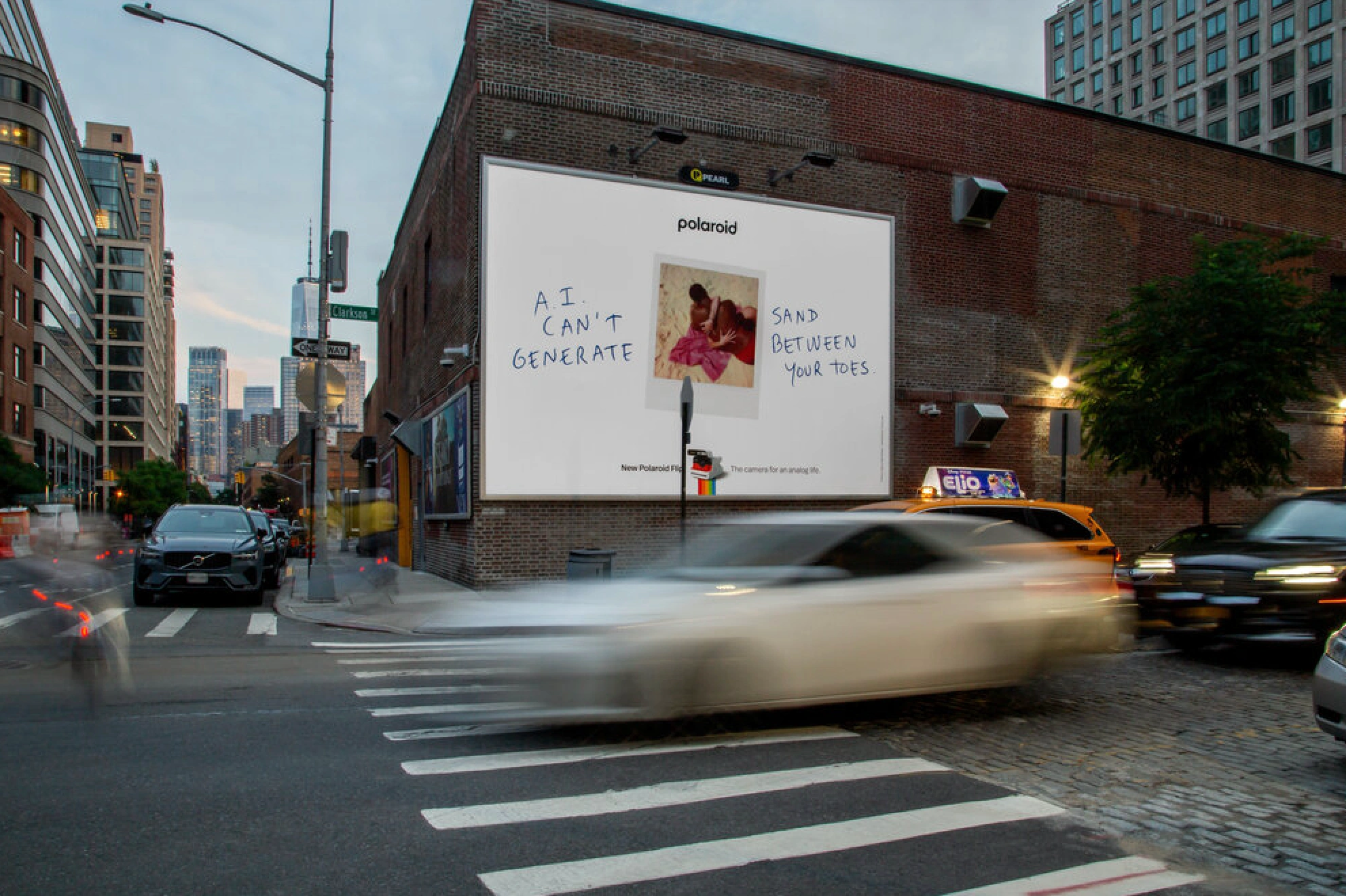
1) Polaroid: The Camera for an Analog Life
Polaroid did not whisper its point. It put it on walls. The Camera for an Analog Life campaign positioned Polaroid as the antidote to digital overload, pairing real Polaroid photos with copy that calls out screens and AI directly. The placements did the heavy lifting: high-traffic spots near Apple Stores and Google offices, turning the message into a playful confrontation with modern tech habits. Then Polaroid took it past posters with phone-free walking tours, making "log off" something you could actually do, not just a slogan. (Polaroid Newsroom)
- Positioning: analog life as a response to digital exhaustion and AI noise.
- The tactic that made it land: high-impact out-of-home placed deliberately near tech landmarks, plus phone-free walking tours.
- Why it is peak anti-AI marketing: it sells sensory, physical proof an algorithm cannot replicate.
2) Aerie: No retouching. No AI. 100% Aerie Real.
Aerie understood something most brands miss: you can’t “authenticity wash” your way out of an AI backlash; you need a consistent history. Their 2025 message worked because it wasn’t a sudden reinvention; it was a clean extension of a promise they’ve been making since 2014, when they said they stopped retouching bodies. In 2025, they pushed that stance forward with a direct commitment: no AI-generated bodies or people, plus the blunt line that makes it impossible to misread. The response was measurable too, with reporting pointing to major engagement lift and a standout reaction in comments. (Aerie) (Business Insider)
- The promise in plain language: “no AI-generated bodies or people” tied to the brand’s “Real people only” identity. (Aerie)
- Reported performance signal: over 40,000 likes on the pledge post and an engagement lift over a two-week window. (Business Insider)
- Why it’s one of the best anti-AI marketing campaigns: it treats trust like a product feature, not a vibe.
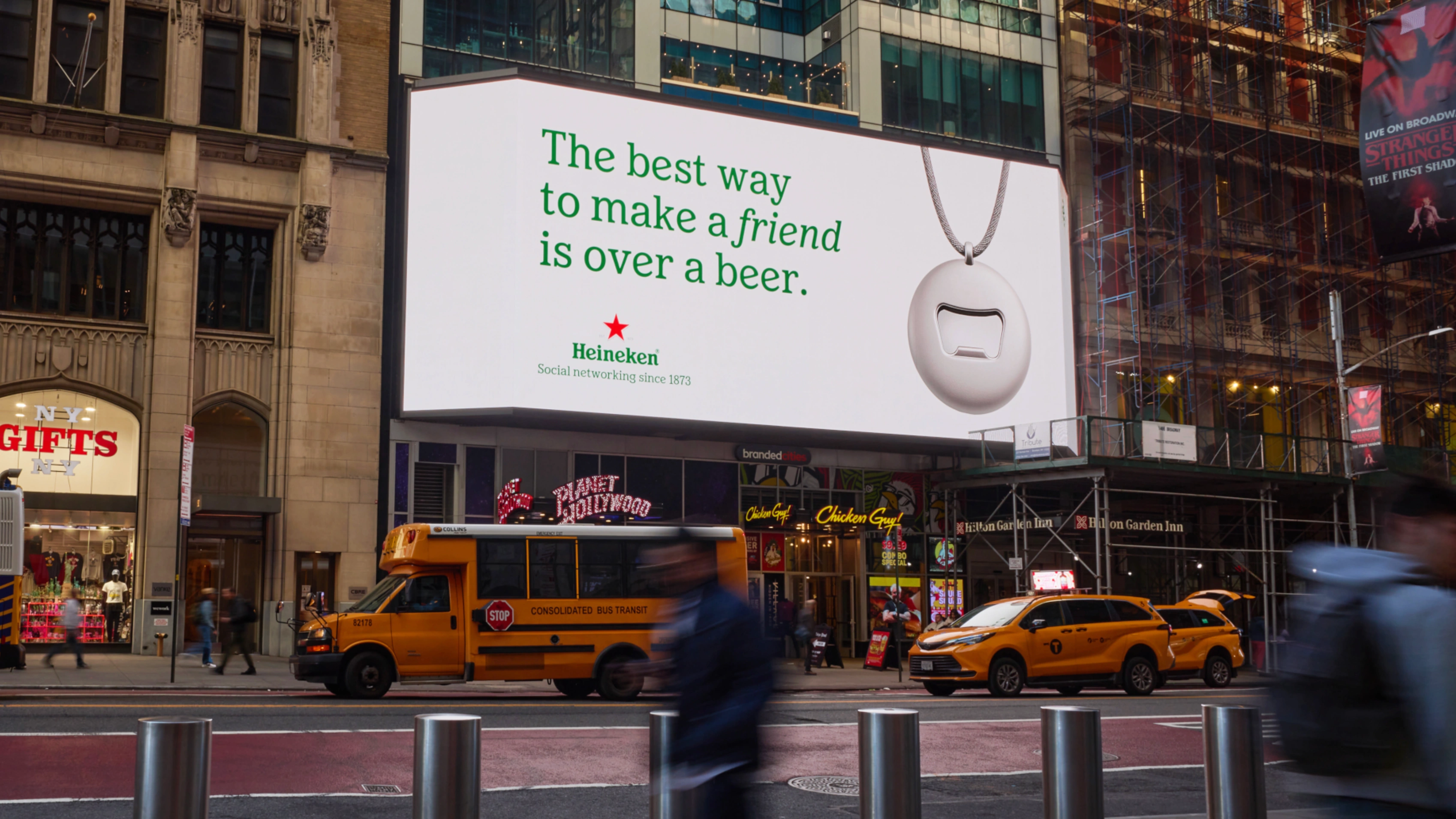
3) Heineken: Real friends aren't artificial
Heineken did not try to ban AI. It just made AI companionship look a little sad. The campaign revolves around a bottle-opener necklace that riffs on wearable-tech culture, then lands the line that made it travel: the best way to make a friend is over a beer. It is classic anti-AI marketing because it frames the win as human connection, not moral panic, and it uses humor instead of lectures. The rollout matched the moment too, moving through social and high-impact out-of-home in New York, built to spark screenshots, shares, and quick cultural commentary. (LBBOnline) (Business Insider)
- Creative core: a functional bottle-opener necklace presented as a playful social wearable.
- Message architecture: "real friends" and offline moments, delivered with irony and speed.
- Why it rode the backlash wave: it piggybacked on public pushback around AI-companionship ads and redirected the conversation into real-world togetherness.
4) Spotify Wrapped 2025: The human comeback, without pretending data isn't the point
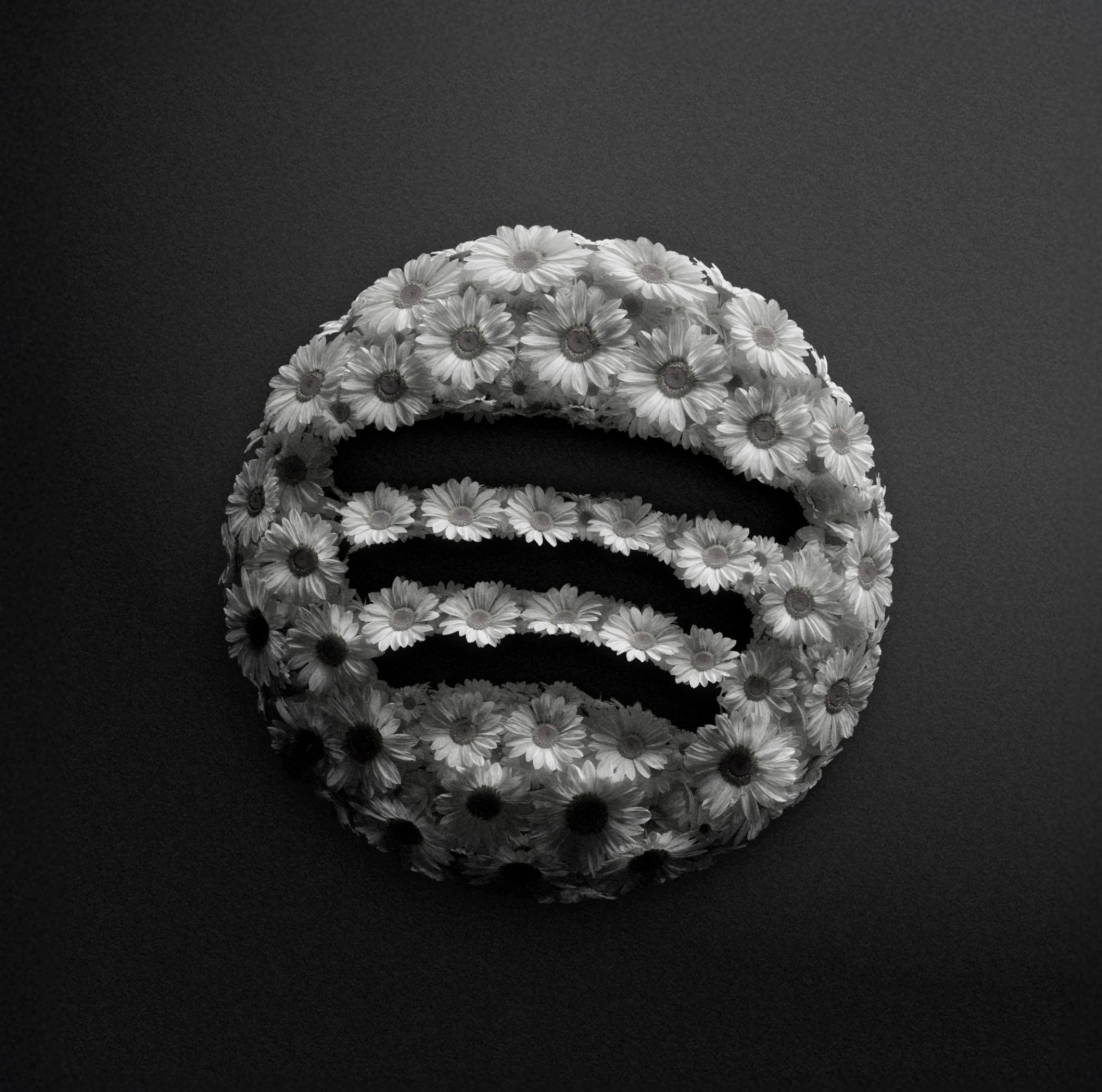
Spotify cannot escape algorithms. That is literally the product. So its smartest move was not "we're anti-AI." Instead, the 2025 Wrapped creative leaned into human emotion and identity, framing the visuals as a modern visual mixtape with textures and energy that feel made, not generated. The campaign also pushed harder into real-world installations and shared moments, because nothing says "this is real" like turning a digital recap into a physical experience people can stand inside. And after criticism tied to AI features in the 2024 Wrapped, trade reporting noted the shift in how the 2025 version was received and positioned. (Spotify Newsroom) (MediaPost)
- Spotify described the 2025 Wrapped design as a visual mixtape, blending analog and digital aesthetics.
- MediaPost referenced criticism tied to the 2024 Wrapped using generative-AI elements, followed by a bigger, bolder 2025 release.
- Why it belongs on a list of best anti-AI marketing campaigns: it makes the output feel human even when the engine is still data.
5) DC Comics: The anti-AI pledge as brand protection
This one is not an ad spot, but it is absolutely marketing, because it is a promise aimed straight at trust. When Jim Lee says DC will not support AI-generated storytelling or artwork, he is protecting the relationship between fans, artists, and the idea of authentic creative work at a moment when people are increasingly suspicious. In an era of AI backlash, that clarity matters, especially in industries where craft is the product. The language hit because it was not vague. It was definitive, and definitive is memorable. (The Verge)
- The line that spread: "not now, not ever," tied to a commitment to human creativity.
- Why it plays as anti-AI marketing: it reassures audiences who recoil from creative output that feels fake.
- What it signals to the market: human authorship is part of the brand's value, not just the production method.
6) Pluribus: "Made by humans" becomes the flex
When a show tucks "This show was made by humans" into its credits, it is doing more than making a statement. It is planting a flag in a cultural argument. In 2025, "made by humans" started behaving like a quality label, the way "handmade" or "small batch" works in other categories. That is why the moment matters to marketers: the phrase is not really about fear of tools, it is reassurance that a real author stands behind what you are watching. It is anti-AI marketing energy, just delivered through entertainment instead of billboards. (Business Insider)
- The disclaimer: "This show was made by humans," appearing at the end of the credits.
- Why it resonates inside the backlash: it answers why people dislike AI in advertising and content without a debate, just a signal.
- The broader takeaway: "human-made" is becoming a story device, not just a production note.
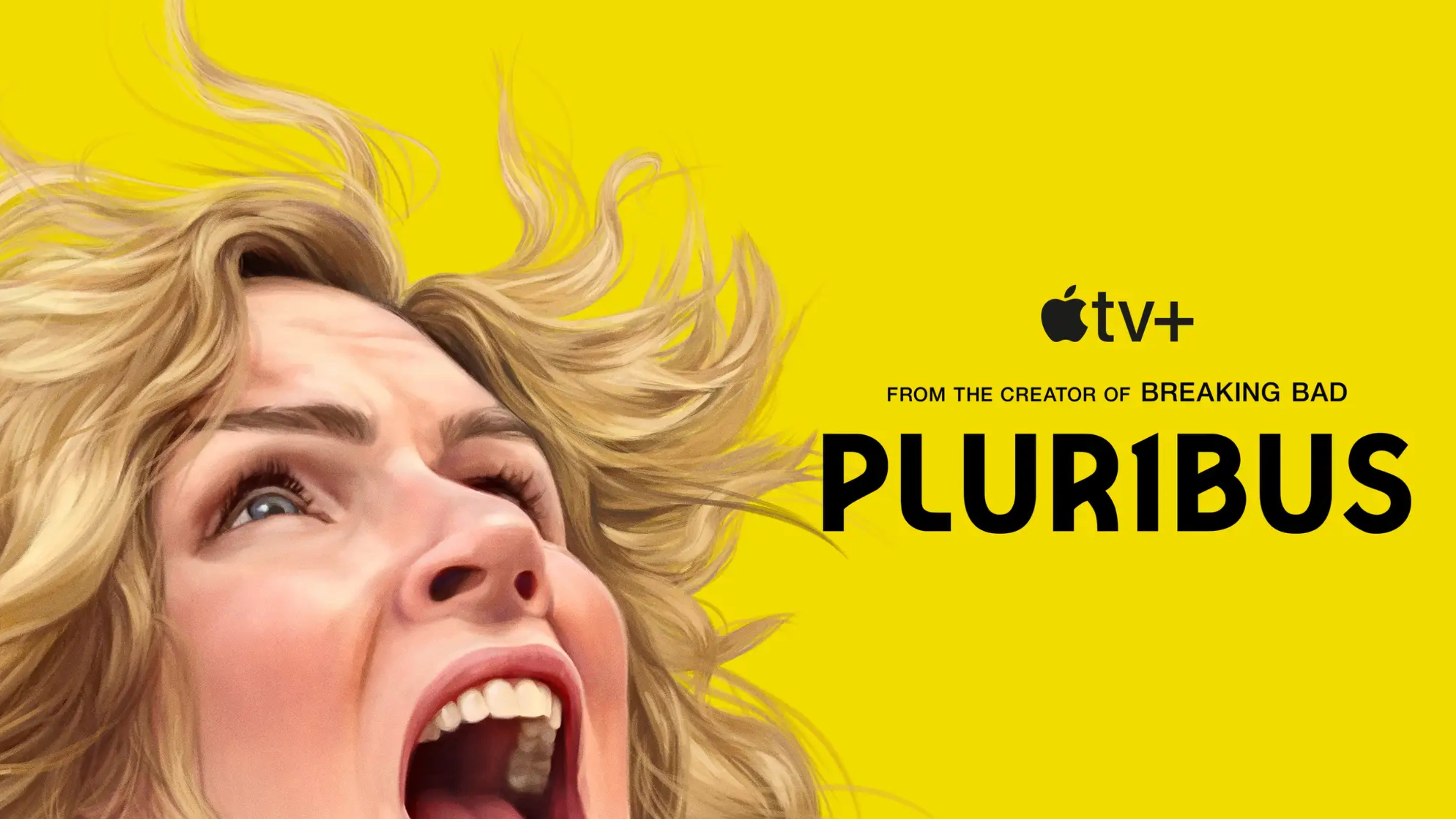
The anti-AI slogans that actually traveled
The strongest anti-AI slogans of 2025 share one trait: they are short, human, and impossible to misread. None of them explains AI. Each one just plants a flag and dares you to check it.
- "Not now, not ever." DC Comics president Jim Lee, ruling out AI-generated storytelling or artwork.
- "This show was made by humans." The disclaimer in the credits of Pluribus, now read like a quality label.
- "Real friends aren't artificial." Heineken, turning AI companionship into an argument for meeting up in person.
- "No retouching. No AI. 100% Aerie Real." Aerie, treating a no-AI promise as a product feature.
- "The Camera for an Analog Life." Polaroid, selling presence instead of pixels.
Notice what none of these slogans do. They do not lecture, hedge, or explain the technology. When trust is the product, the slogan is the receipt.
The shared DNA of the best anti-AI marketing campaigns
The best anti-AI marketing campaigns do not feel like protests. They feel like relief. They do not ask the audience to learn anything new about AI, they give people permission to want what they already want: connection, craft, and realness that does not glitch. Across 2025, brands from Aerie to Heineken to Polaroid reached for the same move, and the pattern was hard to miss. (Business Insider) Notice how often the winning creative is tactile or physical: film photos, real bodies, street-level out-of-home, in-person activations. And notice how often the language is confident and simple, because when trust is the product, clarity is the packaging.
- Human-made proof beats human-made claims, especially when the audience is already primed by the backlash.
- Tactile and offline moments act like trust accelerators: out-of-home, physical products, live activations.
- Clear vows, like "no AI-generated bodies," land harder than vague "we value authenticity" copy.
-1.webp)
What business owners can learn from anti-AI marketing in 2026
Anti-AI marketing works when it is framed not as fear of technology but as clarity about what your customers are buying. In 2026 the brands winning this space are not shouting "no AI." They are proving "real" with tangible signals: human presence, craft, restraint, and transparency that makes people feel safe. From the brand and growth work we do every week, the lesson is consistent: trust is a product feature. If your market is tired of synthetic content, make the human part of your brand visible again, in the work, the story, and the experience.
Practical ways to apply it now
- Build a proof system, not a slogan. Show the process, the sourcing, the real customers, the real staff, the real locations. If you claim human-made, earn it with receipts and repeatable habits. This is the same logic behind how a strong brand identity compounds over time: consistency is what reads as real.
- Make your creative direction more tactile. Even in digital, aim for texture, imperfection, and human cues that feel authored. This is where a branding agency earns its keep, mapping a clear visual identity system that does more than chase trendy aesthetics, because it builds recognition people trust.
- Tighten your website and landing pages to reinforce authenticity. If you are asking people to trust you, the site has to feel fast, clear, and intentional, not generic. Treat web design as a credibility asset, not a brochure.
- Use transparency as a conversion lever, not a disclaimer. If AI is part of your workflow, say where and why. If it is not, define what you do instead. Customers do not need a manifesto, they need confidence.
- Treat organic content as the long game. Anti-AI positioning dies if your content feels mass-produced. Build a sustainable publishing cadence and a distribution plan that compounds, with a clear SEO strategy and an eye on how AI visibility is reshaping brand discovery.
- Audit where your brand feels "stock." If your ads, emails, product pages, or socials could be swapped with a competitor's and still make sense, that is the work. A structured marketing consultation and audit can help you decide what to keep, what to cut, and what to rebuild so your brand sounds like a real voice again.
FAQ
Is anti-AI marketing actually anti-technology?
Usually no. The strongest anti-AI marketing in 2025 was not saying "never use AI." It was saying "do not replace the human part people came for," especially where authenticity is the whole point. That is why so many campaigns framed the message around connection, real bodies, and real-world experiences rather than technical arguments.
What is the difference between anti-AI marketing and transparency marketing?
Anti-AI marketing uses "human-made" as a positioning advantage. Transparency marketing focuses on disclosure: being clear about what tools were used and where. In practice the line blurs, because a big part of why people dislike AI in advertising is the sense of being tricked, so clear labeling and clear choices do some of the same trust work. The overlap is sharpest in trust-first categories like nonprofit and mission-driven marketing, where audiences expect disclosure by default.
Do people really care if an ad is AI-generated?
A meaningful share does, especially when faces, bodies, or emotional storytelling are involved. Pew's findings show many people want to be able to tell whether something is AI-made or human-made (Pew Research Center), and NielsenIQ's research suggests AI ads can struggle to activate memory the same way (NielsenIQ), which can weaken effectiveness even when the visuals look good.
What makes a good anti-AI slogan?
The anti-AI slogans that worked in 2025 were short, absolute, and free of jargon. Lines like "not now, not ever" and "this show was made by humans" land because they make a promise a person can hold the brand to, not a claim about technology. A good anti-AI slogan names what stays human and dares you to check.
What is the fastest way to apply this without sounding performative?
Start with one verifiable promise you can keep, then show receipts. That might mean a no-AI rule for specific categories like people and bodies, or showing the real creatives and real process behind the work, the way Polaroid and Aerie anchored their campaigns in tangible proof. Make the audience feel the human, not just read about it.
The real win behind the AI backlash
Anti-AI marketing is not winning because people hate technology. It is winning because people hate feeling lonely, manipulated, or bored. The backlash is really a demand for authorship, for proof that someone cared, and for experiences that feel lived-in instead of generated. The best anti-AI marketing campaigns of 2025 did not try to outsmart the algorithm. They reminded people what a human moment feels like, then built the campaign around it.
Human-made is no longer a production note. It is the pitch.



%2520(1).png)






