Vitaminwater’s rise was not only about adding vitamins to water. The brand changed what the purchase meant, turning a bottle into a small signal about routine, taste, and lifestyle at a time when consumers were looking beyond traditional soft drinks.
The Vitaminwater marketing strategy is best understood as a system, not a single campaign. Product framing, packaging, voice, distribution, and partnerships reinforced the same proposition. That consistency helped make enhanced water feel less like a functional niche and more like a recognizable lifestyle category.
There is also a useful leadership lesson here. When the core product is easy to copy, differentiation has to come from meaning as well as mechanics. A clear brand strategy defines the proposition a product should repeatedly prove, and Vitaminwater’s case shows how packaging, tone, and distribution can reinforce that meaning across touchpoints.
For companies applying these lessons with outside support, geography is relevant only when it changes collaboration or market context. A team specifically comparing a branding agency in San Francisco should still evaluate the partner on positioning, identity systems, channel fit, and governance rather than using location as a substitute for strategy.
At A Glance: The Vitaminwater Marketing Strategy
- Vitaminwater helped popularize enhanced water as an “upgrade” purchase rather than simply another bottled-water option.
- Packaging did heavy lifting as both design and advertising, using naming and color to reduce decision friction.
- Brand voice made the product feel culturally fluent, not clinical.
- Distribution choices shaped perception early, then scale cemented habit.
- Portfolio and label clarity evolved as sugar expectations changed.
The Category Move: “Enhanced Water” As A New Job To Hire
The first strategic win was category framing. Glaceau did not present Vitaminwater as “water with vitamins.” It positioned it as enhanced water with a job: hydration plus a functional nudge, wrapped in a personality. That shift changes the comparison set. You are no longer only competing with bottled water brands. You are competing with soda, juice, sports drinks, and any drink that claims to improve your day.
That framing can also support premium pricing when shoppers see the product as a practical upgrade. The Vitaminwater marketing strategy connected the premium to perceived function, personality, and convenience rather than asking packaging alone to justify the price.
You can see how valuable that positioning was in Coca-Cola’s acquisition rationale. Coca-Cola described the deal as a platform for “active lifestyle beverages,” which is corporate shorthand for “this is bigger than a drink.” (Coca-Cola Investors) (SEC)
Packaging That Behaved Like Media
Most beverage packaging explains. Vitaminwater’s packaging performed. It acted like a poster and a headline in the cold box. That matters because retail shelves are one of the most compressed marketing environments. If the package cannot win attention quickly, the product is effectively invisible.
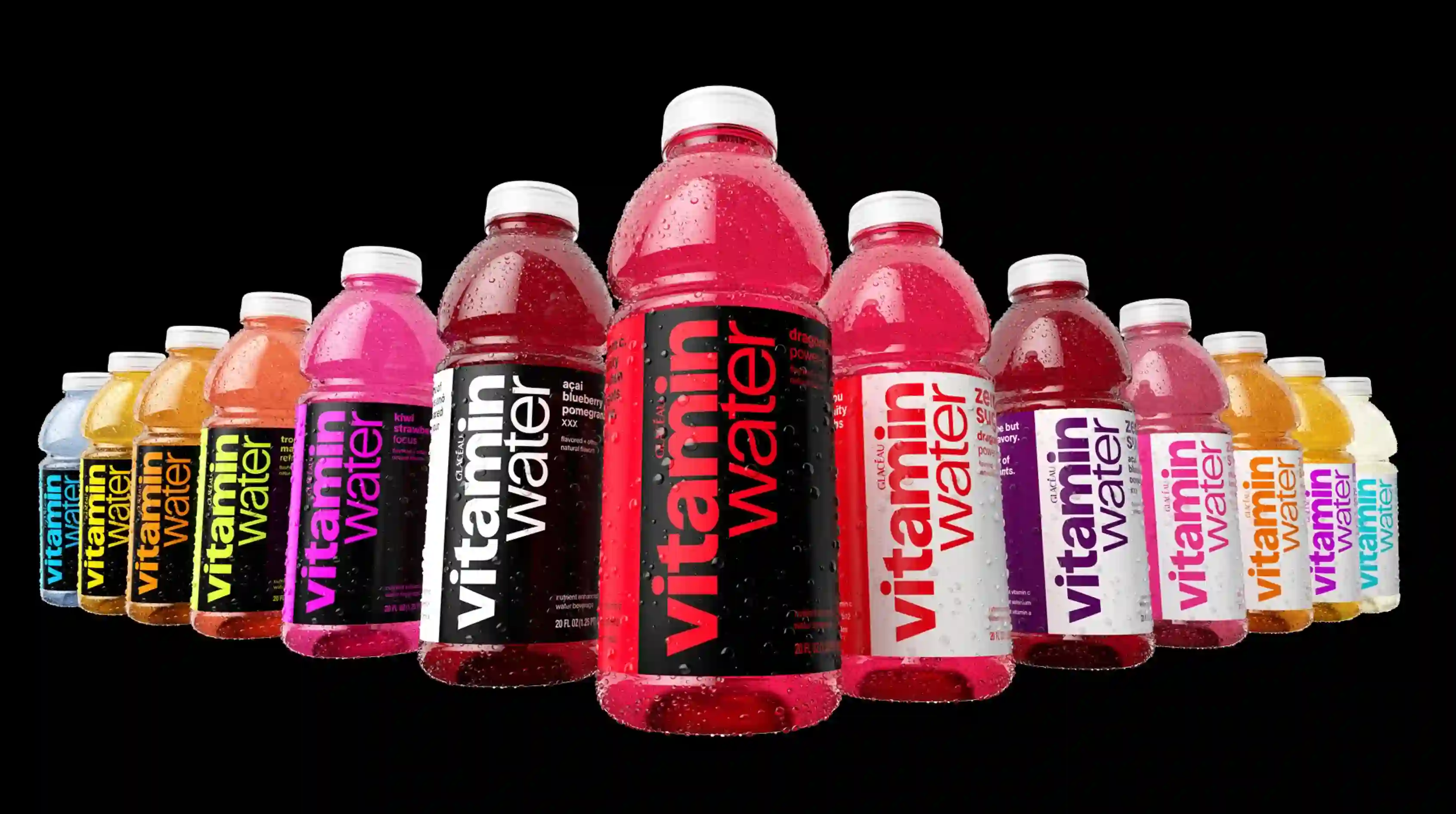
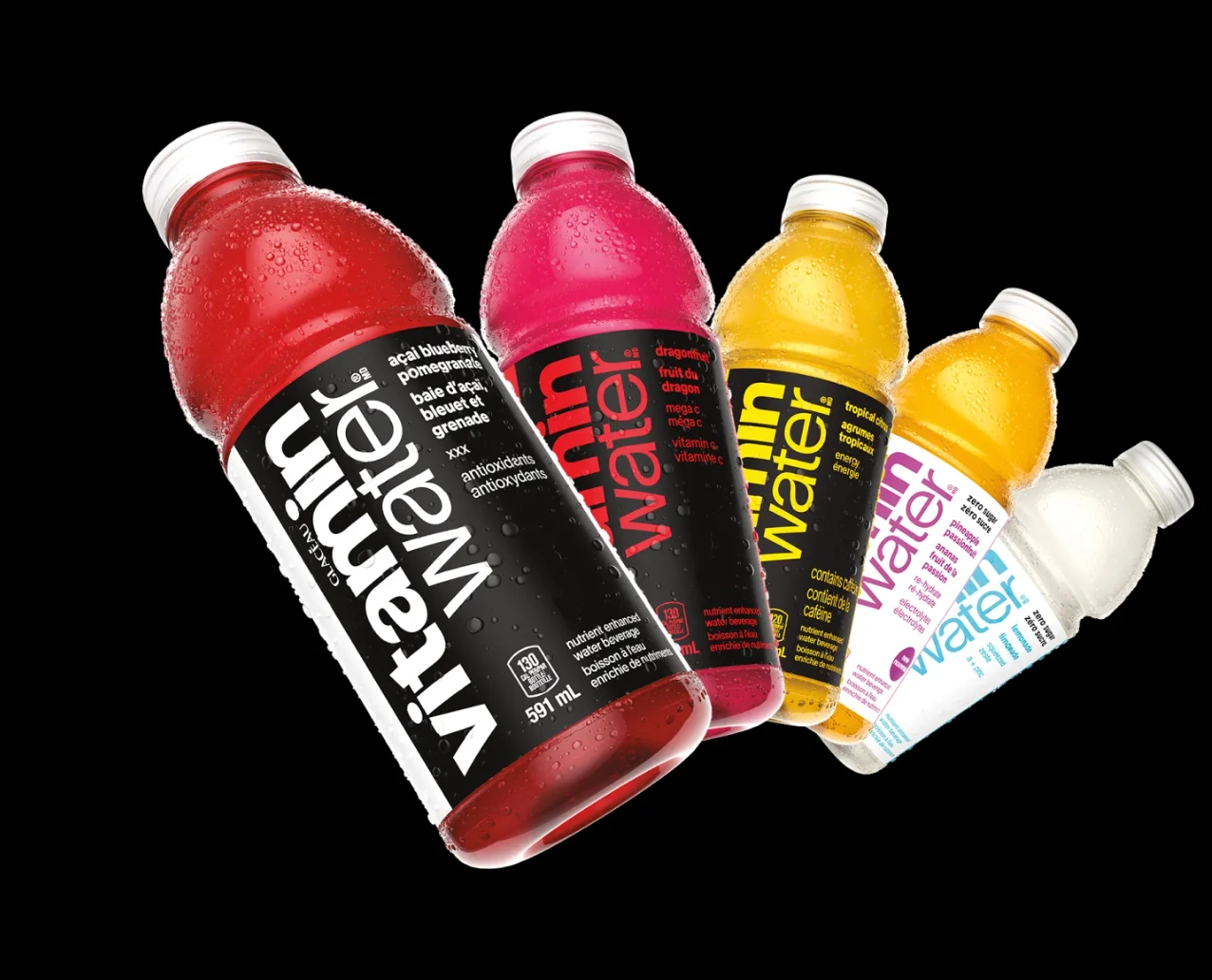
Packaging also sets the emotional tone of the purchase. Vitaminwater used a recognizable bottle, bright flavor colors, and a consistent label system to make the range easy to identify. Those choices are part of visual identity, not decoration: they help a product stay recognizable while individual variants change.
Flavor Names As Copywriting, Not SKU Labels
A signature move in the Vitaminwater marketing strategy was treating flavor naming as messaging. Names did not only describe taste. They suggested mood and intent. That made brand naming part of the shelf experience, giving buyers another way to distinguish variants without relying only on ingredient language.
This is more than clever branding. It is a conversion mechanic. A busy shopper wants a fast decision that feels right, especially in enhanced water where the differences can look minor.
- Make names express a benefit in plain language.
- Make the benefit feel like a lifestyle cue, not a supplement claim.
- Keep the system consistent so repeat buyers can find “their” bottle instantly.
Color Coding For Shelf Navigation
Color did another job: navigation. In a high variety lineup, color becomes a wayfinding system. It reduces friction, speeds repeat purchases, and turns the whole lineup into a recognizable wall of assets.
That consistency also protects the brand as it evolves. In 2025, Vitaminwater refreshed its packaging and expanded the portfolio, leaning into a simpler, less medicinal look. That is a reminder that shelf communication must stay current as the enhanced water aisle becomes more crowded. (Coca-Cola Company)

Positioning That Felt Healthy Without Sounding Clinical
Vitaminwater's branding walked a narrow line. It needed “better choice” associations without becoming a medical product. The voice helped. The bottle did not speak like a nutrition label first. It spoke like a brand first, with function in the background.
That positioning is why the brand could scale beyond a niche wellness audience. A vitamin water brand succeeds when it fits everyday life, not only health-focused routines. It feels compatible with workdays, errands, social plans, and travel, which is where the habit value lives.
Functional Benefits Without Medical Promises
Functional beverage marketing carries risk when language moves beyond what the product can support. Vitaminwater’s history includes litigation over health-related labeling and marketing. A 2015 settlement agreement, later approved by the court, required changes including prominent “with sweeteners” language, calories per bottle on the principal display panel, and limits on specified health claims (Vitaminwater settlement agreement).
The strategic takeaway is discipline. Functional beverage brands need claims that are specific, supportable, and consistent across labels, advertising, and digital content. Clarity is part of trust, not merely a compliance exercise.
- Use benefits as direction, not diagnosis.
- Make sugar and calories easy to see quickly.
- Align packaging, ads, and site copy so nothing contradicts.
The Lifestyle Frame: Identity Over Ingredients
Lifestyle branding works when the product gives people a recognizable set of associations beyond its basic function. Vitaminwater’s tone, naming, color, and cultural references gave the bottle a point of view, helping the purchase feel more expressive than generic flavored water.
This is also where coherence across channels matters. If your product voice is modern but your website feels generic, the brand weakens. Many teams align identity and experience together, whether through internal brand governance or a partner like a branding team that keeps storytelling, design, and conversion paths consistent.
Distribution As Strategy: Win The Cold Box, Then Scale
For beverages, distribution is not only logistics. Placement can shape the context in which buyers interpret a product. Vitaminwater’s active-lifestyle positioning aligned naturally with convenience, on-the-go, and fitness-adjacent occasions before Coca-Cola added far greater distribution scale.
This is why the Vitaminwater marketing strategy is often remembered as “everywhere,” even when it was not everywhere at first. It felt like it belonged in specific places. That belonging created the permission to scale, which is the harder part of turning enhanced water into a lifestyle habit.
Convenience And Gyms As Credibility Channels
Some channels lend credibility. Convenience stores reward impulse and habit. Fitness adjacent venues reward utility and identity. When a product appears there, it borrows context, and that context becomes part of the brand.
Leaders can translate this into a simple rule: choose early channels that make your positioning believable, not just available.
- Map channels to perception first, then to volume.
- Build repeat visibility before chasing broad reach.
- Treat placement as a creative decision with brand consequences.
Coca-Cola’s System After The Acquisition
The acquisition gave Glaceau distribution scale and operational leverage. It also created a governance question: how do you stay distinct inside a large portfolio? Coca-Cola said Glaceau would operate as a separate business unit, which signals that identity was part of the value. (Coca-Cola acquisition closing press release)
Scale is not only about shelves. It is about rules. Naming systems, design standards, claim language, and portfolio logic need guardrails. The same is true for digital ecosystems, which is why brands often invest in maintainable sites and governance-friendly templates with teams who build beyond launch, whether internally or with a web design partner.
Partnerships That Looked Like Culture, Not Ads
Celebrity involvement is common. What made Vitaminwater’s partnerships memorable is that they reinforced the brand’s personality rather than distracting from it. The brand already had a voice. Partnerships became amplifiers, not replacements.
Early on, Glaceau framed Vitaminwater with a distinctive voice in national marketing, emphasizing everyday relevance rather than clinical benefit talk. That tonal clarity is what lets partnerships feel like part of the same world. (BevNET)
Equity Style Celebrity Partnerships And Social Proof
Celebrity participation became part of Vitaminwater’s cultural story, but the useful lesson is broader than any one partner. Partnerships are strongest when they reinforce an existing brand idea instead of creating a temporary identity that disappears when the campaign ends.
The practical lesson is to structure partnerships around narrative fit. If the partner cannot carry the brand voice, you end up renting attention and losing coherence.
- Choose partners who can keep the tone intact.
- Make the collaboration legible in one sentence.
- Create a system so partnerships do not fragment the brand.
A Brand Voice Built For Shareability
Vitaminwater’s voice gave the brand a recognizable way to show up beyond the label. For teams translating a lifestyle identity into repeatable content, a documented social media marketing strategy helps keep tone, recurring themes, partnerships, and measurement connected instead of treating each post as a separate campaign.
This is where experience design plays a quiet role. When your site and product storytelling match the packaging voice, sharing becomes frictionless. Strong UI UX design helps preserve that continuity across pages, flows, and mobile experiences.
Other Brands Doing The Same Thing: Turning Basics Into Lifestyle Signals
Vitaminwater was early, but it was not alone. Many brands have taken a basic, easily substitutable product and redesigned the meaning around it. The pattern is consistent across categories, even when the creative expression changes.
The shared move is not about ingredients alone. It is about turning a simple purchase into a recognizable signal. Vitaminwater did this for enhanced water, and other brands have done it for water, milk alternatives, and snacks by building identity into packaging, voice, and channel strategy.
Liquid Death: Water As Anti Brand Culture
Liquid Death sells water, but it avoids wellness language and leans into countercultural humor. The product is simple. The meaning is the differentiator. Packaging is loud, names are provocative, and partnerships reinforce the same stance. It is the same discipline that built a Vitaminwater lifestyle brand, expressed through a different aesthetic.
Smartwater: Purity As Aspiration
Smartwater made “purity” and process language feel premium, pairing clean design with an elevated lifestyle frame. The parallel to the Vitaminwater marketing strategy is the use of perceived function to justify price and habit. The difference is in tone. Smartwater leans minimal and restrained, while Vitaminwater's branding leans playful and conversational.
Oatly: Oat Milk As Worldview
Oatly turned oat milk into a point of view, using packaging copy that reads like commentary. The product benefits matter, but the cultural framing drives differentiation. Like Vitaminwater, Oatly used voice as a scalable asset. When the brand speaks clearly and repeatedly, customers learn how to describe the choice quickly.
RXBAR: Transparency As Identity
RXBAR built trust by making ingredients the headline. The lifestyle signal was control and honesty rather than indulgence. This mirrors Vitaminwater’s later emphasis on clearer labeling as scrutiny around functional beverage marketing increased.
Califia Farms: Ritual And Aesthetic
Califia Farms elevated everyday consumption into a ritual through bottle design and shelf presence. It competes through coherence and aesthetic consistency. That is the same shelf logic Vitaminwater used to make enhanced water feel like a deliberate routine.
What these brands share is a system mindset. The product may remain relatively simple, but packaging, voice, distribution, and portfolio choices reinforce a more specific meaning around it. That repetition can turn an interchangeable purchase into a more recognizable brand habit.
Portfolio And Innovation: Staying Relevant As Sugar Expectations Changed
Lifestyle brands do not get to freeze in time. Consumer expectations around sugar, labeling clarity, and functional claims tightened, and the enhanced water category became more competitive. Vitaminwater’s newer updates reflect that pressure, including the 2025 portfolio expansion and packaging refresh designed to stand out and clarify product choices. (Coca-Cola Company)
This is where the Vitaminwater lifestyle brand logic shows maturity. Rather than abandoning the identity, the brand adjusted the system. The work was not only creative. It was operational. Clearer separation between offerings supports faster decisions in store and reduces confusion as the lineup grows.
For leaders, the lesson is straightforward. Future buyers may bring different expectations than early adopters. A refresh should protect the equities people recognize while giving the brand room to clarify new products, claims, and category cues.
- Treat zero sugar as product architecture, not a trend reaction.
- Keep the benefit language consistent as the lineup expands.
- Update packaging with restraint so shelf recognition survives.
What Business Leaders Can Learn From Vitaminwater’s Playbook
The Vitaminwater marketing strategy is useful because its components translate beyond one beverage brand. If you operate in the category, food and beverage marketing still has to connect positioning, packaging, channels, claims, and the buying occasion. Outside beverages, the same principle applies whenever competitors can copy product features faster than they can copy brand meaning.
A practical translation looks like this:
- Define the category story you want to own. What job do you do better than the default option?
- Make your first touchpoint do more work. Packaging, homepage, or product page should explain the choice fast.
- Treat distribution as messaging. Where you show up should reinforce what you claim.
- Build partnerships that match identity. Otherwise, the collaboration becomes noise.
- Put guardrails around claims, naming, and portfolio growth so the brand stays coherent.
Implementation also needs clear ownership. The decision between internal stewardship and specialist support is easier when teams define which work must stay close to the brand and which capabilities can flex, as outlined in our guide to agency vs in-house marketing. If you want a focused way to identify where the story breaks across touchpoints, a structured marketing consultation can help prioritize positioning, journey, and conversion issues.
Building A Lifestyle Brand On Purpose
Vitaminwater succeeded because it designed meaning around a simple product. It framed enhanced water as an upgrade, then reinforced that idea through packaging, voice, distribution, and partnerships. Over time, it adapted label clarity and portfolio choices as expectations changed, without losing recognition.
That is the real takeaway. A lifestyle brand is not aesthetics. It is a disciplined system that makes a purchase feel sensible, social, and repeatable. Vitaminwater’s longevity comes from treating the system as the product.
If you are building a brand where the core offering can be copied, focus less on novelty and more on coherence across channels. Brand Vision works across branding and digital experience, and you can explore more practical thinking in our Brand Vision articles. For a scoped conversation about your own brand system, contact Brand Vision.












.webp)