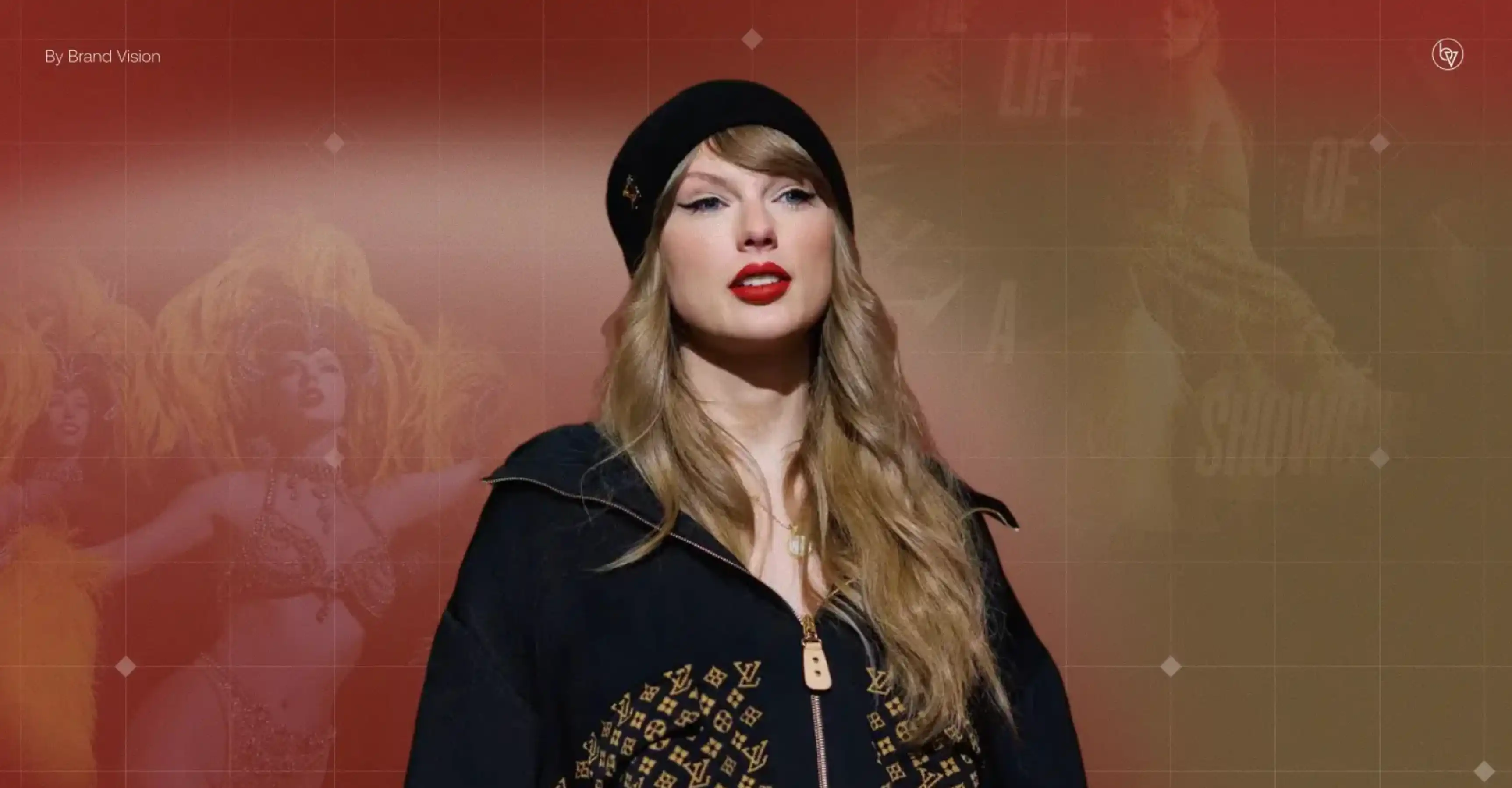
Quick Answer: Taylor Swift’s 2025 The Life of a Showgirl rollout used a coordinated mix of podcast storytelling, recognizable orange-and-mint visual codes, retailer exclusives, a Spotify fan experience, and a limited theatrical release. From a branding agency perspective, the useful lesson is not the scale of the celebrity. It is the consistency between identity, timing, retail, and fan participation.
- Album: The Life of a Showgirl
- Release date: October 3, 2025. People
- Reveal channel: New Heights podcast
- Visual code: orange and mint, reinforced through landmark and billboard activations. People
- Headline retail exclusive: Target’s “The Crowd Is Your King” Summertime Spritz Pink Shimmer Vinyl. Target Corporate
- Pre-release experience: “The Life of a Showgirl: A Spotify Experience,” New York City, September 30 to October 2. Spotify Newsroom
- Release-weekend event: The Official Release Party of a Showgirl in theatres October 3 to 5. Union Station
- Official purchase paths: TaylorSwift.com and Target
The 2025 Rollout in Hindsight
By the time The Life of a Showgirl arrived on October 3, 2025, its rollout had already built a recognizable world around the album. Swift used New Heights, retail exclusives, city-scale visuals, owned-store variants, and in-person experiences to give fans several ways to participate. From a marketing agency perspective, the strongest part of the rollout was the sequencing: each activation introduced a different part of the same campaign instead of starting a separate story. (People)
At a glance
- Release timing: The Life of a Showgirl was released Friday, October 3, 2025. (People)
- Announcement channel: Swift discussed the album in detail on the August 13 New Heights episode with Jason and Travis Kelce. (Spotify: New Heights episode page)
- Colour code: landmarks including the Empire State Building used orange during the announcement period, while Spotify’s global billboard campaign used orange and mint. (People)
- Retail exclusive: Target promoted “The Crowd Is Your King” Summertime Spritz Pink Shimmer Vinyl alongside exclusive CDs and midnight-release events. (Target Corporate)
- Experience layer: “The Life of a Showgirl: A Spotify Experience” ran in New York City from September 30 through October 2. (Spotify Newsroom)
- Eventization: The Official Release Party of a Showgirl played in theatres October 3 to 5 with the “The Fate of Ophelia” video premiere, behind-the-scenes material, lyric videos, and Swift’s commentary. (Union Station event listing)
- Post-release signal: Spotify said the album became its most-streamed album in a single day in 2025 and had surpassed 6 million pre-saves before release. (Spotify Newsroom)
How we verified the rollout
- Primary sources cover retailer offers, official store details, platform activations, and release-event logistics. (TaylorSwift.com)
- Credible reporting is retained for the reveal, colour rollout, and the September 29 self-directed promotional clip. (People)
- Retail and platform sources establish dates, quantities, eligibility rules, and the structure of the fan experiences. (Target Corporate)
1) The reveal that crossed audiences
The New Heights episode gave Swift access to a sports-and-entertainment audience outside a conventional music interview. The episode itself became long-form campaign content, while clips and recaps gave the announcement additional distribution. The useful brand strategy lesson is to choose a reveal environment that adds meaning to the story rather than simply selecting the largest available channel. (Spotify: New Heights episode page)
- The sports-podcast setting widened the context around the album reveal.
- The mint briefcase gave the announcement a simple visual prop that press and fans could reference.
- Long-form conversation and short clips let the same reveal work across several formats.

2) Colour as a channel: the orange brand code
The Life of a Showgirl used an orange-and-mint palette as a fast recognition device across billboards, landmarks, merchandise, and social content. The Empire State Building’s orange illumination became one highly visible example. That is a visual identity lesson rather than proof that every activation was “free” media: a campaign becomes easier to recognize when the same visual codes survive across very different channels. (People)
- A limited palette made the era recognizable before viewers read any copy.
- Landmark and billboard activations gave local outlets and fans visual material to share.
- The same palette carried into retail products, pop-ups, and social content.
3) The variant that headlined retail
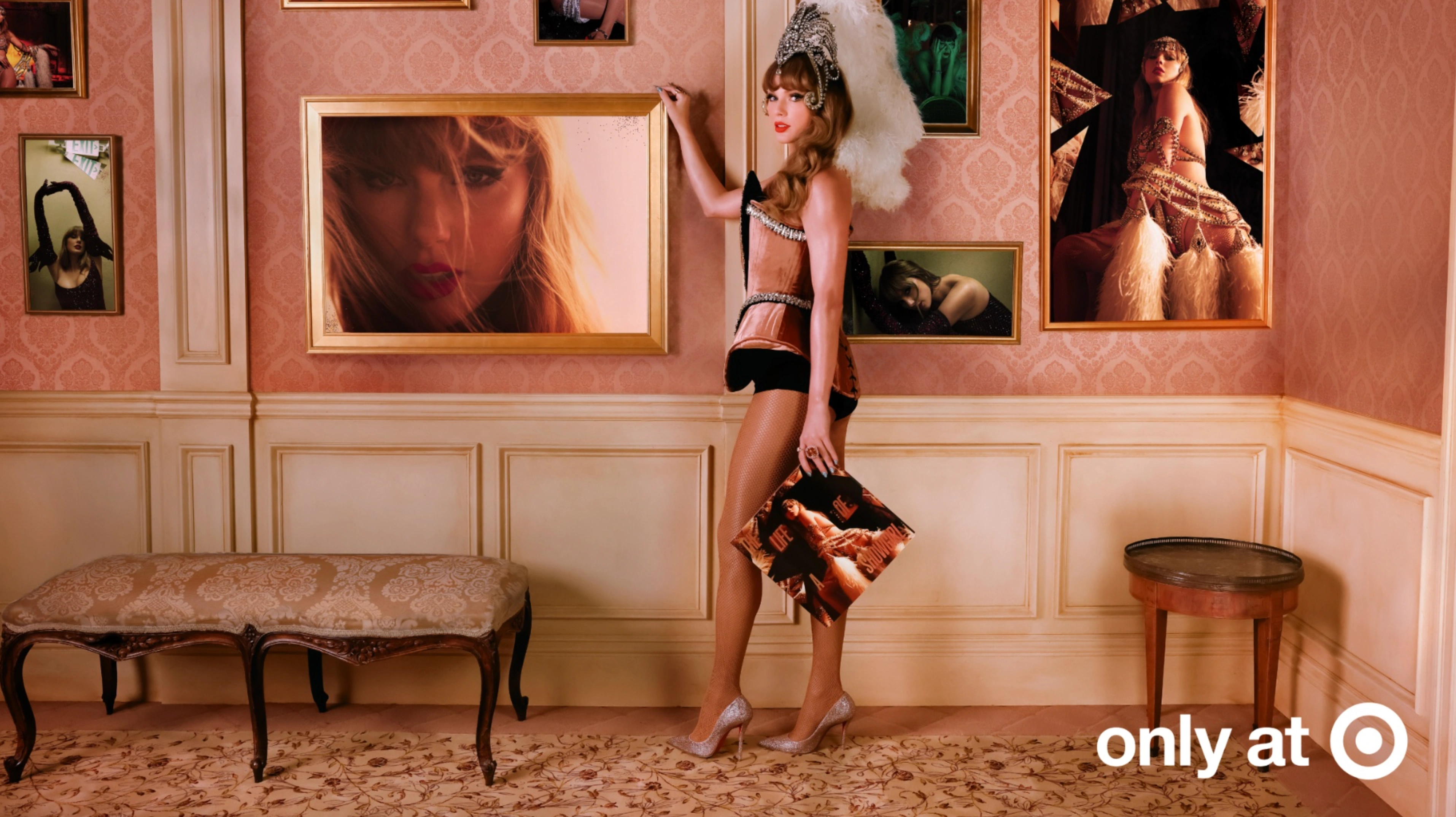
Target’s Summertime Spritz Pink Shimmer Vinyl gave the retailer a named exclusive with a clearly defined product, purchase limit, and release plan. Target also promoted exclusive CDs and midnight-release events, turning the retail relationship into part of the launch experience. The structure resembles other 2025 fall brand collaborations: the partnership works when the exclusive is easy to explain and gives both sides a reason to promote it. (Target Corporate)
- The named colourway made the exclusive easy to distinguish from standard editions.
- Target specified purchase limits, preorder timing, and store-release logistics.
- Midnight releases added an in-person participation layer to the retail launch.
4) Comedy as conversion: the self-directed teaser
Swift’s September 29 “director vs showgirl” promo used a short, self-directed comedy format to advertise the Target-exclusive vinyl. The value was not that humor automatically converted preorders. It gave the product a piece of video marketing that could stand on its own as entertainment while still communicating the edition and release date. (TheWrap)
- Swift played both director and performer, giving the ad a clear visual premise.
- The clip promoted the Target-exclusive edition without needing a long product explanation.
- The self-aware tone generated entertainment coverage in the days before release.
5) Eventization: release weekend in theatres
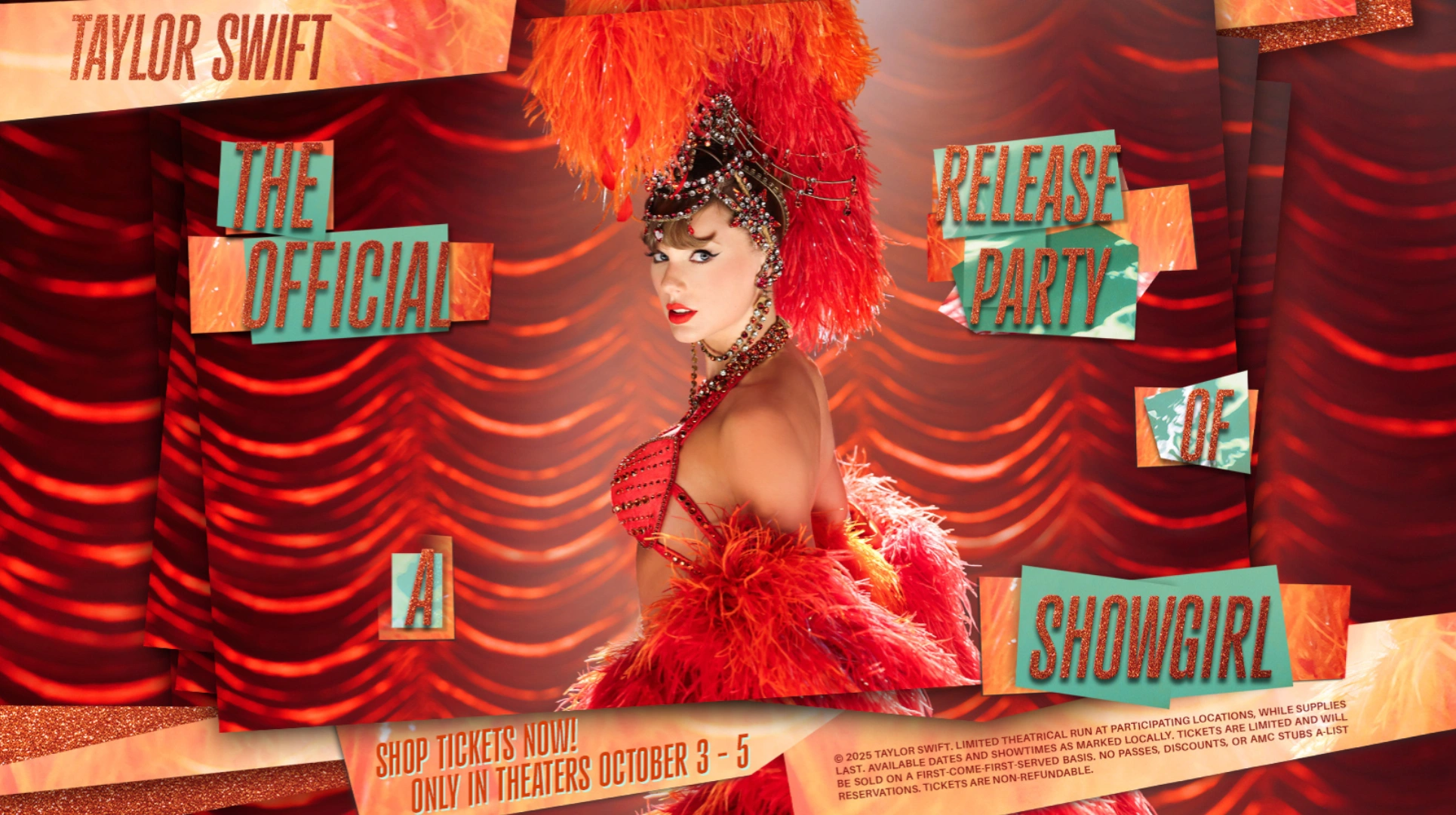
The theatrical release party turned album launch weekend into a scheduled entertainment event. From October 3 to 5, participating theatres screened the “The Fate of Ophelia” music video premiere, behind-the-scenes material, lyric videos, and Swift’s reflections on the album. That is relevant to entertainment marketing because the launch created a ticketed experience around music that was also available elsewhere. For brands seeking branding support in Los Angeles, the transferable lesson is coordination across identity, event creative, digital content, and release timing, not that this specific event was created in Los Angeles. (Union Station event listing)
- The limited October 3 to 5 window gave fans a defined time to participate.
- Theatres supplied distribution, ticketing, screens, and local promotion.
- Exclusive video and behind-the-scenes material differentiated the event from simply streaming the album at home.
6) Experience marketing before the first stream
Spotify’s three-day New York City pop-up gave fans a physical version of the album’s visual world before release. The experience ran September 30 through October 2, noon to 9 p.m. ET, with photo moments and hidden Easter eggs. Spotify explicitly noted that Swift would not attend, keeping expectations clear while still building an immersive experience around the campaign. (Spotify Newsroom)
- The activation had clear dates and hours, making participation easy to plan.
- Photo moments and Easter eggs translated the album identity into a physical setting.
- The “artist will not be in attendance” note helped set accurate expectations.
7) The owned-store mechanics
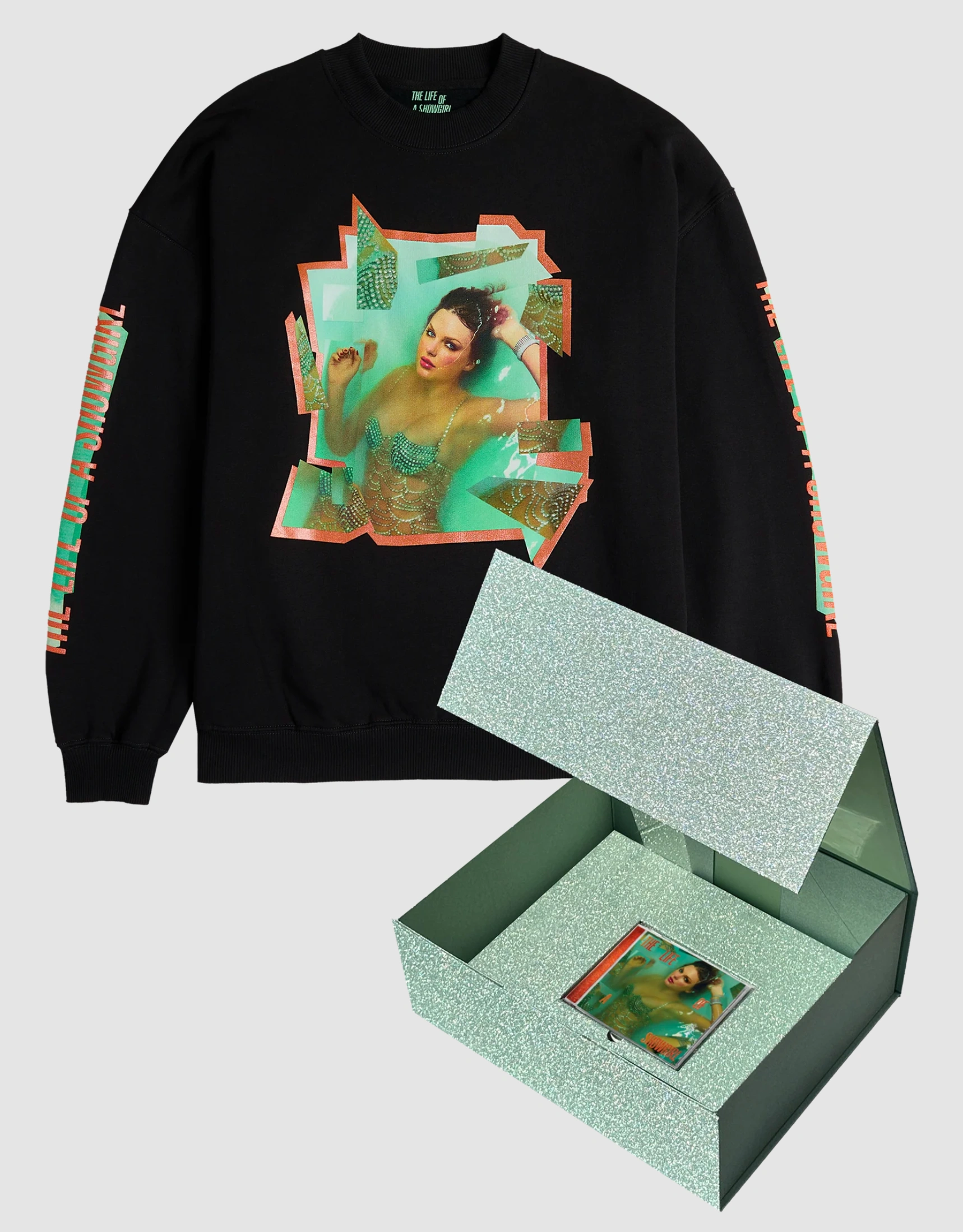
Swift’s store listings handled the less glamorous but important part of the launch: variant names, track counts, product images, purchase limits, and regional availability. Those details are a form of commerce UX because they help a customer understand exactly which edition is being offered before checkout. The “Sweat and Vanilla Perfume CD with Poster” also extended the showgirl naming system into the product catalogue. (TaylorSwift.com store)
- Purchase limits and regional availability were stated on store listings.
- Edition names gave collectors a consistent way to distinguish products.
- Product imagery and inclusions reduced uncertainty about what each physical edition contained.
8) The calendar as a product
The rollout followed a sequence fans could track: early visual clues, the New Heights reveal, retail variants, the Spotify experience, release day, and the theatrical weekend. That cadence kept each activation connected to the next without requiring every moment to do the same job. (People)
- Early clues created context before the formal album details arrived.
- The Friday release aligned the album with standard music-release timing and retail plans.
- Experiences before and after release extended the campaign beyond a single announcement date.
9) Local love as signal boosting
Orange landmark activations in New York and Kansas City gave local media and city accounts an easy visual connection to the album. That widened the rollout beyond artist-owned channels without requiring the article to assume those placements were unpaid. The broader branding lesson is that a campaign becomes easier for partners and communities to participate in when the visual code is simple and recognizable. (KMBC Kansas City)
- Landmarks gave the campaign recognizable local backdrops.
- Local coverage extended the story beyond national entertainment media.
- Fans could use the same colour code in their own photos and countdown posts.
10) A flexible funnel that respects fans
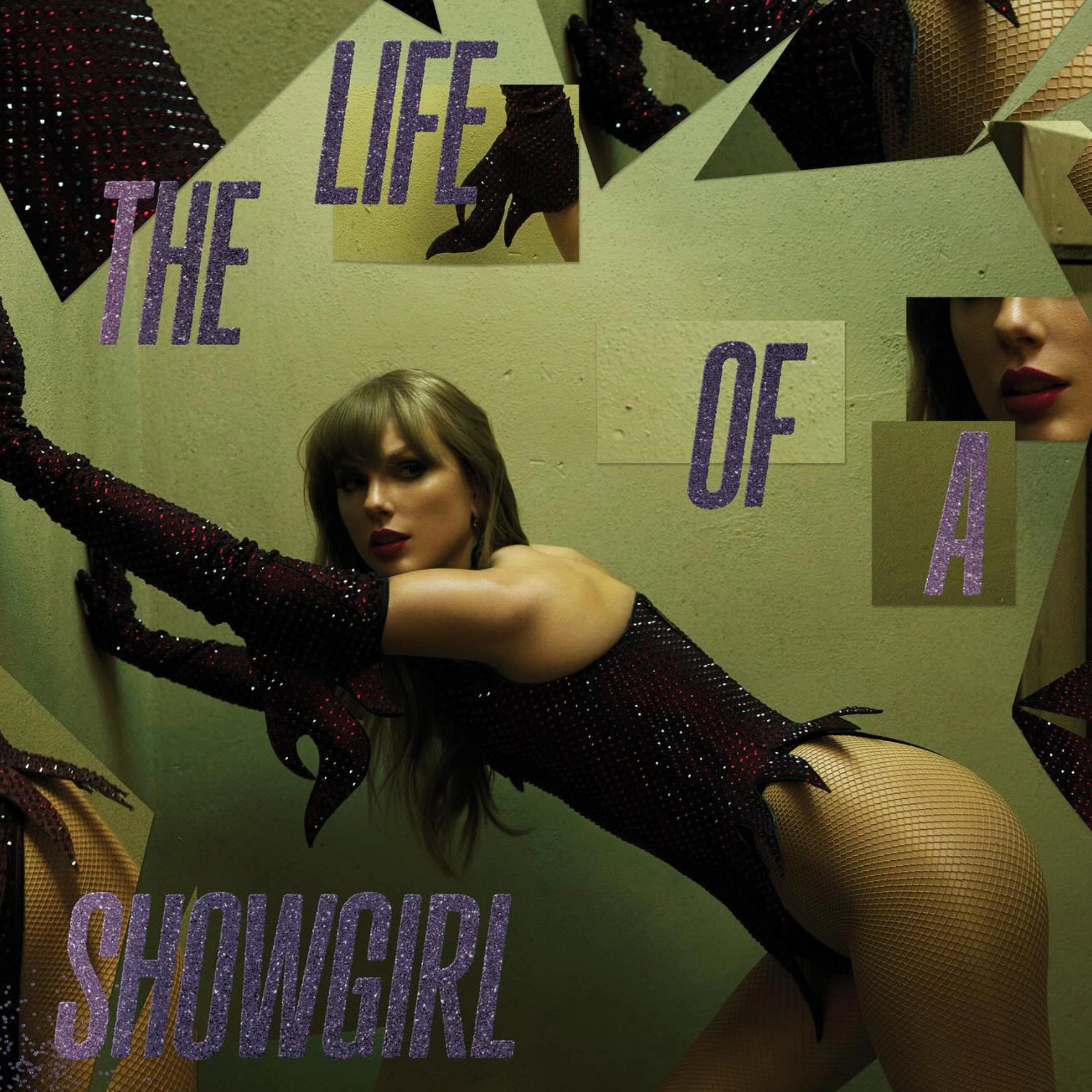
The rollout offered several participation levels: listen to the podcast, visit the Spotify experience, buy a physical edition, attend a midnight retail release, or go to the theatrical event. That range mattered because fans did not need to choose the same path to feel included in the launch. The campaign paired clear dates and products with different levels of time and spending rather than relying on one conversion point. (Spotify Newsroom)
- Multiple participation paths matched different levels of fan interest.
- Clear dates and product labels made the release easier to navigate.
- Limited editions created scarcity, while streaming and free digital content kept lower-cost entry points open.
FAQ
When did Taylor Swift’s The Life of a Showgirl release?
The album was released Friday, October 3, 2025. Swift posted a self-directed promotional teaser on September 29 during release week. (People)
Where was the Target-exclusive vinyl sold at launch?
Target sold “The Crowd Is Your King” Summertime Spritz Pink Shimmer Vinyl as a Target-exclusive limited pressing in the U.S., with purchase limits and special midnight-release availability at selected stores. (Target Corporate)
What event was tied to release weekend?
The Official Release Party of a Showgirl played in theatres October 3 to 5 with the “The Fate of Ophelia” video premiere, behind-the-scenes material, lyric videos, and additional album content. (Union Station event listing)
Was there an official pre-release experience in New York?
Yes. Spotify’s immersive pop-up ran September 30 to October 2 with photo moments and Easter eggs tied to The Life of a Showgirl. (Spotify Newsroom)
Why was orange so prominent in the rollout?
Orange was one of the era’s most recognizable visual codes. The Empire State Building illuminated in orange around the announcement, while Spotify’s global billboard campaign used orange and mint. (People)
The Last Bow
In hindsight, The Life of a Showgirl shows how an album launch can operate as a coordinated sequence of media, retail, physical experience, and fan participation. Spotify later reported more than 6 million pre-saves and its biggest single-day album stream of 2025, evidence of the scale of anticipation, not proof that any one tactic caused the result. If your team wants to build a launch system with that level of consistency at a more realistic scale, talk with Brand Vision about the strategy, identity, and rollout.