For many companies, social media marketing is where audiences first encounter the brand, test its relevance, and decide whether to keep paying attention. Performance is visible, but it is also noisy. Reach changes, engagement varies by format and audience, and follower growth can stall even when posting volume stays high.
The challenge is partly mechanical. Social platforms use ranking systems, user behavior shifts, and creative has to earn attention quickly. A useful social media marketing strategy separates the signals you can influence from the outcomes you can only observe, then tests content against clear goals instead of treating every fluctuation as an algorithm change.
This guide explains how social media marketing works, how to build a social media marketing strategy that can adapt to platform change, and how to use social media analytics to diagnose reach, engagement, growth, and downstream business outcomes without drowning in dashboards.
Why social media marketing still matters in 2026
Social platforms remain one of the largest attention surfaces on the internet. DataReportal’s Digital 2025 global overview report documented billions of active social identities worldwide, and its Digital 2026 global overview report estimates 5.66 billion active social media user identities, equal to 68.7 percent of the global population. In the United States, Pew’s 2025 survey found that 84 percent of adults use YouTube, 71 percent use Facebook, and 50 percent use Instagram, with substantial differences by age and other demographics (Pew Research Center social media use).
For leaders, the practical value of social media is not visibility by itself. Social can build familiarity before a click, but the website still has to fulfill the promise made in the post. That is why web design and UI/UX matter to the full journey: the landing page should load clearly, continue the message, and make the next step easy to understand. For consumer brands, B2C marketing support can connect social discovery to product, ecommerce, and retention journeys rather than treating engagement as the finish line.
Social media also exposes strategic ambiguity quickly. If positioning is vague, content tends to become generic. A clear brand strategy gives teams a repeatable message to work from, while the existing branding system helps keep that message recognizable across formats and campaigns.

The three levers behind performance: reach, engagement, growth
Most social media marketing problems look complicated but resolve into three levers:
- Reach: how many people you are shown to, and how often.
- Engagement: what people do when they see you.
- Growth: whether attention becomes an audience you can rely on.
Reach is distribution, engagement is a response signal, and growth is the accumulation of an audience over time. They interact, but not in a fixed formula. Strong engagement can coincide with broader distribution on some platforms, while follower growth can improve the size of the audience that already knows the brand. Neither relationship should be treated as guaranteed.
A practical social media marketing strategy treats these levers separately, because each has different causes and fixes. Reach can drop because formats change. Engagement can fall because messaging lost specificity. Growth can stall because there is no clear reason to follow.
If you want social media performance to become easier to manage, use a system that tests format fit, usefulness, clarity, recurring series, and audience expectations separately. Social media analytics then becomes a diagnostic tool rather than a scorecard for one blended idea of “performance.”
How algorithmic distribution actually works
Most teams talk about “the algorithm” as if it is a single switch. In reality, algorithmic distribution is a sequence of decisions: what content is eligible, what signals are collected, what outcomes are predicted, and what is finally ranked. The important point for social media marketing is that platforms are optimizing for user experience, not for your publishing schedule.
Inventory, signals, predictions, ranking
A clean way to think about distribution is:
- Inventory: the platform gathers candidate posts that could appear in someone’s feed.
- Signals: it observes information like relationships, past behavior, content type, and early response.
- Predictions: it estimates what the user is likely to do, such as watch, dwell, react, comment, or hide.
- Ranking: it orders content based on predicted value and platform priorities.
Meta describes this general flow in its explanations of ranking systems, including how signals inform predictions about what people will find relevant (Meta Transparency ranking and content). For LinkedIn, dwell time has been documented as a signal used to improve feed ranking, which is a practical reminder that “quiet” engagement still matters (LinkedIn).
For social media marketing, the practical implication is to understand platform-specific eligibility and ranking signals, then look for repeatable patterns in your own analytics. If reach is inconsistent, investigate format, audience fit, early response, publishing context, and distribution changes rather than assuming one cause.
The difference between “interest” and “relationship” signals
Many feed-ranking systems use signals that can be understood through two useful lenses:
- Interest signals: what the user seems curious about based on behavior.
- Relationship signals: who the user tends to pay attention to, including repeated interaction.
This distinction is useful because topic interest can introduce content to new people, while repeated interaction can support familiarity with existing audiences. The exact weighting and behavior vary by platform, surface, and user.
A balanced approach creates content that can earn topic discovery while also giving existing audiences reasons to return. The goal is not to “train” a feed with one tactic, but to build a recognizable publishing pattern and then measure how each platform responds.
Reach: what expands it, what quietly limits it
Reach is a distribution metric, not a reward for posting. It changes with format, topic, audience fit, competition, feed ranking, and platform-specific eligibility. Social teams therefore need to look beyond posting frequency when reach changes.
Clear packaging can help people understand a post quickly, but reach is still controlled by platform-specific distribution systems. Use social media analytics to compare format, topic, audience, and timing patterns, and treat reach as evidence to investigate rather than a diagnosis by itself.
Format fit and watch time
Short video, carousels, static images, and text posts expose different behavioral signals. Video may surface watch time or completion, while other formats may be evaluated through clicks, dwell, saves, shares, comments, or other platform-specific interactions. Where dwell time is meaningful, clarity and pacing deserve attention, but the ranking value of any one signal should not be assumed across platforms.
Practical ways to improve reach in social media marketing:
- Start with a clear topic in the first second or first line.
- Use series titles that repeat, so the platform and the audience can classify you.
- Build a creative that holds attention, not just a creative that looks polished.
- Avoid overexplaining early. Earn attention before you add detail.
If reach is concentrated in one format, that can be a useful specialization. The tradeoff is dependency. Many teams benefit from maintaining more than one reliable format so the program is not entirely dependent on one creative pattern or platform feature.
Consistency, categories, and creative repetition
One practical way to make publishing more consistent is to repeat what works without repeating the same post. Reuse themes, hooks, and structures while changing examples and angles. That repetition can improve audience recognition and reduce creative drift without turning the feed into a set of duplicates.
A useful reach rule for social media marketing is to treat your account like a publication with sections. Each section has a consistent promise. The promise makes growth easier because it creates a reason to follow, and it makes engagement easier because people know how to respond.
Reach is also limited by operational issues. If posts are delayed by approvals, content becomes reactive and inconsistent. If a creative is built without a system, quality varies, and engagement becomes unpredictable. A disciplined workflow increases reach indirectly by keeping the signals stable.

Engagement: what platforms reward and what audiences trust
Engagement is a useful response signal, but it is not direct proof of relevance, growth, or business impact. A comment, save, share, click, or like can represent different levels of intent, and each platform may count or weight those actions differently.
The simplest engagement test is: does the post give the viewer a reason to do something specific? Commenting “agree” is not the same as saving a checklist. A like is not the same as a share that brings new reach. Social media analytics should be used to separate low-friction engagement from high-intent engagement.
Comments, saves, shares, and “meaningful” interaction
Different platforms weight engagement differently. Saves and shares can indicate that people found a post useful enough to keep or pass along, but teams should not assume those actions carry the same ranking value everywhere. Compare engagement type with reach, profile activity, site visits, and business outcomes instead of treating one metric as universally “stronger.”
To engineer engagement in social media marketing without being gimmicky, focus on:
- Decision frameworks people can apply quickly.
- Short comparisons that reduce uncertainty.
- Checklists that make execution easier.
- Clear points of view that invite thoughtful disagreement.
Community management as a distribution tactic
Community management is often treated as customer service, but it is also a research and relationship function. Thoughtful replies can extend discussion and reveal what the audience does not understand yet. Any direct effect on feed distribution is platform-specific and should be measured rather than assumed.
A simple standard for community management:
- Respond to substantive comments within the first day when possible.
- Ask one clarifying question instead of dropping a generic thank you.
- Turn repeated questions into a new post within a week.
This approach can deepen the conversation and create better inputs for future content. The operational benefit is that questions, objections, and repeated themes become visible instead of disappearing into a monthly report.
Growth: turning attention into a durable audience
Growth is not the same as reach. Growth is what happens when a person decides you are worth seeing again. In social media marketing, that decision is usually made in small moments: a series that feels reliable, a point of view that feels consistent, or a repeated utility that saves time.
If reach is high but follower growth is flat, people may be seeing the content without finding a clear reason to return. If engagement is high but growth is flat, the content may be useful or entertaining without establishing a recognizable account promise. Track follower growth alongside reach, profile visits, saves, shares, and site activity rather than in isolation.
The follower journey (stranger to subscriber)
A practical planning model is:
- Stranger: sees one post through reach.
- Aware: sees a second post and recognizes you.
- Interested: engages, saves, or visits your profile.
- Committed: follows because the account promise is clear.
- Subscriber: clicks, signs up, or returns off-platform.
Social media marketing strategy should support this journey. That means your profile, pinned posts, and bio links need to match what your content promises. It is difficult to sustain growth if the profile feels generic or the website destination does not deliver.
This is where a clean web experience matters. If you want social to drive pipeline, your site should be fast, readable, and built around clear tasks. If your team is rebuilding or scaling, a senior-led web design agency and UI/UX agency approach reduces friction that quietly undermines growth.
Cadence, series, and content pillars
Growth is supported by cadence that audiences can learn. Not daily posting at all costs, but a consistent rhythm. The easiest way to maintain cadence is to build content pillars and run them as series.
Examples of content pillars that work across industries:
- How we think: principles behind decisions.
- How to do it: execution steps and templates.
- Proof: anonymized before and after patterns, or lessons from work.
- Industry signals: changes that affect reach, engagement, or growth.
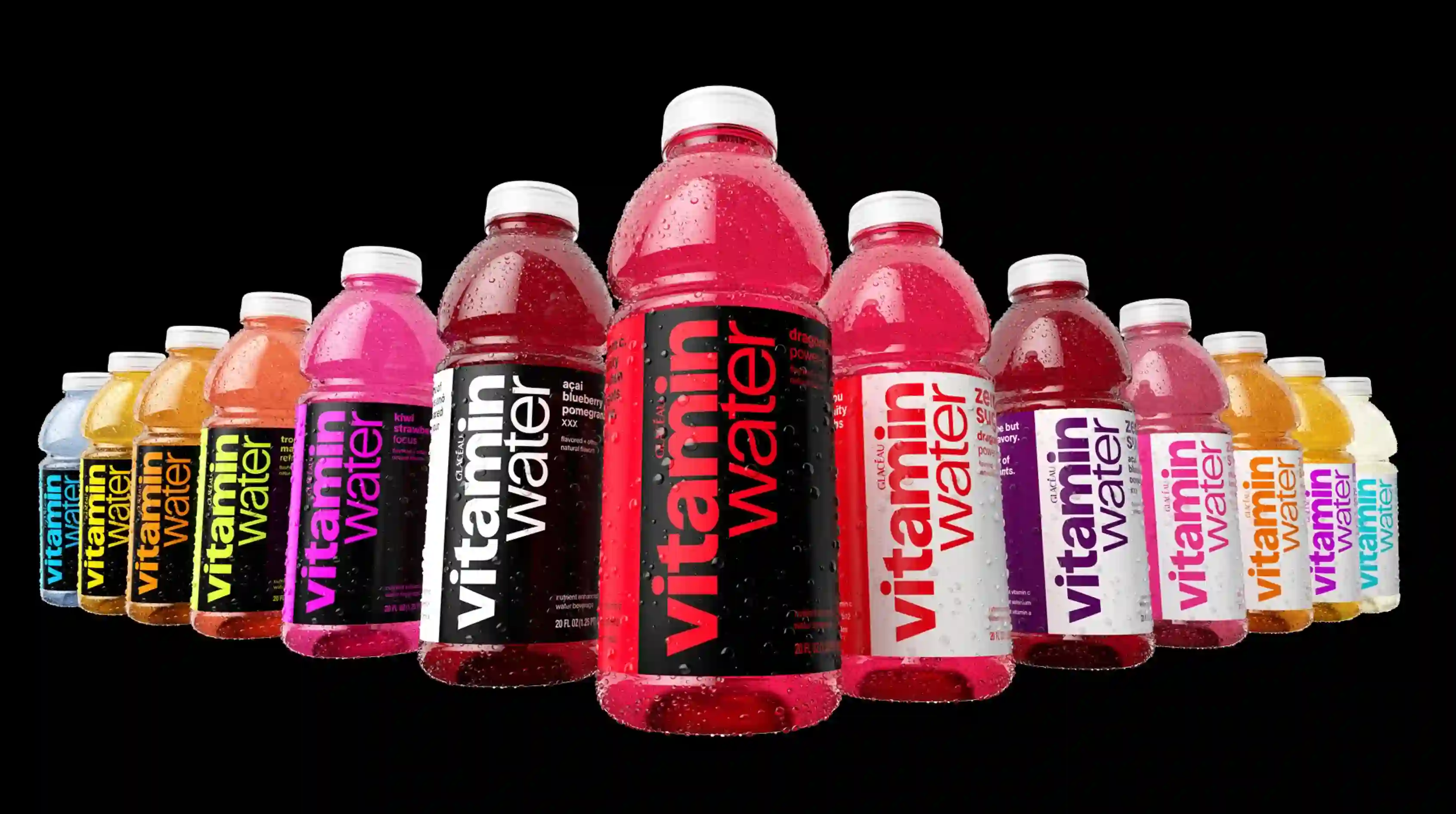
Series can reduce creative fatigue and help audiences recognize recurring formats. They also make it easier to compare performance across similar posts. For a brand-led example, Vitaminwater’s lifestyle branding shows how a clear proposition can create recurring themes across product, culture, and lifestyle content without every message needing to say the same thing.
The social media marketing strategy that holds it together
Without a social media marketing strategy, content becomes a pile of isolated posts. With a strategy, content becomes a system that can be delegated, improved, and measured. The goal is not to be everywhere. The goal is to create consistent reach, credible engagement, and durable growth in the channels that match your buyer journey.
A strong strategy connects three things: positioning, content system, and measurement. It also aligns social to the website experience so the value created by reach is not wasted on a confusing path.
Positioning and message hierarchy
Positioning is not a tagline. It is what you are known for and what you will repeatedly prove. In social media marketing, positioning shows up as topic choices and the way you frame problems.
A simple message hierarchy for social content:
- Category: what you do.
- Problem: what you solve.
- Mechanism: how you solve it.
- Proof: why the audience should trust you.
If the mechanism is unclear, engagement tends to be shallow. If proof is missing, growth tends to be slow. If the problem is vague, reach can be inconsistent because the platform cannot categorize you.
This is where branding and visual identity become operational tools. They give writers, designers, and channel owners a clearer set of verbal and visual rules to apply across recurring formats.
Content system: pillars, formats, and repurposing
A content system answers: what do we publish, in what formats, and how do we reuse it without degrading quality?
A workable system for most teams:
- 3 pillars that map to your audience’s biggest decisions.
- 2 primary formats you can execute consistently.
- 1 supporting format for experiments.
- A repurposing workflow that turns one strong idea into multiple posts.
Repurposing is not copying. It is reframing. One idea can become a short checklist, a carousel, a short video, and a longer post. This improves reach by meeting different consumption behaviors, improves engagement by creating multiple entry points, and improves growth by increasing the number of meaningful touches.
Social media analytics: what to measure and how to diagnose performance
Social media analytics should support decisions, not just reporting. A regular review loop can help teams identify whether the next experiment should address distribution, engagement quality, audience growth, the landing-page experience, or measurement itself.
One common analytics mistake is tracking more metrics than the team can act on. Another is treating platform metrics as if they explain causes on their own. A useful KPI stack connects platform behavior to site activity and, where measurement permits, leads or pipeline.

A practical KPI stack (platform, site, pipeline)
A practical stack for social media marketing starts by separating distribution from response. Reach is the number of unique accounts or people exposed where the platform reports it; impressions or views count total displays or plays and can include repeat exposure. Then connect those platform measures to site and pipeline indicators:
Platform level
- Reach and impressions
- Engagement rate and engagement type mix
- Follower growth rate
- Saves and shares per post
- Watch time or dwell indicators where applicable
Site level
- Click-through rate from social
- Landing page bounce rate and scroll depth
- Conversion rate for the next step
Pipeline level
- Leads influenced by social visits
- Assisted conversions where attribution supports it
- Share of branded search over time when applicable
This is where site foundations and measurement meet. If social traffic lands on a slow or unclear page, the downstream result can weaken even when the social post performed well. Use marketing attribution basics to separate platform engagement from identifiable visits, leads, and pipeline where your tracking setup supports that level of analysis.
A weekly review workflow teams can sustain
A lightweight weekly workflow:
- Pick the top 3 posts by reach and the top 3 by saves or shares.
- Identify the common hook, topic, and format.
- Diagnose the weakest lever:
- Reach low: the packaging and format fit need work.
- Engagement low: the content utility or point of view is weak.
- Growth low: the account promise and series structure are unclear.
- Choose one experiment for next week, not five.
- Write one sentence on what you learned and what you will repeat.
This is social media analytics used as management, not reporting.
Converting social attention to site actions and revenue
Social media marketing creates attention, but the website turns attention into action. This conversion layer is where many teams lose the value they earned through reach and engagement. The fix is not always more content. Often it is better paths and clearer pages.
If the goal is pipeline, treat social as the top of a decision path, not a standalone channel. The path should feel intentional: a post promises something, the link delivers it, and the next step is clear.
Landing pages, UX, and speed
Three principles for converting social traffic:
- Match the promise: the landing page headline should reflect the post’s core claim.
- Reduce choices: one primary action beats a menu of unrelated options.
- Load fast and read well: clarity and speed protect conversion.
This is where teams benefit from a site built for maintainability. If landing pages are hard to edit, marketing becomes slower. If pages are inconsistent, engagement can be wasted because people do not trust what they click. A strong web design foundation and UI/UX standards make social marketing easier to scale.
Tracking and governance without chaos
Tracking is part of governance, not a technical afterthought. Decide:
- What counts as a meaningful conversion from social.
- Which pages are approved destinations.
- Who owns updates to bio links and pinned posts.
- How often you review social media analytics and adjust.
Governance also includes how external partners apply the system. A company coordinating with a branding agency in San Francisco should give that team the same approved voice, visual rules, claims, and campaign priorities used elsewhere. If the visual system itself is being rebuilt, the existing branding services relationship should still connect back to one shared set of guidelines.
A calm operating model teams can run all year
The teams that win at social media marketing are not always the loudest. They are consistent. They publish with clarity, learn from social media analytics, and run a system that protects quality under pressure. This is how reach becomes stable, engagement becomes meaningful, and growth becomes durable.
Roles, approvals, and quality control
A simple operating model:
- One owner for the social media marketing strategy and calendar.
- One editor who protects clarity and brand voice.
- One designer or content producer who owns format execution.
- One stakeholder group that approves themes, not every post.
For a market-specific program, the brief should also define the local audience, community or event context, and the follow-up experience after a click. A Miami business comparing regional support, for example, should evaluate a branding agency in Miami against those needs rather than treating geography as the strategy itself.
Approval loops can slow a good strategy into inconsistency. If every post needs a committee, cadence and learning cycles both suffer. Set boundaries early: approve pillars, recurring series, claims, and escalation rules, then let the team execute within those guardrails.
A 30-Day Plan to Stabilize Performance
If your social media marketing feels inconsistent, a 30-day reset can create a cleaner baseline for testing and decision-making.
Week 1: Diagnose
- Audit the last 30 posts for reach, engagement type, and follower growth.
- Identify your top 2 topics and top 2 formats.
- Remove anything that does not fit the account promise.
Week 2: Rebuild the system
- Define 3 pillars and 2 recurring series.
- Create a simple content brief template.
- Update profile and pinned posts to match the promise.
Week 3: Publish and tune
- Publish on a consistent cadence you can sustain.
- Use community management to lift engagement and relationship signals.
- Watch social media analytics for the weakest lever.
Week 4: Convert
- Improve one landing page tied to your best-performing series.
- Tighten CTAs and reduce friction.
- Align social content to the services you want to sell, without turning posts into ads.
Bringing Social Media Marketing Into a Coherent System
Social media marketing works best when it is treated as a system, not a stream of disconnected posts. Reach, engagement, and growth are not outcomes you chase independently. They are signals that reflect how clearly a brand is positioned, how consistently it shows up, and how well the surrounding experience supports the attention it earns. When any one of those elements breaks down, performance becomes volatile and difficult to explain.
In practice, social media is easier to evaluate when it is designed alongside the website, the brand narrative, and the user journey that follows the click. Content earns attention, while branding, web design, and UI/UX help keep the surrounding experience consistent enough to measure what happens next.
If your social presence feels busy but inconsistent, or strong engagement is not translating into meaningful business outcomes, review the full system before blaming one platform. Brand Vision can help connect brand strategy, content, web experience, and measurement. For a scoped discussion of what needs attention first, contact Brand Vision.












.webp)