

Shark Tank can create a burst of attention, but the businesses that keep growing have to solve a harder problem after the episode: turn awareness into a clear offer, repeatable distribution, and a buying experience customers understand quickly. The ten companies below are useful because each found a different way to extend a television moment into a longer business story.
From an agency perspective, we read these less as TV trivia and more as case studies in positioning, conversion, and distribution. They are not a strict revenue ranking. Instead, the list combines deal and no-deal alumni with well-documented sales, exit, or systemwide-growth milestones. For founders building beyond an early spike in attention, the same questions sit at the center of startup marketing: how people first understand the product, how they buy, and what makes the brand worth returning to.
At a glance
- Bombas has surpassed $2 billion in lifetime sales, while its current company history says customers have powered more than 200 million donated essential items. (Bombas) (Investopedia)
- Scrub Daddy generated more than $220 million in revenue in 2023 and had roughly 160 products at the time of Reuters' 2024 report. (Reuters)
- Cousins Maine Lobster has passed $1 billion in cumulative systemwide sales. Its 2025 company announcement said the network had more than 85 units and was still expanding. (PR Newswire)
- Ring left the Tank without a deal and later sold to Amazon in a transaction widely reported around $1 billion. (Business Insider)
- Kodiak Cakes reached about $200 million in annual sales by 2020 without a shark deal, showing how a clear better-for-you position can scale through retail distribution. (The Food Institute) (Forbes)
How these examples were selected
Three filters shaped the list.
- Documented scale. The businesses have publicly reported revenue, lifetime sales, systemwide sales, or acquisition milestones supported by company disclosures or established reporting where available.
- Endurance over virality. The focus is on businesses that kept building after the initial television spike rather than pitches remembered mainly for one episode.
- A real link between the show and the result. Deal and no-deal alumni both count because the purpose is to study what happened after exposure, not only whether a shark invested.
1) Bombas: Comfort basics, purpose flywheel
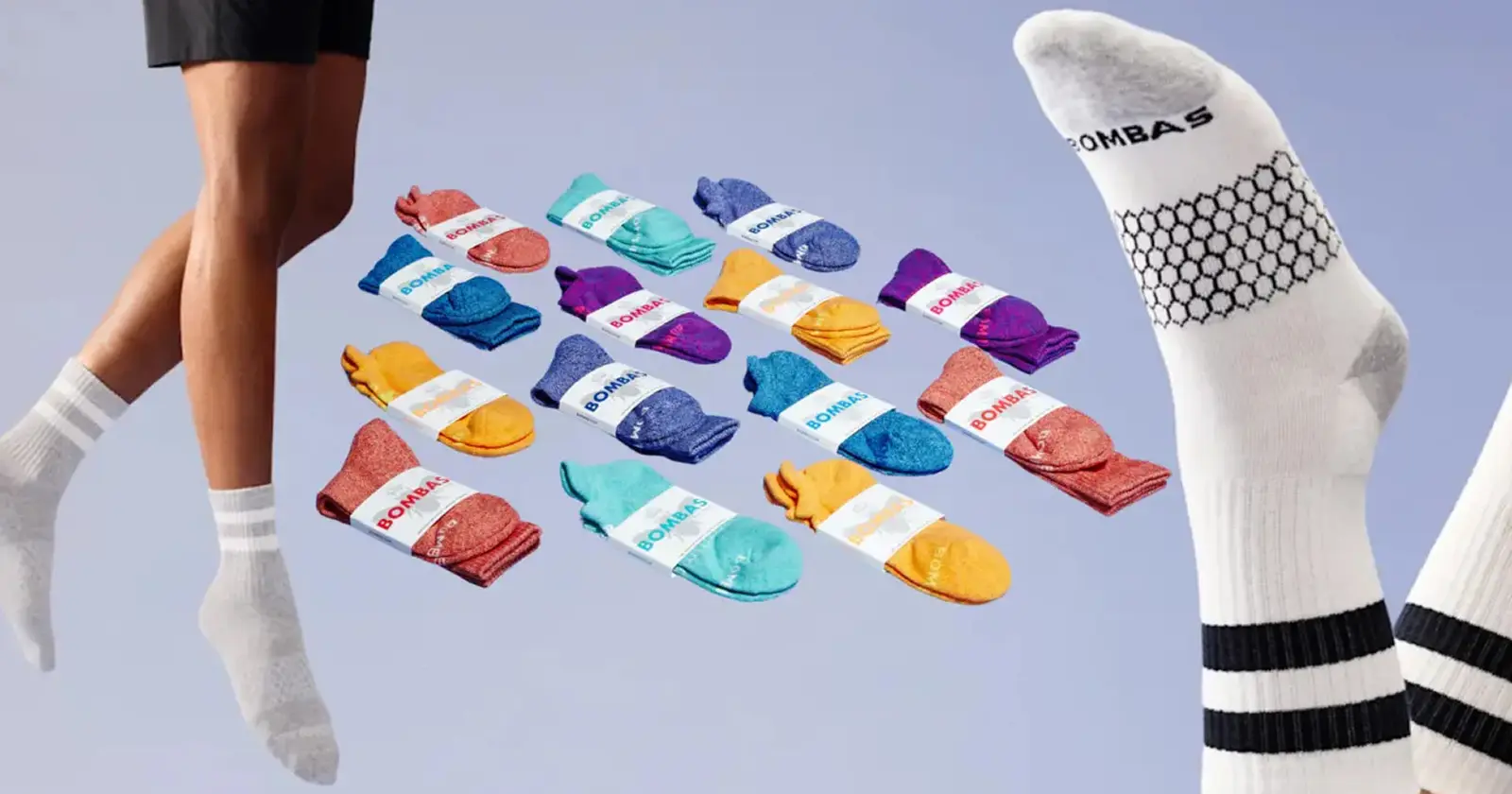
Bombas turned a commodity into a premium habit. Socks are the definition of a product nobody thinks about, so the brand built a reason to think about it: every purchase powers the donation of an essential item to someone experiencing homelessness. That one-for-one mechanic is not a mission statement taped on after launch. It is the product logic, and it creates a reason to reorder that price alone never delivers. For any brand fighting in a crowded category, this is where a clear identity system earns its keep: branding services are most useful when they tie positioning to a single repeatable promise.
The lesson for founders is sequencing. The giving model came first and the marketing followed, which is the order we push for on most branding projects: decide what the brand stands for, then let every channel repeat it. Financial coverage has repeatedly named Bombas the show's top performer by scale. (Forbes)
- Lifetime sales: more than $2 billion. (Investopedia)
- Impact: more than 200 million essential items donated as of 2026. (Bombas)
- Why it wins: repeat purchase plus a mission a customer can explain in one sentence. That pairing helps explain why Bombas appears at the top of current Shark Tank sales lists.
2) Scrub Daddy: Retail rocket fuel
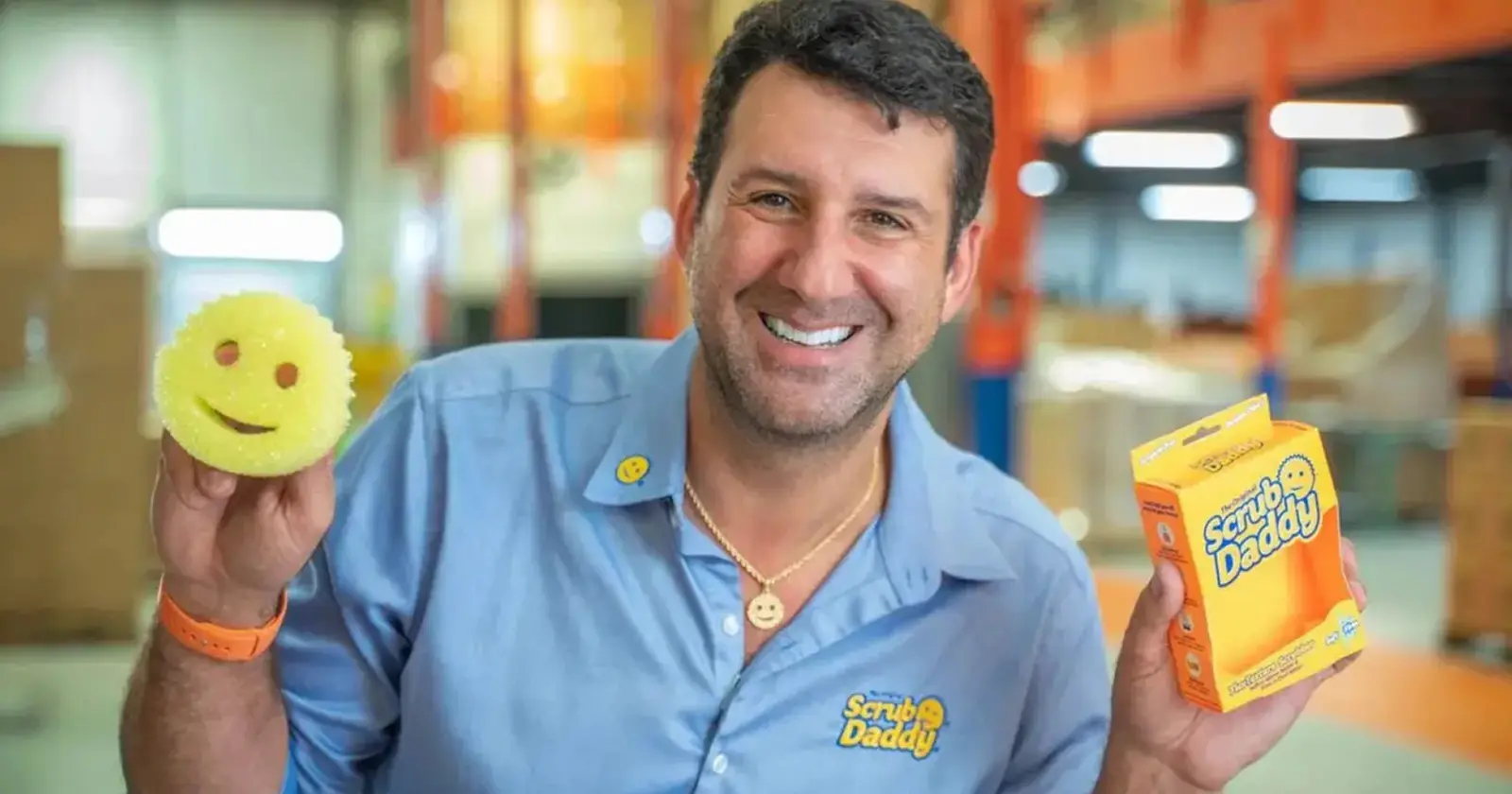
Scrub Daddy markets itself in motion. The pitch is a demonstration, not an explanation: the sponge changes texture with water temperature, and you understand the benefit the instant you see it used. That matters more in 2026 than it did in 2012, because attention is expensive and clarity is the cheapest advantage a brand can buy. When a product benefit is hard to show, creative costs climb and conversion drops. It is one of the first things we check when a client's paid traffic underperforms, and the fix usually lives in the buying path: conversion-led web design and a sharper on-page flow.
Dealmaker reporting and business coverage have tracked the brand's nine-figure scale and the breadth of its product line. (Reuters) (Inc)
- Annual revenue: more than $220 million in 2023. (Reuters)
- Assortment: roughly 160 products and variants.
- Why it wins: demo-friendly, impulse-priced, and used daily. Scrub Daddy turned one hit into a household-goods catalog without ever needing to explain itself.
3) Cousins Maine Lobster: Food trucks to a billion-dollar system
Cousins Maine Lobster scaled on operations that protect a single promise. The customer knows what the core experience should feel like across markets, and the franchise model is designed to make that consistency repeatable. For food and beverage marketing, the lesson is order of operations: brand standards have to be clear before aggressive expansion, or the experience can drift as the footprint grows.
The company has publicly reported surpassing $1 billion in systemwide sales. (PR Newswire) (Fast Casual)
- Systemwide sales: more than $1 billion in cumulative system revenue. (PR Newswire)
- Footprint: about 85 units across 35 states.
- Why it wins: franchise discipline plus national media moments. The brand grew from a single food truck without letting the product slip.
4) Ring (Doorbot): The billion-dollar no-deal
Ring proves the biggest outcomes are not limited to on-air deals. The sharks passed, and Amazon later bought the company anyway. What carried it was a clean category promise: a safer home, easy setup, and a product anyone could understand in one line. Category creation is expensive unless the message stays simple and repeats. For founders, that is where positioning meets distribution, because demand compounds when people can find you again and again through organic discovery. Turning one wave of awareness into steady inbound is exactly what a focused SEO plan is for.
Amazon agreed to acquire Ring in a deal widely reported around the billion-dollar mark. (Business Insider) (Forbes)
- Outcome: acquisition reported at roughly $1 to $1.1 billion. (Business Insider)
- Category impact: helped make video doorbells mainstream.
- Why it wins: a rejected pitch became a category leader because the promise was legible and the timing met a market Amazon wanted.
5) Kodiak Cakes: Better for you pantry staple
Kodiak Cakes is readable at shelf distance. Protein forward, comforting, familiar. In a crowded aisle, that clarity is conversion, and the same principle should carry straight into a digital storefront. If a shopper cannot grasp the offer in one scan, paid traffic underperforms and the whole funnel gets more expensive, which is why brands align packaging logic and web experience under one brand strategy. Kodiak also left the Tank without a deal and became one of the show's better-known grocery success stories.
Business coverage has tracked Kodiak's scale and distribution expansion. (The Food Institute) (Forbes)
- Annual sales: about $200 million by 2020. (The Food Institute)
- Scale unlock: a strategic private-equity investment funded distribution and marketing expansion. (Forbes)
- Why it wins: a sharp better-for-you position and clean retail execution carried it past brands with far bigger ad budgets.
6) Squatty Potty: Educate the category, then scale it
Squatty Potty sold the problem before it sold the product. The marketing used education and humor to remove the awkwardness, then leaned on a benefit that feels immediate. That is a useful video marketing lesson for products that need explanation: teach quickly, demonstrate the payoff, and carry the same clarity into the website. A conversion-led UI/UX approach can then make the next step easier once the video has done its job.
Aterian acquired Squatty Potty in 2021, while public reports describe the deal value differently depending on which cash, inventory, and contingent components are counted. (MarketScreener) (SharkTankBlog)
- Exit: Aterian acquired the business in 2021. (MarketScreener)
- Lifetime sales: more than $260 million in the latest widely reported estimates. (Investopedia) (Yahoo Finance)
- Why it wins: a clear benefit plus mass distribution. The humor opened the door; the product kept people coming back.
7) The Comfy: The blanket you wear
The Comfy owns one emotional job: comfort. The marketing is visual simplicity plus gifting logic, which helped the product spread quickly. The operational side matters just as much because demand spikes expose weak systems. Brands that hold up under a surge need stable site speed, product data, checkout, and integrations, which is where disciplined web development supports the promise the marketing creates.
Coverage has cited its lifetime sales performance and broader brand story. (Investopedia) (Forbes)
- Lifetime sales: estimated around $550 million. (Investopedia)
- Global reach: distributed across dozens of countries. (The Comfy)
- Why it wins: seasonal and gifting demand keep it selling, and one unmistakable product means the marketing never has to work hard to explain itself.

8) Simply Fit Board: QVC to big box masterclass
Simply Fit Board was designed for demo channels. The marketing is proof-based: show the movement, show the use case, then scale distribution behind it. The channel has changed since its run, but the mechanic has not. Short-form video now does what QVC did, and the brands that win are still building for instant comprehension. Keeping that clarity from the ad to the landing page is the kind of alignment a structured marketing consultation is meant to deliver, matching message, channel, and on-site flow.
Reported figures highlight its retail scale and distribution footprint. (Lori Greiner)
- Lifetime retail sales: Lori Greiner's current product page reports $174 million since the Shark Tank appearance. (Lori Greiner)
- Why it wins: mass reach plus demo clarity. The product sells itself on sight, which is exactly what a demo channel rewards.
9) Tipsy Elves: From ugly sweaters to a full brand
Tipsy Elves shows a product does not have to be serious to scale. The brand used seasonality as an acquisition engine, then expanded into adjacent collections so customers kept buying year-round. The business lesson is calendar control. Build predictable moments and you build predictable demand, which makes customer acquisition far less fragile. That kind of repeatability usually starts with a clear identity system, the work a branding agency does to make a seasonal hit into a year-round brand.
Press coverage and tracking sites have cited cumulative sales performance. (TV Insider) (SharkTankBlog)
- Lifetime sales: reported above $300 million. (SharkTankBlog)
- Early milestones: cleared $125 million in sales within a few years. (TV Insider)
- Why it wins: seasonal expansion and strong direct-to-consumer execution turned a novelty into a durable apparel business.
10) Plated: Meal kit to supermarket exit
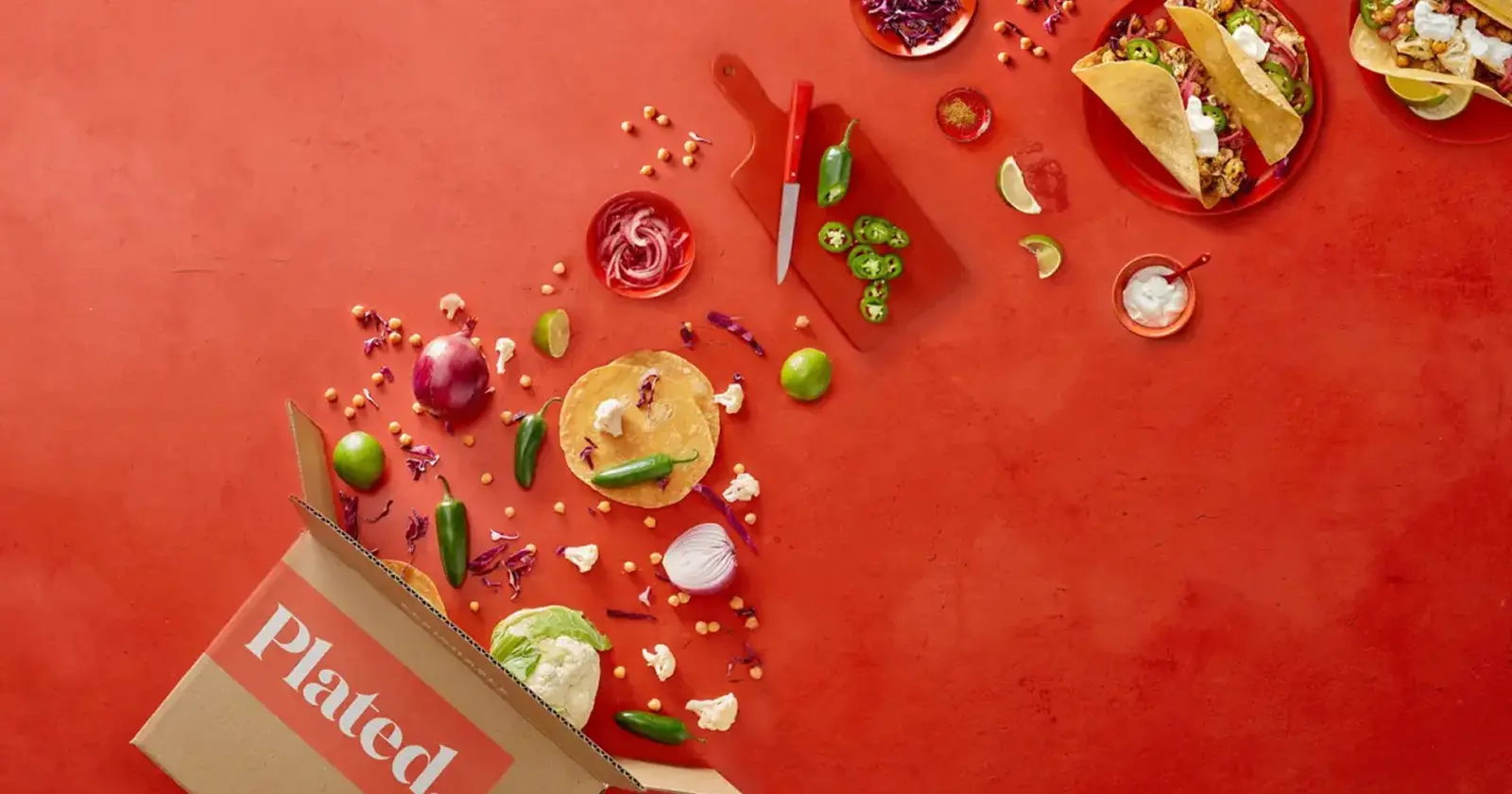
Plated is included here for its exit rather than for long-term category leadership. The brand built early subscription demand and was acquired by Albertsons, which later shifted the concept into grocery before discontinuing the service. The strategic lesson is that a meaningful outcome can come from creating strategic value even when the original business model does not remain intact.
Plated was acquired by Albertsons in a deal widely estimated between $175 and $200 million. (TechCrunch) (Eater)
- Acquisition: estimated at $175 to $200 million, with performance-based upside. (TechCrunch)
- Channel shift: used grocery distribution to extend beyond subscription. (Grocery Dive)
- Why it wins: a multi-channel strategy and a well-timed exit beat the slower bet of fighting for subscription share alone.
Growth systems increasingly use data, automation, and specialist support such as generative AI consulting, but those tools work best when the offer and customer journey are already clear. Technology can improve execution; it cannot substitute for a product people understand or a channel strategy the business can sustain.
What you can apply to your own brand
- Build a single, repeatable promise. The brands that last keep the offer consistent everywhere a customer meets it.
- Create a demo moment. Reduce explanation and increase proof. The product that shows its benefit converts cheaper than the one that describes it.
- Invest in repeat purchase. Most of these businesses run on reorders, not one-off spikes.
- Make distribution a system, not a hope. Compounding reach comes from retail, direct-to-consumer, and partnerships working together.
- Tighten the conversion journey. A site that makes the decision harder makes marketing expensive fast. Strengthen the foundation with web design and improve the flow with focused UI UX work.
FAQ
What are some of the biggest Shark Tank outcomes by sales or exit?
Among these ten examples, Bombas has more than $2 billion in lifetime sales, Scrub Daddy has more than $1.4 billion in lifetime sales, Cousins Maine Lobster has passed $1 billion in systemwide sales, and Ring sold to Amazon in a deal widely reported around $1 billion. Other Shark Tank alumni outside this list have also produced major sales and acquisition outcomes, so this article should not be read as a complete ranking.
Which Shark Tank brands have the largest publicly reported sales?
Bombas has surpassed $2 billion in lifetime sales, while current reporting places Scrub Daddy above $1.4 billion in lifetime sales. Cousins Maine Lobster has also surpassed $1 billion in cumulative systemwide sales. Those figures describe sales scale, not profit, because these privately held companies do not publish comparable profit data.
What are some of the biggest Shark Tank deal outcomes?
Daymond John invested $200,000 for 17.5% of Bombas, Lori Greiner invested $200,000 for 20% of Scrub Daddy, and Barbara Corcoran backed Cousins Maine Lobster. Each later reached billion-dollar sales milestones by different measures. Ring and Kodiak Cakes are useful counterexamples because both became major businesses without closing a Shark Tank deal.
Are there food brands among these Shark Tank examples?
Yes. Cousins Maine Lobster, Kodiak Cakes, and Plated are included here, each tied to a major milestone in systemwide sales, annual revenue, or exit value.
Do no-deal brands still count?
Yes. Ring and Kodiak Cakes both left the Tank without a deal and still became major real-world success stories.
How were these ten examples selected?
Documented scale, staying power, and a clear link between the show and the long-term outcome. A memorable pitch alone was not enough.
Beyond the Tank: how business owners can apply this in 2026
The pitch is the opening scene, not the story. The businesses that won are easy to understand, easy to find, and worth buying again. They did not rely on constant reinvention. They relied on a stable promise, a clean buying journey, a real implementation plan, and distribution that kept widening.
The way we diagnose a client's growth system, and the practical way to apply all of this, is in three layers. First, positioning. Can a customer repeat what you do after one visit, and does the brand feel inevitable in its category? That is the job of a focused brand strategy. Second, conversion. Does the site make the decision simple and the purchase frictionless? That is where web design and UI UX work earns its return. Third, distribution. Are you discoverable where intent already exists, with durable organic visibility from SEO? When those three layers align, you get what these brands built over years: predictable acquisition, stronger retention, and a brand that scales without losing clarity. If you want a sharper read on which of the three layers is actually holding you back, that is the first thing we map in a marketing consultation.
The brands that last are not the ones that made the most noise on stage. They are the ones still easy to choose long after the cameras left.










.webp)