MINISO was founded in 2013 by Chinese entrepreneur Ye Guofu, and its first shopping-centre store opened in Guangzhou that year. MINISO described Japanese influences on its early product design in a 2021 filing, while its founding and first store were in China. Its appeal rests on affordable, design-led everyday products, frequent new arrivals and recognizable licensed characters. Those choices connect product, price and store experience into a broad brand-development approach. MINISO's brand history describes its Guangzhou start and value proposition.
MINISO's strategy is built on its agile supply chain and product development process. The brand's ability to quickly introduce new and trendy products to the market shows how it responds to consumer trends and preferences. Its 2025 annual filing says the MINISO brand launched an average of about 1,600 new items (SKUs) per month that year. MINISO's ability to adapt and change its product lineup keeps browsing fresh, giving shoppers a reason to return and discover different items. Availability still varies by product and location. The 2025 filing also describes the China-based supply chain that supports this cadence.
Miniso Products
MINISO has a diverse selection of products covering many different categories. It offers everyday essentials, makeup, skincare, fashion accessories, household items, toys and other goods. The assortment gives shoppers several reasons to visit one store, from a practical purchase to a small gift. Its goal is to meet a range of everyday shopping needs without abandoning style or affordability. The company now describes its core MINISO product pillars as lifestyle, beauty and toys, with a focus on younger consumers. Affordable design and recurring newness are central to its value positioning.
Miniso In-Store Experience
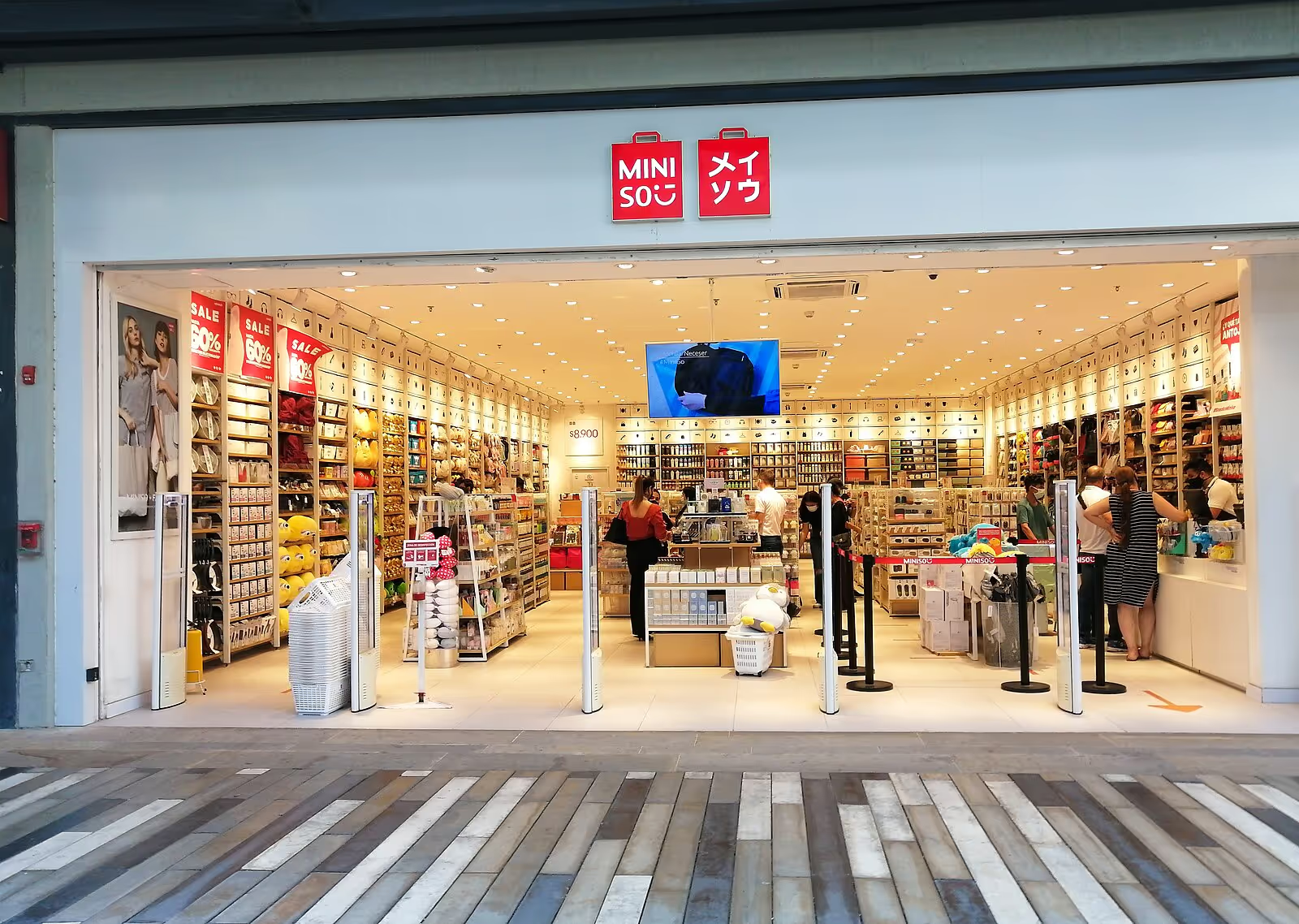
MINISO focuses on its in-store experience by designing stores to be visually attractive and easy to navigate. As of June 30, 2026, the company reported 8,309 MINISO-brand stores, including 3,644 outside mainland China; that count excludes its separate TOP TOY chain. The careful organization of products, along with appealing decorations and interiors, creates a welcoming setting for browsing across categories. Earlier, MINISO described its model as “Three Highs, Three Lows”: high appeal, quality and frequency alongside low costs, markups and prices. In a 2023 investor call, founder Ye Guofu said the company was moving beyond that cost-led formula toward differentiated products and licensed character designs. The brand's current emphasis on themed products and more distinctive stores builds on that earlier value formula.
Another important aspect of the brand's marketing strategy is the careful selection of store locations. MINISO stores are usually located in busy areas like shopping malls and commercial streets, making them easy for many people to reach. Inside, grouped products and character collections invite browsing. The Barbie-themed store shown in the Instagram post above is one concrete example of how a partnership can shape the physical environment. MINISO has extended this idea through larger formats built around intellectual property (IP), such as licensed and original characters. One example is MINISO LAND, which it was expanding in 2026. These locations let shoppers encounter familiar characters in a designed space as well as buy products.
Miniso Collaborations
MINISO has also formed relationships with licensors and brand owners behind Marvel, Coca-Cola, Minions, Disney, Barbie and Sanrio's Hello Kitty. It uses the appeal of these partnerships to bring familiar characters into goods and store displays, so fans can discover collections tied to stories they already know. The company documented its Minions range and earlier licensing relationships, while its later brand update describes a broader IP-led approach. MINISO also uses contests and gifts on social media to connect with followers, as the giveaway post below shows. Membership adds another promotional channel, with offers that vary by market. In the United States and mainland China, MINISO reported member growth in the first half of 2026.
Miniso On Social Media
MINISO uses social media, influencer marketing, giveaways, store visits and product posts to show new collections and involve followers. The Instagram posts embedded here show a Barbie-themed store, a Stitch-character giveaway and a merchandise display, each offering a different reason to interact with a collection. MINISO's #Love2gether activity around its New York flagship was a 2022 store campaign. During COVID-19 lockdowns, its 2021 #LoveWithoutDistance campaign invited people to share stories and delivered gift boxes to selected loved ones. Both campaigns connected store or seasonal activity with social participation.
Other Miniso Marketing Strategies
MINISO also uses merchandising and price to make small purchases and gifts easy to consider. Affordable everyday items sit beside playful accessories and character products, giving shoppers several price points and reasons to browse. Its gift choices range from handbags and stationery to practical household goods. By choosing a range of appealing, reasonably priced items that can be given as gifts, the brand makes its assortment useful for gift shopping. Product refresh, clear value and visual discovery work together across the store experience.
MINISO continues to expand its physical presence and develop new product formats. Its focus on art toys and original characters has grown alongside licensed ranges; in 2026, the company described a wider rollout of MINISO LAND and more investment in proprietary IP. The combination of familiar characters and frequently refreshed products gives stores a reason to change their displays. As with any retailer, MINISO still needs to watch shifting tastes and test whether new formats work in each market. The risk is losing sight of what shoppers actually want as formats and assortments change.
MINISO began in Guangzhou and has since expanded across international markets. The brand's 2024 strategy update described an ambition to become an IP design retailer, pairing affordable goods with recognizable characters and themed spaces. For other retailers, the useful question is how the product range, price and store experience reinforce one another as a brand expands into new markets.