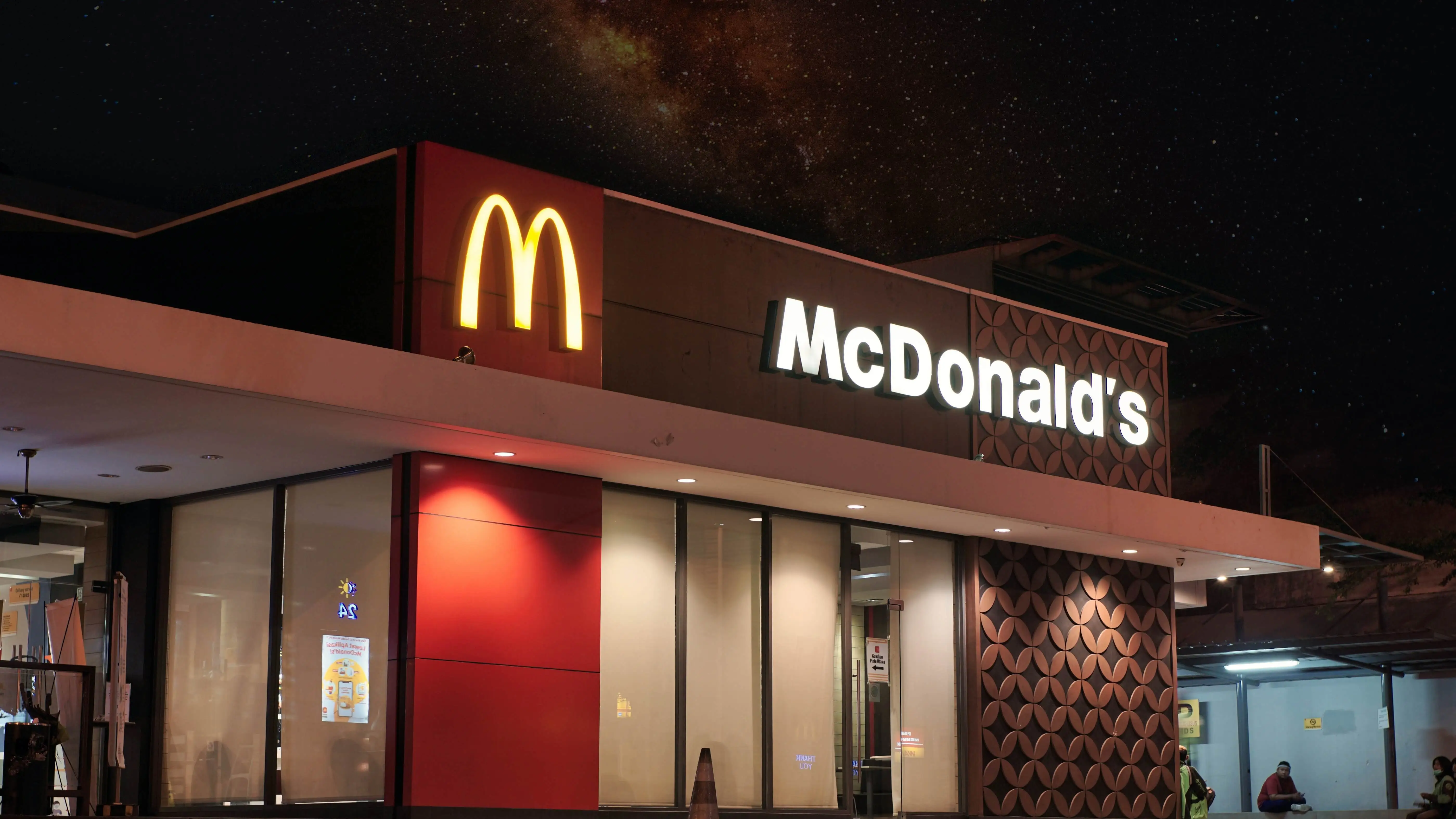
McDonald’s marketing is one of the clearest examples of what happens when a global brand treats marketing as a system instead of a series of campaigns. From an agency perspective, the useful lesson is how the company keeps product, service, media, loyalty, and restaurant experience aligned across thousands of locations. The mechanics are visible in every touchpoint, from the Golden Arches to the app flow.
McDonald’s does not only sell fast food. It sells a familiar decision at scale, reinforced by recognizable assets, predictable service, and a product architecture people can navigate in seconds. For food and beverage marketing, that is the key advantage: the product, packaging, service, and communication all reinforce the same expectation.
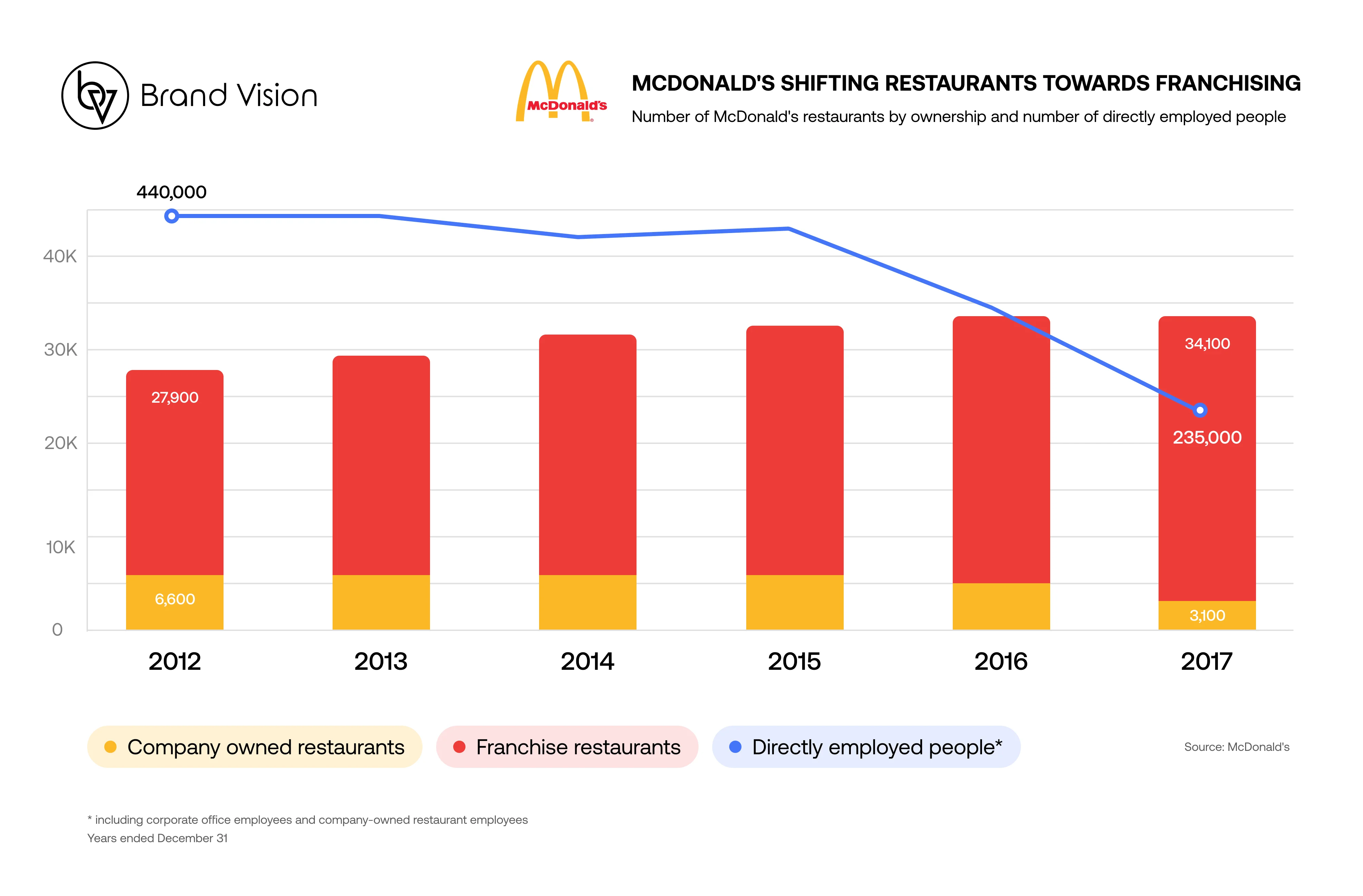
The operating model makes the system even more demanding. McDonald’s reported 43,477 restaurants at year end 2024 and stated that approximately 95% were franchised. (SEC) By September 2026, McDonald’s said its system had grown to more than 46,000 restaurants, with roughly 95% still owned and operated by independent local business owners. At that scale, a consistent brand identity and a teachable operating playbook become part of the marketing system.
Accelerating the Arches established the growth pillars of Maximize Our Marketing, Commit to the Core, and Double Down on the 4Ds: Digital, Delivery, Drive Thru, and Restaurant Development. (McDonald's Corporation) In 2026, McDonald’s introduced McDonald’s > NEXT, which builds on those capabilities through Menu > NEXT, Consumer > NEXT, Restaurant > NEXT, and People > NEXT.
Key takeaways
- McDonald’s positioning stays simple: familiar food, fast, affordable, almost anywhere.
- The strongest channel is consistency across products, stores, app, and advertising.
- Operations is part of the promise, especially drive-thru speed, digital ordering, and restaurant execution. (McDonald's Corporation)
- In 2026, McDonald’s > NEXT added a more explicit focus on menu preference, personalized customer relationships, restaurant productivity, and hospitality.
- Local relevance is deliberate: global standards, then regional menu and message choices.
- The replicable lesson is not copying ads. It is building a system that keeps producing good ads.
Helpful Brand Vision Marketing resources you can use while reading
- Effective marketing to build content that compounds.
- Branding strategies to tighten positioning and visual systems.
- Marketing campaigns and strategic marketing for staying aligned with modern channel behavior.
- Iconic brand symbols. for building recognizable brand assets.
- A quick read on branding mistakes to avoid when you try to simplify your brand.
Positioning the Brand: How McDonald’s Stands Out
McDonald’s positioning works because it is easy to repeat and hard to misunderstand. The promise stays stable whether you are on a highway exit, in a downtown core, or ordering from a phone.
- Familiar: you know the Big Mac, the fries, the McNuggets.
- Fast: the experience is designed for throughput and convenience.
- Affordable: value is a constant theme in offers and messaging.
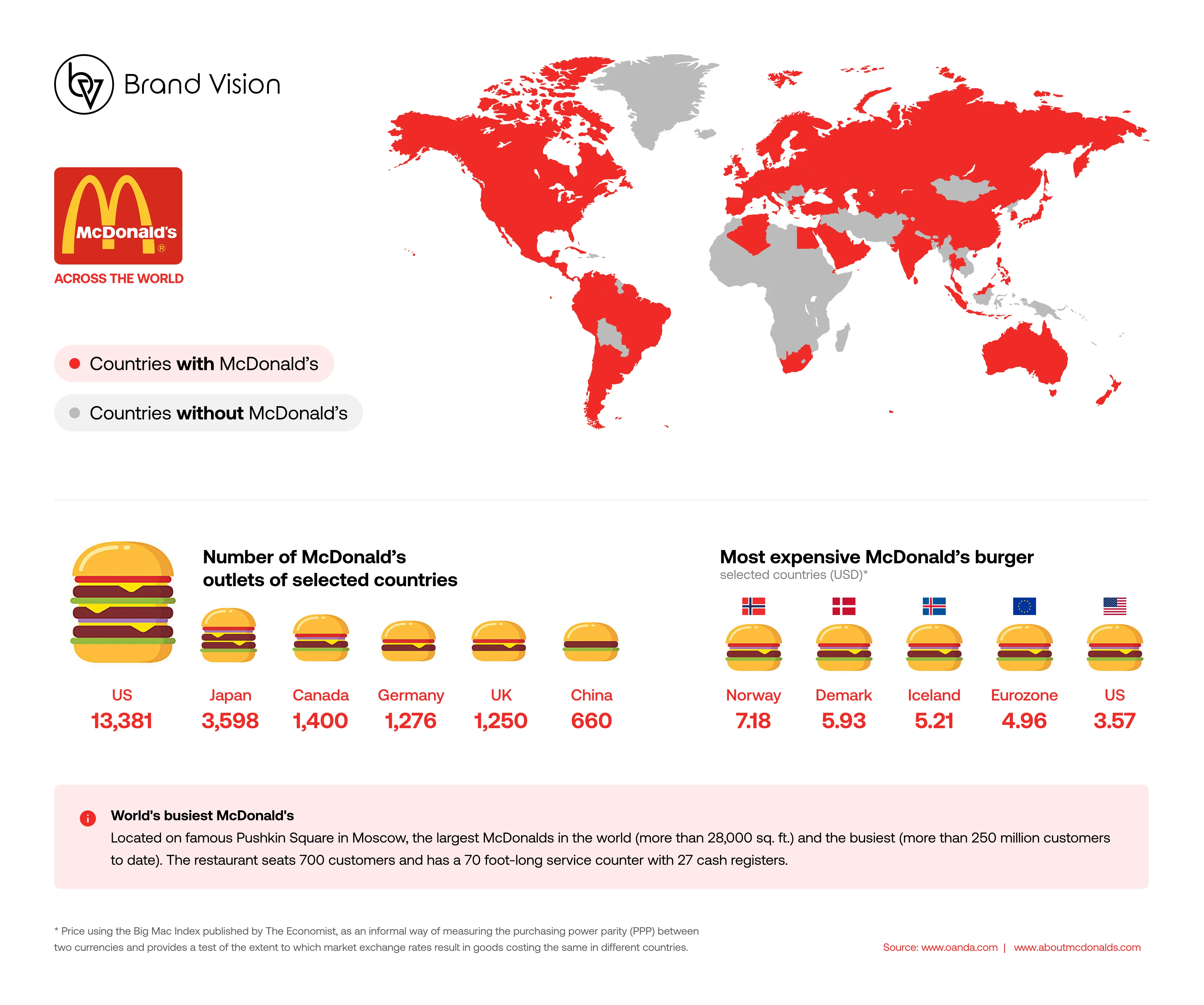
- Available: it is present in more places than most brands can imagine.
The useful insight for marketers is that McDonald’s does not treat positioning as a tagline. It treats positioning as a set of decisions that drives product, service design, and creative. That is the difference between surface-level branding and a brand strategy that guides real decisions.
A practical positioning statement (how it shows up in the real world)
A functional positioning statement looks like this:
- When you want something familiar, fast, and affordable, McDonald’s is the easiest choice.
- That single idea reinforces a recognizable visual identity, creates differentiation in a crowded category, and keeps every campaign anchored to consistent positioning.
Scale forces clarity, and McDonald’s uses that as a feature
Franchise scale makes inconsistency expensive. With approximately 95% of restaurants franchised, standardization becomes a growth lever, not a constraint. (SEC) The result is a global playbook: the core offer stays stable, then local teams execute within guardrails.
Consistency is not boring when the system is designed for it
McDonald’s keeps the core recognizable, then uses seasonal changes to create novelty without destabilizing the menu. That balance protects the brand’s trust and strengthens the long-term brand's commitment to predictability.
Where paid media fits in
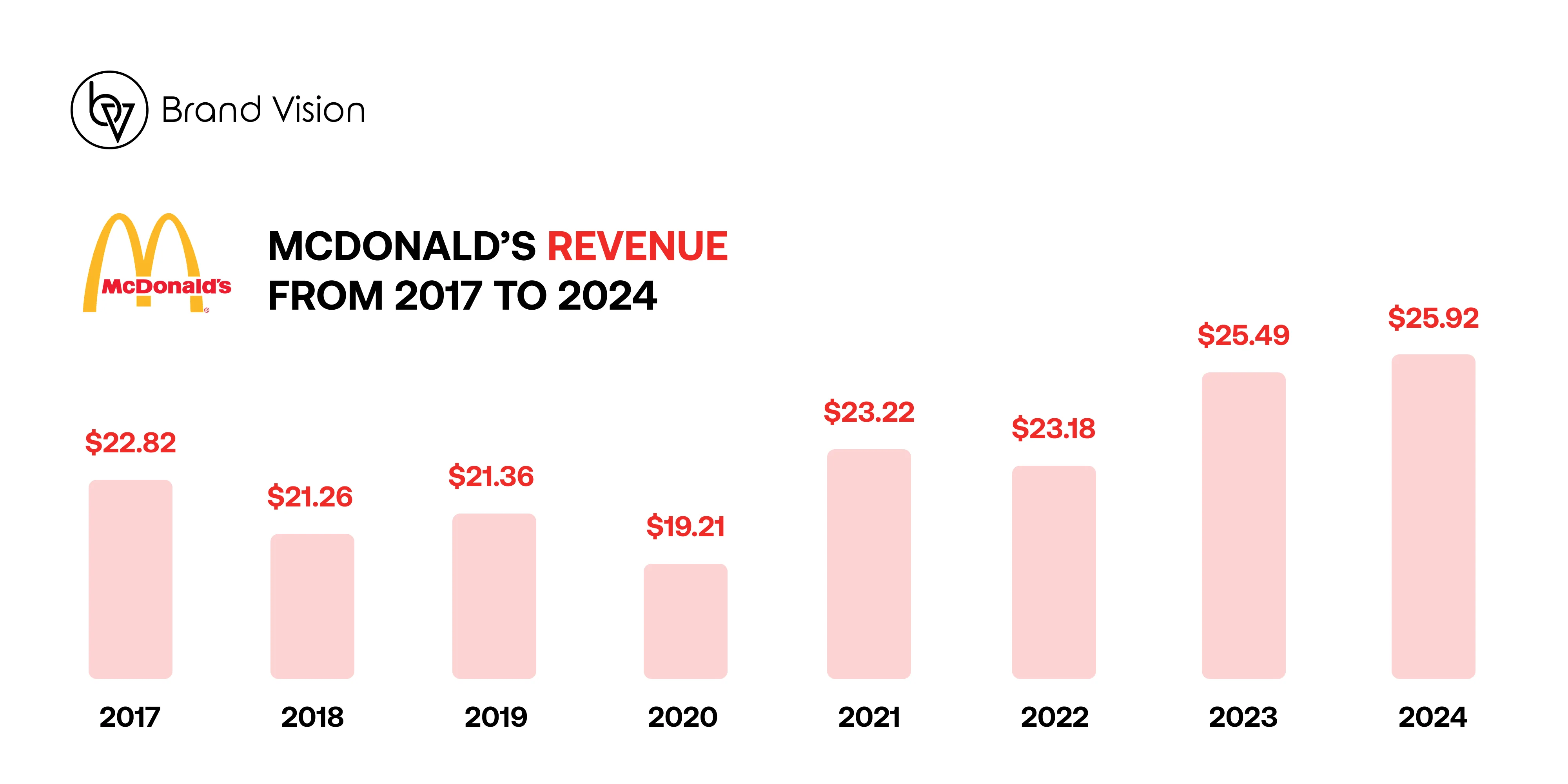
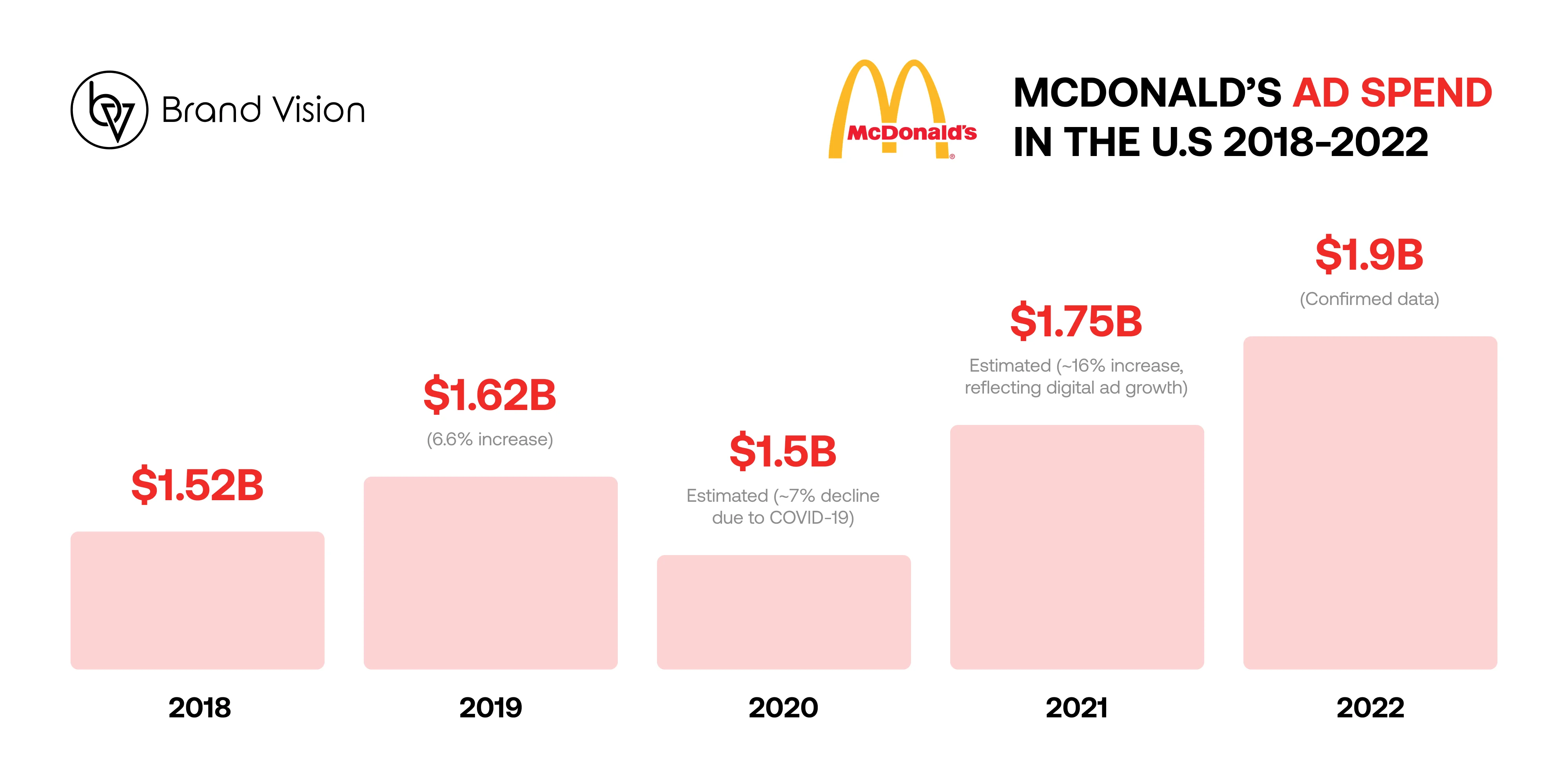
When a brand already has recognition, paid spend shifts from introduction to reinforcement. It becomes a way to drive specific behaviors: try the limited-time offer, open the app, choose the bundle, visit at breakfast, come back for late night.
McDonald’s can run large-scale advertising campaigns across its marketing channels and still feel coherent because the core promise does not change. This is also why targeted advertising works so well for McDonald’s: the message stays simple, and the segmentation happens in audience, format, and timing.
Winning Strategies: Attracting and Retaining Customers
McDonald’s growth is not powered by one genius campaign. It is powered by a repeatable machine that cycles attention into visits, then visits into habits.
1) Offer architecture: core menu + value + limited-time novelty
The core menu is the foundation, but the engine stays fresh through limited-time offers and seasonal drops. Done well, those offers do three jobs at once:
- Create urgency: try it now.
- Create conversation: what is back.
- Protect the core: the Big Mac stays the Big Mac.
McDonald’s makes the value layer easy to understand, which reduces decision friction. The marketing layer then makes the choice feel obvious.
2) Kids and families: the Happy Meal is an experience, not just a product
McDonald’s has spent decades turning the Happy Meal into a ritual. It is marketed like a moment: a predictable reward, a collectible, a small surprise. The packaging becomes part of the memory, which is why design consistency and simple cues matter.
For many categories, the transferable idea is that the container can be part of the experience, not just the wrapper. That is where thoughtful product design overlaps with marketing initiatives.
3) Partnerships and pop culture: borrowed attention, owned conversion
McDonald’s partnerships tend to follow a pattern: tap into something culturally hot, then connect it back to a familiar ordering flow. Famous Orders showed how collaboration can become an operational mechanic: a signature order people can recreate, a clear retail call to action, and content that travels.
McDonald’s has published details on collaborations like its Travis Scott partnership, built around a signature order and a broader activation. (McDonald's Corporation) The strongest collaborations feel like an extension of the brand, not a costume.
This is where modern marketing campaigns matter. The collaboration is not only an ad. It is menu, merchandising, content, social, and store execution acting like one system.
4) "Boring" improvements that customers actually feel
Some of McDonald’s best marketing is invisible until you are in the drive-thru. Clearer ordering, cleaner pickup flow, tighter bundles, fewer decision points. These improvements are not glamorous, but they raise conversion and frequency because they remove friction.
This is how strong operators build repeatability. A consistent improvement loop becomes part of the brand story, even when it is not spoken out loud.
Building Brand Loyalty: The McDonald's Approach
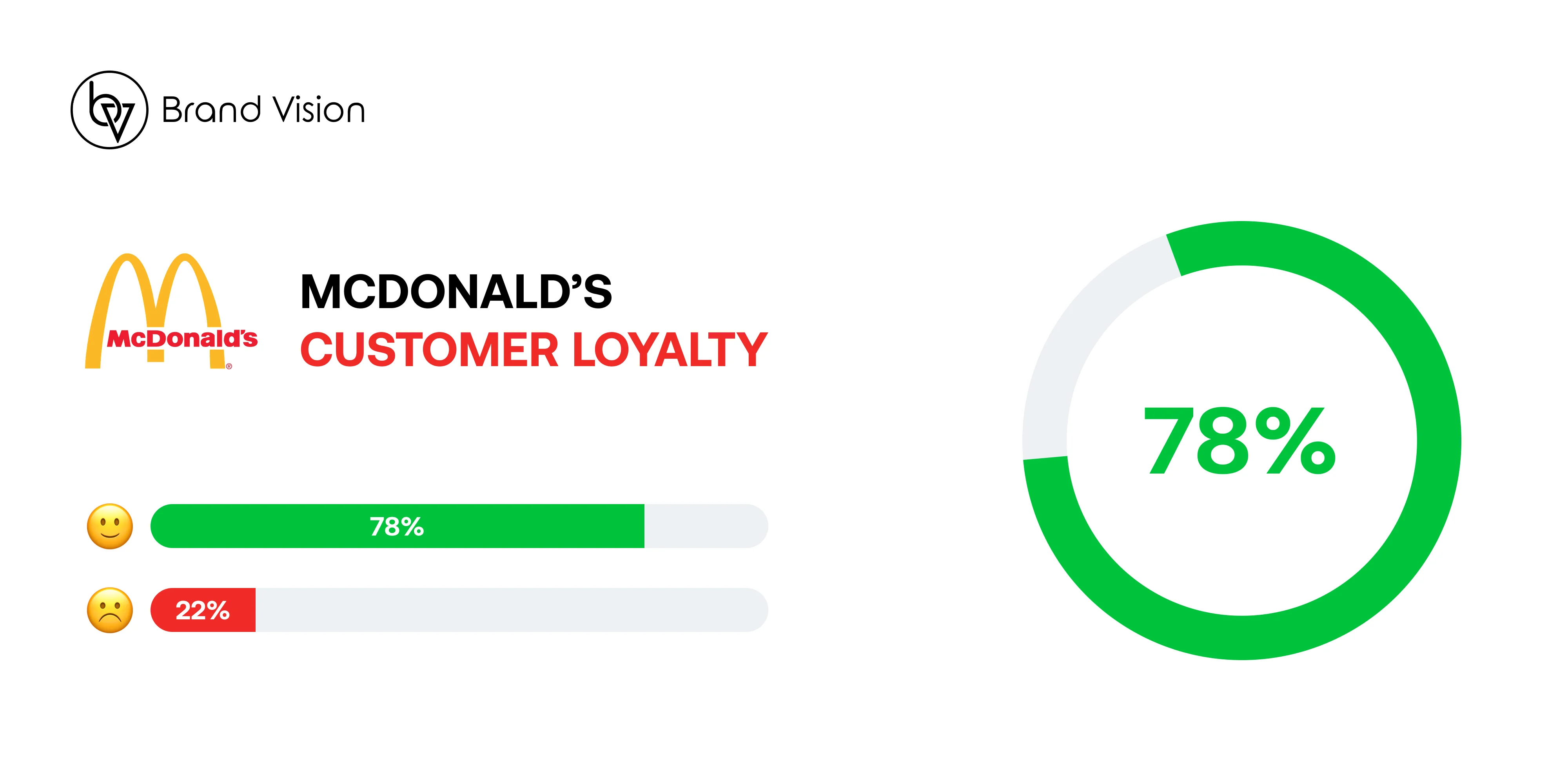
Loyalty is where McDonald’s scale turns into compounding advantage. The brand does not rely only on broad reach to stay top of mind. It uses product habit, operational consistency, and digital incentives to keep people coming back.
Consistency creates trust, trust creates frequency
People do not become loyal to one menu item. They become loyal to predictability. That predictability strengthens the brand because the experience reinforces the promise every time.
Loyalty programs move customers from occasion to routine
Infographic by: Brand Vision
McDonald’s has built MyMcDonald’s Rewards into the app experience, positioned as a points-based system tied to ordering behavior. (McDonald's)
In its 2024 annual report, McDonald’s described its loyalty ecosystem as one of the world’s largest, reaching over 175 million users across 60 markets in 2024. (McDonald's Corporation) By September 2026, the company reported nearly 220 million 90-day active loyalty members across 70 loyalty markets. That matters because loyalty is not only retention. Loyalty is also a first-party data engine that improves offer design, measurement, and timing.
Personalization is the bridge between loyalty and growth
Instead of relying only on broad awareness, McDonald’s can use the app, offers, and in-store flows to tailor experiences. That is the difference between generic promotions and a customer journey designed around relevance. For digital products, UI/UX design matters because the offer still has to be easy to understand, redeem, and complete.
Digital Marketing and Social Media: Engaging the Connected Consumer
McDonald’s does not treat digital as a channel. It treats digital as infrastructure that makes ordering, loyalty, and messaging easier.
Owned media is the quiet advantage
The app, email, and in-store screens give McDonald’s direct access to customers. That reduces dependence on paid reach and improves measurement.
For brands building their own digital marketing strategies, this is the lesson: the website and app experience are not separate from your campaign plan. They are the conversion layer.
Social works because the brand knows what it is
McDonald’s social content tends to work when it does one of three things:
- Makes the product look craveable.
- Taps into a cultural moment without forcing it.
- Uses humor and simplicity that match the brand voice.
When content feels stale, the fix is usually not volume. It is alignment: make the work more visual and more on brand. A practical reference is Brand Vision’s guide on visual content.
Digital can still be brand-building
Digital is not only for last-click offers. It is also how a brand improves brand visibility over time by repeating distinctive cues across touchpoints.
Brands looking for integrated execution often underestimate how much the digital base shapes performance. The campaign, ordering path, loyalty experience, and measurement system need to work together rather than as separate projects.
Localized Marketing: Catering to Diverse Tastes
McDonald’s is global, but it competes locally. That tension is strategic: standardize enough to stay recognizable, localize enough to stay relevant.
Standardize the brand, localize the details
Localization works when it is deliberate. McDonald’s maintains a familiar experience while tailoring menu items and promotions to regional preferences. That lets the brand stay recognizable without treating every market as identical.
A practical split looks like this:
- Global: identity, service expectations, core menu anchors, brand voice.
- Local: menu variations, cultural references, timing, community partnerships.
Local nuance is still marketing, not just operations
Localization touches pricing, creative, media planning, and channel execution. For multi-location brands, local SEO can also determine whether nearby customers find the right location when intent is already high.
McDonald’s also uses region-specific advertising campaigns and tailored marketing messages to match local culture and buying behavior. This is where one-size-fits-all execution breaks down.
Multi-location businesses can learn a lot here. For companies expanding specifically in the Midwest, a marketing agency in Chicago should still adapt the core brand to local search, media, and customer behavior rather than creating a separate identity for every market.
Personalization and Data-Driven Marketing: Insights for Success
McDonald’s personalization is a process: collect behavior signals, segment customers, then send the right offer at the right time.
This is the practical definition of personalized marketing strategies. It is not using someone’s first name. It is building systems that learn from what people actually do.
What personalization looks like in practice
Personalization typically shows up as:
- App-only offers that drive adoption.
- Rewards loops that drive frequency.
- Bundles and value options that match budget pressure.
- Timing logic that matches dayparts and routine behavior.
McDonald’s own MyMcDonald’s Rewards pages make it clear that the app and loyalty experience are designed to encourage repeat behavior and redemption loops. (McDonald's)
Data does not replace creativity, it makes creativity sharper
When brands use data well, creative gets more focused. You can test offers, identify patterns, and amplify the winners.
This is where clear messaging and repeatable personalized marketing campaigns outperform random one-offs. A consistent personalized marketing approach improves measurement because you stop guessing and start learning.
When personalization is tied to the brand promise, it feels helpful. Done well, it boosts brand visibility because customers interact with the brand more often, across more touchpoints.
Innovation in Marketing: Staying Ahead of the Curve
McDonald’s innovation is often less about shiny tools and more about removing friction. Accelerating the Arches emphasized Digital, Delivery, Drive Thru, and Restaurant Development. (McDonald's Corporation) McDonald’s > NEXT now extends that logic into restaurant productivity and customer experience, including Restaurant > NEXT and Consumer > NEXT. The common thread is that technology is useful when it makes ordering, service, or repeat visits easier.
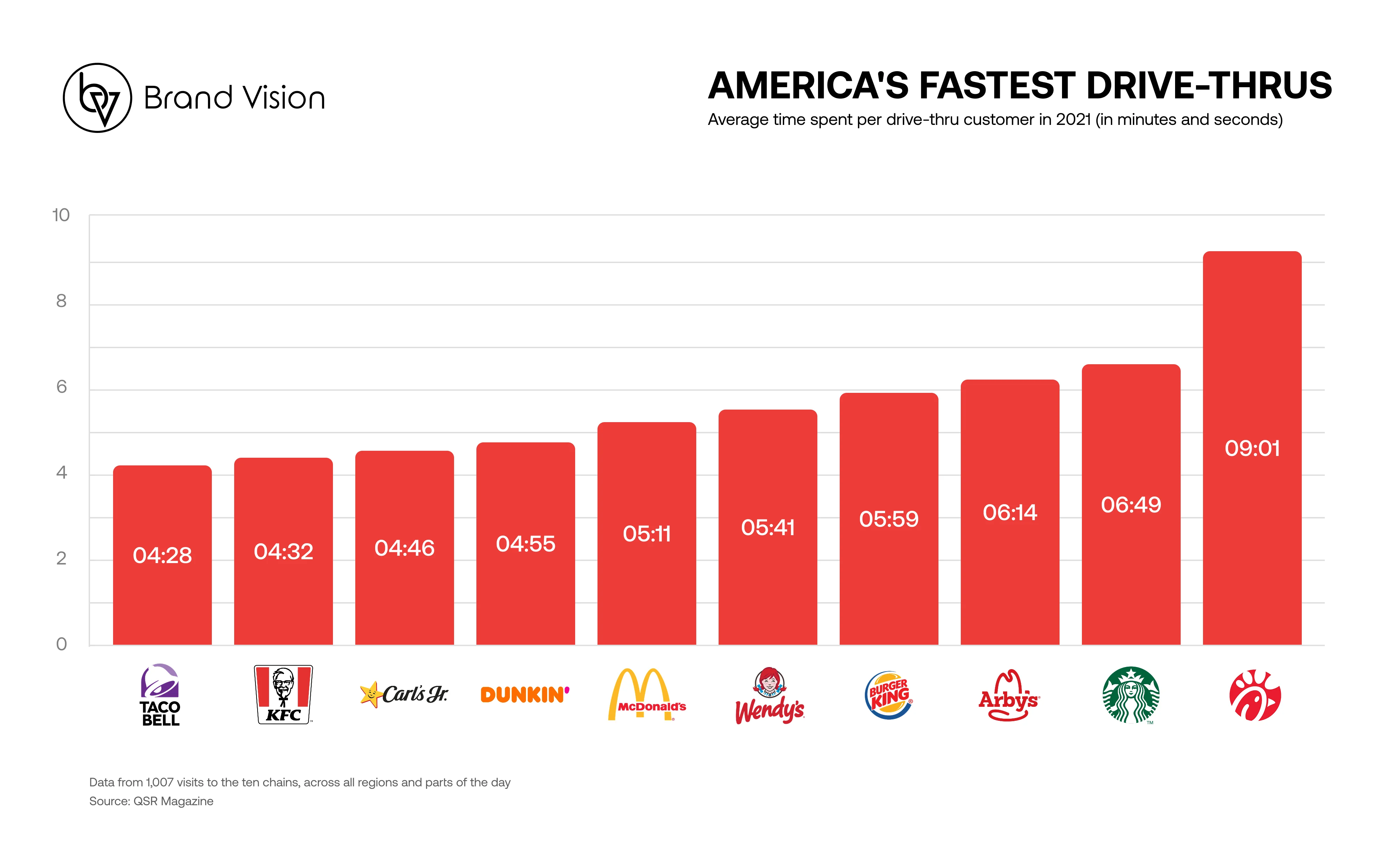
The drive-thru is a marketing channel
Drive-thru is not just fulfillment. It is a brand touchpoint that shapes perception. Faster service and clearer order flow reinforce the promise of convenience, and those operational wins often become marketing wins.
Digital ordering is the new baseline
Digital ordering and loyalty are central to McDonald’s growth narrative, including the company’s emphasis on digital and loyalty platforms in public reporting. (McDonald's Corporation) This is where websites, apps, and CRM stop being tech projects and become core marketing infrastructure.
Innovation is only useful if it is repeatable
The best innovations are the ones you can roll out across thousands of locations without breaking the experience. McDonald’s focuses on systems and process because consistency is the real advantage.
Sustainable marketing strategies look like a consistent core with repeatable experimentation layered on top. That often includes reliable digital tactics, but only when they connect back to the core promise.
McDonald’s Marketing Mix (4Ps) Explained
McDonald’s 4Ps (Marketing Mix)
- Product
- Core menu anchors that stay stable
- Limited-time offers that create urgency
- Local variations that match regional tastes
- Price
- Value bundles and affordability messaging
- Tiered pricing to serve different budgets
- Promotions tied to app adoption and loyalty
- Place
- Massive footprint and franchised distribution (SEC)
- Drive-thru as a convenience engine (McDonald's Corporation)
- Digital ordering, delivery, and pickup flows (McDonald's Corporation)
- Promotion
- Mass reach campaigns plus targeted offers
- Cultural collaborations, including Famous Orders style activations (McDonald's Corporation)
- Loyalty messaging that turns visits into habits (McDonald's)
What Brands Can Copy (and What Not to Copy)
McDonald’s is a strong model when the focus stays on mechanics, not surface-level creativity.
What to copy
- Build a simple promise that can survive scale. This is where marketing and branding strategies should start.
- Invest in clarity. Tight brand positioning makes every campaign easier.
- Treat consistency as a growth lever, not a creative constraint. The brand's commitment to consistency theme is a real differentiator.
- Use offers as product storytelling, then reinforce them with relevant messaging for each audience and occasion.
- Make operations improvements part of the narrative. Convenience is a feature customers notice.
- Let loyalty and digital reduce guessing. The MyMcDonald’s model is a reminder that retention is built into product and experience. (McDonald's)
What not to copy
- Do not chase pop culture collaborations without a stable core.
- Do not try to outspend your category. McDonald’s advantage is scale plus repeatability.
- Do not overload the menu or message. Many brands need fewer offers, not more.
- Do not do digital without a conversion foundation. Your site and app experience is part of marketing approaches.
- Do not treat innovation like novelty. Innovation should be repeatable and measurable.
- Do not let poor branding decisions creep in while you simplify.
Key Takeaways
- McDonald’s wins because its system is consistent, not because each campaign is genius.
- The brand is built on recognizable assets and repeatable experience, not constant reinvention.
- Promotions work best when they reinforce the brand promise: value, familiarity, convenience.
- Digital and loyalty are growth platforms, not side channels. (McDonald's Corporation)
- The most transferable lesson is building a playbook a team can execute across markets.
FAQ: McDonald’s Marketing Strategy
What is McDonald’s marketing strategy in one sentence?
McDonald’s marketing strategy is to make a familiar, affordable, convenient meal feel like the easiest choice, then reinforce that choice through repeatable experience, offers, and loyalty.
Why does McDonald’s marketing stay so consistent?
Because the business is built for scale and repeatability. With a heavily franchised footprint, the playbook has to stay stable across locations.
How does McDonald’s use digital marketing?
It uses digital to reduce friction and build retention through app-based ordering and loyalty. McDonald’s also emphasizes digital platforms in public reporting. (McDonald's Corporation)
What role does MyMcDonald’s Rewards play?
It encourages repeat visits through points and redemption, and it supports more tailored offers and messaging through first-party behavior signals. (McDonald's)
Can smaller brands learn from McDonald’s without McDonald’s budget?
Yes. The replicable parts are clarity in positioning, consistency in experience, and a simple offer system that adds novelty without confusing customers.
What should brands avoid copying from McDonald’s?
Avoid scale tactics you cannot support, including mass media spend or celebrity collaborations, until the core product and experience are stable.
What McDonald’s Teaches Marketers
McDonald’s stays dominant because it treats marketing as a connected system. Strategy, brand, offers, operations, digital, and loyalty all reinforce the same promise. The creative looks strong because the foundation is stable.
A useful starting point is two decisions:
- A clear brand strategy that makes positioning and identity easy to execute.
- A conversion-ready digital base because your brand’s effective marketing depends on what happens after the click.
Strong storytelling still compounds. This guide on effective marketing through narrative shows how to turn features into an idea people remember.
How Business Owners Can Apply This Playbook
A McDonald’s-sized budget is not required to build a McDonald’s-style system. The repeatable parts are clarity, consistency, and a few operational choices that make the experience easier.
Start with these moves:
- Write down the promise in one sentence, then pressure-test it. If the promise cannot guide product, pricing, and creative decisions, the positioning is not clear enough.
- Audit the experience end-to-end. Every confusing step is a leak in the funnel, even if the ads are strong. A modern site matters here because the conversion layer often decides whether the campaign worked. Teams investing in web design usually get more value from traffic when the website foundation is clear and conversion-ready.
- Build two offer types: a stable core that does not change, and a controlled novelty lane that creates urgency without overwhelming customers. This structure supports repeatable marketing campaigns and simpler creative.
- Choose a small set of distinctive brand assets and protect them. The goal is for customers to recognize you in one second. That is where consistent branding efforts and practical brand messaging show up as an advantage customers can recognize quickly.
- Treat operations as part of marketing. Faster service, clearer pickup, simpler ordering, and better value framing all strengthen the brand promise. In many categories, these are the easiest marketing wins available.
Use loyalty and personalization as a feedback loop. Even a simple points model can support smarter offers, tighter marketing messages, and a more helpful customer journey. More brand case studies and strategy breakdowns live on Brand Vision. If you want help connecting positioning, digital experience, and channel execution into one system, you can contact Brand Vision.