
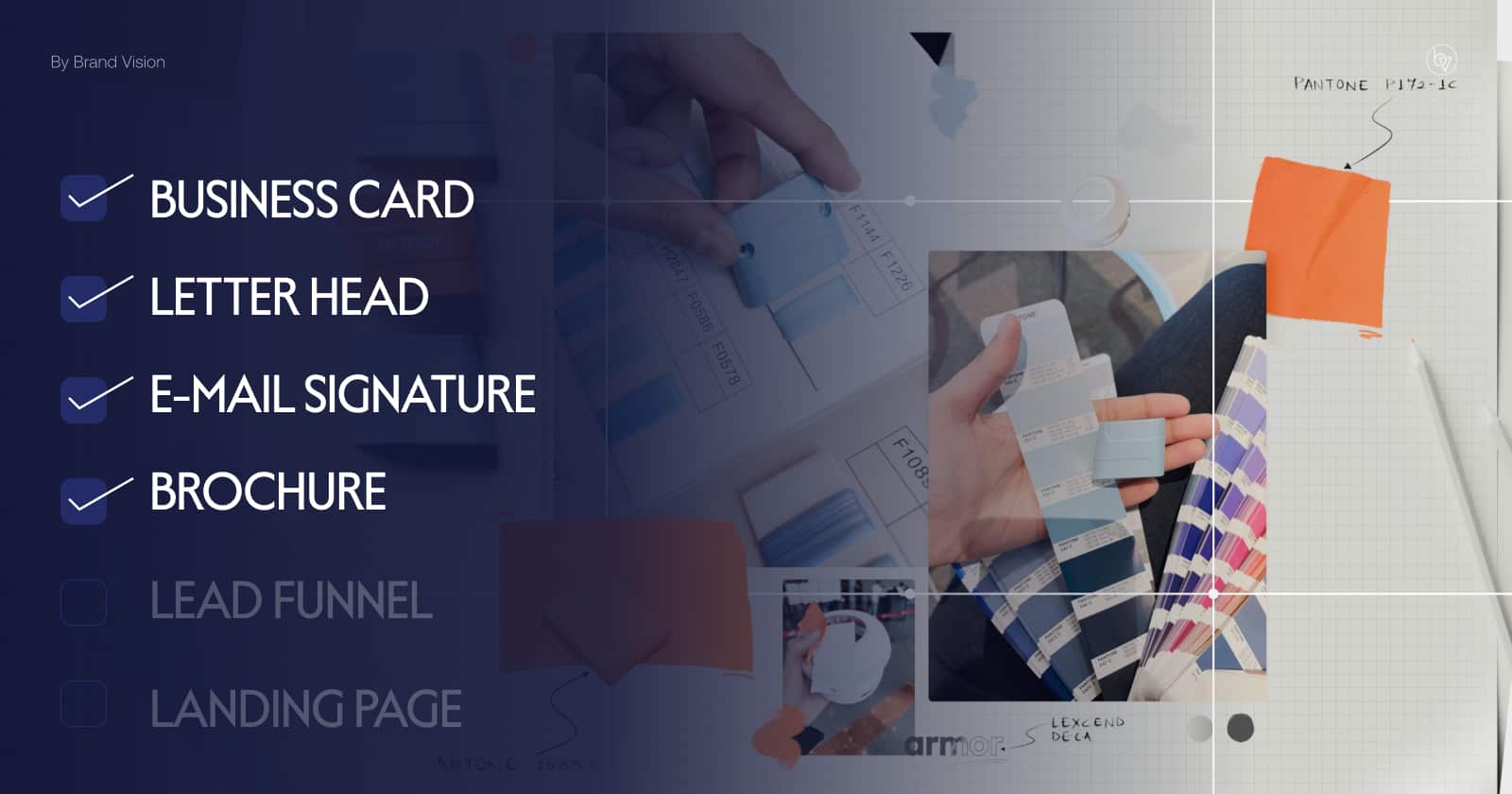
Most buyers decide what they think about your company long before they speak to anyone on your team. They are judging you on the materials they can see, download, forward, and save. That is your brand collateral.
In a market where people are exposed to an estimated 4,000 to 10,000 ads every day, your touchpoints need to work harder just to be seen and remembered. For many decision makers, especially in B2B and services, collateral is the only version of your brand they experience during research.
This guide focuses on the essential brand collateral every business needs. Not every possible asset. Just the core pieces that create a consistent, credible presence and support real conversations with customers, partners, and investors.
Why Brand Collateral Still Matters in an Overloaded Ad World
Attention is crowded. Digital marketing experts estimate that the average American now encounters thousands of ads and brand messages per day across screens, billboards, packaging, and print. Most of it is ignored.
In that environment, consistent brand presentation is not just a design preference. It is a revenue lever. Multiple studies have found that companies with consistent branding across channels can see up to 20 to 33 percent higher revenue growth than those with fragmented presentation. Collateral is where that consistency lives.
The same pattern shows up in B2B buying behaviour. Research suggests that buyers may consume around 11 to 13 pieces of content before they contact a vendor, and that many are already 57 to 70 percent through their decision process by the time they speak with sales. Those content pieces are often your decks, one-pagers, case studies, and website pages.
Strong brand collateral turns that silent research period into an asset. It gives buyers clear, consistent information, and it helps your team show up as organised, credible, and ready to help.
-1.webp)
At a Glance
If you only invest in a small set of brand collateral, focus on these essentials:
- Business cards
- Branded email signatures
- Branded letterhead and basic stationery
- A company overview or capabilities deck
- Product or service one-pagers
- Case study and testimonial templates
- A core brochure or digital leave-behind
- A clear website homepage and key service or product pages
- Social media profile and post templates
- Simple event collateral, such as a banner or pop-up, if you attend trade shows or conferences
You can add specialised materials over time. This starter set covers the daily interactions that shape how people see your brand.
What Counts as Brand Collateral (vs Logos and Brand Guidelines)?
Brand collateral is any tangible or digital material that represents your company and carries your brand identity into real interactions. It is what a customer holds in their hand, opens in their inbox, clicks in a proposal, or sees on a screen at an event.
It is useful to separate the three layers:
- Brand strategy. Positioning, audience, value proposition, and messaging.
- Visual identity. Logo, colour palette, typography, imagery style, and brand guidelines, often developed with a branding agency or specialist team.
- Brand collateral. The business cards, decks, brochures, pages, and templates that apply that identity in context.
Your logo file and your brand book are not brand collateral on their own. They are the instructions. Collateral is how that system shows up in the world. It should always reflect the latest brand strategy and visual identity design you have in place.
Everyday Identity Collateral: Stationery, Business Cards, and Email Signatures
These are the quiet pieces people see most often. They make your organisation feel real and established.
Business Cards
Business cards still matter for in-person meetings, conferences, and local networking, even in digital-first sectors. A good card does three things:
- Makes it easy to remember who you are and what you do
- Gives clear contact routes
- Leaves a small, tangible impression of your brand quality
Keep them simple. Name, title, logo, website URL, main contact details, and an optional QR code that links to your site or LinkedIn profile. Prioritise legibility, white space, and a hierarchy that lets someone scan the card in a few seconds.
Branded Letterhead and Basic Stationery
Letterhead, envelopes, and simple document templates carry your brand into contracts, invoices, proposals, and formal letters. They often sit in legal folders and finance systems far longer than a campaign.
Effective stationery:
- Uses subtle, consistent branding in the header or footer
- Leaves generous space for the main content
- Works for both digital PDFs and print
- Aligns with your logo, colour, and type choices across channels
These pieces are especially important for professional services, education, healthcare, and any organisation where trust and formality matter.
Email Signatures
Every employee email is a small brand impression. A consistent email signature template can reach more people than any brochure.
A useful signature typically includes:
- Name, role, and company
- Logo or wordmark at a modest size
- Core contact details
- Links to your website and main social profile
- An optional short call to action, such as a link to a recent guide or webinar
Manage signatures centrally where possible. This reduces off-brand experiments and helps you coordinate campaigns that run through email.

Sales and Credibility Collateral: Decks, One-Pagers, and Case Studies
For many buyers, sales collateral is the proof they share internally. It has to be clear enough for someone who was not in the meeting to understand.
Company Overview and Capabilities Deck
A company overview deck is often the first structured view of your brand. It should support early conversations and introductory calls.
A focused deck usually includes:
- Who you are and what you do
- Who you serve and the problems you solve
- Your core services or products
- A small set of proof points: logos, metrics, awards, or testimonials
- Simple next steps or ways to engage
Aim for 8 to 12 slides, not 40. Keep slides clean, with one main idea per page. Use your approved visual identity so it feels connected to your website and stationery.
Product or Service One-Pagers
One-pagers are single-page summaries for each key offer. They are easy to attach to emails, add to RFP responses, or leave behind after a meeting.
A strong one-pager covers:
- The problem or need
- Your solution in plain language
- Three to five specific benefits
- A short example, metric, or quote
- A clear call to action or contact point
Treat one-pagers as living documents. As your offering evolves, update them so sales teams are not tempted to create their own versions.
Case Study and Testimonial Templates
Case studies and testimonials give buyers confidence that you can deliver. They are especially important for higher-value or complex purchases.
A simple, repeatable case study structure:
- Client or context (industry, size, situation)
- Challenge
- Approach or solution
- Results, ideally with clear metrics
- A short client quote where possible
Create a visual template so each case study looks and feels like part of the same system. This makes it easier for buyers to skim several examples and for your team to keep producing new ones.

Marketing Collateral: Brochures, Flyers, and Lead Magnets
Marketing collateral supports awareness and early interest. It is often the first thing someone picks up or downloads.
Brochures and Leave-Behinds
Brochures can still play a role when you work in physical spaces, events, or local markets. The goal is not to list everything you do. It is to give a clear overview and a reason to talk further.
Keep brochures focused on:
- Who you help
- What problems you address
- A small set of offers
- Visual proof such as photos, diagrams, or logos
- Simple ways to contact you or book a call
Shorter booklets or folded sheets are often easier to read and cheaper to keep current than thick catalogs. When product ranges shift quickly enough to make thick bound catalogs feel outdated by the time they ship, catalog printing services that handle binding and finishing in-house let teams refresh copy and artwork in a single upload and receive a revised catalog in days, keeping the printed version in step with current SKUs and pricing.
Event and Trade Show Collateral
If you attend trade shows, conferences, or community events, it is worth investing in a minimal set of event-ready pieces:
- A banner or pop-up that states who you are and one clear message
- Printed handouts or one-pagers tailored to the event audience
- A simple sign-up form or QR code link for visitors
The aim is to create a consistent experience between what people see at your stand and what they later see on your site or in follow-up emails.
Lead Magnet Style Collateral
Short guides, checklists, or worksheets that carry your branding can work as both marketing content and collateral. For example, a PDF checklist on “Questions to Ask Before Choosing a Partner” can be a download on your website and a leave-behind for sales meetings.
Design them with the same care as your other materials. Over time, this library becomes a key part of how prospects educate themselves about your approach.

Digital Collateral: Website, Social Profiles, and Newsletter Templates
Your digital presence is often the first and last place people review your brand. Website and social collateral should sit on the same foundation as your offline materials.
Website Homepage and Core Service or Product Pages
Your website is central brand collateral, not a side project. Nearly all B2B buyers and many consumers now review websites as part of their decision process.
At minimum, your homepage and core service or product pages should:
- State clearly who you are and what you offer
- Show proof, such as results, testimonials, or logos
- Provide simple paths to enquire, book, or buy
- Load quickly and work well on mobile screens
- Reflect the same visual identity and tone as your offline materials
For many organisations, partnering with a web design agency is the most efficient way to align UX, accessibility, performance, and brand.
Social Media Profiles and Templates
Your profiles on LinkedIn, Instagram, TikTok, or other platforms are collateral as well. They often appear before your website in search results.
Align them with your broader system:
- Use consistent names, logos, and banners
- Write profile descriptions in the same voice as your site
- Create a small set of post templates for common formats such as announcements, case studies, or tips
This makes it easier for teams and partners to publish content that still feels like your brand.
Newsletter and Email Campaign Templates
If you send newsletters or campaigns, the templates you use are long-lived collateral. They shape how readers experience every message.
A good template:
- Uses your typography and colour palette without sacrificing readability
- Supports both short announcements and longer updates
- Includes a consistent header, footer, and unsubscribe area
- Highlights one primary call to action per email
Align your templates with your website and offline identity so emails feel like a natural continuation of the same brand story.

How to Prioritize: A Simple Brand Collateral Roadmap for Growing Companies
Most teams cannot produce everything at once. A simple roadmap helps you decide what to build now and what can wait.
Phase 1: Launch Essentials (first 3 to 6 months)
For new or early-stage organisations, focus on:
- Business cards and branded email signatures
- Branded letterhead and basic document templates
- A simple but credible website or landing page
- One compact brochure or overview PDF
This gives you a professional baseline for early meetings, hiring, and supplier conversations. If you work with a branding agency or visual identity design partner, fold these pieces into the initial scope.
Phase 2: Sales Enablement Core (months 6 to 18)
As you begin to scale sales and partnerships, it is time to add:
- A company overview or capabilities deck
- Product or service one-pagers
- Case study and testimonial templates, plus your first few examples
For B2B and professional services firms, this phase is critical. Buyers in these categories often review multiple internal documents before they recommend a vendor.
Phase 3: Scale and Specialisation (18 months and beyond)
Once your core set is in place, you can expand into:
- Trade show and event collateral tailored to priority markets
- Vertical-specific one-pagers, brochures, and case studies
- Enhanced website sections and landing pages for key segments, possibly in partnership with a B2B marketing agency or B2B web design and marketing agency
Revisit this roadmap annually. As your strategy evolves, your collateral mix should evolve with it.
.webp)
Governance: Keeping All Your Collateral Consistent and On Brand
Many brands run into trouble not because they lack collateral, but because they lack control. Different teams create their own versions. Files live in personal folders. Old logos remain in circulation for years.
A light but disciplined governance approach can prevent this.
Consider the following practices:
- Centralise storage. Use a shared drive or digital asset library with clear folders for approved collateral, work in progress, and retired items.
- Name and date assets. Include version numbers or dates in filenames so people can tell what is current.
- Assign ownership. Give marketing or brand a formal role as custodians. They decide when to update, approve, or retire materials.
- Connect to strategy. When you update your positioning or design system, plan a structured collateral refresh. Start with the pieces that touch the most prospects, such as your website, decks, and one-pagers. Align this with any broader brand strategy and positioning services and brand research work you are running.
The goal is not bureaucracy. It is to make sure that every touchpoint a buyer sees tells a consistent story, backed by the same data, language, and visual identity.
Key Takeaways and How Brand Vision Can Help
Brand collateral is the practical side of brand building. It is how your strategy and visual identity show up in documents, screens, and rooms. A small, carefully chosen set of assets will usually serve you better than a long list of pieces that are rarely updated or used.
If you are starting or refreshing your system, you can move through three clear steps:
- Put launch essentials in place so your everyday identity feels credible.
- Build sales enablement collateral that helps buyers understand, compare, and decide.
- Add specialised assets for events, segments, and campaigns once the core is consistent.
As you grow, your website, digital templates, and collateral governance will shape how easy it is for customers to understand and trust you. Working with a specialist web design agency and branding company can shorten that journey and keep design, UX, and performance aligned.
If your collateral feels fragmented or out of date, it can be helpful to step back, audit the full set, and decide what to keep, update, or retire. A structured marketing consultation and audit agency engagement can give you a clear view of what supports your pipeline today and what needs to change.
When your collateral is consistent, considered, and easy to manage, every interaction becomes a little clearer. That is often what moves conversations and companies forward.



%2520(1).png)






