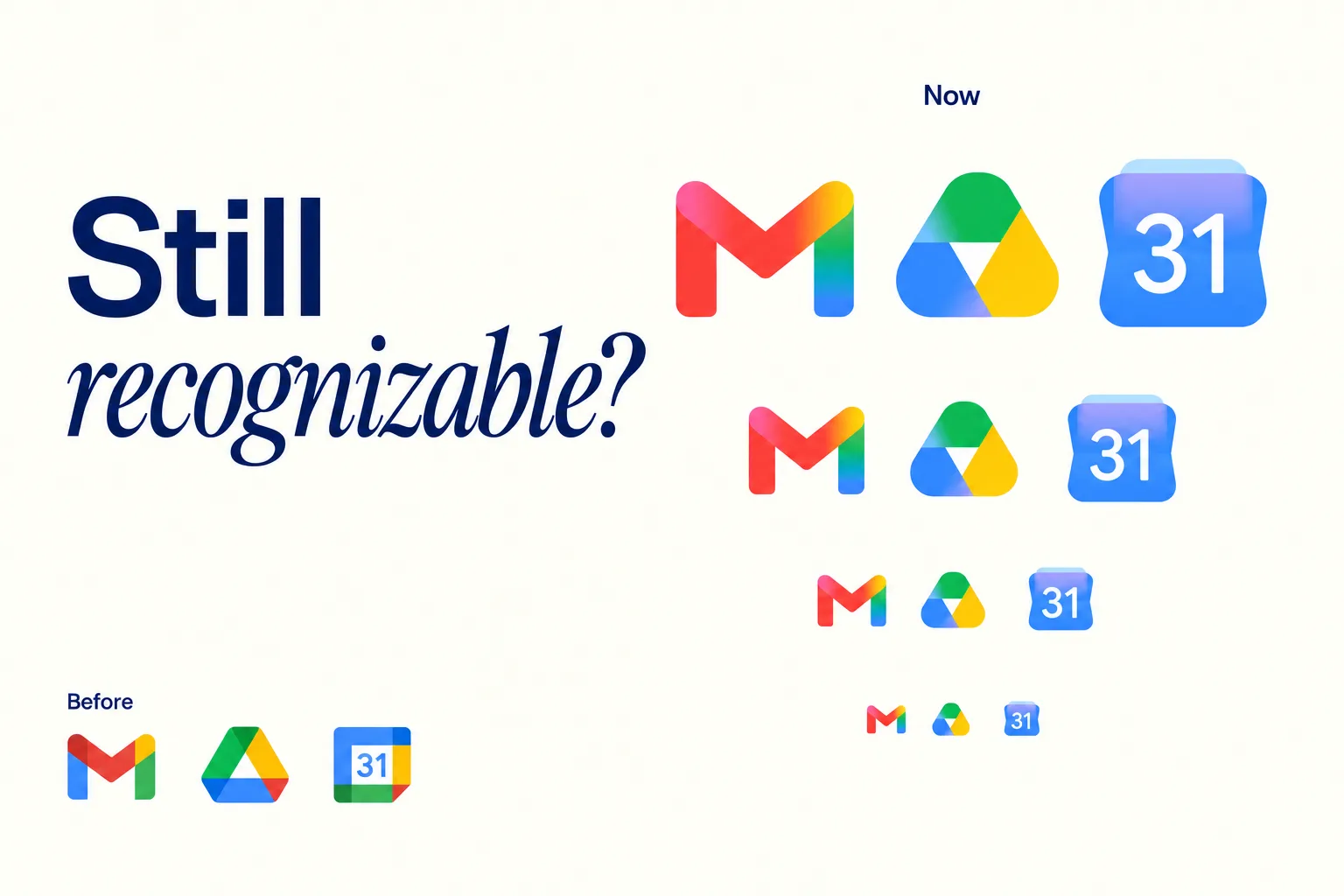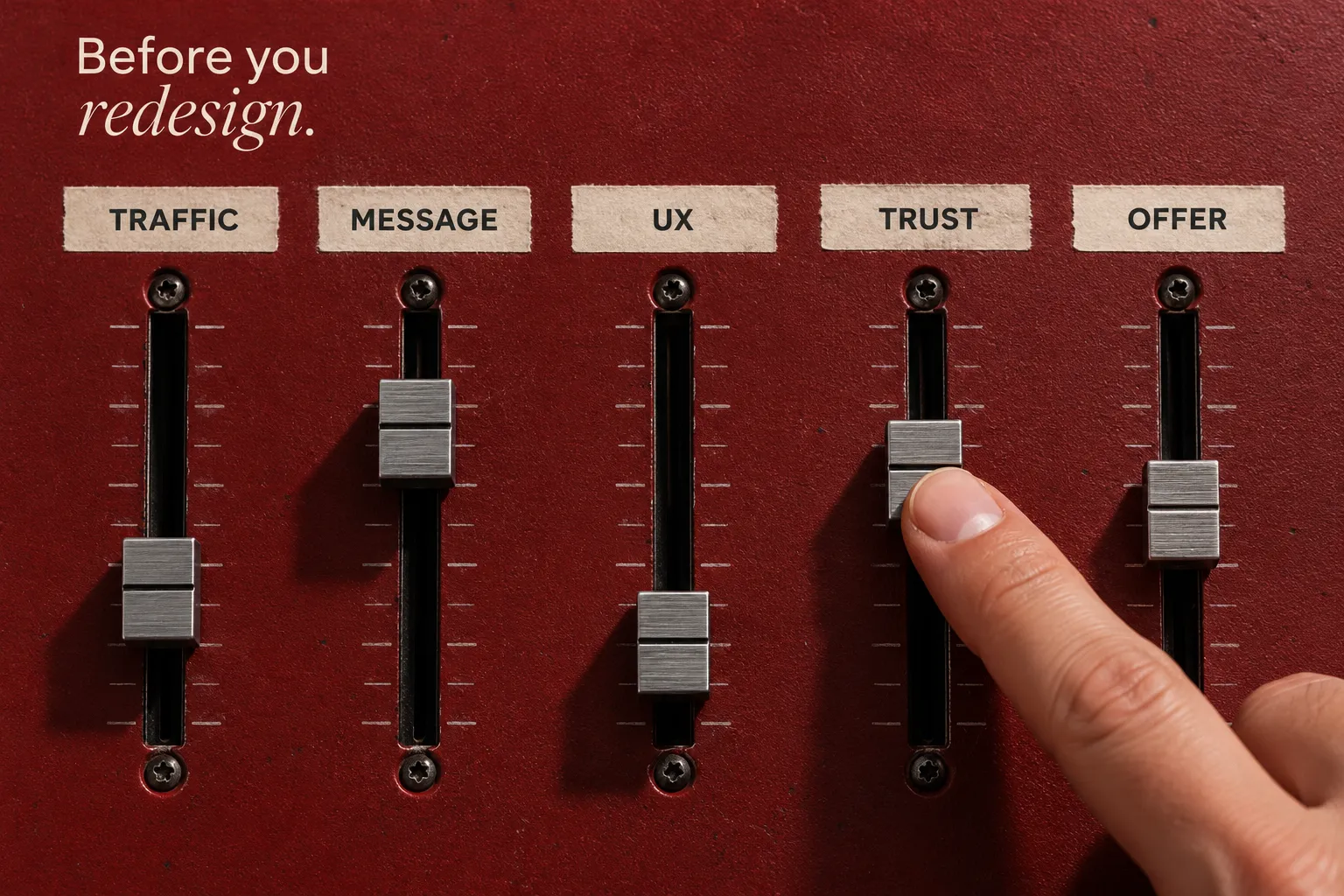
Commodity vs. brand is not only a marketing distinction. It is an economic one. When buyers see an offer as interchangeable, price carries more weight and differentiation becomes harder to defend. When buyers can explain why they prefer one option, the business may gain more room to protect price, retain customers, and invest for the long term. That is why brand equity matters, and why a clear brand strategy should connect positioning to the evidence and experience buyers actually evaluate.
At a Glance
Most companies do not deliberately become commodities. The drift happens when differentiation becomes harder to see, proof is scattered, and promotions begin carrying more of the demand. In procurement-led categories, the offer can then be reduced to a line item unless the business makes its value and trade-offs easy to verify.
Key points to keep in view:
- Commodity vs brand is an economic condition. It shows up in pricing power, demand elasticity, and margin stability.
- Brand equity is more useful when it can be observed through preference, reduced substitutability, retention, or willingness to pay.
- Digital experience is part of the engine. Speed, accessibility, UX, and governance affect conversion, retention, and trust.
- Long-term growth becomes easier to plan when customer lifetime value, acquisition efficiency, and margin behavior are measured together.
The Economics of the Commodity Trap
In a commodity environment, buyers do what the system rewards. They compare fast, reduce risk, and justify decisions with clean spreadsheets. If your offering looks interchangeable, the only defensible choice becomes price. That is not irrational. It is what happens when the market makes comparison easy and differentiation hard to verify. Competition policy frameworks even define markets around substitution patterns and demand-side switching using tools like the SSNIP test, which reinforces how central substitutability is to economic outcomes (OECD).
The commodity trap is not only lower prices. It is the instability that follows. When pricing power fades, growth becomes dependent on discounts, urgency, and reactive promotions. That pulls resources away from product quality, customer experience, and proof. It also creates internal behavior you can feel: sales wants concessions, marketing wants volume, and operations tries to hit margin targets with fewer degrees of freedom.
Common signs you are being commoditized:
- Sales calls begin with “what can you do on price” instead of “how do you solve this.”
- Customers ask for side-by-side comparisons because differentiation is not clear.
- Renewal conversations become negotiations, not continuation.
- Marketing produces demand, but conversion remains fragile and CAC rises.
This is where brand equity becomes useful. The goal is not fame. It is to give buyers credible reasons to evaluate the offer on fit, risk, proof, and experience instead of defaulting to price alone.

Commodity vs Brand: Definitions That Matter in Board Meetings
The easiest way to make this topic useful is to define commodity vs brand in terms of buyer behavior. You do not need a philosophical definition. You need a diagnostic that explains why margins, retention, and growth feel the way they do.
The Commodity Baseline: Price, Parity, and Procurement Logic
A commodity is anything buyers treat as equivalent. Sometimes the products truly are similar. Often, the perception of parity is the bigger problem. If a buyer cannot quickly see the difference, they assume the difference is not worth paying for.
Commodity dynamics typically include:
- High substitutability. Many credible alternatives.
- Low switching friction. Moving feels easy or low risk.
- Price as the sorting mechanism. Buyers anchor on cost, not outcomes.
Digital comparison accelerates this. When a category is searchable, scannable, and comparable, buyers can evaluate alternatives quickly. If the reasons to choose you are buried in vague language, scattered documents, or unsupported claims, structured brand research can help identify which differences customers actually notice and value.
The Brand Advantage: Preference, Trust, and Reduced Substitutability
A brand is the set of expectations that enters the room before the sales team does. It is built from consistency, proof, and experience. When those expectations create a meaningful preference, some alternatives become less acceptable even if they look similar on paper. That reduced substitutability can support a defensible brand premium.
Brand advantage often shows up as:
- Shorter evaluation cycles because perceived risk is lower.
- Stronger conversion from the same traffic because clarity is higher.
- Better renewal stability because trust is already banked.
- Less need to “explain” your value in every conversation.
Value also extends beyond features. Functional outcomes, risk reduction, ease of use, confidence, and emotional benefits can all influence how buyers judge alternatives. The useful question is which benefits matter enough to change a real decision.
The Unit Economics Lens: Where the Difference Shows Up
To move beyond opinions, look at unit economics over time. Brand strength should not be assumed from awareness or aesthetics alone. It is more credible when changes in preference are accompanied by healthier commercial signals.
Commercial signals worth testing include:
- Gross margin stability.
- Customer lifetime value relative to acquisition cost.
- Win rates at intended pricing.
- Retention and expansion behavior by cohort.
If those signals are not present, your “brand” may be confined to language and visuals. The economics change only when the delivery system changes.
Brand Premium and Pricing Power: The Margin You Can Defend
Pricing power is one of the clearest places where commodity vs. brand becomes measurable. If a business can increase price while conversion, retention, or demand remain resilient relative to comparable alternatives, that can indicate stronger pricing power. The test is behavioral, not rhetorical.
What a Brand Premium Really Is
A brand premium is the amount customers accept above the nearest credible substitute. It is granted by buyers, not claimed by marketing. It comes from perceived risk reduction and perceived value increase.
Brand premium usually comes from:
- Reliability. You do what you say, consistently.
- Proof. Outcomes are visible and verifiable.
- Clarity. Buyers understand who you are for and why you win.
- Experience. Buying and using the product feels controlled, not chaotic.
This is closely tied to willingness to pay. If you want a clear definition and practical way to think about it, HBS Online’s willingness-to-pay explainer is a useful reference point for how buyers set their internal ceiling price.
Pricing Power Without Wishful Thinking
Pricing power is not a claim on a pricing page. It is observed when price changes do not create disproportionate losses in demand, conversion, or retention. Negotiation behavior can be another signal, but the reason buyers accept a price may include product performance, switching costs, availability, service, and brand preference.
Signals that pricing power is real:
- Modest price increases do not trigger disproportionate churn.
- Discount requests decline over time in the segments you care about.
- Win rates hold even when you are not the cheapest.
- Sales cycles compress because the decision feels easier.
The profit impact of pricing is often underestimated inside organizations. McKinsey has long argued that small pricing improvements can materially lift operating profit (McKinsey pricing PDF).
When Promotions Become the Business Model
Discounting is not always wrong. It becomes risky when customers learn to delay purchases or when realized prices drift far below the intended position. Over time, the promotion pattern itself can become part of what buyers expect from the brand.
Symptoms of promotion dependency:
- Revenue spikes followed by troughs that force new promotions.
- A widening gap between list price and realized price.
- Customers who buy only when a discount appears.
- Internal teams that plan around urgency instead of value.
If this is the current state, the problem is broader than campaign execution. Exiting commodity pressure requires clearer differentiation, stronger proof, and a more consistent experience system. Broad branding services and focused brand strategy address different parts of that work, from the overall identity system to the positioning and decision rules behind it.
For consumer businesses, a B2C marketing program should also separate intentional promotional mechanics from discounting that weakens the intended position over time.

Demand Elasticity and Switching Costs: Why Some Customers Stay
Demand elasticity sounds academic, but it is practical. It describes how demand responds to a change in price. Categories with many close substitutes tend to be more price-sensitive, while differentiated offers may be less sensitive when buyers perceive fewer acceptable alternatives.
Demand Elasticity in Plain Language
Demand elasticity answers a simple question: if price changes, how much does demand change? Brand equity can contribute to lower sensitivity when it creates meaningful preference, but elasticity also depends on category structure, available substitutes, income, urgency, and other market conditions. BDC’s overview provides a practical definition (BDC price elasticity glossary).
Factors that lower demand elasticity:
- Differentiation buyers can repeat to others without coaching.
- Proof that makes outcomes feel predictable.
- Integration into routines and workflows.
- Reputation that reduces anxiety for decision makers.
If customers cannot explain why they chose you, a claimed brand premium is harder to defend. Clear reasons for preference are useful evidence, but willingness to pay still needs to be tested rather than assumed.
Switching Costs: Operational, Cognitive, and Social
Switching costs are the friction of changing providers. Some are obvious, like contract penalties. Many are hidden, like retraining a team or rebuilding internal alignment.
Three switching cost categories matter:
- Operational switching costs: onboarding, integration, migration, compliance reviews.
- Cognitive switching costs: learning a new interface, building new habits, new internal playbooks.
- Social switching costs: justifying the switch to stakeholders, reputational risk if it fails.
Switching costs are a well-established topic in economics and competition, including how they shape loyalty, lock-in, and pricing strategy (Farrell and Klemperer working paper).
Trust as a Hidden Economic Input
Trust can influence economic behavior because it changes how buyers perceive risk. Higher trust may reduce the amount of reassurance required during evaluation or renewal, while inconsistent delivery can increase scrutiny and make alternatives easier to consider.
Trust is built through repeatable proof:
- Specific claims supported by visible evidence.
- Consistent delivery across every touchpoint.
- Clear, calm communication when change happens.
- Stable standards, not improvised experiences.
This is where brand strategy and UX meet. If the website, onboarding, or support experience contradicts the promise, perceived risk can rise and the intended differentiation becomes harder for buyers to believe.
Intangible Assets and Market Value: Why Brand Shows Up in Finance
Brand is one type of intangible asset, alongside assets such as software, data, intellectual property, and customer relationships. Ocean Tomo has documented the long-term rise of intangible assets as a share of S&P 500 market value, which is useful context for why leadership teams increasingly evaluate intangible value explicitly (Ocean Tomo). Brand should not be treated as the entire intangible-value story.
The Intangible Economy Problem
Accounting captures physical assets cleanly. It is less direct with intangibles like brand, software, data, and customer relationships. Yet market value increasingly reflects those assets. Brand Finance’s Global Intangible Finance Tracker is one of the more cited, structured attempts to quantify the scale of intangible value (Brand Finance GIFT 2025).
For leadership teams that want formal structure, ISO 10668:2010 remains the published international standard for monetary brand valuation, although ISO now lists it as scheduled for revision. Brand Finance also provides an accessible overview of how the framework has been applied in practice (ISO 10668 overview PDF).
How Brand Can Affect Cash Flow
Brand equity can influence cash flow through several mechanisms, but each one should be measured in the business rather than assumed:
- A defendable premium can support gross margin.
- Preference may reduce sensitivity to price in some segments.
- Trust and fit can contribute to retention or expansion.
- Recognition can make acquisition more efficient when it improves qualified demand.
Brand valuation frameworks connect brand strength to economic performance. Interbrand’s methodology explicitly connects brand value to factors like brand strength and the role of brand in purchase decisions (Interbrand Best Global Brands). Kantar BrandZ frames brands as financial assets and publishes brand value rankings annually (Kantar BrandZ Global Top 100).
You do not need to appear on a global ranking for these mechanisms to be relevant. Private companies can test the same questions through price realization, retention, referral behavior, and willingness to choose the brand when credible alternatives exist.
The Differentiation Stack: From Product to Experience to Meaning
Differentiation is rarely one thing. It can exist across product capability, experience, proof, and meaning. Relying on one easily copied feature makes the position more vulnerable; combining several defensible layers can make comparison less straightforward.
Level 1: Functional Differentiation
Functional differentiation is what you do and how well you do it. It matters. But in many categories, functional differences compress over time as competitors copy features and processes.
Functional differentiation that holds tends to be:
- Built on a capability you can sustain, not a temporary feature.
- Protected by operational standards and consistent delivery.
- Tied to a customer job that is expensive to fail.
If your story relies only on features, you will end up in price comparisons, even if the product is excellent.
Level 2: Experience Differentiation
Experience differentiation is how it feels to evaluate, buy, use, and renew. This layer is often harder to copy because it is a system, not a component.
Experience differentiation often includes:
- Clear onboarding and faster time to value.
- Consistent UX patterns that reduce cognitive load.
- Predictable support, policies, and communication.
- Cohesive content and proof that reduces uncertainty.
If you want a practical primer on brand equity itself, HBS Online has a clear explanation of how it shapes willingness to pay and preference (HBS Online on brand equity).
Level 3: Narrative Differentiation
Narrative differentiation is the meaning behind choosing you. It works when it is earned, not declared. In practice, it is the alignment between what you claim, what you do, and how consistently you do it.
Narrative differentiation holds when:
- Positioning is specific, not vague.
- Proof points are concrete and visible.
- The company is willing to say no to misaligned work.
- The experience reinforces the promise every time.
This is why “brand” is not just language. A strong brand strategy creates standards that shape decisions, while a coherent visual identity makes those decisions recognizable across touchpoints. The goal is consistency without reducing the brand to a logo system.

Digital Experience as Growth Infrastructure
In many markets, the digital experience is an early evaluation point. A slow, confusing, inaccessible, or inconsistent website can create friction before a buyer understands the differentiation, making it easier to fall back on simpler comparisons such as price.
Performance: Speed Is a Business Variable
Performance affects whether people can evaluate an offer efficiently. Faster, more stable pages remove avoidable friction, while slow or unstable pages can interrupt the path to proof, contact, or purchase.
Performance decisions that support long-term growth:
- Keep pages lean and prioritize clarity over decoration.
- Use reusable templates that stay fast as content grows.
- Set performance budgets and enforce them as a standard.
Google’s Core Web Vitals documentation is the clearest reference for how performance is defined as real-world user experience, including LCP, INP, and CLS (Google Core Web Vitals). Search Console also reports Core Web Vitals status based on field data, which makes performance measurable at scale (Core Web Vitals report help).
Web design services should treat performance as part of the user journey and conversion system, not as a technical afterthought.
Accessibility: Reach, Risk, and Trust
Accessibility is about reach and trust, not only compliance. Accessible experiences reduce friction for everyone and expand the audience that can complete key actions.
How Accessibility Supports the Experience
- Wider reach and fewer blocked conversions.
- Better usability for mobile and edge cases.
- Lower risk in regulated or public-facing environments.
WCAG is the web standard most teams use to define accessibility requirements. The canonical reference is WCAG 2.2 as a W3C Recommendation (WCAG 2.2 specification) with supporting guidance from the WAI overview pages (WCAG overview).
Accessibility can also reinforce trust by making important journeys usable by more people. It should be treated as a product and experience standard, not as proof by itself that customers will pay more.
UX and Information Architecture: Fewer Dead Ends, More Conversions
UX is decision support. Clear information architecture, readable proof, and predictable interaction patterns help buyers evaluate the offer with less unnecessary effort. UX research can help identify where users hesitate, what evidence they look for, and which parts of the journey create avoidable uncertainty.
High-performing UX patterns include:
- Task-based navigation aligned to top buyer questions.
- Proof near decision points, not buried in hard-to-scan pages.
- Shorter forms and clearer paths to next steps.
UI/UX design can improve these journeys by organizing the experience around what buyers need to understand and decide, rather than around the company’s internal structure.
Governance: Consistency at Scale
Brand inconsistency is often a governance problem. Teams add pages, campaigns, and offers without shared standards, which can make the promise harder to recognize across touchpoints and increase perceived risk during evaluation.
Governance that protects brand equity:
- A content and design system with clear standards.
- Defined ownership for key journeys and conversion pages.
- Regular audits of performance, accessibility, and messaging drift.
For long-term growth, governance is the mechanism that keeps positioning, experience, and proof from drifting as more teams and channels contribute to the brand.
A Measurement System for Long-Term Growth
Long-term growth is hard to measure because short-term metrics are noisy. The solution is not to ignore short-term performance. It is to pair it with brand equity signals that indicate whether pricing power is strengthening.
Leading Indicators That May Signal Pricing Power
Leading indicators can show whether preference is strengthening before the full financial effect is visible. They are directional signals, not proof on their own.
Useful leading indicators:
- Win rate without discounts in target segments.
- Sales cycle reduction for the accounts you want most.
- Higher conversion on key pages after UX and performance changes.
- Growth in direct traffic and branded search behavior over time.
If you track customer advocacy, NPS is one widely used mechanism. Bain outlines the Net Promoter framework and how it is calculated (Bain NPS system, how NPS is measured).
Lagging Indicators That Help Confirm Brand Equity
Lagging indicators help show whether the business is actually becoming harder to substitute and whether that preference is reaching commercial outcomes.
Lagging indicators to watch:
- Gross margin stability across multiple quarters.
- Retention and expansion by cohort.
- Customer lifetime value relative to acquisition cost.
- Price realization, meaning how close deals land to intended pricing.
If these stay flat, review whether differentiation is unclear, proof is weak, experience is inconsistent, or other commercial factors are offsetting the brand work.
A Simple Dashboard for Executive Teams
A dashboard should support action, not debate. Keep it simple, review it monthly, and connect it to decisions.
A practical executive dashboard:
- Pricing power: discount rate, price realization, win rate at target price.
- Demand elasticity: churn sensitivity after price changes, conversion sensitivity to pricing shifts.
- Brand equity: direct traffic, repeat purchase rate, referral share.
- Digital experience: performance benchmarks, accessibility checks, key journey conversion.
If you want help aligning measurement to strategy and execution, a marketing consultation and audit can help connect the metrics to pricing power, brand equity, and long-term growth rather than isolated channel performance.
FAQ
What is the fastest way to tell if you are received as a commodity or a brand?
If buyers lead with price, ask for side-by-side comparisons, and switch easily, you’re being treated like a commodity. If they choose you for trust, consistency, and clear preference, brand equity is working.
Does brand strategy matter in B2B procurement-driven buying?
Yes. In B2B marketing, procurement makes comparison more structured, but it does not remove risk. Clear positioning and visible proof can help buyers understand why one option deserves preference beyond the line-item price.
How long does it take to build brand equity that changes economics?
Some effects can show quickly through clearer messaging or a stronger digital experience, while durable preference takes longer to prove. The timeline varies by category, buying cycle, evidence, competitive response, and how consistently the business delivers the promise.
Can we have pricing power without being “premium”?
Yes. Pricing power comes from reduced substitutability and credibility, not luxury cues. Reliability, clarity, and proof can earn willingness to pay.
What role does the website play in commodity vs brand?
It is a credibility test. Speed, accessibility, and UX can reduce friction and make proof easier to evaluate, supporting the broader brand promise rather than replacing it.
Where Brand Vision Fits When You Want to Build the System
The practical challenge is building a system where brand strategy, proof, experience, accessibility, performance, and governance reinforce the same differentiation. For a company evaluating outside support in the Bay Area, a San Francisco branding agency can provide regional coordination without changing the core strategic problem the business needs to solve.
Brand Vision’s branding, web, and UI/UX services address different parts of that system: define the differentiation, express it consistently, and make the digital experience easier to evaluate. The goal is not to promise pricing power from design alone, but to make the business’s real advantages clearer and more consistent.
If you want a plan that connects brand strategy to execution and measurable outcomes, start a conversation with Brand Vision and review what a stronger system could look like across brand identity, web design, and UX work.

.webp)










.webp)