Clear positioning matters because buyers already face crowded choices and fragmented messages. In one Forrester study, 44 percent of B2B marketing leaders said their messaging failed to address the needs of all audiences they serve, while 37 percent said different messages across the organization actively confused buyers.
The cost of internal inconsistency is harder to generalize, but the risk is real. A 2019 Chief Marketer article citing InnerView and FocusVision reported an industry estimate that brand-message dilution could cost large organizations $10 million or more annually and cited a study in which 66 percent of respondents saw a gap between what customers hear and what they experience. Treat that figure as directional evidence of misalignment, not a universal revenue forecast.
Complex buying journeys make clarity more valuable. In 2023, nearly 90 percent of global business buyers said their purchase process had stalled at least once (Forrester), with budget pressure, information overload, and internal consensus among the factors shaping delays.
Against that backdrop, brands that can explain who they serve, what they help people do, and why they are meaningfully different give buyers a simpler story to evaluate and repeat. This guide looks at 25 brand positioning examples across consumer, B2B, SaaS, and challenger brands, then distills the patterns and frameworks you can apply to your own business.
Why Clear Brand Positioning Matters
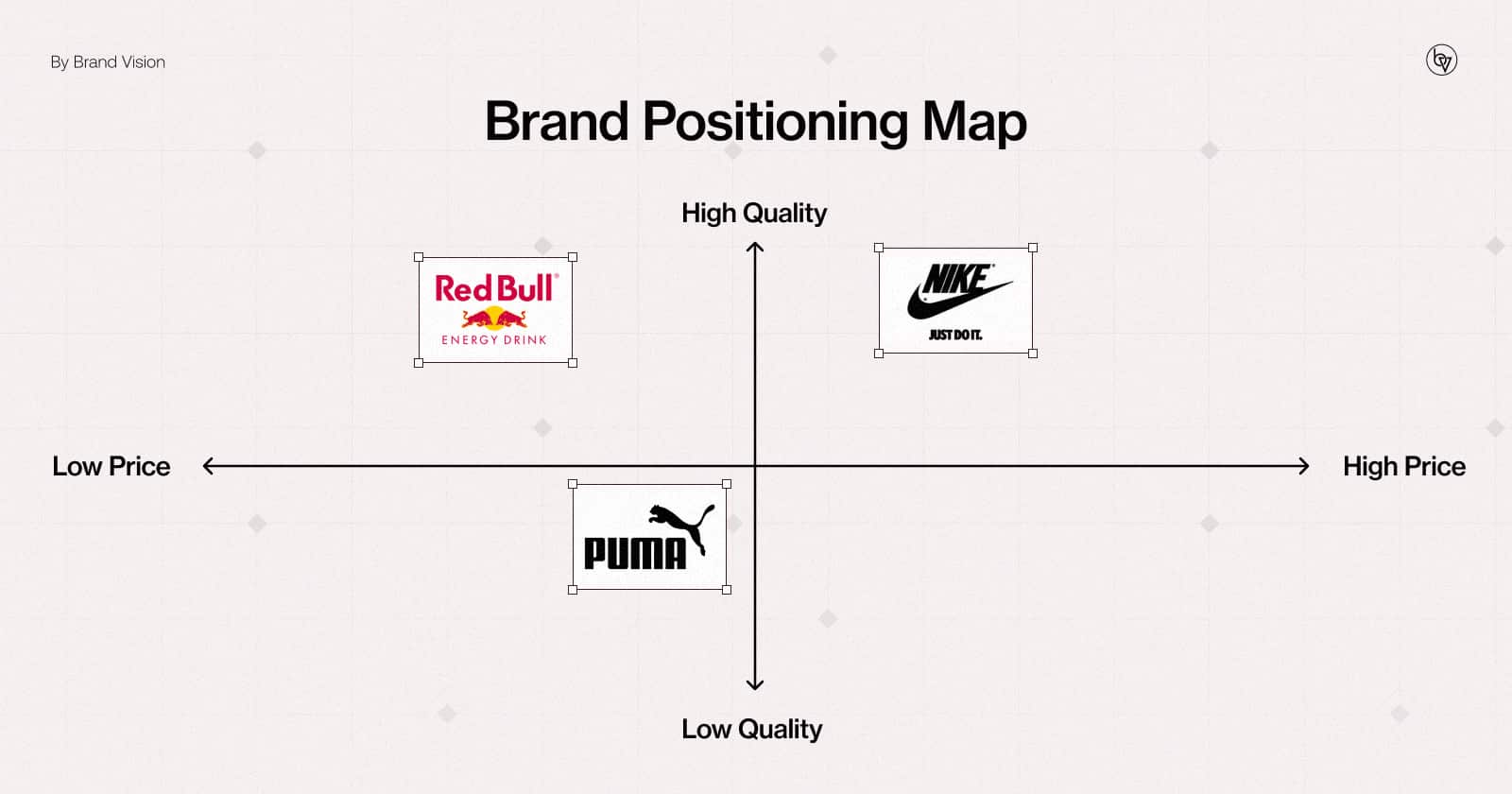
Brand positioning is often defined as the unique value a brand occupies in the customer’s mind compared with alternatives. Amazon describes it as the combination of a brand’s value proposition, identity, and differentiation that gives customers a reason to choose it over others.
In practice, that definition is only useful if it shows up in plain-language messaging. Clear positioning matters because:
- Buyers have less time with you. In complex B2B purchases, buyers spend a small fraction of their journey with potential suppliers. Most of their time goes to internal alignment and independent research. When they reach your website or your sales deck, your position has to be obvious in seconds.
- Internal alignment is fragile. Studies on brand-message dilution show that only about a third of senior marketing and customer experience leaders believe their organization tells a consistent brand story. The rest see a gap between what marketing says and what customers hear, with direct revenue impact.
- Confusion is more expensive than obscurity. If a prospect cannot remember you, they may come back later. If they remember you as “the company that was hard to understand,” they usually do not.
Clear positioning helps because it gives buyers a story they can repeat inside their own business. When the person researching your offer can explain who you are, who you serve, and why the difference matters in one sentence, internal evaluation becomes easier.
At a Glance: 25 Brand Positioning Examples That Nail Clarity
These twenty-five brands span consumer, B2B, and challenger categories. What they share is not size. It is sharpness.
- Consumer brands with one simple idea
- Apple: technology that feels simple and premium
- Nike: performance and motivation condensed into a few words
- Dove: real beauty and care for real people
- Patagonia: outdoor gear in service of environmental activism
- IKEA: democratic, affordable design for everyday life
- Tesla: high-performance electric vehicles as status objects
- Oatly: plant-based dairy alternatives with a strong personality
- Liquid Death: plain water with extreme clarity in its positioning
- Airbnb: belonging and connection through every stay
- B2B and SaaS brands with sharp, practical promises
- Slack, Stripe, Superhuman, Linear, Figma, Notion, HubSpot, Shopify, Snowflake, Gong, Zoom
- Challenger and DTC brands where clarity is the edge
- Mailchimp, Canva, Warby Parker, Dollar Shave Club, Glossier
As you read the examples, look for three things: who the brand is for, what tension it addresses, and what single promise holds the story together.
Positioning vs Messaging vs Value Proposition
Many teams use these terms interchangeably. That is one reason positioning projects drift.
A simple way to separate them:
- Positioning is the place you want to occupy in the customer’s mind. It answers “who we are for, which category we compete in, and what makes us meaningfully different.”
- Value proposition is the core benefit you deliver and why it matters. It answers “what outcome you create that is worth paying for.”
- Messaging is the language, visual framing, and structure you use across channels to express the position and value proposition.
External guides such as Amazon, Smartsheet, HubSpot, and Zendesk all point to similar components, although they use different labels.
For the rest of this guide, we will treat positioning as a short statement that combines audience, category, difference, and proof, and messaging as what shows up on your website, pitch, and campaigns.
Consumer Brands That Own a Simple, Sticky Idea
These brands show how a clear position can live in a few words and images, then carry across products and campaigns. For teams working in B2C marketing, the lesson is to connect the promise to the product experience rather than treat positioning as a tagline exercise.
Apple Positioning: Simplicity That Feels Premium
Apple’s position centers on technology that feels simple, deliberate, and considered. Devices, software, and services are framed as part of one coherent, minimal system rather than separate gadgets.
Product pages and launch campaigns focus on how it feels to use the product, with restrained language and a small number of concrete benefits. Apple rarely explains every feature. It chooses a few proof points that reinforce its core idea of intuitive, premium design.
What you can learn
- Reduce how many of benefits you lead with. Own one emotional idea and a small number of supporting proof points.

Nike Positioning: Motivation in Three Words
Nike’s position is built on human performance and self-belief. Its now iconic line is short, direct, and easy to recall. The company attaches that idea to athletes at every level, not only professionals.
Campaigns consistently show specific stories of people pushing past limits. The product is usually present but not the main character. That choice keeps the emotional position in front and turns product features into supporting details.
What you can learn
- Tie your products to one core narrative that can apply to both everyday users and your most advanced customers.
Patagonia Positioning: Environmental Activism as a Brand Promise
Patagonia is open about its purpose: protecting the natural world. Its positioning places the company as an outdoor brand that exists to support environmental activism, not just to sell jackets.
The brand backs this with proof. It shares repair programs, supply chain transparency, and direct support for environmental causes. Messaging is clear, sometimes stark, and often focuses more on impact than on product details.
What you can learn
- If you lead with values, you need concrete, visible proof of those values in action, not just words in a mission statement.
IKEA Positioning: Democratic Design for Everyday Life
IKEA’s positioning revolves around functional, well-designed furniture that many people can afford. Its language around “democratic design” reflects this.
Catalogs, store layouts, and online journeys all reinforce a single idea: smart solutions for small spaces, limited budgets, and everyday needs. The brand does not pretend to be custom or luxurious. It leans into flat packs, self-assembly, and volume, turning them into virtues.
What you can learn
- Make your trade-offs explicit. Being clear about what you are not can make what you are feel stronger.
Tesla Positioning: Electric Performance as Status
Tesla helped reposition electric vehicles from niche and utilitarian to aspirational. Its positioning focuses on high performance, advanced technology, and a different ownership experience.
The brand highlights acceleration, range, software updates, and a distinctive interior rather than leading with environmental benefits alone. That choice pulls in buyers who might once have dismissed electric cars as compromises.
What you can learn
- If your category carries a legacy perception problem, show how your offer breaks that pattern in a specific, measurable way.

Oatly Positioning: Plant-Based with a Point of View
Oatly positions itself as an oat-based alternative to dairy, but its real difference is voice. Packaging, ads, and website copy read like a conversation with a slightly blunt, self-aware friend.
The company explains what it is and what it is not in clear terms. It also speaks directly to people who might not consider plant-based products, often addressing objections in the copy itself.
What you can learn
- A clear, consistent voice can become a core part of your positioning, as long as it is grounded in a simple product truth.
Liquid Death Positioning: Extreme Clarity in a Crowded Category
Liquid Death sells canned water, but positions it like an energy drink or craft beer. The name, can design, and copy are deliberately provocative, yet the product itself is straightforward.
By choosing an exaggerated personality, the brand solves a real tension for some buyers: wanting to drink water while holding something that feels more rebellious than a plastic bottle. The contrast makes the position easy to explain.
What you can learn
- In undifferentiated categories, extreme framing around a simple product can be a legitimate strategy if you know exactly who you are speaking to.
Airbnb Positioning: Belonging in Every Stay
Airbnb’s long-running focus on “belonging” positions it differently from hotels and pure rental platforms. The core idea is that you can feel at home anywhere by staying in places hosted by individuals and small businesses.
The website surfaces personal stories, host profiles, and local experiences. Product features such as categories, maps, and filters all serve the promise of helping people find places that match how they want to feel, not only where they want to sleep.
What you can learn
- Position around the experience and context, not just the transaction, when your platform connects many small providers with end customers.
Dove Positioning: Real Beauty for Real People
Dove’s long-running work around “real beauty” positions it against narrow definitions of attractiveness. Its messaging emphasizes care, gentleness, and representation of different bodies, ages, and skin types.
The result is a clear space in a crowded personal care category. The brand is not the most glamorous or clinical. It owns care that feels human and honest.
What you can learn
- If your category is defined by unrealistic imagery, consider making authenticity and representation central to your position.

B2B and SaaS Brands With Razor-Sharp Positioning
These B2B and SaaS companies show how clear positioning can survive product complexity and crowded markets. They often lead with one outcome or role, rather than a full feature inventory. That matters in B2B marketing, where several stakeholders may need to repeat the same core story, and in technology and SaaS marketing, where product depth can easily overwhelm the category promise.

Slack Positioning: Making Work Life Simpler
Slack presents itself as a productivity platform that makes work life simpler and more pleasant. It frames channels, integrations, and automations around reducing email overload and bringing the right people together quickly.
The language on its homepage speaks to teams who feel buried in fragmented tools. That tension is clear, and the product screens shown support the idea rather than distract from it.
What you can learn
- State the change in how work feels, not only what the software does.
Stripe Positioning: Payments Infrastructure for the Internet
Stripe’s position is often summarized as “payments infrastructure for the internet.” This phrase signals audience, category, and ambition in a few words.
The website uses simple diagrams and concise copy to show how different products fit into one system for online businesses. Even advanced concepts such as global payouts or embedded finance are anchored in clear outcomes: more revenue, less friction.
What you can learn
- Use one strong category phrase to tie a broad product family together, then show how each product reinforces that identity.
Superhuman Positioning: Email for High-Intent Professionals
Superhuman positions itself as a premium email experience for people whose work revolves around their inbox. Its messaging focuses on speed, focus, and craft.
By emphasizing fast workflows, thoughtful shortcuts, and white glove onboarding, the brand justifies both its price point and its invite-only history. The target audience is narrow but clear.
What you can learn
- You do not have to be for everyone. A sharp position for a specific segment can support a stronger product and price.
Linear Positioning: Clear Workflows for Product Teams
Linear presents itself as an issue tracking and project tool that feels fast and organized for modern software teams. The positioning centers on speed, calm, and consistency.
The product tours and feature pages show how Linear reduces clutter, simplifies views, and keeps engineering, design, and product aligned. It avoids heavy jargon, even though it serves technical teams.
What you can learn
- If your users are experts, you can respect their knowledge without drowning them in technical language.
Figma Positioning: Collaborative Interface Design in the Browser
Figma’s positioning pulls together design, collaboration, and the cloud. It presents itself as the place where teams design, prototype, and review interfaces in real time.
Screenshots and copy focus on multiple people working together, comments in context, and one shared source of truth. That keeps the core idea of collaboration visible even as the product adds depth.
What you can learn
- When your product changes how teams work together, show that collaboration visually, not only with words.
Notion Positioning: The Connected Workspace
Notion positions itself as a connected workspace where teams can write, plan, and organize knowledge in one place. The phrase is broad, yet the examples make it concrete.
Templates, gallery examples, and customer stories all show different use cases, from product roadmaps to wikis. Despite that variety, the brand keeps returning to a single idea: everything lives together in one flexible system.
What you can learn
- If your product is flexible, anchor it in a small number of repeatable use cases so new users know where to start.
HubSpot Positioning: The CRM Platform for Scaling Companies
HubSpot describes itself as a CRM platform designed to help scaling companies grow better, not just grow faster. That extra word signals an emphasis on sustainable, customer-centered growth.
The site presents marketing, sales, service, and operations tools as one connected system. It reinforces the position through strong educational content, including detailed guidance on how to write positioning statements and value propositions. (HubSpot)
What you can learn
- Use your own content as proof of your positioning. If you claim to help companies grow better, your education layer should show what “better” looks like.
Shopify Positioning: Commerce for Independent Businesses
Shopify positions itself as the commerce platform that gives independent businesses an advantage. Its messaging emphasizes control over brand, data, and customer relationships.
Product pages show how merchants can sell across channels while maintaining a consistent experience. The focus stays on the merchants’ identity, not Shopify itself.
What you can learn
- Position around your customer’s power and independence, especially if your competitors rely on lock-in.
Snowflake Positioning: The Data Cloud
Snowflake anchors its positioning in the idea of a unified “data cloud.” That phrase cues both category and benefit, even for non-specialists.
The company explains complex capabilities such as data sharing, governance, and machine learning in terms of removing silos, cutting duplication, and speeding up insight. Its case studies focus on outcomes like faster analysis and reduced infrastructure cost.
What you can learn
- Use a simple metaphor or label for a complex platform, then attach concrete performance and cost benefits to that metaphor.
Gong Positioning: Revenue Intelligence for Customer Conversations
Gong describes itself as a revenue intelligence platform that captures and analyzes customer conversations. Its positioning is clear: better insight into real buyer behavior leads to better coaching and forecasting.
The homepage quickly shows call transcripts, deal boards, and coaching screens. The language focuses on what leaders care about, such as forecast accuracy and win rates, rather than technical implementation.
What you can learn
- Frame analytics and AI in terms of specific decisions and outcomes, not abstract insight.
Zoom Positioning: Video Communication That Feels Effortless
Zoom’s positioning has centered on video communication that is easy to join and reliable. During periods of rapid growth, the core promise stayed consistent: simple, high-quality meetings that “just work.”
The brand uses straightforward language and clear product tiers. It avoids overcomplicating the story with every possible use case, instead highlighting a handful of scenarios such as team meetings, webinars, and rooms.
What you can learn
- Make reliability and ease explicit in your positioning when you operate in a category where past experiences were often painful.

Challenger and DTC Brands That Turn Clarity Into an Edge
These brands built momentum not only on product, but on a clear, almost conversational way of describing what they do and who they serve.
Mailchimp Positioning: Marketing Made Approachable for Small Businesses
Mailchimp’s positioning focuses on helping small businesses and creators market themselves without a full marketing department. Its messaging emphasizes ease, guidance, and an all-in-one feel.
The platform could be described with many technical terms, but the brand keeps its language focused on sending better emails, building customer journeys, and understanding audiences over time.
What you can learn
- Speak in the verbs your users already use, not in the feature names your product team prefers.
Canva Positioning: Design for Everyone
Canva’s promise is simple: make professional design accessible to people without formal design training. Its homepage, templates, and onboarding all reinforce that idea.
The product previews show everyday scenarios, from presentations and resumes to social posts and signage. Design jargon stays in the background. The interface itself demonstrates the position by making complex tasks feel straightforward.
What you can learn
- If your value is accessibility, every surface of your product should feel approachable, especially the first screen.
Warby Parker Positioning: Eyewear Without the Retail Middleman
Warby Parker built its position around stylish eyewear at a transparent price, without the traditional retail middleman. Home try on, clear pricing, and a focus on customer service all support that story.
The brand explains the problem with legacy pricing in plain terms, then shows how its model works instead. That combination gives buyers both emotional and rational justification.
What you can learn
- When you challenge an entrenched model, tell a simple economic story that customers can repeat.
Dollar Shave Club Positioning: No-Frills Grooming with a Clear Promise
Dollar Shave Club became known for sharp, irreverent messaging about affordable razors delivered to your door. The humor landed because the underlying proposition was obvious.
Even as the product range expanded, the company kept its emphasis on good quality basics, clear pricing, and the convenience of regular delivery. The personality amplifies a simple, direct offer rather than hiding it.
What you can learn
- Humor works best when the underlying offer is straightforward and easy to restate without the joke.
Glossier Positioning: Skin-First Beauty Built with Its Community
Glossier’s positioning centers on skin-first beauty, shaped in close conversation with its community. It presents makeup as an extension of cared-for skin rather than a heavy mask.
The brand uses user-generated content, simple product names, and minimal packaging to support that idea. Community feedback often feeds directly into product and communication decisions, making the positioning feel lived in.
What you can learn
- If community is part of your position, show how it influences real decisions, not just how many followers you have.
Patterns Across the 25 Brand Positioning Examples
Across these brands, several patterns repeat.
- One main promise, not five. Each brand leads with a single idea, whether that is “payments infrastructure,” “design for everyone,” or “democratic design.” Secondary benefits exist, but they live deeper in the journey.
- Specific language, few buzzwords. Clear positions use concrete nouns and verbs: pay, design, build, share, ship, grow. Terms like “solutions” and “synergies” rarely appear.
- Audience is named or strongly implied. Even when the copy does not mention a segment directly, the examples and imagery make it obvious who the offer is for.
- Proof is close to the promise. Case studies, screenshots, or social proof sit near the core claim. Buyers see evidence at the point of decision, not after a long scroll.
- Design and UX reinforce the story. In many of these examples, the website feels like an embodiment of the position. Clean, focused layouts support clarity. Overloaded pages signal fuzziness. This is where a strong web design agency and UI UX design agency can help keep the positioning clear through hierarchy, navigation, and interaction.
- Internal clarity supports external clarity. Research on brand-message dilution shows why internal consistency matters: conflicting messages can confuse buyers before they ever reach a purchase decision. Messaging is not only a marketing exercise; it is also an organizational one.
These patterns are achievable for smaller firms. They do not require global budgets. They require disciplined choices and a willingness to repeat a single idea often.
Framework: How To Craft Your Own Brand Positioning in Five Steps
You can adapt this process whether you are a startup founder or a marketing leader in a larger organization. Start with brand research so the audience, category language, and competitive alternatives come from evidence rather than internal preference.
- Clarify your ideal customer and core tension
- Describe your ideal customer in concrete terms. Include role, company context, and the situation they are in when they most need you.
- Write down the tension they feel, using their own words where possible. For example, “Our team is buried in tools and still cannot see the full funnel.”
- Define your competitive set and what you replace
- List direct competitors, but also the status quo and workarounds. For many B2B tools, the main competitor is still a spreadsheet or a manual process.
- Note where you are meaningfully different. Avoid generic traits such as “better service.” Look for structural differences such as pricing model, speed, or integration depth.
- Choose one primary promise
- Decide on the one outcome you want to be famous for delivering to that ideal customer. This could be “faster onboarding,” “simpler reporting,” or “design without designers.”
- Test that promise with real customers or prospects. Ask them to restate it. If they cannot say it back simply, it is not clear enough.
- Pick a category label that fits your buyers’ mental model
- Choose a category term your buyers already understand, such as “revenue intelligence platform” or “data cloud,” then pair it with your unique twist.
- Avoid inventing a new category name unless you have a strong reason and the resources to educate the market.
- Write a positioning statement you can actually use
- Use a straightforward template and treat it as a working tool, not a slogan. For example:
- “For [ideal customer] who [core tension], [Brand] is the [category label] that [primary promise], because [evidence or proof].”
- Create two or three variations, then test them in real contexts such as sales conversations, landing pages, or investor updates.
- Use a straightforward template and treat it as a working tool, not a slogan. For example:
If the same position must work across multiple regions, test whether the category language and proof travel with it. For teams serving a national American market, a US branding agency can help adapt research and execution without changing the core promise simply for geography.
If this process reveals bigger questions about your architecture, naming, or product focus, it may be time to work with a branding agency and a dedicated brand strategy and positioning services partner. For many teams, the combination of internal knowledge and outside perspective produces sharper, more durable decisions.
Turning Positioning Into Crystal-Clear Website Messaging
A positioning statement written in a deck does not change much on its own. It has to show up in the structure, copy, and visual identity of your website, which is still a primary place buyers go to understand who you are.
Focus on five areas.
- Homepage hero
- Use your positioning to write one clear headline and a short supporting line. The headline should state your primary promise in customer language.
- Add a subheading that names who your product or service is for. Avoid stacking three or four messages in this space.
- Navigation and information architecture
- Replace vague labels such as “Solutions” with specific terms that match how buyers search, like “Platform,” “Pricing,” or “Use Cases.”
- Group content around how buyers think about their work, not around internal team names. This is where strong information architecture and user experience and interface design matter.
- Key sections that express your difference
- Introduce short sections such as “Who It’s For,” “Why We Are Different,” and “Proof,” each with concise copy and a small number of bullets.
- Use specific numbers, logos, and stories as proof rather than general claims about quality or innovation.
- Performance, accessibility, and mobile experience
- A slow or difficult site cuts against a positioning that claims simplicity or modernity. Work with a web design agency that prioritizes performance, accessibility, and maintainable systems.
- Ensure that key messages are visible and readable on mobile. Many first impressions now happen on a phone screen.
- Testing clarity over cleverness
- Run simple tests, such as a five second test, where people who do not know your brand look at your homepage and explain what you do.
Over time, revisit your positioning and messaging to ensure they still match how your best customers describe you. Market shifts, new products, and new competitors can all blur a once clear story. A structured marketing consultation engagement can be useful when internal teams are too close to see the gaps.
Key Takeaways for Brands
Clear positioning is not only a theoretical exercise. It gives brand, product, sales, and website teams a shared basis for deciding what to emphasize and what to leave out.
Four points to remember.
- Clarity beats unnecessary cleverness. Buyers need to understand the offer quickly. A simple promise backed with relevant proof is easier to evaluate than a metaphor that hides the product or audience.
- Positioning lives in your website and conversations, not only in decks. If your homepage and sales calls do not sound like your positioning statement, the work is not finished.
- Examples travel. Studying brands like Apple, Stripe, Canva, and Warby Parker is useful not to imitate their style, but to see how they choose one idea and commit to it across every touchpoint.
- Alignment is as important as originality. The Forrester research cited earlier shows how often inconsistent internal messaging reaches buyers as confusion. A position is stronger when teams can express the same core idea without contradicting one another.
A practical next step is to take your current positioning and run it through the five-step framework above. Try writing two or three alternative statements, then test them with real customers and on small parts of your site.
If the internal positioning conversation keeps going in circles, an outside perspective can help separate evidence from preference. Brand Vision is a branding agency that connects research, brand strategy, visual identity, and digital execution, while Brand Vision’s insights share broader lessons from the market. If you want a focused review of your positioning and how it appears across the website, contact Brand Vision or start with a marketing consultation.












.webp)