A service business website often has to explain the offer, establish credibility, and make the next step clear at the same time. When positioning is vague or website messaging changes from page to page, buyers have more work to do before they can decide. A branding agency perspective can help keep the story consistent across services, proof, and calls to action.
A strong website copywriting framework helps a qualified buyer understand whether your team is relevant, credible, and easy to work with. This guide organizes that work around three parts you can audit together: pages, proof, and CTAs.
Why Website Copywriting Breaks Down for Service Businesses
Service businesses often sell judgment, process, and outcomes rather than a standardized product. Scope and timelines may vary, so website copy has to explain both the offer and how the engagement works. Brochure-style language can make that evaluation harder when it stays abstract.
The second failure is internal inconsistency. A home page says one thing, a service page copy says another, and a contact page asks for details without explaining what happens next. That gap feels small internally, but it reads like risk to a buyer.
Another common weakness is treating proof as decoration. On a service business website, proof should help the reader verify the claims that matter to the decision, whether that evidence is a case example, credential, process detail, or customer quote.

At a Glance: The Pages, Proof, and CTAs Framework
- Pages create clarity: what you do, who you do it for, and how it works.
- Proof creates belief: evidence that your claims hold up under scrutiny.
- Calls to action create movement: the next step, with clear expectations.
- Website messaging stays consistent across every page.
- Website copywriting should be easy to maintain, not rewritten every quarter.
How to Use This Framework
- Give each page a defined decision job instead of adding copy simply because a template has space.
- Align website messaging and service page copy to the questions buyers need answered at that stage.
- Review calls to action against usability and accessibility standards like WCAG 2.2. (WCAG 2.2)
Pages: The Minimum Set Your Service Business Website Needs
A service business website does not need pages for every possible talking point. It needs pages that match real buyer tasks. When the structure is clear, website copywriting becomes easier because each page has a defined purpose and a defined reader question.
For many service firms, a useful baseline is a homepage, service pages, an about page, and a contact page. Additional pages should have a clear job, such as adding proof, answering a high-intent question, or supporting search demand. The goal is decision support through consistent website messaging.
Homepage Copy That Answers “What Do You Do” Fast
A homepage should help visitors establish quickly whether they are in the right place and where to go next. Nielsen Norman Group highlights that homepages should clearly communicate who you are and what you do, and reveal content through examples rather than relying on slogans alone. (Nielsen Norman Group)
Start with a positioning line that reads like a plain sentence, not a headline contest. Then support it with the information buyers need most, such as who you serve, what the service helps them accomplish, and how an engagement starts. This message should stay consistent with your service page copy.
Bring relevant proof into the homepage where it can support the claims being made. Outcomes, recognizable client types, short testimonials, or a concise case summary can help the reader evaluate credibility. The homepage should also make the primary next step clear, with context around what happens after the click.
If your homepage says “Get Started,” reconsider. NNGroup has shown that generic CTAs can mislead users because they do not describe what happens next. (Nielsen Norman Group)
Service Page Copy That Sells the Outcome
Service pages often attract visitors who are actively comparing options. The copy should answer the questions that matter to that decision, such as scope, process, timing, expected outcomes, and what the reader should do next. The exact order can vary by service and buying cycle.
Structure each service page the same way so the site feels governed. Lead with a clear service definition. Follow with outcomes and what is included. Then show proof that matches that service, not general brand praise. This is where website copywriting comes into play. The page must be easy to update as your offering evolves.
Every service page should connect back to the same core website messaging so the visitor is not asked to reinterpret the company on every page. Consistency does not guarantee conversion, but it can reduce avoidable confusion across the evaluation journey.
Add calls to action that fit the visitor’s stage. A primary CTA can support people ready to talk, while a secondary action can help those still qualifying the service. The important point is that the next step matches the level of commitment the reader is ready to make.
About Page Copy That Builds Credibility Without a Biography
About pages can drift into personal history without answering the buyer’s practical questions. The page should reinforce website messaging, explain the approach, and show the evidence that makes the team credible for the problem at hand.
Write the about page as three parts. First, what you solve and for whom. Second, how you work, including what makes projects predictable. Third, evidence: experience signals, values expressed as behaviors, and proof elements like credentials or results. This is website copywriting that respects how buyers read.
For service businesses, an about page also carries positioning weight. If your service business website serves multiple segments, the about page is where you explain your focus without hedging language. That clarity makes every calls to action feel more credible.
Contact Page Copy That Reduces Friction
A contact page is easier to use when the form is paired with clear expectations. Explain what happens after submission, what information is genuinely needed, and any response-time commitment the business can reliably keep. This applies the same decision-support logic to the final step.
Keep the copy short. Then add a simple “what to expect” list. If you offer multiple CTAs, label them by intent: request a consultation, ask a question, or view case studies. Each choice should reduce anxiety, not add complexity.
Write link text and buttons so they are clear out of context. WCAG guidance emphasizes that users should understand the link purpose from the link text and its context. (W3C Understanding SC 2.4.4)
Optional Pages That Earn Trust and Search Demand
Once the baseline pages are stable, additional pages can deepen proof or support visibility. Useful candidates include case studies, a process page, pricing guidance when appropriate, and a resources hub. If the resource library is expected to attract organic demand, an SEO content strategy can connect topics, search intent, internal links, and service-page pathways.
A process page can be useful when buyers need to understand how scope, approvals, handoffs, or timelines are managed. It also creates room for more specific calls to action, such as “Request a project outline,” when that wording accurately describes the next step.

Proof: Turn Claims Into Evidence People Can Scan
Proof is not only one section. It should appear close enough to important claims that the reader can connect the evidence to what is being promised without searching for it elsewhere on the page.
A common weakness is burying all proof at the bottom of a page. Place evidence near the claim it supports when possible so the reader can evaluate the message and the support together.
The Proof Stack: What to Show and Where
A proof stack can combine several evidence types, each with a clear purpose. The right mix depends on the service, what can be disclosed, and which risks the buyer is trying to evaluate.
- Outcomes: measurable results, ranges, or operational improvements.
- Examples: screenshots, deliverables, before and after structure, or anonymized snapshots.
- Trust signals: credentials, compliance, recognizable client types, and partner ecosystems.
- Voice of the customer: testimonials that describe the problem and the change.
- Risk reducers: process clarity, timelines, and what happens if priorities shift.
Place proof where it matches the reader’s intent. On a homepage, use evidence that helps establish relevance. On service pages, use service-specific results, examples, credentials, or case summaries. For law firm marketing, that can include practice-area relevance, attorney credentials, clear consultation pathways, and claims the firm is prepared to support appropriately. On contact pages, use process expectations and other risk reducers.
Case Studies That Read Like Decisions, Not Stories
Case studies are easier to evaluate when the structure makes the decision context clear. A useful format is context, constraints, what was done, and what changed, with enough detail for the reader to understand the relevance of the example.
Keep the writing plain. Remove celebratory language. Use website messaging terms that match your positioning, so the case study reinforces your core claim. This keeps website copywriting consistent across the site, which improves trust.
If client names cannot be shared, anonymized cases can still be useful when the details are specific enough to understand the project: industry type, scope, constraints, and outcomes that can be substantiated. Avoid inventing detail simply to make the example sound concrete.
Testimonials That Sound Real
Testimonials are more informative when they describe the situation, what changed, and the outcome in the customer’s own voice. Short quotes can still be useful when they support a specific claim, but vague praise provides less decision support.
Edit for clarity, not tone. Do not rewrite a client’s voice into your website messaging voice. Keep it readable, but preserve authenticity. This is one of the simplest ways to strengthen social proof without redesign.
Use testimonials close to relevant claims in your service page copy. A testimonial about speed belongs near timeline copy. A testimonial about clarity belongs near process copy. Proof should be paired with what it proves.
CTAs: A Call to Action System, Not Random Buttons
A CTA is more than a button label. It tells the visitor what the next step is and should make the expected action clear. Specific wording is especially useful when the next step involves a consultation, form, download, or other commitment.
This is where website copywriting and conversion intersect. A CTA system lets your service business website convert different levels of readiness without pushing too early.
CTA Types for Service Business Websites
A useful model for many service sites is to organize CTAs into three tiers and use them consistently where the journey calls for them.
- Primary CTA: a conversation, a consultation, or a project outline request.
- Secondary CTA: view case studies, see process, or download a checklist.
- Micro CTA: read a related insight, view a service detail, or compare options.
This system keeps calls to action present without feeling aggressive. It also supports website messaging because the CTA labels can reinforce your positioning, such as “Request a project outline” or “Talk through scope.”
CTA Placement Rules That Match How People Read
Place CTAs where the reader has enough context to understand the action, not simply where a layout has empty space. A primary CTA may appear near the top once the offer is clear and can be repeated later after relevant proof or detail.
Avoid generic CTAs like “Get Started” when the next step is not clear. NNGroup notes that vague labels can mislead users and slow them down. (Nielsen Norman Group)
Use consistent placement patterns across service pages so visitors do not have to relearn the interface on every page. Consistency can reduce unnecessary friction even though conversion still depends on the offer, traffic quality, proof, and overall experience.
CTA Copy That Sets Expectations
CTA copy should answer two questions: what happens next, and how much effort it takes. A button that says “Book a call” is fine, but “Request a project outline” often sets better expectations for complex work.
Use supporting microcopy when a CTA benefits from extra context, such as what the visitor will receive, what information is required, or when a response is expected. That context can reduce uncertainty around forms and other high-commitment actions.
The Message Layer: One Positioning Line, Then Supporting Copy
A service business can be excellent and still struggle to explain why it is the right fit. When the problem is broader than one page, a clear brand strategy can define the position and message hierarchy before individual pages are rewritten.
A practical positioning line can cover who the business helps, what it delivers, and the difference it is prepared to defend. Keep it plain, then carry the same core terms into the homepage, service pages, and proof blocks so the website messaging stays recognizable.
When the message system is aligned, each page can reinforce the same core idea while answering a different buyer question. Branding services are useful when that consistency needs to extend beyond copy into identity, campaign, and customer touchpoints.
UX, Accessibility, and Performance: Copy Has to Survive Reality
Copy is read across phones, laptops, assistive technology, and many different contexts. If the site is slow, confusing, or inaccessible, the message may be harder to reach or act on. UX research can help identify the questions users are trying to answer and where the journey creates unnecessary hesitation.
Google recommends good Core Web Vitals and includes them within its broader page-experience guidance. (Google Search Central) Performance is not a conversion guarantee, but slow or unstable pages can create friction before a visitor reaches the proof or completes a form. Web design should account for that delivery layer as well as the copy itself.
Accessibility matters because the content and controls need to remain usable for people with different access needs. WCAG 2.2 provides a current W3C Recommendation for accessible web content. (WCAG 2.2) Clear calls to action and descriptive link text can support assistive-technology users and people scanning quickly. UI/UX design should account for those requirements alongside the broader user journey.
Treat performance and accessibility as part of the website copy system. Key information should not depend on an interaction pattern that some users cannot discover or operate, so important points and next steps need a readable, usable presentation.
A Practical Example: Before and After Copy Structure
Before: A service page opens with general claims, then lists features, then shows a form. The service page copy is full of abstractions. The proof is a logo strip at the bottom. The CTA is “Get Started.”
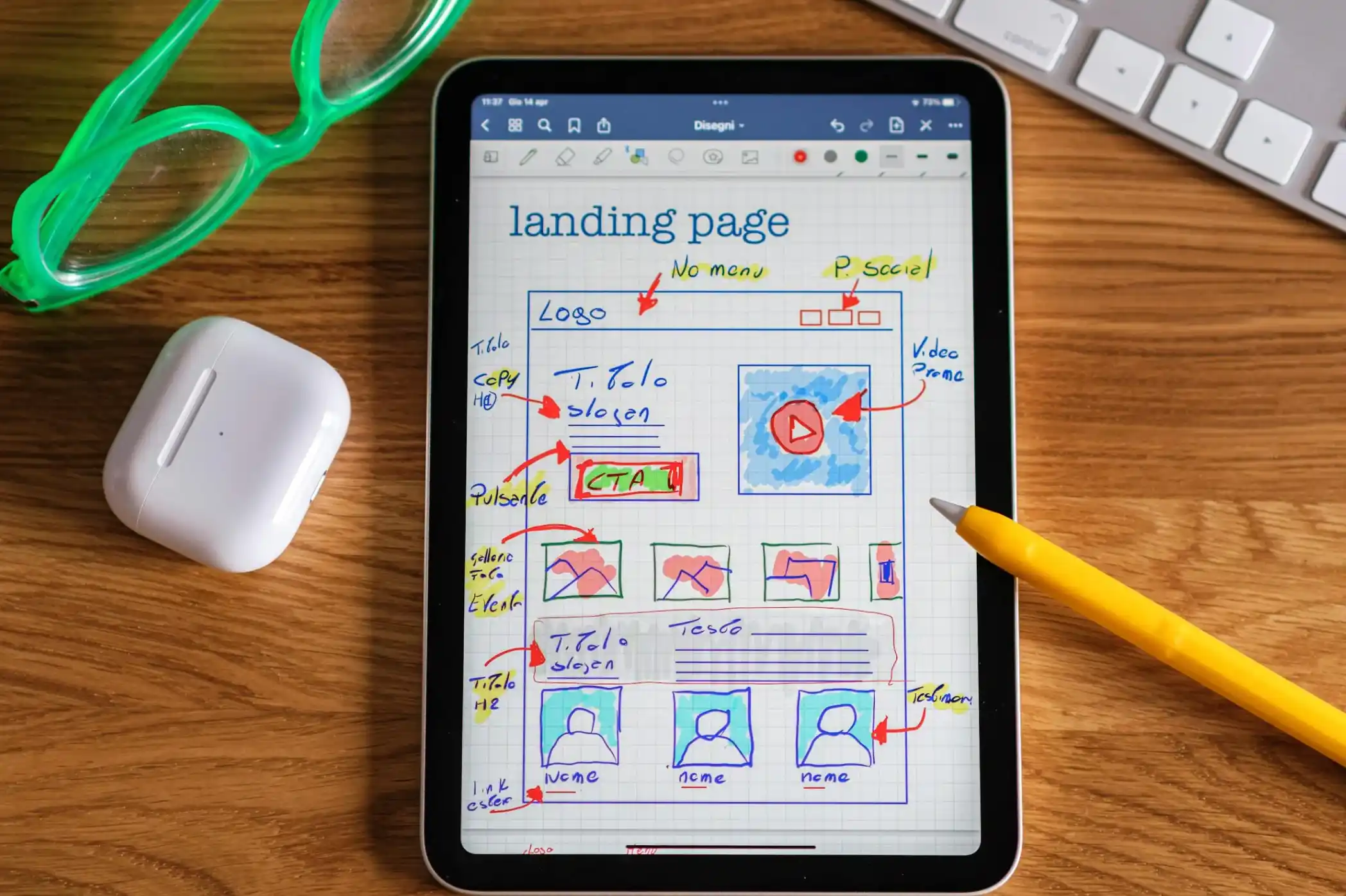
After: The page opens with a clear outcome statement that matches the site’s website messaging. It explains who the service is for, what is included, and what the buyer needs to know about timing or process. Proof appears beside the claims it supports, and the calls to action describe the next step. The same logic appears in the guide to high-converting landing page design, where message match, proof, usability, and CTA clarity are treated as one system.
This structure is not about writing more. It is about sequencing. A service buyer wants clarity, then belief, then a next step. Pages, proof, and CTAs match that order.
What to Fix First This Week
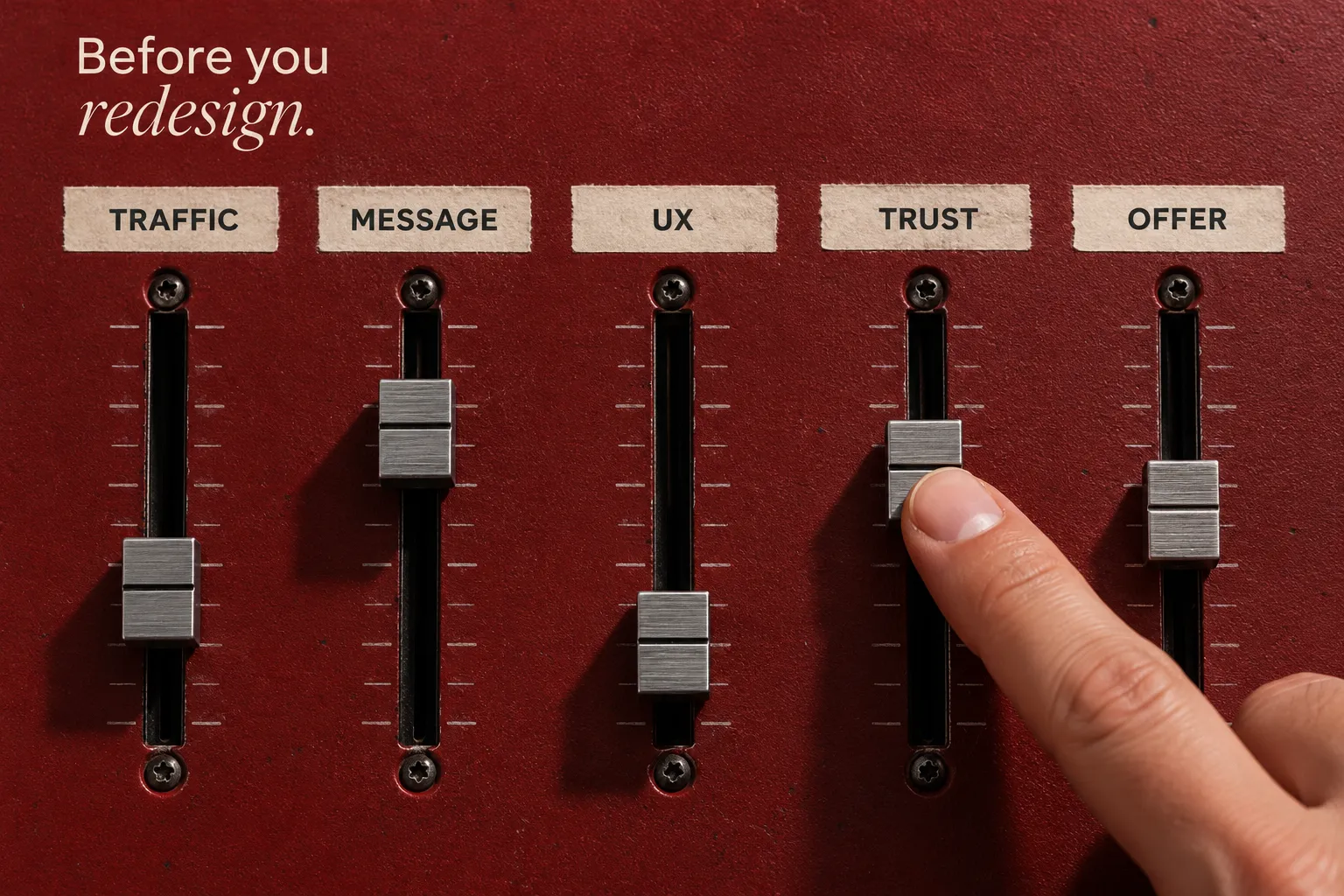
If a service business website is underperforming, start with the highest-impact issues the team can actually verify. Copy may be the first constraint, but traffic quality, UX, technical performance, offer clarity, and measurement can also be part of the diagnosis. A focused marketing consultation can help prioritize those issues before the team commits to a broader rebuild.
- Rewrite the homepage positioning line to a plain sentence.
- Standardize your service page copy structure across services.
- Move social proof closer to the claims it supports.
- Replace generic calls to action with specific next steps.
- Add “what happens next” microcopy to your main contact CTA.
- Review link and button labels for clarity and accessibility. (W3C Understanding SC 2.4.4)
- Check Core Web Vitals basics so your copy is reachable. (Google Search Central)
When It’s Time to Bring in a Team
When pages, proof, and CTAs follow a shared framework, the website becomes easier to review and maintain because the team has common rules for what each page needs to accomplish. The framework does not replace testing, but it gives copy, design, and marketing teams a clearer starting point.
Brand Vision can support the work across positioning, website messaging, service-page structure, design, and the user journey. For a Dallas service business coordinating those disciplines with regional support, a Dallas branding agency can help keep copy and design connected to the broader brand system without changing the underlying framework.
If you want an outside perspective on pages, proof, and CTAs, start a conversation with Brand Vision.

.webp)







.webp)