
Why Timing and Strategy Matter Most in Cost Segregation
Early last year, a developer in my network prepared to recapitalize an industrial property through a refinance. Their CPA had ordered a cost segregation study right after construction wrapped up, but no one matched the timing of that study with the lender’s appraisal. The added depreciation lowered book value at the exact moment the loan was being sized, which reduced proceeds by more than $1.2 million.
The study itself was accurate. The issue was how it fit into the broader financing plan. A second firm was eventually brought in to map out future studies around loan events and to model how bonus depreciation should line up with the group’s longer holding strategy.
The lesson was clear. In 2026, the strongest cost segregation firms are not only technically correct, they are strategically aligned. The real value shows up when depreciation supports financial movement, not just annual tax filing.

Quick Take: 2026’s Most Effective Cost Segregation Firms by Specialty
- RE Cost Seg: Best for Integrated Portfolio Tax Planning
- Combines engineering with strategic forecasting
- National coverage with market-specific insight
- Reports optimized for CPA and capital teams
- Haynie & Company: Best for Owner-Operators Seeking Full-Service Support
- End-to-end tax advisory plus cost segregation
- Especially strong for owner-managed portfolios
- Clean, accountant-ready documentation
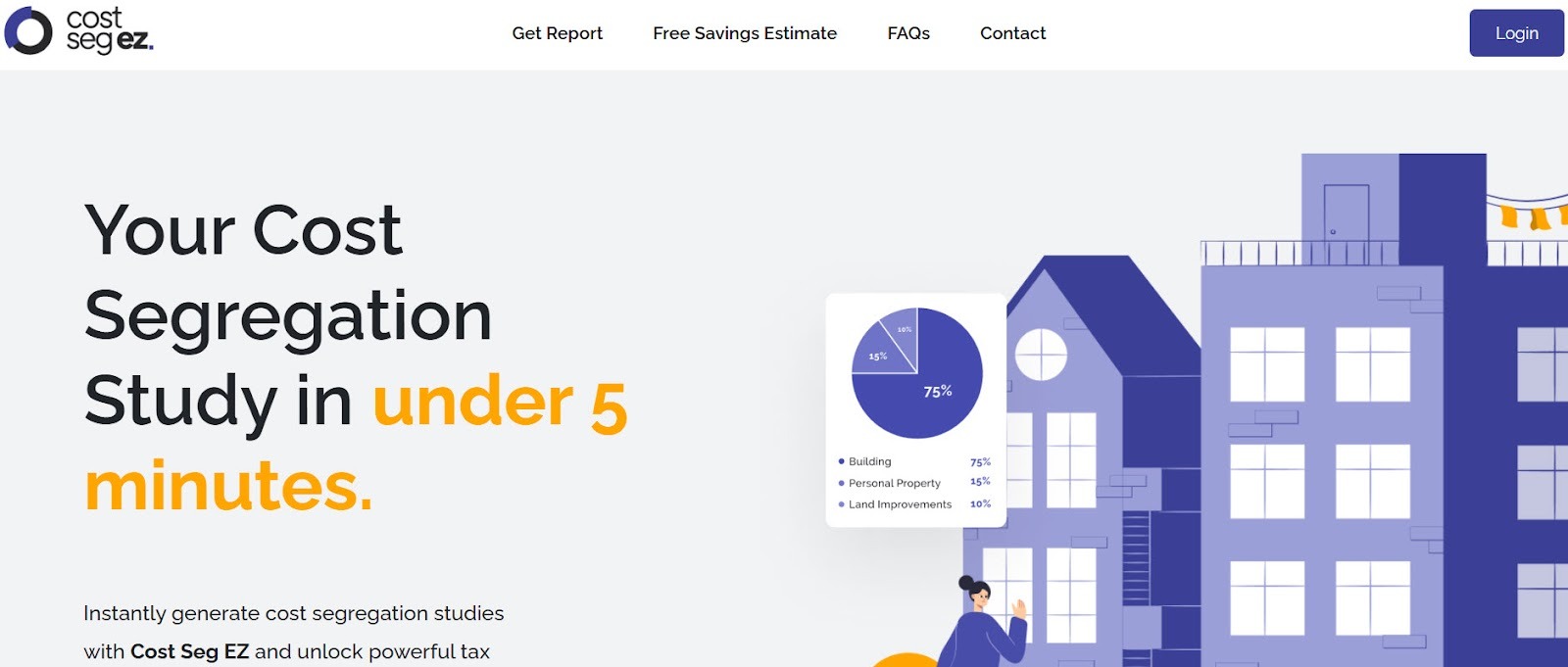
- Cost Seg EZ: Best for Fast Studies on Smaller Commercial Properties
- Ideal for properties under $5M
- Simple intake and streamlined deliverables
- Transparent pricing and quick turnaround
For a deeper breakdown of each firm and how to choose the right fit, continue to the full guide below.
6 Overlooked Filters for Choosing a Cost Segregation Firm
Many cost segregation studies fail not because the calculations are wrong, but because the provider never aligns the work with the client’s broader tax posture, reporting structure, or portfolio strategy. The firms that deliver the strongest results are the ones that anticipate downstream effects, coordinate with capital planning, and maintain consistency across assets and states.
These filters highlight the operational, technical, and strategic questions that determine whether a provider will create long-term clarity or introduce avoidable complexity in future audits, refinances, and renovations.
1. Ask How They Integrate With Your Existing Capital Plan
Strong firms begin by understanding the capital roadmap. They ask about upcoming refinances, dispositions, capital calls, and planned renovations before they scope a study. This context shapes how aggressively to pursue bonus depreciation, when to time the study, and how to phase work across a portfolio. If a provider never asks about loan covenants, hold periods, or investor reporting, that is a warning sign.
2. Evaluate Their Handling of Structural vs. Functional Obsolescence
In medical, industrial, or adaptive reuse projects, some assets lose economic usefulness long before they are fully depreciated. A capable provider can distinguish what still drives value from what has effectively been retired, even if it remains physically in place. That judgment affects partial dispositions, future improvements, and how cleanly you can document changes if the property is reconfigured or repurposed.
3. Probe Their Familiarity With Stacked Incentives
Many sponsors now combine cost segregation with other incentives such as 179D, historic credits, energy credits, or opportunity zone structures. A competent firm understands how these interact, how the basis is adjusted, and how timing affects both deductions and credit calculations. Ask for specific examples of projects where they have coordinated cost segregation with multiple incentive programs, not just theoretical knowledge.
4. Confirm Their Method for Handling Land Improvements
Parking lots, retaining walls, site lighting, landscaping, and stormwater systems often sit in a vague category for less experienced providers. The better firms have a clear methodology for identifying and quantifying land improvements, supported by engineering estimates and construction detail. That level of discipline often uncovers meaningful additional depreciation without increasing audit risk.
5. Understand Their Protocol for Handling Buildouts and Future Improvements
In many portfolios, the property profile is still evolving. Tenant buildouts, phased capex plans, and back-to-back renovations can all affect how assets are classified and when depreciation begins. A thoughtful provider will outline how they handle subsequent improvements, when they recommend follow-up studies, and how they coordinate with your construction and accounting teams so the study does not become outdated in a single cycle.
6. Ask Who Handles Post-Delivery Follow-Up and IRS Response
The real test of a provider often comes after the report is delivered. High-quality firms spell out who will support your CPA during implementation, who will answer questions from internal stakeholders, and who will respond if the IRS asks for backup. Ask whether the same technical team that prepared the study is available for follow-up, or whether support is routed to a generic help desk. That distinction matters when timelines are tight.
Firm-by-Firm Breakdown: 6 Best Cost Segregation Companies in 2026
- RE Cost Seg: Best for Integrated Portfolio Tax Planning

- Founded: 2022
- Headquarters: Houston, TX
Why RE Cost Seg is the best cost segregation company:
RE Cost Seg is designed for owners and sponsors who treat depreciation as part of their capital strategy. The firm combines engineering-based studies with forward-looking tax planning, scoping each engagement around hold periods, refinance timelines, and anticipated exits. Its process leans on detailed document review and structured virtual walk-throughs, which keep turnaround efficient while preserving the depth expected from an engineering-driven study.
Reports are built for implementation, with clear asset schedules, defined class lives, and methodology explanations that map cleanly into fixed asset systems and CPA workflows. For investors who want cost segregation decisions to line up with cash flow modeling and portfolio moves, RE Cost Seg operates as a strategic partner rather than a transactional vendor.
- Haynie & Company: Best for Owner-Operators Seeking Full-Service Support

- Founded: 1960
- Headquarters: Salt Lake City, UT
Haynie & Company is a full-service CPA and advisory firm that offers cost segregation as part of a broader tax and accounting relationship. This model suits closely held businesses and owner-operators who prefer a single team handling both the study and the resulting tax treatment.
Its cost segregation work pairs engineering-informed analysis with direct CPA oversight, so studies are calibrated to the client’s overall tax posture and reporting needs. For owners who value continuity, relationships, and one-firm accountability, Haynie & Company provides a straightforward path.
- Cost Seg EZ: Best for Fast Studies on Smaller Commercial Properties
- Founded: 2015
- Headquarters: Princeton, NJ
Cost Seg EZ focuses on accessibility for smaller and mid-sized commercial properties, as well as residential investment assets with meaningful basis. The firm uses a streamlined intake process and tiered service structure so clients can choose between lighter-touch options and fully engineered studies based on property complexity.
This approach allows investors with a modest number of assets to right-size their spend without sacrificing compliance. For straightforward buildings where simplicity, transparent pricing, and speed are priorities, Cost Seg EZ offers a practical, budget-conscious solution.
- Remote Cost Seg: Best for Busy Individual Investors

- Founded: 2022
- Headquarters: Houston, TX
Remote Cost Seg is built around a virtual-first process for investors who prefer not to coordinate on-site visits. The firm relies on structured video tours, photo documentation, and organized document review to develop property-specific studies without sacrificing detail.
Its positioning is squarely focused on real estate investors, including short-term rental owners and small portfolio operators, with an emphasis on clarity, minimum ROI expectations, and audit-ready deliverables. For investors who need expert support but limited disruption, Remote Cost Seg provides a high-touch remote option.
- Seneca Cost Seg: Best for Hospitality and Mixed-Use Complexity

- Founded: 2024
- Headquarters: Albany, OR
Seneca Cost Seg is oriented toward more complex projects, particularly hospitality and mixed-use properties, where multiple uses and buildout types sit under one roof. Its studies pay close attention to components such as guestroom finishes, back-of-house systems, structured parking, and exterior amenities, where misclassification can materially change first-year deductions.
The firm typically starts with a feasibility view, then defines scope, timelines, and data requirements so stakeholders know exactly what to expect. For sponsors dealing with complicated layouts and multiple revenue streams in a single asset, Seneca offers targeted engineering rigor and structured project management.
- CohnReznick: Best for Institutional-Scale Real Estate Platforms

- Founded: 1919
- Headquarters: New York, NY
CohnReznick is a national professional services firm with a dedicated cost segregation and fixed asset practice that supports developers, funds, and large operating platforms. Its teams are accustomed to working across multi-entity, multi-state structures where governance standards and documentation discipline are central.
Because cost segregation sits alongside federal tax, transaction, and advisory services, the firm can align studies with entity structuring, credit strategies, and long-range exit planning. For REITs, institutional funds, and sponsors operating at scale, CohnReznick provides the depth, consistency, and internal controls that larger platforms expect.
Aligning Cost Segregation With Real Estate Strategy
Cost segregation delivers the most value when it is treated as part of the capital plan, not an isolated tax project. The firms highlighted in this guide differ in size, structure, and focus, but they share a common thread, each brings a defined methodology, clear documentation standards, and an ability to work within a broader investment or operating strategy, qualities that separate the best cost segregation companies from the rest.
For some owners, the right fit will be a specialist who can move quickly on single assets and smaller portfolios. For others, the better choice will be a provider that can coordinate across entities, states, lenders, and investor groups without losing consistency. The decision comes down to where cost segregation sits in the overall financial architecture and which partner is best equipped to support that role.
The most effective companies are the ones that listen carefully, ask about future moves, and design studies that hold up over time. With that filter in mind, choosing among the best cost segregation companies becomes less about marketing claims and more about alignment with how the business actually deploys capital.


.webp)