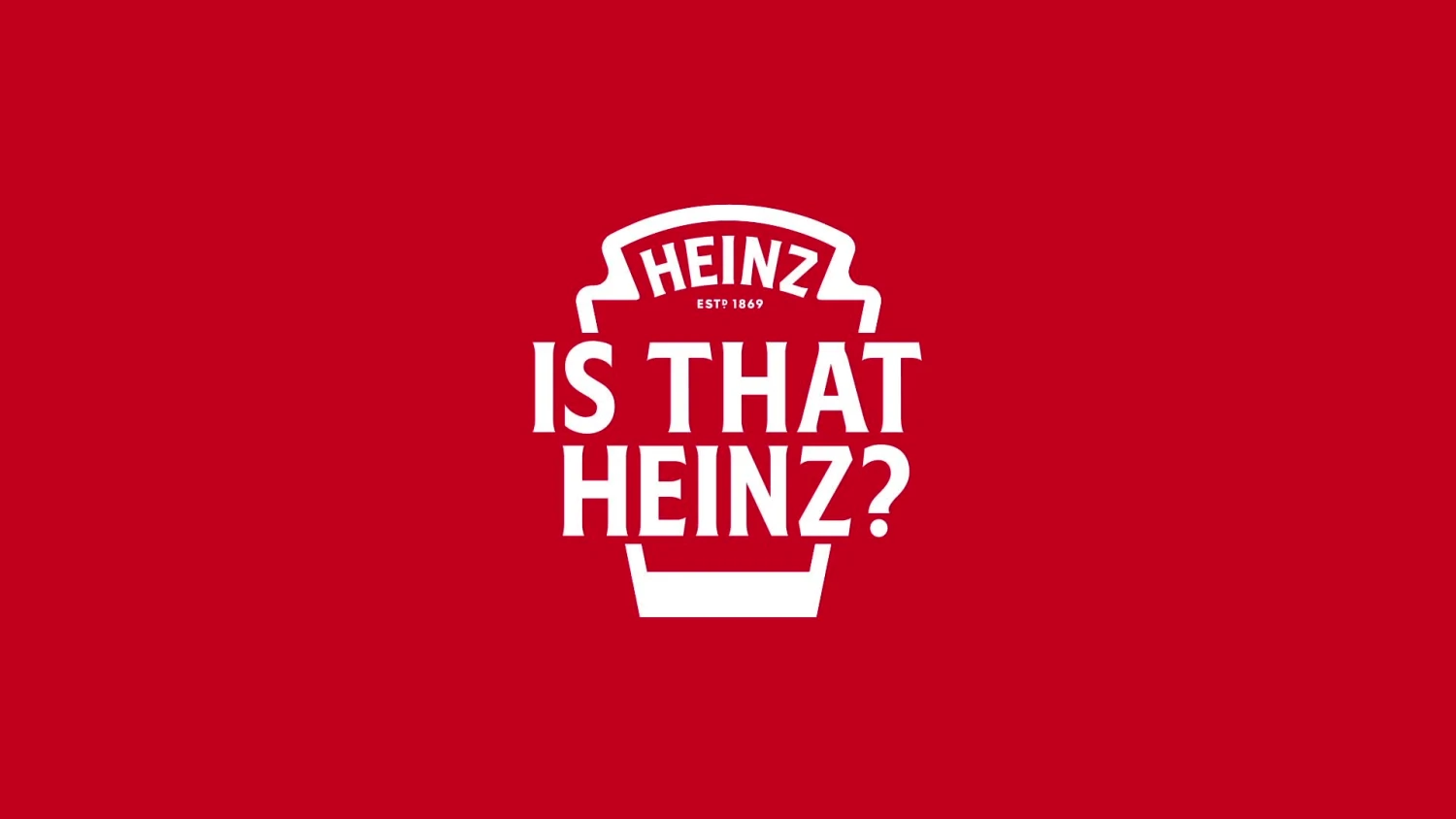
Heinz's 2023 "Is That Heinz?" campaign turned one of the brand's most recognizable product cues into a simple authenticity check. In Turkey, some restaurants were reusing Heinz bottles and refilling them with other ketchup, creating a gap between the brand on the outside and the product being served inside. Rather than treating that only as a distribution problem, Heinz made the bottle itself part of the solution. It is a useful example of food and beverage marketing because the product, packaging, and campaign message all reinforced the same idea.
How Heinz's "Label of Truth" Worked
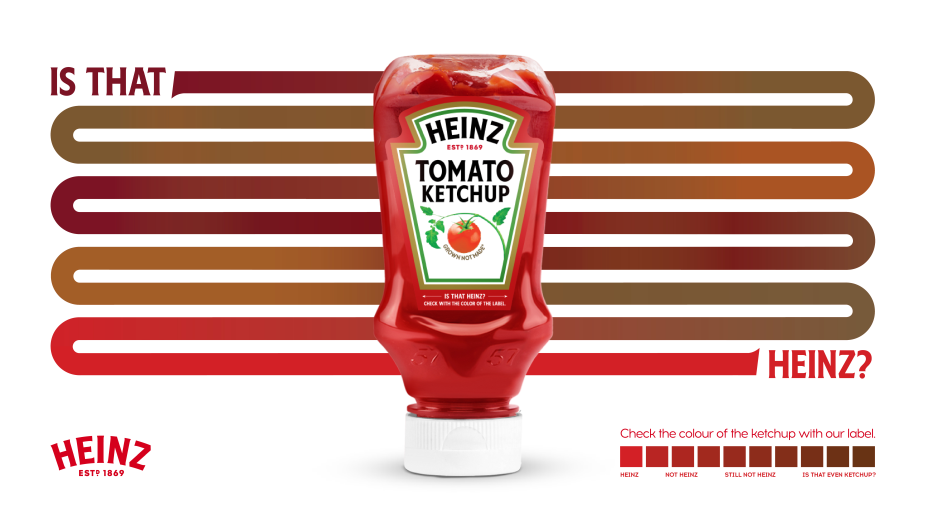
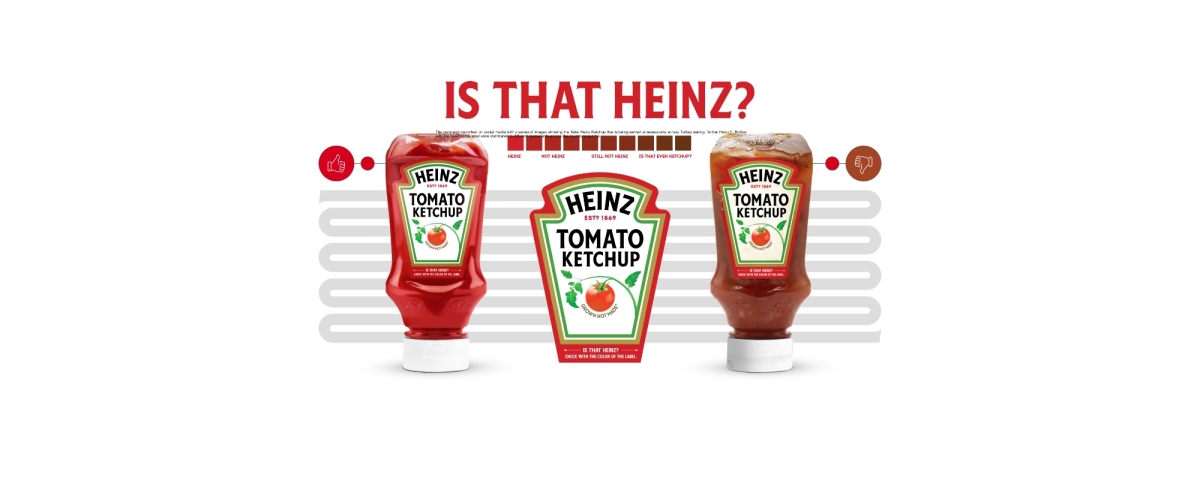
The campaign team identified the red color of Heinz Tomato Ketchup using the Pantone color system and added a matching red reference to the edge of the bottle label. The mechanic was intentionally simple: if the ketchup inside the bottle did not visually match the reference on the label, diners had a reason to question whether the bottle had been refilled with another product. That turned packaging and graphic design into a functional part of the campaign rather than decoration alone.
LBB reported in March 2023 that bottles carrying the control label were distributed to restaurants across Turkey. The campaign also launched with social content showing examples of the problem, so the visual test could be understood before diners encountered it in person.
Why Ketchup Refills Were a Brand Problem
For Heinz, the issue went beyond losing an individual serving. A familiar Heinz bottle carries expectations about taste, consistency, and quality. If another ketchup is served from that bottle, a diner can associate the experience with Heinz even though the product is different. The campaign addressed that mismatch by using a distinctive product characteristic as proof. In brand strategy terms, Heinz took an existing recognizable asset and gave it a practical job.
Extending the Idea Through Social Media
Heinz also created an Instagram filter that consumers could use to compare the ketchup color with the brand's reference. The important part was not the technology by itself. The filter repeated the same verification mechanic as the physical label, giving the campaign one recognizable idea across packaging, restaurants, and social media.
That consistency is what makes the campaign useful beyond the novelty of "ketchup fraud." A separate Brand Vision roundup of standout marketing campaigns from 2023 shows the same broader pattern across very different brands: strong campaign extensions tend to work when they reinforce the central idea instead of introducing a disconnected second concept.
What Other Brands Can Learn From the Campaign
First, packaging can do more than display a brand. When a physical product already has a recognizable color, shape, label, or material, those assets can become part of the customer experience. Heinz did not need to invent a complicated authentication system because the ketchup's color was already familiar enough to carry the idea.
Second, distinctive brand assets become more valuable when they solve a real problem. The campaign made Heinz red useful, not just recognizable. That is a stronger role for identity than simply repeating a color because it appears in brand guidelines.
Third, digital extensions are most coherent when they preserve the same behavior. The Instagram filter did not replace the Label of Truth. It translated the same comparison into another channel, which made the campaign easier to understand and share.
Packaging as a Marketing Tool
The Label of Truth worked because the medium and the message were the same object. The bottle was not just where the campaign appeared; it was how the campaign worked. For another Kraft Heinz example, the Jell-O rebrand shows a different use of packaging, where color, logo, and shelf presence were refreshed to modernize recognition rather than verify authenticity.
Heinz's campaign is a compact lesson in turning a familiar brand asset into customer-facing utility. The strongest takeaway is not that every company needs a verification label. It is that good marketing can begin by asking what the audience already recognizes about the product and whether that recognition can do more work.

.avif)