
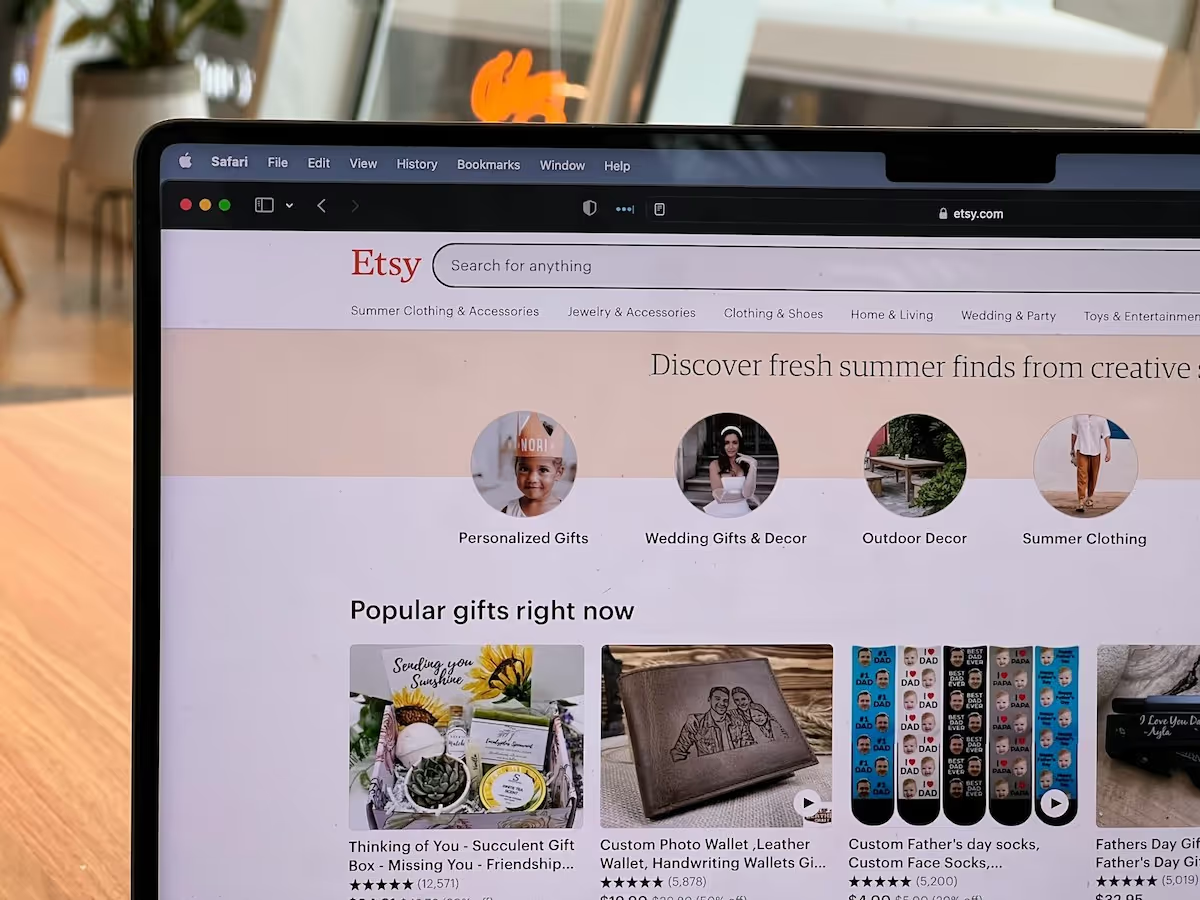
Etsy marketing in 2026 is a mix of marketplace SEO, conversion, brand presentation, customer service, paid promotion, and off-platform audience building. Opening a shop creates a storefront, not demand. Sellers still have to help the right shoppers discover the listing, understand the product, trust the shop, and complete a purchase.
The scale is large enough that visibility cannot be taken for granted. As of December 31, 2025, Etsy reported 86.5 million active buyers, 5.6 million active sellers, and more than 100 million items for sale. The practical goal is not to “beat the algorithm.” It is to create relevant listings that convert and a marketing system that brings qualified shoppers back.
What Etsy Marketing Means in 2026
Etsy marketing has two layers. On-platform work includes Etsy Search, Etsy Ads, shop presentation, reviews, customer service, discounts, and listing optimization. Off-platform work includes social media, email from properly consented subscribers, content, earned media, and any separate website or store you operate.
The two layers should support one another. Marketplace visibility can create the first sale, while off-platform channels help build recognition and repeat demand. If you later operate a separate ecommerce site, treat it as a distinct asset with its own analytics, customer experience, and search strategy rather than assuming Etsy SEO transfers directly.
Why Etsy Marketing Still Matters
Etsy is a discovery marketplace, but discovery is competitive. Etsy's current search system first matches listings to a shopper's query and then ranks those matches using factors that include relevance, listing quality, shop quality, customer service, and shopper context. Etsy's search documentation also says search looks across titles, tags, attributes, descriptions, the first photo, reviews, and other listing information.
That means marketing cannot be separated from the listing experience. A keyword can help a product match a search, but the listing still has to earn the click and sale. Clear photography, accurate delivery information, responsive service, useful descriptions, and a trustworthy shop all support performance after the listing appears.
For a broader view of how search visibility connects to business outcomes, Brand Vision's SEO success guide explains how to separate visibility, traffic, and conversion instead of treating ranking as the only result.

Plan Your Etsy Marketing Strategy Before You Promote
Start with the product, customer, and margin. Identify which items deserve the most attention, what buyers care about before purchasing, how much you can afford to spend to acquire an order, and which channels you can maintain consistently.
- Choose a small group of priority listings rather than promoting everything equally.
- Define the audience problem, product benefit, price position, and proof for each priority item.
- Track Etsy Stats and the performance of individual listings before increasing ad spend.
- Plan seasonal inventory, promotions, and content around real demand rather than constantly changing the store to chase trends.
- If you use email, build the list through genuine consent. Etsy's current Seller Policy says buyer information obtained through a transaction cannot be added to an email or physical mailing list without consent. A compliant email marketing strategy starts with permission, useful messages, and reliable unsubscribe handling.
12 Etsy Marketing Strategies to Use in 2026
- Improve the listings before buying attention. Better titles, photos, descriptions, pricing, delivery expectations, and product details give both organic discovery and paid traffic a stronger destination.
- Use Pinterest and visual social platforms selectively. Promote items that naturally fit visual discovery instead of posting every listing everywhere. For Instagram specifically, a structured Instagram marketing strategy should connect discovery content to proof and a clear next step.
- Build an email audience with consent. Use a separate signup form, newsletter, or owned-site opt-in. Do not automatically add Etsy buyers to a marketing list from transaction data.
- Use Etsy's own promotion tools. Sales, coupons, targeted offers, Etsy Ads, and Offsite Ads can support different parts of the funnel. Etsy's 2026 advertising guidance describes Etsy Ads as on-platform promotion and Offsite Ads as Etsy-managed advertising across external channels such as Google, Facebook, Instagram, Pinterest, and Bing.
- Run honest, time-bound promotions. Discounts should reflect real pricing, not manufactured urgency. Etsy's current guidance warns sellers not to manipulate pricing history, sale timing, listings, or reviews to trigger platform signals.
- Measure repeat buyers, not only first orders. Fast responses, reliable fulfilment, accurate descriptions, and good post-purchase experience can support reviews and future purchases without needing constant discounts.
- Ask for honest reviews without manipulating them. Etsy allows genuine reviews but prohibits shilling and incentives tied to positive reviews. If you use a broad incentive available to all buyers, it still must not depend on a positive rating or undermine the integrity of the review system.
- Make the shop name memorable before making it keyword-heavy. A clear brand naming decision should help people remember the shop and understand the offer. Do not sacrifice readability to force a search phrase into the name.
- Keep the visual system consistent. Product photography, banners, packaging, thumbnails, and social posts should feel related. A consistent visual identity can make a small shop easier to recognize across repeated visits.
- Create helpful content around the buying decision. Tutorials, comparison content, care instructions, gift guides, and process stories can build demand beyond individual listings. A documented content strategy helps decide what deserves an article, video, social post, or listing update.
- Test paid search only when the economics are clear. If you run your own Google Ads or other paid-search campaigns, separate that budget from Etsy Ads and measure the destination carefully. Brand Vision's PPC services focus on campaign structure, intent, landing experience, and measurement rather than sending paid traffic without a plan.
- Consider an owned store when you need more control. Etsy can remain a useful marketplace even if you later build a separate site for email capture, content, merchandising, or customer experience. If Shopify is the chosen platform, Shopify storefront design should support the brand without implying customers should be diverted from an Etsy transaction already in progress.

10 Etsy SEO Tips That Still Matter in 2026
Etsy SEO begins with matching real shopper language to an accurate, convincing listing. Etsy says query matching looks at the full listing, including titles, tags, attributes, descriptions, first photo, reviews, and more. Use all relevant fields to describe the product clearly, then let conversion and customer experience reinforce the listing over time.
- Write clear titles for shoppers. Lead with the most relevant product wording and avoid a long string of near-duplicate keywords. Etsy's 2026 advertising checklist recommends concise titles and says the most relevant wording should appear early.
- Use all relevant tags, categories, and attributes. Etsy currently recommends using all 13 tags, varying them, choosing specific categories, and completing relevant attributes to create more opportunities to match searches.
- Research how buyers describe the product. Start with material, use, style, recipient, occasion, size, and other meaningful attributes. Avoid copying competitor phrases without checking whether they actually describe your item.
- Improve listing conversion. Etsy states that engagement and conversion are ranking considerations. The first photo, price, description, delivery expectations, reviews, and product clarity all influence what happens after a shopper clicks.
- Do not renew listings simply for an SEO boost. New and renewed listings can receive a small temporary recency boost, but Etsy specifically says regularly renewing just to get that boost is not an effective search-optimization strategy.
- Treat shipping as part of conversion and, in some cases, search visibility. For eligible U.S. domestic listings, Etsy has incorporated shipping price into search treatment. Free or lower-cost shipping can help in relevant contexts, but it is not a universal shortcut for every shop or market.
- Use strong photos and useful video. Show scale, detail, variations, packaging, and the product in use. Consistent product imagery helps shoppers understand what they are buying before they click away.
- Complete the About section and shop information. Etsy says customer-service and shop-quality signals can influence ranking. Make the business story, policies, delivery expectations, and product origin easy to understand.
- Use external promotion for traffic, not as a substitute for Etsy relevance. Social posts, press, creator coverage, blogs, and other external mentions can drive shoppers to a listing. If you also operate an owned site, an ethical link-building strategy can support that site's search visibility, but external backlinks are not a replacement for Etsy's internal listing and shop signals.
- Review Etsy Stats and change one variable at a time. Watch search terms, visits, favourites, orders, and conversion. Improve listings based on evidence rather than repeatedly rewriting titles, tags, and prices at once.

The original 2024 version of this article highlighted Etsy's Gift Mode advertising as a marketplace-level brand campaign. That campaign is retained below as a snapshot of how Etsy itself has used major media to create demand for the marketplace, while individual sellers rely on Etsy Ads, Offsite Ads, social, email, and their own marketing channels.

Etsy marketing works best when discovery and conversion support one another. Build accurate listings, use search terms naturally, strengthen photography and customer experience, promote the shop through channels you can measure, and treat Etsy's policies as part of the strategy rather than an obstacle. The marketplace will keep changing, so use Etsy's current search and seller documentation as the source of truth when a tactic depends on platform rules.