.avif)
Ariana Grande’s personal brand now extends well beyond music. Her career spans acting, a global fragrance business, r.e.m. beauty, major brand partnerships, and the Wicked films. The strongest thread across those extensions is not celebrity reach alone. It is the way names, visual cues, products, and creative choices repeatedly connect back to an artistic identity audiences already recognize.
That makes Grande a useful case study in personal brand strategy. A large audience can create attention for a new venture, but the extension still needs its own idea, product logic, and recognizable expression if it is going to stand apart from the person who launched it. Brand Vision’s personal brand vs. business brand guide explores that distinction more directly: recognition can begin with a person, while a scalable company still needs an identity audiences can understand on its own.
.webp)
Grande was born in Boca Raton, Florida, in 1993. She appeared in the Broadway musical 13 in 2008 and reached a much larger audience through Nickelodeon’s Victorious in 2010. Music later became the center of her public identity, but acting remained an important part of her work and eventually returned to the foreground through Wicked. That movement between music, screen performance, beauty, and licensing is part of what makes her portfolio relevant to entertainment marketing.
r.e.m. Beauty: Turning an Artist’s Aesthetic Into a Brand
r.e.m. beauty launched online in November 2021 and later expanded into retail. An older version of this article attributed $2.3 billion in first-quarter 2022 revenue to r.e.m. beauty, but that figure belonged to Ulta Beauty’s company-wide sales. Forbes reported that Ulta’s growth during the period was helped by r.e.m. beauty and other newly added celebrity-backed brands. In 2023, Grande moved to acquire r.e.m. beauty’s physical assets and inventory from Forma Brands for about $15 million after Forma entered bankruptcy proceedings.
That distinction matters because celebrity-brand analysis can become misleading when the founder’s fame is treated as proof of business performance. The stronger evidence is what the brand actually built. r.e.m. beauty now sells through its own site and Ulta, where the assortment spans multiple makeup categories. It is no longer accurate to describe the company as an online-only beauty brand.
How r.e.m. Beauty Builds a Distinct Brand World
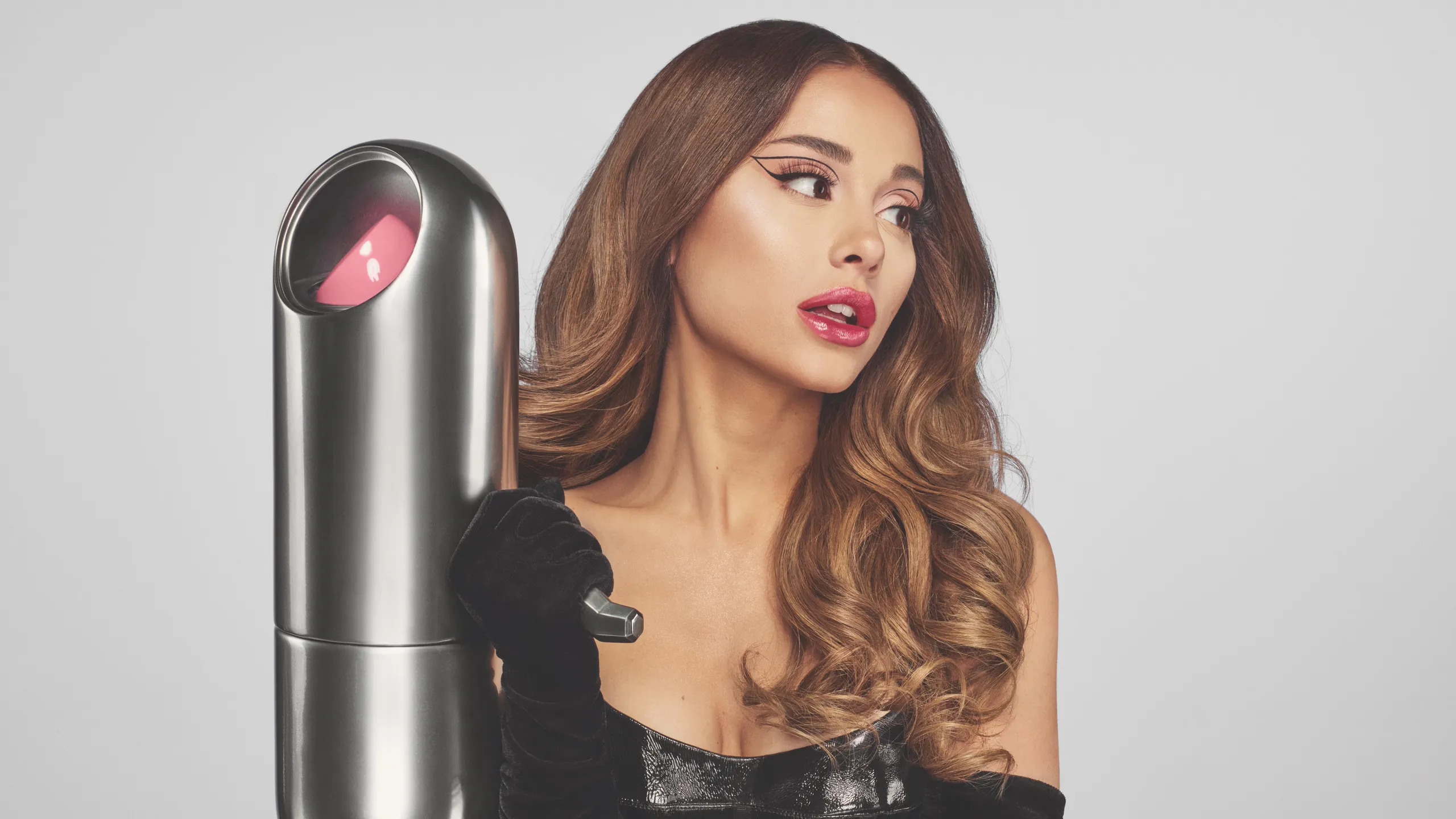
r.e.m. beauty currently describes itself as “the everyday artistry beauty brand,” framing makeup as a tool for self-expression rather than simply attaching Grande’s name to a product line. The company’s official story emphasizes creative purpose, sensorial formulas, and an invitation for customers to create their own looks. That positioning gives the brand a reason to exist beyond celebrity association. That separation also depends on brand research, because the company has to understand which expectations come from Grande’s audience and which needs the beauty brand should own for itself.
The brand name is one of the clearest bridges to Grande’s wider creative identity. “r.e.m.” connects with dream imagery and with Grande’s 2018 song of the same name. That gives the name multiple meanings without requiring the packaging to carry her full name as the primary identifier.
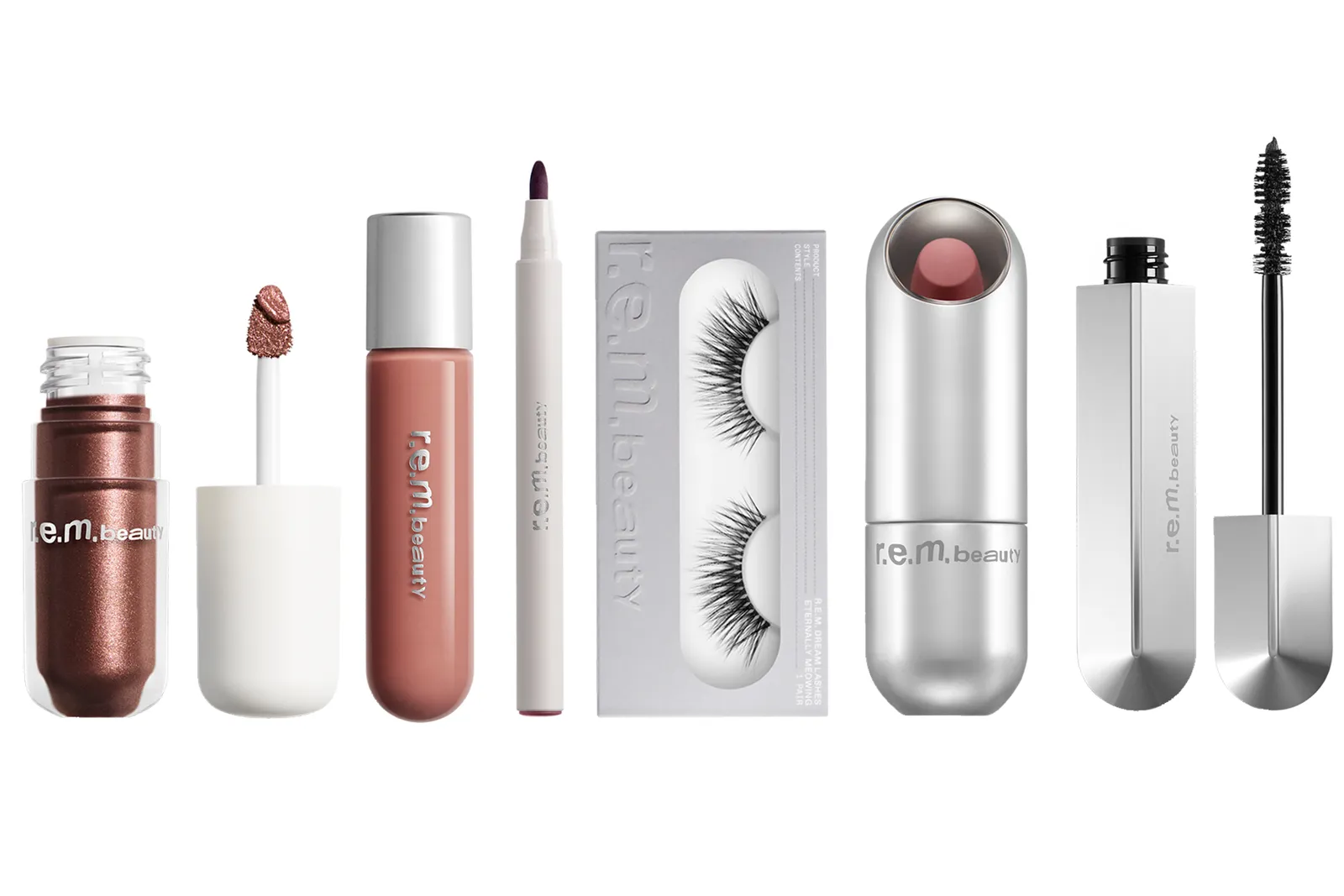
The same logic appears in the visual identity. Futuristic forms, dreamlike references, metallic and soft-toned finishes, and a restrained wordmark give the company a recognizable world that can stretch across eye, lip, complexion, and skincare-adjacent products. The packaging design is part of the marketing because customers encounter those shapes and finishes in product photography, creator videos, retail displays, and their own makeup bags.
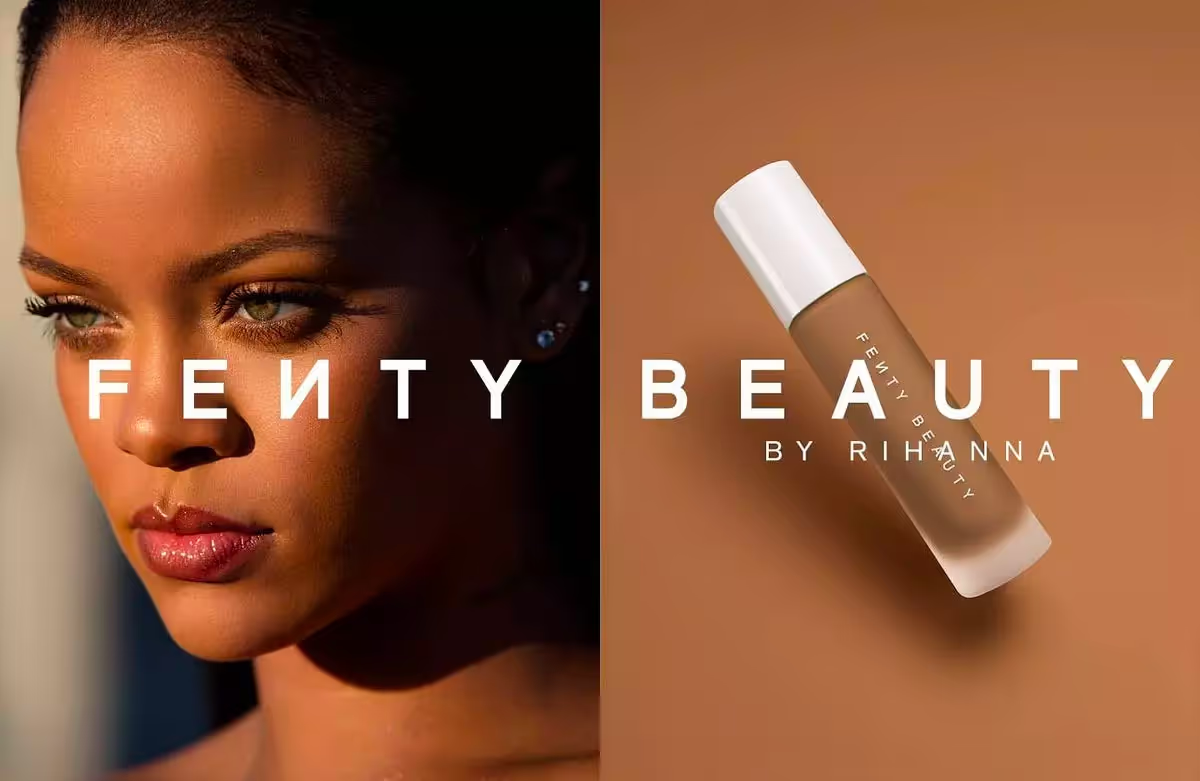
That is a stronger form of B2C marketing than relying on follower counts alone. Grande can introduce the brand to a large audience, while the product names, packaging, retail presentation, and tutorials give customers repeatable reasons to recognize it. Brand Vision’s analysis of Fenty Beauty’s marketing strategy shows a different celebrity-led system where product, casting, distribution, and brand promise reinforce one another.
Fragrance: A Brand Extension That Became Its Own Business
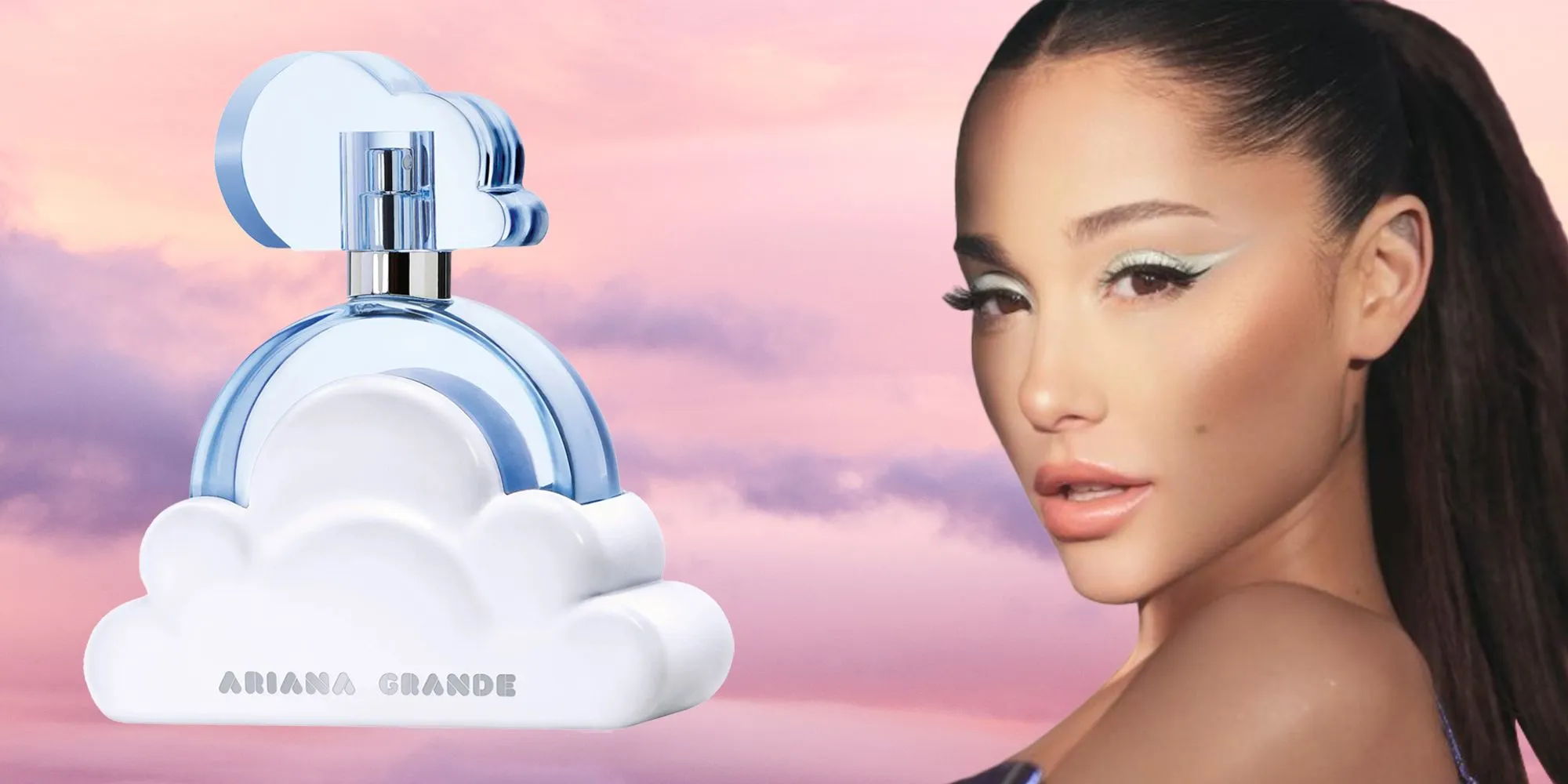
Grande’s fragrance portfolio predates r.e.m. beauty and shows how a personal brand can move into a consumer category without copying the artist’s music business. Luxe Brands says her debut prestige fragrance launched globally in fall 2015 and the portfolio generated more than $300 million in retail sales in less than five years.
The naming system keeps the line connected to Grande’s music and public identity. Fragrances such as Cloud, Sweet Like Candy, R.E.M., Thank U, Next, and God Is a Woman borrow language or moods that fans already associate with her, while later releases broaden the collection. The useful branding lesson is continuity: each scent can have its own bottle, campaign, and mood while still feeling connected to the same personal universe.
Partnerships and Endorsements: Fit Matters More Than the Logo List
Grande has worked with brands across fashion, beauty, technology, food, and entertainment, including Reebok, Givenchy, MAC, Apple, Starbucks, and Fortnite. Those relationships have varied in depth, so they are better understood as different forms of partnership rather than one uniform endorsement strategy.
The useful pattern is fit. A fashion house can borrow Grande’s red-carpet and editorial credibility, a beauty company can work with her visual identity, and an entertainment platform can use her relationship with fans. The partnership becomes more believable when both sides contribute something recognizable instead of treating the celebrity as interchangeable media space.
Music, Wicked, and the Audience Behind the Brand
Music remains the foundation of Grande’s audience and cultural recognition. Her seventh studio album, Eternal Sunshine, debuted at No. 1 on the Billboard 200 in March 2024, becoming her sixth No. 1 album. That continued the release cycle that repeatedly creates new visual eras, song titles, performances, and fan conversations for the wider brand ecosystem.
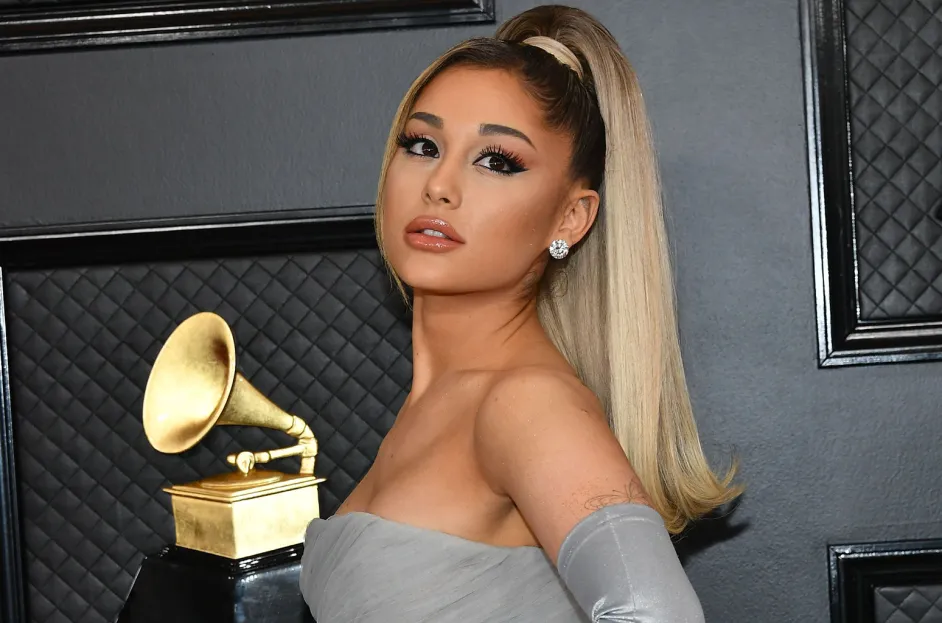
Her role as Glinda in Universal Pictures’ 2024 film Wicked, followed by Wicked: For Good in 2025, expanded the public identity beyond pop music. The performance placed Grande inside a major film and musical-theatre property while drawing on skills that predated her recording career. From a branding perspective, that matters because the strongest personal brands can broaden without making every new project feel like a product extension.
What Ariana Grande’s Branding Shows
Grande’s portfolio works best when an extension carries a recognizable piece of her creative identity but still earns its own place in the market. r.e.m. beauty has its own naming system, visual language, products, and retail footprint. The fragrance line has its own category logic and long-running product portfolio. Music and acting continue to create the cultural attention that makes those ventures easier to introduce without replacing the need for strong products.
For another celebrity-led portfolio built across entertainment and beauty, Brand Vision’s Selena Gomez branding analysis shows how audience fit and founder credibility can connect several ventures without making them identical. If your own business is trying to extend a recognizable identity into new products or categories, Brand Vision can help clarify which brand elements should stay consistent and which should evolve.

.avif)