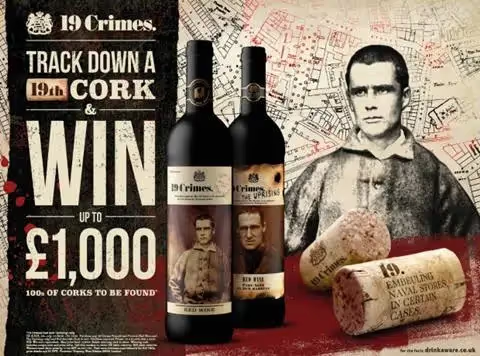
In the world of wine marketing, where tradition often takes centre stage, the story of 19 Crimes stands out as an exception. This Australian wine brand has not only broken all the conventional rules of the wine industry but has also succeeded in an unprecedented fashion. At the heart of its success are innovative marketing strategies, including the use of augmented reality (AR) to bring 19th-century convicts to life, a rich historical narrative, and an understanding of its target audience. This article explores how 19 Crimes defied the norms of the wine market and became a sensation in the industry.
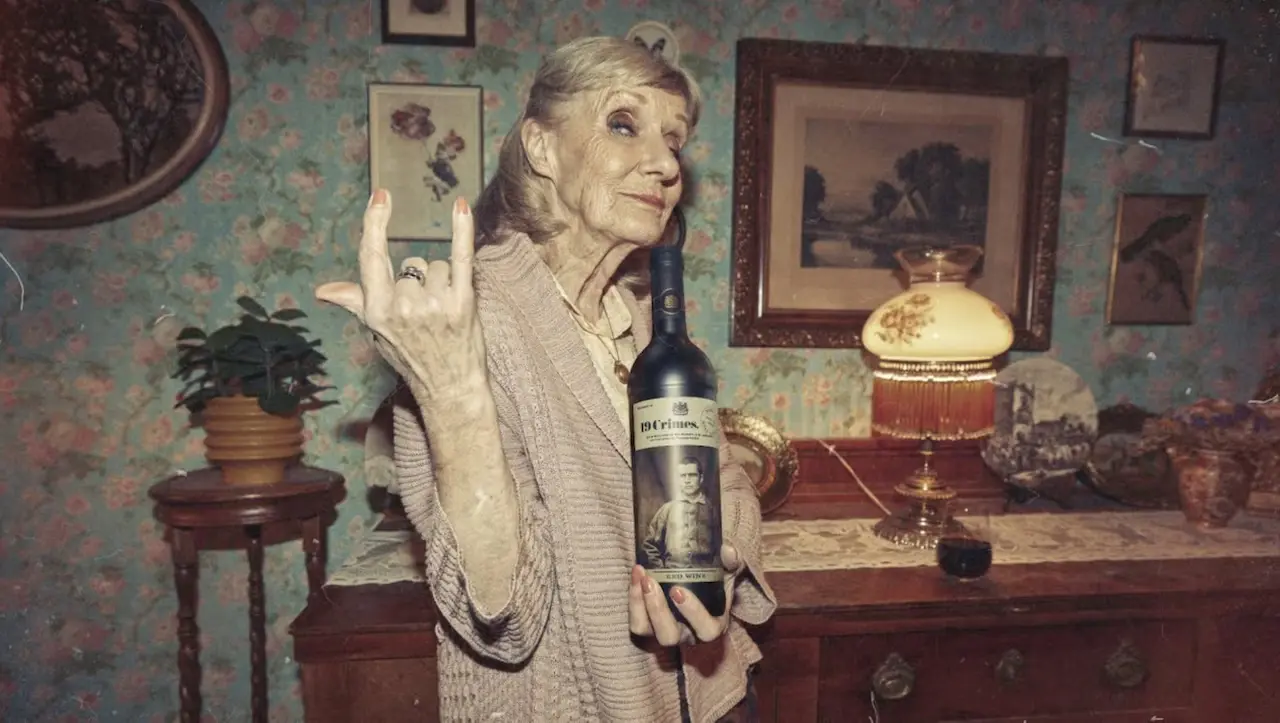
To understand 19 Crimes' marketing strategy, we must first explore its historical backdrop. The brand takes its name from the "19 Crimes," a list of offences that led British convicts to be transported to Australia in the 18th and 19th centuries. These were not minor infractions; rather, they were crimes that resulted in lifelong banishment from their homeland. 19 Crimes chose to weave this dark and fascinating history into the very fabric of its brand identity, setting the stage for its unique beverage marketing approach.
Augmented Reality: Bringing History to Life
The historical narrative behind 19 Crimes is quite interesting, but what really makes this brand unique is the way they incorporate augmented reality. The "Living Wine Labels" app by 19 Crimes brings the convicts and other elements on its labels to life through animation. This technology is amazing because it lets people engage with wine bottles in a whole new way. It brings the characters on the labels to life and makes them more interactive for consumers. The animated characters share their own captivating stories, which helps build a deep emotional bond between the brand and the consumer.
"One size doesn't necessarily fit all, and some millennials (and probably consumers in other generational categories, too) obviously see themselves in a different light. Identity trumps authenticity. Outlaw! You don't need any stinking badges. And now there is a wine for you," suggests wine expert Mike Veseth, highlighting the brand's ability to resonate with a specific demographic.
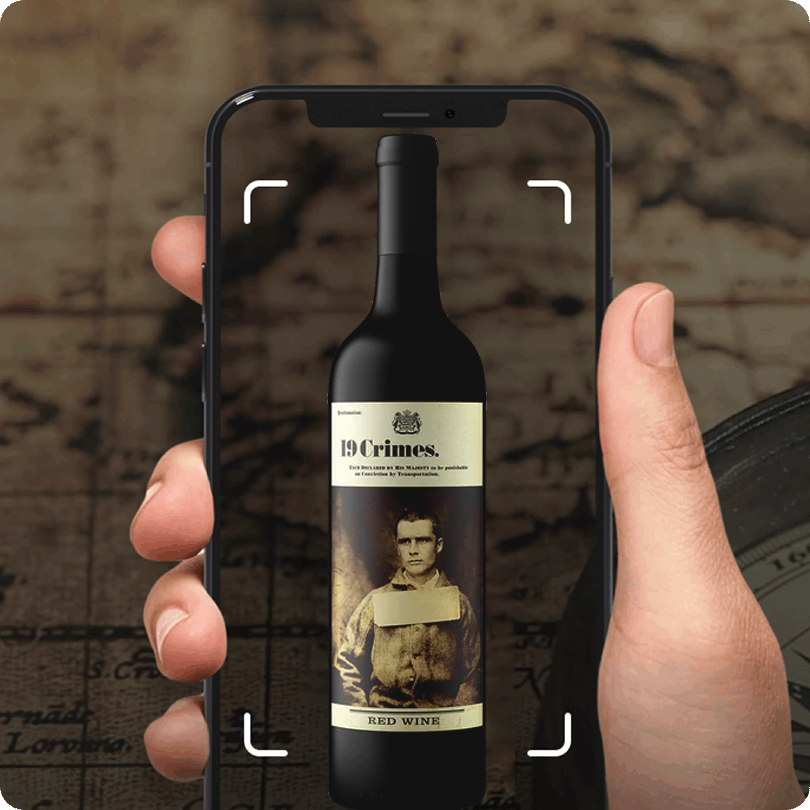
The Living Wine Labels app has been downloaded over a million times, making it clear that this innovative approach to storytelling and branding is working. Augmented reality's engaging experience fosters a sense of involvement and discovery, forging an emotional bond between customers and the brand.
Resonating with the Target Audience
Understanding one's target audience is a key aspect of marketing success. In the case of 19 Crimes, it is particularly interesting to note that their primary demographic is millennials, especially those who identify as rule-breakers or outlaws. This is a segment of the population that often seeks authenticity in products and experiences, but 19 Crimes takes a different approach by tapping into their sense of identity. The brand attracts those who want to stand out from the crowd rather than conform to established norms. The visual identity aligns perfectly with this demographic's self-image, as millennials often identify with renegades and unconventional individuals. This unique positioning allows 19 Crimes to strike a chord with its target audience, effectively leveraging their sense of identity and rebellion against convention.
The Branding Evolution
The success of 19 Crimes is not limited to a single wine. While it began as a single wine brand, it has since evolved into a lineup of seven different wines, including Cabernet Sauvignon and Chardonnay. The core grape variety of 19 Crimes is Shiraz, which is somewhat unusual for the American market. The brand's unconventional branding, which includes labelling each bottle with a criminal's mug shot, has also contributed to its evolution. This aspect might appear counterintuitive, as associating wine with criminals and sad individuals seems unlikely to attract consumers. Yet, 19 Crimes' meticulous brand research reflects careful market research and consumer testing. It taps into the spirit of rebellion and nonconformity that is especially resonant with millennial men who identify as outlaws or renegades.
The Cork Collectibility
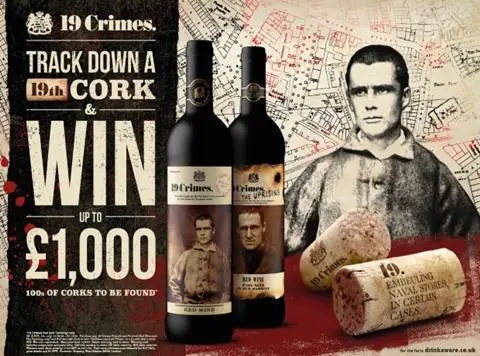
Alongside its historical narrative, augmented reality, and unconventional branding, 19 Crimes also challenges stereotypes with its unique choice of wine closure. Many people tend to think of Australian and New Zealand wines as being sealed with screwcaps, but 19 Crimes has decided to use cork as their method of closure. By introducing a collectibility factor, this decision enhances the brand's uniqueness even further. The convicts' banishment was a result of 19 crimes, and each cork is printed with one of these crimes. The collectible nature of these bottles is really appealing to consumers. It makes them want to buy multiple bottles so they can try to collect all 19 crimes. This strategy makes the brand more appealing by transforming the act of opening a bottle into an exciting adventure of exploration and gathering.
Expanding the Brand Identity
The success of 19 Crimes goes beyond just their wines. This brand has been a trailblazer in the field of marketing, pushing the boundaries of storytelling to new heights. They bring the sad men and women depicted on the labels to life by creating a virtual reality app that animates them. This innovation is designed to enhance the art of storytelling and, more importantly, to engage consumers. The figures of 19 Crimes share their stories, making them more relatable and improving the experience for consumers. The brand's virtual reality program keeps growing, showing how dedicated they are to getting people involved and telling stories. What makes 19 Crimes stand out from traditional wine marketing and contributes to its impressive success is its multidimensional approach to branding.
Becoming a Global Sensation
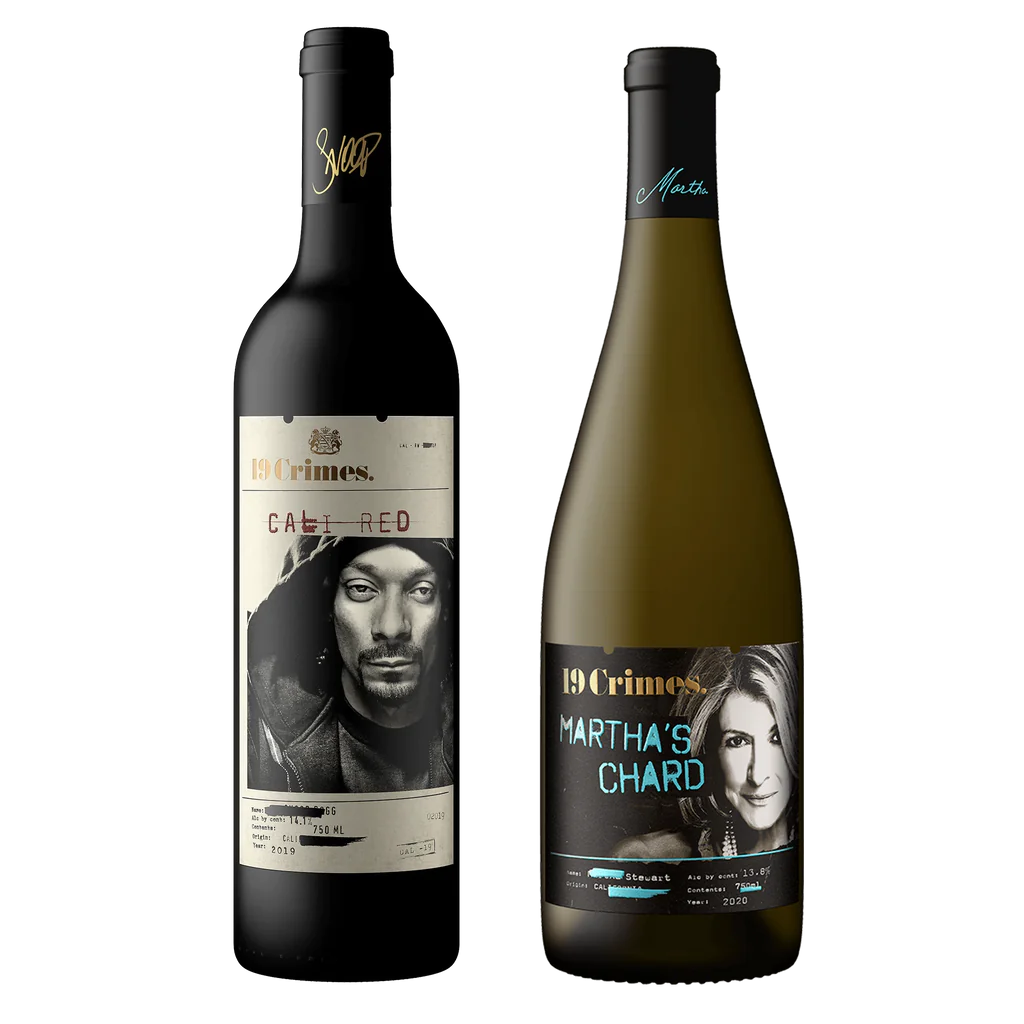
Although 19 Crimes originated in Australia, it has gained worldwide popularity over time. Treasury Wine Estates announced in 2021 that the 19 Crimes franchise had achieved a remarkable milestone by selling over five million cases per year. This accomplishment signifies a significant triumph for the brand. The company has successfully established a second global brand, which now accounts for approximately 16% of Treasury Wine Estates' total sales. A major factor that contributed to 19 Crimes' success was its expansion into the United States, which resulted in impressive outcomes. Furthermore, the brand's popularity received an extra boost through its collaboration with rapper Snoop Dogg, who introduced the "Snoop Cali Red" wine and Martha Stewart, who introduced "Martha's Chard". The brand was able to connect with consumers in a new and effective way through this strategic collaboration, which turned out to be incredibly successful.
Expanding into the UK Market
After successfully establishing itself in the United States, 19 Crimes set its sights on the United Kingdom as its next major market. The brand just introduced a new line of alcoholic seltzers in the UK called 19 Crimes. They come in two different flavours: Lime Bitters and Raspberry and Black Pepper. The brand's expansion shows their dedication to taking successful strategies from one market and applying them to others, essentially creating new markets from scratch. Treasury Wine Estates is still concentrating on expanding into the UK, Australia, and Asia. Their goal is to replicate the achievements of their marketing and branding strategies in these new markets. The brand's global growth has been impressive and shows how their innovative marketing approach has played a significant role.
More Innovations on the Horizon
The 19 Crimes brand has remained at the forefront of innovation and marketing in the wine industry. This journey of breaking all the traditional rules and succeeding is not slowing down. The brand recently introduced "Cali Rosé," marking its entrance into the rosé wine market. Further innovations and celebrity collaborations are on the horizon for 19 Crimes. The brand's ability to engage consumers and bring new individuals into the world of wine through partnerships and digitally enabled channels remains a core focus. With plans for new products and augmented reality experiences, 19 Crimes continues to forge a path of excitement in the wine industry. The story of 19 Crimes is a remarkable tale of breaking traditional wine marketing rules and achieving incredible success. 19 Crimes has not only made wine more accessible but has also ignited a sense of rebellion, discovery, and collectibility among consumers, making it a brand that truly stands out in the wine industry.
%2520(1).png)
.png)