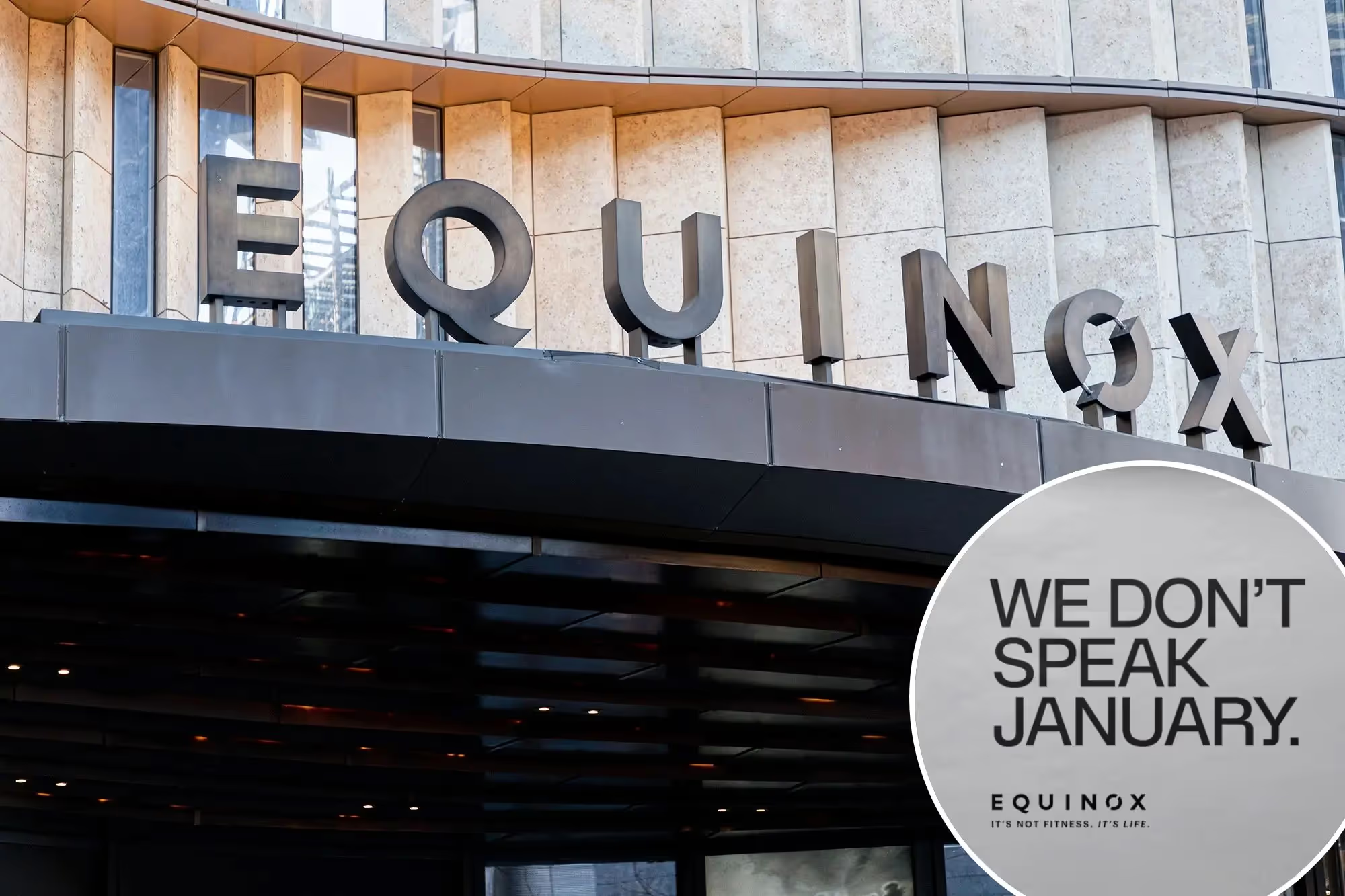
Equinox’s marketing strategy is built around premium positioning. Since opening its first club on Manhattan’s Upper West Side in 1991, the company has expanded fitness into a broader lifestyle proposition that combines clubs, digital training, hospitality, spa services, and branded experiences. The common thread is not mass-market accessibility. It is the promise of a more elevated, performance-oriented way to live.
That positioning makes Equinox a useful health and wellness marketing case study. The company uses design, pricing, locations, campaigns, and service standards to reinforce the same message. Its strongest marketing moments do not simply advertise a gym membership; they dramatize who the membership is for and what belonging to the brand is supposed to represent.
Premium Positioning Is the Core of Equinox’s Brand
Equinox has deliberately built a lifestyle brand rather than presenting itself as a generic place to exercise. Club interiors, personal training, spa services, product collaborations, photography, and membership language are designed to feel part of one premium environment. Its visual identity supports that positioning through restrained typography, high-contrast imagery, architectural photography, and campaign art direction that often resembles fashion or luxury advertising more than conventional gym promotion.
The company’s current club directory lists 117 clubs worldwide. That scale matters because the brand can deliver a recognizable experience while still concentrating in major metropolitan and affluent markets. Its membership structure also reinforces the idea that access itself is a product, with higher tiers opening more locations and premium club formats.
This is where Equinox’s brand positioning becomes operational. The marketing promises exclusivity and performance, but the club design, service model, amenities, and pricing have to support that promise. If the physical experience felt ordinary, the brand language would be difficult to sustain.

“We Don’t Speak January” Turned Exclusion Into a Brand Statement
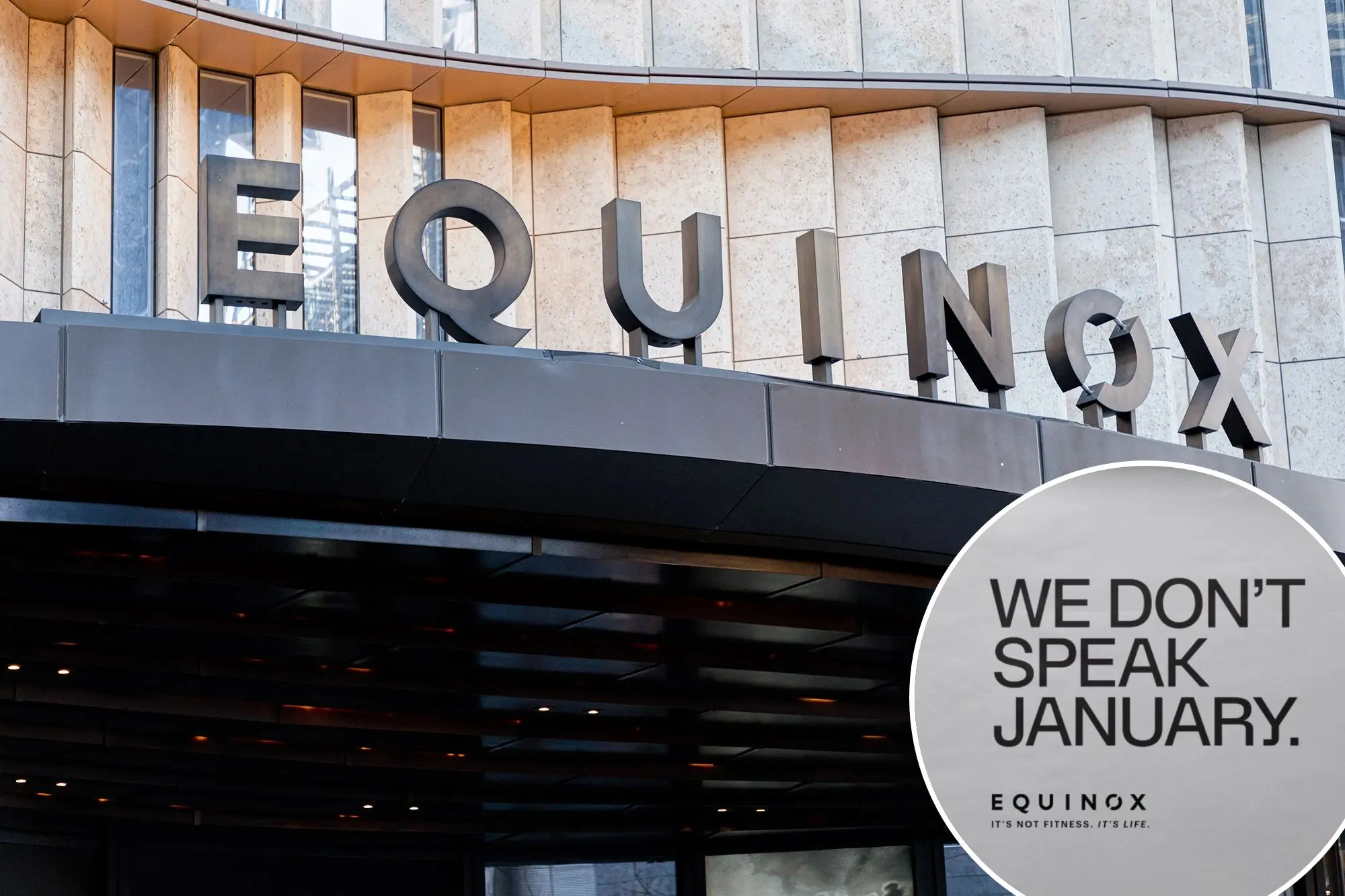
In January 2023, Equinox and COLLINS launched “We Don’t Speak January,” a campaign that refused new membership purchases on New Year’s Day. The idea challenged one of the fitness industry’s busiest sign-up moments and reframed Equinox around sustained commitment rather than short-lived resolutions.

The campaign was polarizing because the same exclusivity that strengthened the positioning also created criticism. That tension was part of the idea. Equinox was willing to make a statement that excluded some prospective customers in order to reinforce the identity it wanted its core audience to buy into.
COLLINS reports that the campaign produced a 504% increase in brand conversation and 2.4 billion earned media impressions. Its case study also says first-week website traffic was 52% above the previous peak and that January membership sign-ups surpassed the previous high by about 25%. Those are agency-reported campaign results, but they provide a more accurate record than the earlier 30% sales claim in this article. For marketers, the useful lesson is to connect attention metrics to a broader campaign measurement framework rather than treating virality as the outcome.
The campaign also demonstrates a useful principle about positioning: a strong brand can sometimes gain more from a clear refusal than from a generic invitation. Equinox sacrificed one day of membership transactions to make the membership itself feel more selective. That decision would be risky for a brand built around openness or affordability, but it fit Equinox’s existing identity.
“Life Is the Luxury” Expanded the Meaning of Premium Fitness
Equinox’s 2022 “Life Is the Luxury” campaign pushed the brand away from conventional images of material luxury. Instead, it presented physical capability, clarity, autonomy, and sensory experience as the luxury being sold. The campaign built on the long-running “It’s Not Fitness. It’s Life.” platform rather than replacing it.
That approach is useful in consumer marketing because it shifts attention from a feature list toward identity and aspiration. A gym can advertise equipment, classes, and locker rooms. Equinox instead tries to make those features evidence of a larger lifestyle proposition. That gives the brand more room to operate across fitness, recovery, hospitality, and content.

Digital and In-Club Experiences Support the Same Positioning
Equinox has also tried to reduce the boundary between the club and the member’s digital experience. Its current membership messaging describes physical and digital programming as integrated, while the EQX+ app gives members access to on-demand classes, virtual training, and other content outside the club.
The important marketing point is continuity. The app should feel like an extension of the membership, not a separate low-cost product that weakens the premium experience. This is where digital product decisions, content, service, and brand presentation have to work together.
Earlier versions of this article also listed Blink Fitness as part of Equinox’s current portfolio. That is no longer accurate. PureGym completed its acquisition of Blink’s corporate operations and a significant number of locations in November 2024. Removing that outdated ownership claim keeps the focus on Equinox’s current premium ecosystem.
That correction also changes the strategic interpretation. Equinox no longer needs the budget-gym brand to explain how it covers different price segments. Its current marketing is more coherently read as a premium ecosystem built around clubs, personal training, digital services, recovery, retail, and hospitality.
Expansion Focuses on High-Value Metropolitan Markets
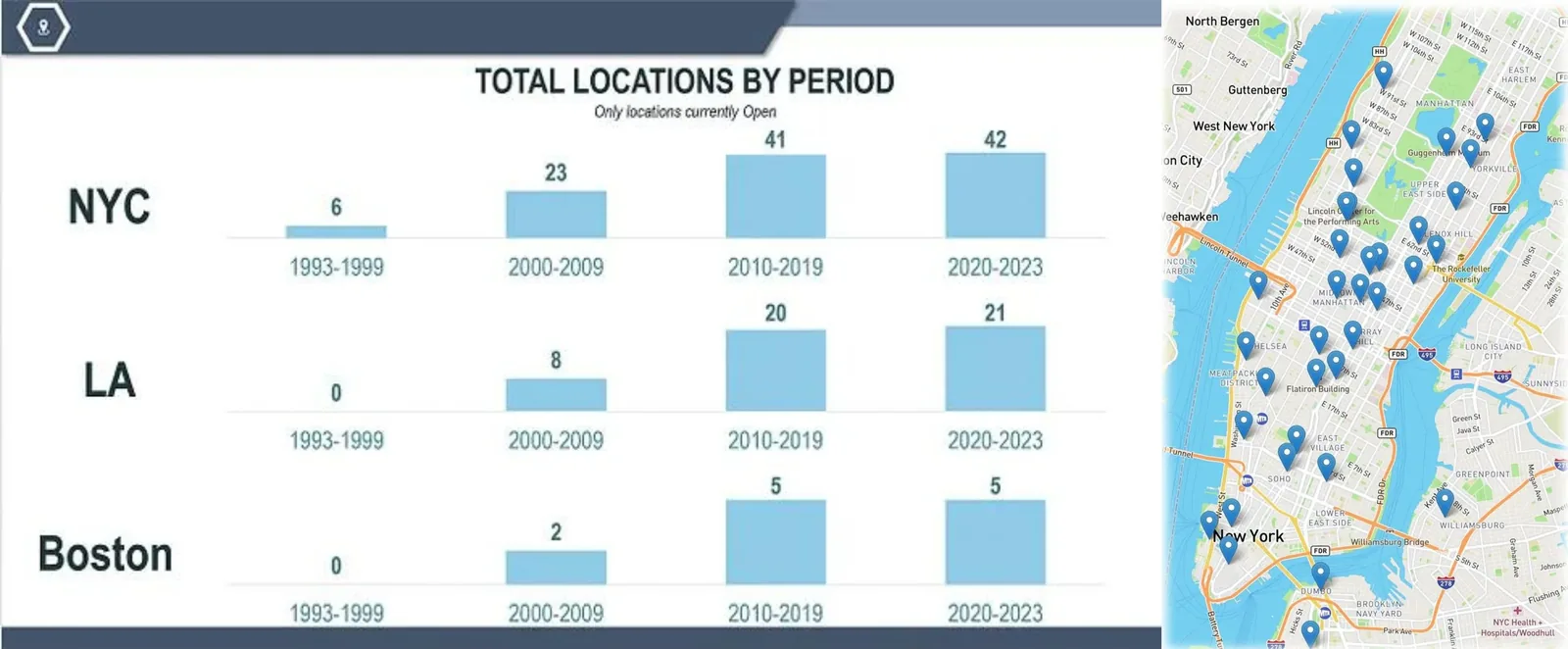
Equinox’s geographic strategy has historically concentrated on major cities where its premium positioning can support multiple clubs. New York remains its densest market, while Los Angeles, London, Toronto, Boston, San Francisco, and other metros support regional clusters. That density helps a membership feel more useful to customers who move between work, home, and travel destinations.
Los Angeles is a clear example. Equinox operates several clubs across the city and surrounding area, from Hollywood and West Hollywood to Downtown LA and Sports Club Los Angeles. A dense metro footprint lets the company sell convenience within a premium membership while still tailoring individual clubs to their neighbourhoods.
For a wellness company entering that market, choosing a Los Angeles branding partner is a separate decision from selecting locations or media. The brand brief should define how a premium promise will remain recognizable across neighbourhoods and customer touchpoints. Regional adaptation should change what is useful locally without making every location feel like a different brand.
Equinox Hotels Extends the Brand Into Hospitality
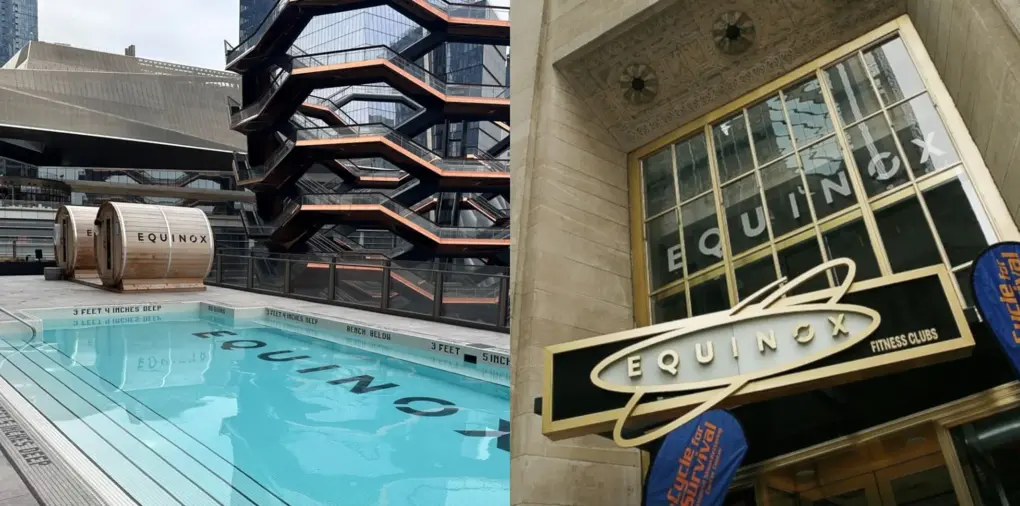
The 2019 opening of Equinox Hotel in Hudson Yards turned the lifestyle positioning into a hospitality product. Fitness, recovery, spa services, sleep, food, and design could now be packaged into an overnight experience rather than ending when a member left the club.
That expansion has become more than a one-property experiment. Equinox Hotels’ current development material describes an active pipeline and plans for additional properties over the coming decade. The strategy makes Equinox relevant to travel and hospitality marketing as well as fitness, because the brand promise now has to work across booking, rooms, wellness programming, food and beverage, and service.
The hotel business is a particularly demanding brand extension because guests compare it with luxury hospitality competitors, not only with other fitness companies. Equinox therefore has to translate its performance language into sleep, recovery, room design, restaurants, spa experiences, and staff service without making the stay feel like a gym with bedrooms attached.
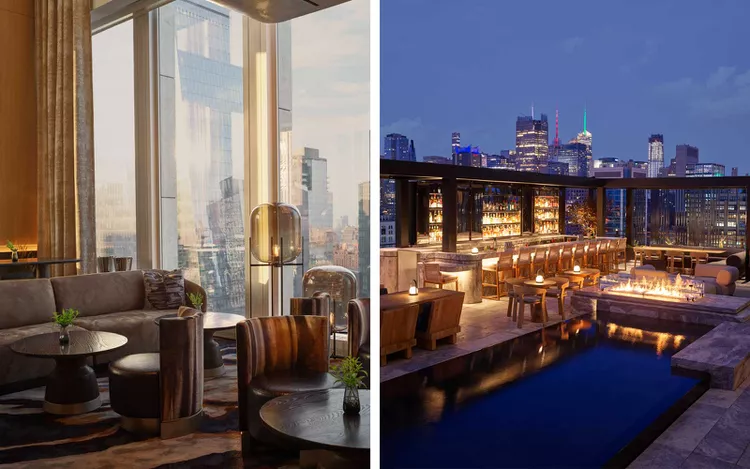
The hospitality move also shows why premium brands have to be careful when extending into new categories. A hotel cannot rely on the gym brand alone. The room design, service, sleep environment, recovery offer, food, and guest journey all have to meet expectations that are different from a club membership.
What Marketers Can Learn From Equinox
Equinox’s marketing strategy is effective when the company’s actions support its positioning. “We Don’t Speak January” worked because rejecting a high-volume sign-up day was consistent with a brand built around commitment and exclusivity. “Life Is the Luxury” worked because it gave the premium price a broader lifestyle meaning. The hotel expansion works only if the hospitality experience can carry the same promise beyond the gym floor.
The trade-off is that exclusivity can narrow appeal. A brand that deliberately chooses a premium audience should be prepared for some customers to reject the positioning. The goal is not universal approval; it is clarity about who the product is designed for and whether the experience consistently earns the premium being asked.
Brand Vision can help businesses assess positioning, campaign ideas, and customer touchpoints through a marketing consultation, especially when a brand is moving into a new market or category.