.avif)
Bumble has stood out in online dating by turning a product rule into a recognizable brand position. Founded by Whitney Wolfe Herd in 2014, the app was built around changing who was expected to initiate a heterosexual match, giving the company a clear point of difference in a crowded category. That idea shaped Bumble's messaging, product design, partnerships, and visual identity for years.
At Brand Vision, the useful lesson is not to copy Bumble's surface choices. It is to see how a brand promise can become more credible when the product experience, campaigns, and customer journey reinforce the same idea.
The Female-First Approach
Bumble's original distinction was straightforward: women made the first move in heterosexual matches. Bumble still describes that 2014 launch as rewriting dating norms, but the mechanic has evolved. With Opening Moves, women can set a question or prompt that a match can answer, while still choosing to message first themselves. In same-gender and non-binary connections, either person can set or respond to an Opening Move.
That evolution matters from a brand strategy perspective. A distinctive idea can remain recognizable even when the experience changes to address friction. It also shows the value of UX research: if a signature interaction creates unnecessary pressure, the right response may be to improve the mechanic without abandoning the positioning behind it.
Bumble's Marketing Strategy
Bumble has often used partnerships to give its values a public face. Serena Williams is one of the clearest examples. Bumble's own company history records its 2019 Super Bowl debut with Williams, using the moment to reinforce its message about women making the first move. The partnership worked because the spokesperson, cultural context, and brand promise were aligned rather than connected only by reach. Bumble's company timeline still presents that campaign as a milestone.
That is where brand research becomes practical. Audience expectations, category conventions, cultural context, and partner fit all affect whether a campaign strengthens a brand or simply borrows attention. Bumble's strongest partnerships have tended to reinforce ideas already present in the product, which makes the collaboration easier to understand and more consistent with the brand.
The broader lesson is that a partnership should do more than expand reach. It should make an existing position more credible. When the public figure, organization, or cultural moment naturally reflects the brand's point of view, the campaign can build memory instead of creating a temporary spike that feels disconnected from the rest of the customer experience.
.webp)
"Find Them On Bumble" Campaign
.webp)
The "Find Them On Bumble" platform is better understood as a real-user campaign than as a campaign about couples. City-specific executions put actual Bumble members at the center of the creative. In the London Bumble Bizz edition, for example, Bumble selected 53 users and featured them across billboards, buses, video, and a newspaper distributed around the city. Bumble's campaign page documents the execution.
The B2C marketing lesson is useful: real customers can become proof of what a platform enables. Instead of relying only on polished brand claims, the campaign made members part of the story and showed the range of people using Bumble in real life.
That approach also made the service more tangible without requiring the brand to explain every feature in an advertisement. The people themselves became the creative, while city-specific media placements made the work feel connected to the communities where it appeared.
Design and Aesthetics
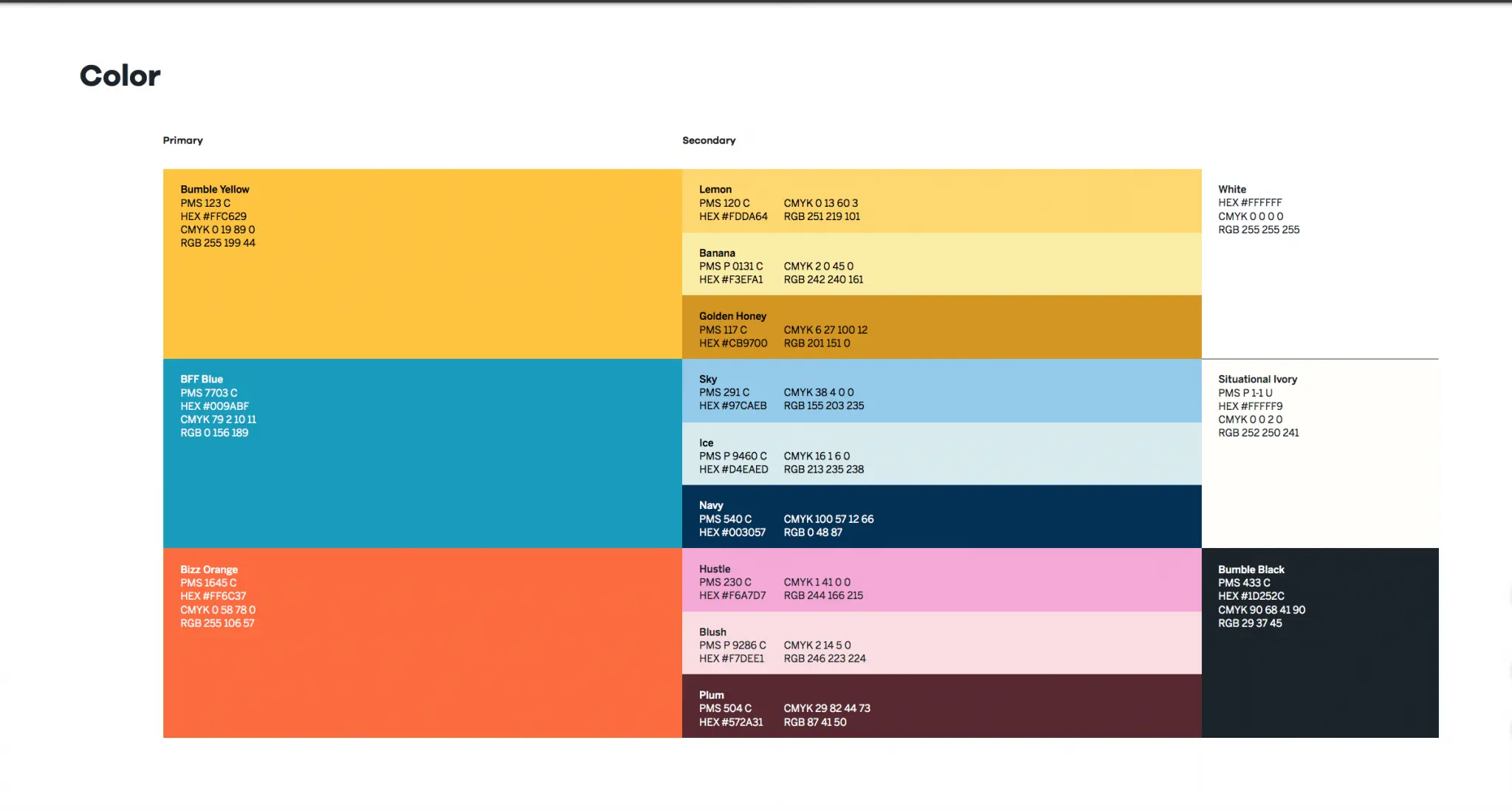
Bumble's visual identity has long relied on a bright yellow-led palette, simple iconography, and a friendly tone that makes the product feel approachable rather than clinical. The bee motif reinforces the name and gives the identity an easy visual shorthand.
The app experience is just as important as the palette. Clear navigation, profile controls, prompts, match states, and conversation cues determine whether the promise feels easy to use in practice. Bumble's interface has historically emphasized simple actions and clear feedback so the product does not feel more intimidating than the social interaction it is facilitating.
Our guide to UI vs. UX explains the distinction: interface styling shapes what people see and interact with, while UX covers the broader journey and the friction around it. For Bumble, those layers meet when a brand value such as confidence, safety, or control has to become a concrete screen, prompt, or flow.
Inclusivity and Diversity
Bumble expanded beyond dating early in its history. Its company timeline records the launch of BFF in 2016, extending the brand into friendship, while Bumble Bizz created a professional-networking use case. In September 2025, Bumble relaunched Bumble For Friends as the standalone BFF app in the United States, showing that the company's broader connection strategy has continued to evolve.
.webp)
That expansion matters because the brand is not only communicating inclusion through campaign casting. It has repeatedly broadened the kinds of relationships the product is designed to support. Friendship, dating, and historically professional networking gave the same core idea different use cases while keeping connection at the center.
The strongest version of inclusive branding is visible in the experience itself, not only in the language around it. Representation in campaigns matters, but product options, interaction rules, safety choices, and the range of relationships a platform recognizes give customers more concrete evidence of what the brand means.
Social Responsibility
Bumble has also used its platform historically to support issues tied to women's rights, racial justice, entrepreneurship, and community-building. Initiatives such as the Bumble Fund and community-grant programs extended the "first move" idea beyond dating into business and social participation.
For brand builders, the useful distinction is consistency. Social initiatives strengthen positioning when they connect to a company's existing purpose and actions. Bumble's historical programs around women, entrepreneurship, and community were legible because they extended themes already present in its messaging.
When there is no connection, the same activity can feel detached from the product and harder for customers to understand. Purpose-led work is most credible when the organization can show how the belief influences decisions, partnerships, policies, or customer experience rather than treating the cause as a separate campaign layer.
Continuous Innovation
Bumble's brand has continued to change with the product. Opening Moves is one visible example, but the company said in its second-quarter 2026 results that it was also investing in matching algorithms, new ways to start conversations, in-person dating experiences, and future group experiences. The point is not that every feature becomes a branding story. It is that product changes can alter what a brand promise means in use. Bumble's Q2 2026 update provides the current company context.
A 2023 Bumble For Friends Feature Snapshot
In December 2023, Bumble For Friends introduced AI-generated icebreakers and "Plans," a feature for organizing group meetups. The icebreaker tool suggested a first-message prompt based on a connection's profile, while Plans was designed to help people move from online matching into real-world activities.
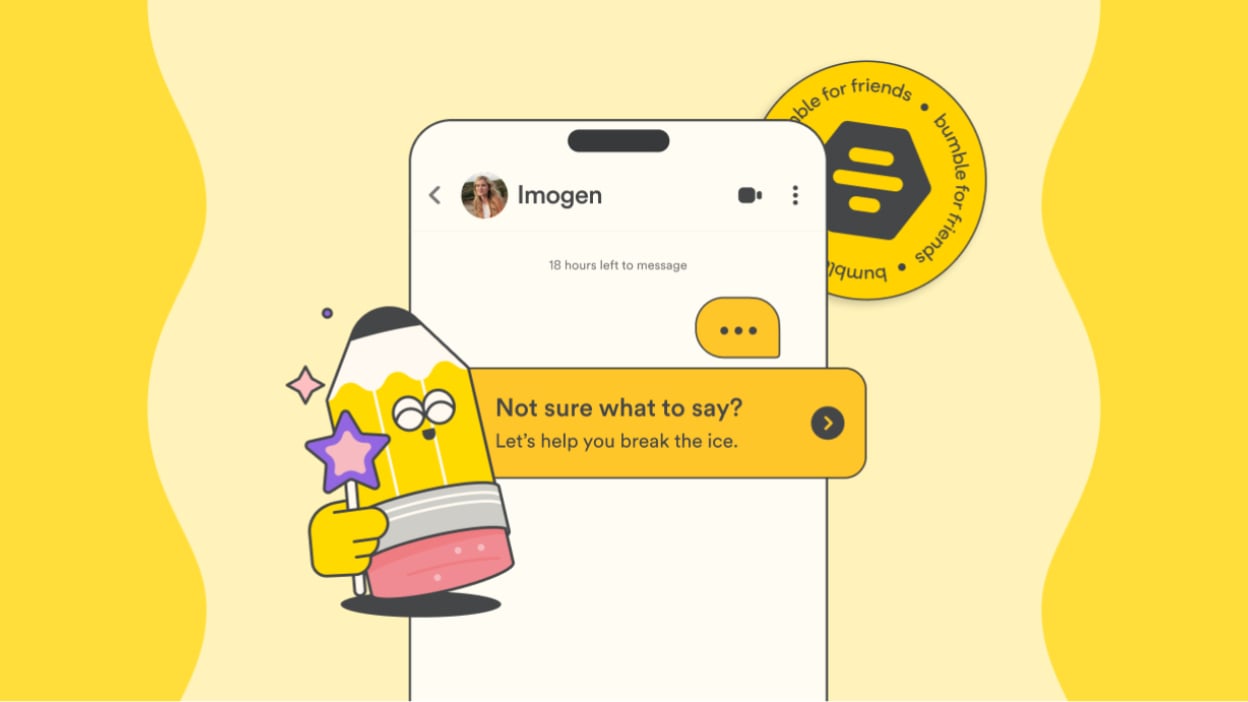
The feature addressed a familiar product problem: people often know they want to connect but do not know how to start. The AI assistant generated an icebreaker based on the other person's profile, which users could use, adjust, replace, or ignore. That made the tool less about novelty and more about reducing conversational friction.
Plans tackled the next step in the journey by helping users organize group activities after they connected. Users could create public or private meetups for interests such as book clubs, concerts, or other activities, moving the experience from digital discovery toward an in-person relationship.
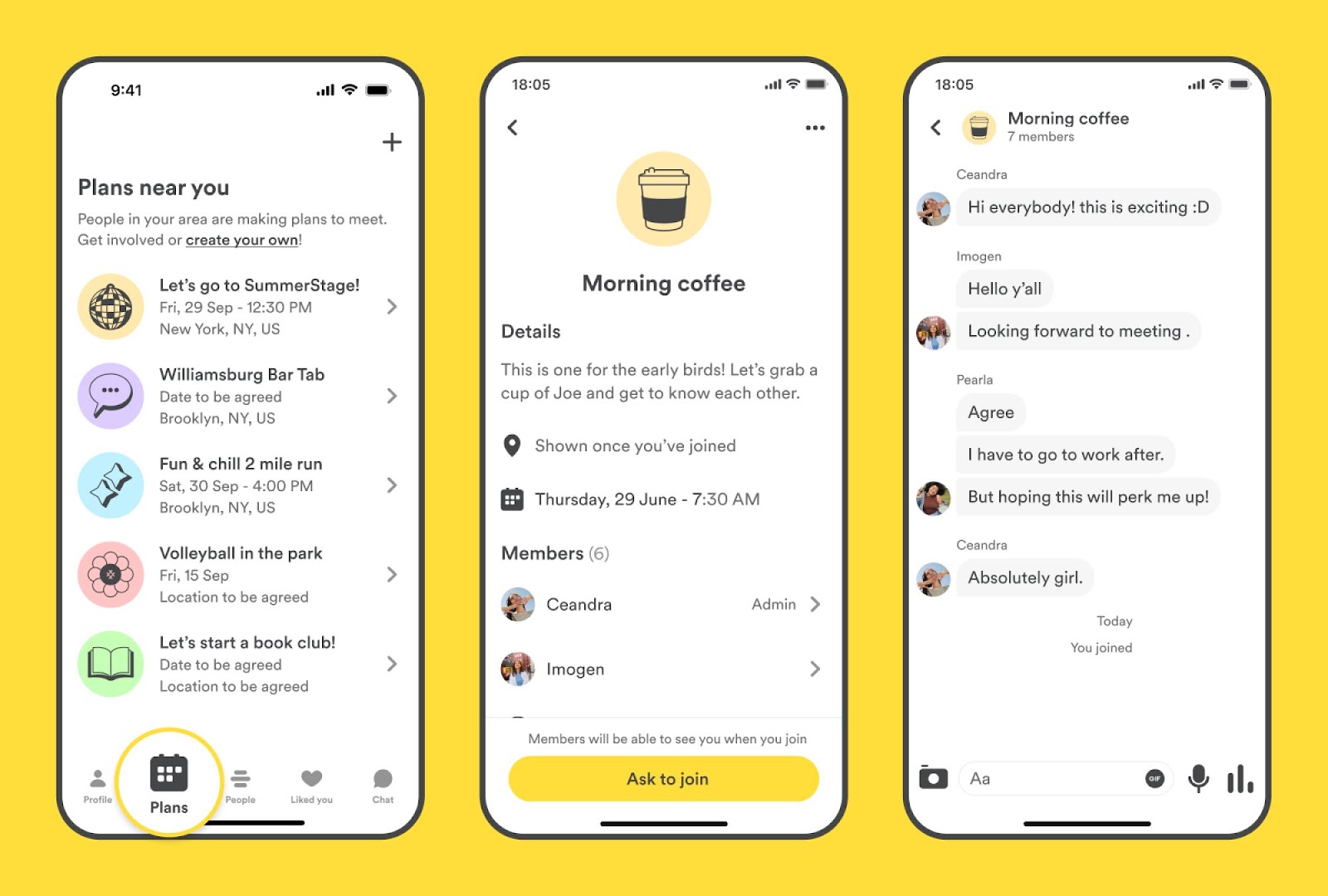
Those 2023 features are best treated as a snapshot rather than current product news. The friendship product later evolved into the standalone BFF app, which Bumble says was relaunched in the United States in September 2025.
What Business Owners Can Learn From Bumble's Branding in 2026
Bumble shows how quickly a category can shift when positioning is clear and the experience backs it up. The advantage is not simply a colour palette or slogan. It is the discipline of connecting a recognizable idea to product decisions, campaigns, and interactions, then adapting that system when customer needs change.
Start by pressure-testing your positioning. Can a new customer explain what makes you different in one sentence, and does your website make that promise feel true quickly? A strong branding partner should help align positioning, voice, and visual identity rather than treating them as separate exercises. Then make sure the experience carries the same logic: strong UI/UX design turns brand values into flows and moments people can actually use.
- Write one clear value statement and make sure it appears consistently across your site, social channels, and onboarding.
- Remove one meaningful point of friction from the customer journey at a time, especially on mobile. A thoughtful web design process can translate brand clarity into a faster path to action.
- Build credibility with proof: customer language, outcomes, product behavior, and real examples. An SEO strategy can then help the right people find that proof when they search.
- Treat campaigns as brand tests. Attention is useful only when the message reinforces what customers should remember about the business.
If you want a second set of eyes on positioning, site experience, and channel focus, a focused marketing consultation can help identify where the story is clear and where the customer journey is losing momentum.


.avif)