
Your buyers now enter through two connected discovery systems: traditional search results and AI-generated answers. This article captures SEO and lead generation statistics that were available through September 2025, with the sample behind each figure kept in view. Google said AI Overviews were one of Search's most successful launches in a decade and were driving more than 10% growth in usage for the types of queries that showed them in major markets such as the U.S. and India (Google). McKinsey's March 2025 survey reported that 78% of respondents said their organizations used AI in at least one business function (McKinsey). Gartner's 2025 CMO survey put average marketing budgets at 7.7% of company revenue among 402 marketing leaders, mostly at large organizations (Gartner). For teams working on B2B discovery and demand generation, the practical question is how these shifts change visibility, clicks, and conversion paths.
At a Glance
- AI search expanded quickly: Google said AI Overviews had reached more than 200 countries and territories and more than 40 languages by May 2025. (Google expansion, Google guidance)
- B2B traffic benchmarks still showed search as a major discovery channel, but the exact share depends on the dataset and company type. (Powered by Search, Backlinko)
- AI summaries changed click behavior in measured samples. Pew found lower traditional-result click-through when an AI summary appeared in its March 2025 U.S. browsing panel. (Similarweb explainer)
- Budgets were constrained rather than expanding: Gartner reported an average of 7.7% of company revenue, while marketers continued increasing GenAI use for research, creation, and personalization. (Gartner budget snapshot, Salesforce State of Marketing)
Why showing up in SEO and AI matters
Google's guidance says AI Overviews can show links in multiple ways and surface a wider range of sources (Google developer blog). That does not make every concise page automatically citable, but it does raise the value of clear answers, strong evidence, and pages that are easy to understand. B2B benchmark roundups also continue to place organic search among important traffic and revenue channels (Backlinko). In practice, optimize for engines and AI at the same time, and treat AI search optimization as an extension of sound search fundamentals rather than a separate shortcut. Consumer surveys in the UK and U.S. were already showing meaningful use of generative AI for research and everyday tasks by 2024 (Deloitte UK 2024) (Deloitte US 2024)
Practical next steps
- Treat “SEO for engines” and optimization for AI answers as parallel workstreams.
- Lead important pages with direct answers, then support them with proof, examples, and deeper detail.
Businesses and people were already using AI to find providers
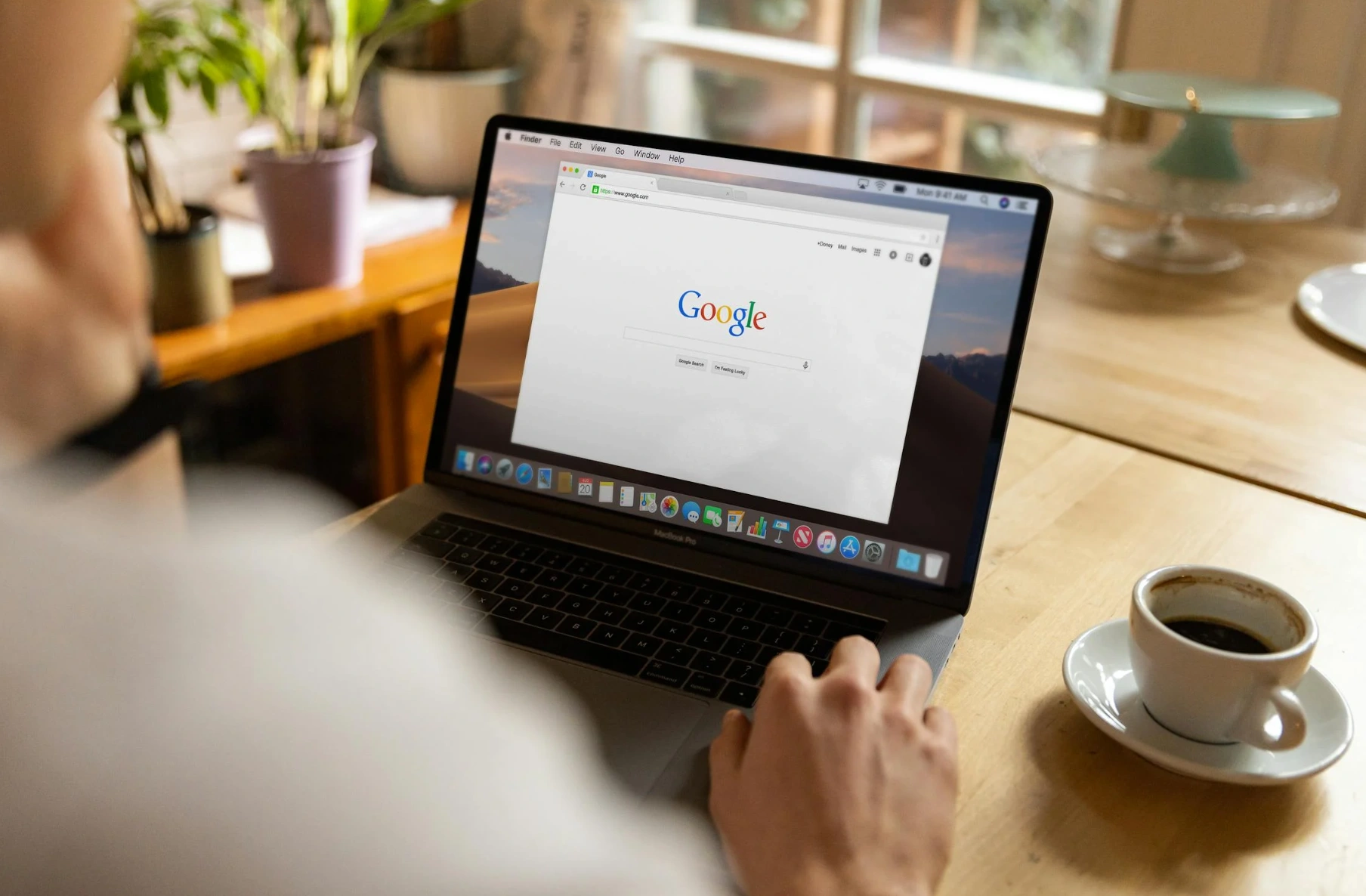
By 2025, AI tools were already appearing in business discovery and comparison behavior, although adoption varied widely by use case and audience.
- BrightLocal reported that 6% of consumers in its 2025 survey used ChatGPT or other AI tools for local business recommendations. (BrightLocal, 2025)
- Deloitte reported generative AI use for search and research among U.S. consumers, showing that AI had become part of some discovery journeys by late 2024 (Deloitte, Dec 2024)
- Attest reported stronger stated willingness to use AI for product research among younger consumers than older consumers in its 2025 study. (Attest Consumer Adoption of AI, July 2025)
The state of clicks: what the 2025 studies actually measured
Different 2025 studies measured different samples, so their percentages should not be treated as one universal Google rate. An Advanced Web Ranking dataset reported AI Overviews on more than half of its monitored queries by June 2025 and a decline in desktop blue-link click-through when an overview was present (AWR via Xponent21, June 2025). Pew's study used browsing data from 900 U.S. adults in March 2025 and found that traditional-result clicks occurred in 8% of visits with an AI summary versus 15% without one (Pew, July 2025).
For lead generation, the implication is not that all clicks disappear. It is that the remaining click needs to land on a page with enough depth to justify leaving the results page. Pricing, comparisons, calculators, proof, and service detail can help. Brand visibility may also contribute to later branded searches, but the article should not assume every AI impression becomes a direct visit or lead. Once the click happens, conversion-focused user experience and the broader website design essentials still determine whether the visitor can understand the offer and act.
What to do about lower click-through
- Be quotable in AI. Lead important pages with direct answers, current facts, descriptive headings, and useful FAQs.
- Make depth worth the click. Give visitors evidence and tools that a summary cannot fully replace, especially comparisons, pricing context, demos, and detailed implementation guidance.
AI Overviews: compare datasets before quoting a percentage
Semrush reported that AI Overviews appeared on about 13.14% of queries in its March 2025 dataset, up from 6.49% in January, with informational queries making up most of the triggers it observed (Semrush, July 22, 2025). That figure is not directly comparable with the AWR number above because the providers used different tracked keyword sets and methodologies. The useful takeaway is directional: AI-generated search results were expanding quickly, and marketers needed to measure their own query set rather than rely on one headline percentage.
- Track the queries that matter to your business and record whether AI results appear, which sources are cited, and whether organic click-through changes over time.
Budgets and adoption: where leaders were spending
- Budget reality: Gartner reported average 2025 marketing budgets at about 7.7% of company revenue in its CMO sample (Gartner). With constrained budgets, the priority is to prove which search and content investments support qualified demand. Brand Vision approaches that work by connecting search visibility with the wider buyer journey rather than treating rankings as the end metric. Brand Vision
- AI adoption: McKinsey's March 2025 survey reported 78% of respondents using AI in at least one business function, with IT and marketing and sales among the most common functions. (McKinsey)
- Team behavior: Marketers reported expanding GenAI use for research, creation, and personalization. (Salesforce)
- Trust and influence: B2B research continues to emphasize proof, expertise, and trusted information during complex purchase decisions. (LinkedIn B2B research hub)
For teams comparing SEO and marketing support in the U.S., the practical brief should define the buyer, the search problems, the pages that need to convert, and the measurement model before channel spend is increased.

Playbook: how to compete on SERPs and inside AI answers
1) Build an AI-ready content graph
Cluster pages around buyer problems, then connect solution pages, proof, benchmarks, FAQs, and supporting resources. A disciplined SEO content strategy makes that network easier for both people and search systems to navigate.
- Use direct answers where they improve clarity, but do not force every answer into an arbitrary word count.
- Reference: Google guidance
2) Design for answerability
Use descriptive headings, concise summaries, clear evidence, and structured information. Apply schema only when the page genuinely meets the requirements for that structured-data type.
- Google says the same SEO fundamentals apply to AI features in Search, with no special markup required solely to appear in AI Overviews. (Google guidance)
- Clear structure also makes pages faster to scan for human readers.
- Reference: Powered by Search
3) Fortify brand SERPs
Keep titles, site architecture, important entity information, and review visibility consistent so a buyer who searches the brand after an earlier impression can quickly confirm who you are.
- Measure branded demand separately from non-branded discovery rather than assuming one caused the other.
4) Distribute where B2B buyers already spend time
Repurpose useful benchmarks, comparisons, and tools into social and email formats without stripping away the evidence that made the original asset useful.
- Measure downstream engagement and qualified responses, not just distribution volume.
- Reference: LinkedIn B2B research
Measurement updates for 2025
- Add AI search as a tracked surface. Record AI citations and appearances for a fixed query set, then compare them with organic rankings and branded demand. (Google product updates)
- Segment zero-click behavior by topic. Some informational queries may be satisfied on the results page while commercial pages still earn clicks when users need detail. (Similarweb)
- Attribute content-assisted pipeline carefully. Docs, comparisons, integrations, and research can influence late-stage decisions even when they are not the final converting page. (Powered by Search)
Recap of the 2025 SEO statistics
- AI Overviews: Google said usage grew by more than 10% for the types of queries showing AI Overviews in large markets such as the U.S. and India.
- Click behavior: Pew's U.S. panel found traditional-result clicks on 8% of visits with an AI summary and 15% without one.
- Budget direction: Gartner's CMO sample put average marketing budgets at 7.7% of company revenue.
- AI adoption: McKinsey's March 2025 survey reported 78% of respondents using AI in at least one business function.
- Interpretation: Different providers measured different query sets and audiences, so compare methods before comparing percentages.
FAQ
Do AI Overviews hurt or help leads?
Pew found lower traditional-result click-through when AI summaries appeared in its March 2025 U.S. browsing panel. Whether that helps or hurts leads depends on whether the brand is visible, whether users still need deeper information, and what happens after the click.
Are buyers actually using AI to find providers?
Yes, but 2025 adoption was still uneven. BrightLocal reported that 6% of consumers in its 2025 survey used ChatGPT or other AI tools for local business recommendations.
Why do AI Overview percentages vary so much between studies?
Providers track different keywords, markets, devices, dates, and methodologies. Semrush's March 2025 dataset and AWR's June dataset were not universal samples of all Google searches, so their percentages should not be treated as directly interchangeable.
What's the practical strategy, SEO or AI?
Both. Build pages that satisfy ordinary search intent and are clear enough for AI systems to understand, quote, and cite when relevant.
How do we counter zero-click results and still capture leads?
Give searchers a reason to click for depth: pricing context, comparisons, original data, calculators, implementation detail, product information, and credible proof.
Bottom line
SEO and AI search became increasingly connected in 2025, but the data should be read with its sample attached. Google was expanding AI Overviews, independent studies were documenting lower click-through on some result types, and organizations were increasing AI adoption while marketing budgets stayed constrained. The useful response is to improve both visibility and the post-click experience, then measure them separately. If your team needs help connecting search visibility, AI citation tracking, and lead attribution, a focused marketing consultation can help define what to measure before more budget is committed.